Where a day takes you
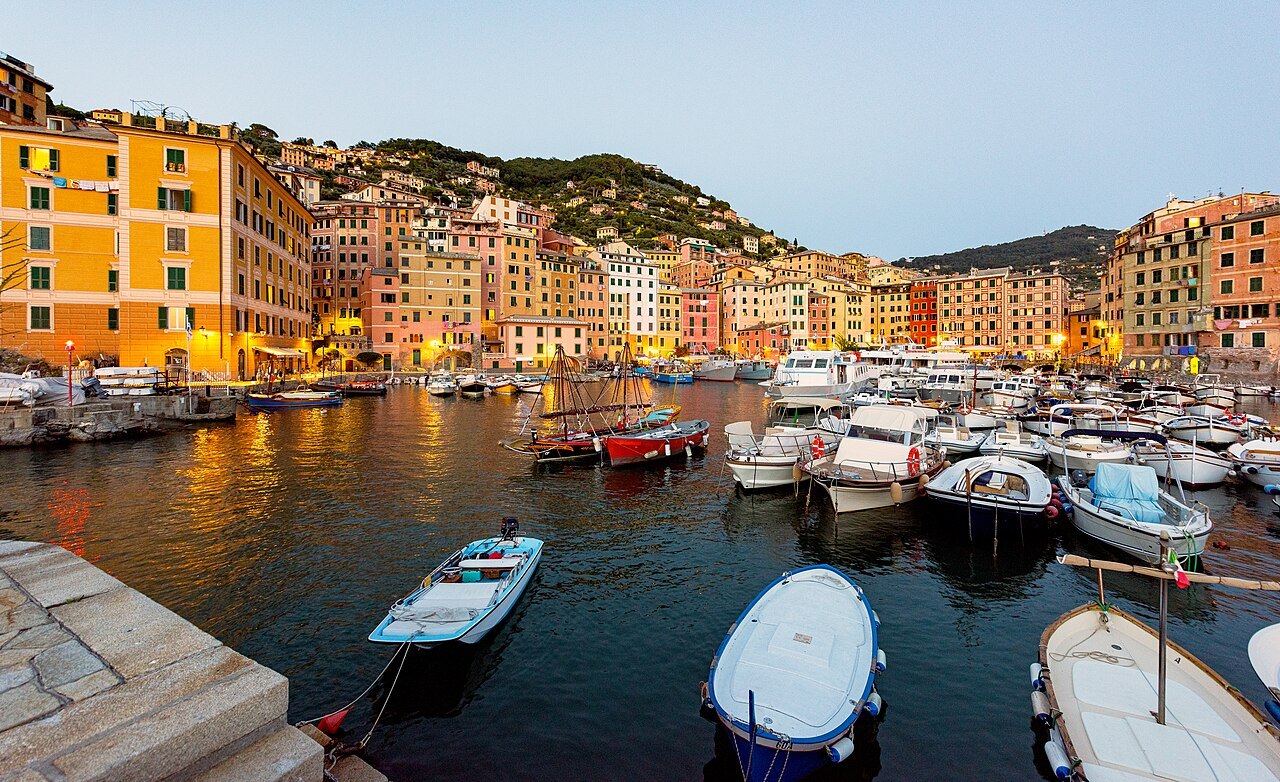
- CamogliTrain from Brignole, about forty minutesTall painted houses on a pebble shore, a fishing harbour and the best swimming within easy reach of the city.
- San FruttuosoBoat from Camogli, or a walk over the headlandA Benedictine abbey in a cove with no road to it, reached by boat or by a steep path through the park.
- Portofino and Santa MargheritaTrain to Santa Margherita, then bus or boatThe famous harbour and the larger resort town next to it, with a coastal path between them.
- RapalloTrain from Brignole, about fifty minutesA working Riviera town with a castle on the water and a cable car up to a sanctuary in the hills.
- The Cinque TerreTrain, about an hour and a half to MonterossoFive terraced villages on the eastern Riviera, joined by trains, footpaths and boats.
- MilanIntercity from Piazza Principe, about an hour and three quartersThe nearest big city inland, and an easy day out if the weather turns against the coast.
Day Trips in detail
The coast is the point
Genoa sits in the middle of the Ligurian arc, with the Riviera di Ponente running west toward France and the Riviera di Levante east toward Tuscany. Regional trains run along both, every few minutes at peak times, stopping at every town.
That makes day trips here unusually simple. There is no need for a car, no need to book, and the fares are ordinary regional ones; the eastern coast is the prettier and the busier of the two.
The pattern most visitors use is a train out in the morning, a boat or a path in the middle of the day, and a train back in the early evening. Boats run along the coast in season and are worth taking one way.
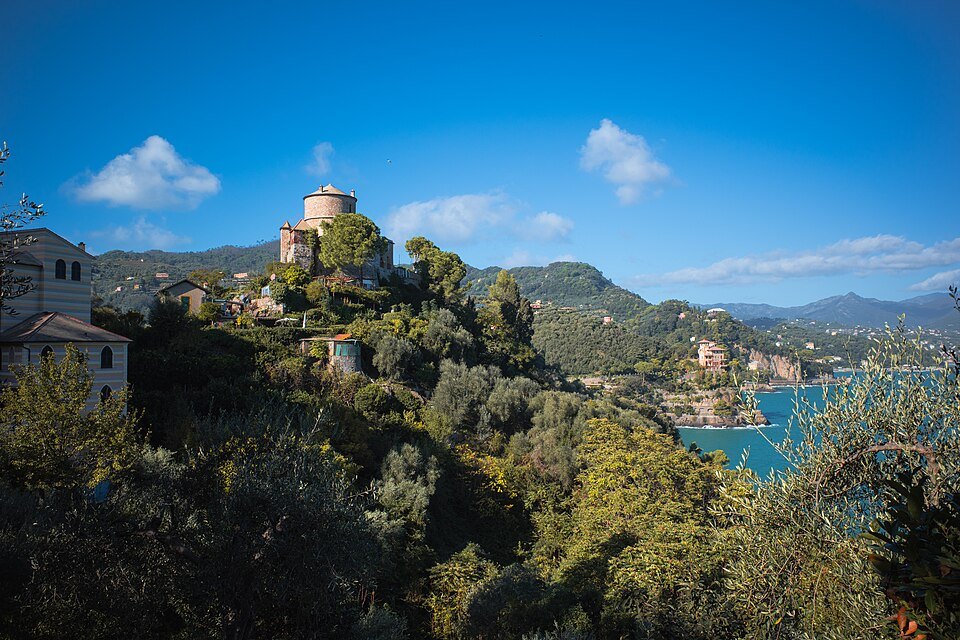
The two Rivieras are not the same. West of the city the coast is broader, flatter and more built up, with long beaches and pine woods; east of it the mountains come down to the water and the towns are stacked in coves, which is the landscape most people picture.
Trains are the way to do all of it. The coastal line runs behind the towns in tunnel and comes out at each station within a few minutes' walk of the water, and the fares within Liguria are modest.
Camogli and San Fruttuoso
Camogli is the first real stop east: a tall, narrow town of painted houses stacked above a pebble beach, with a fishing harbour, a basilica and a castle on the rocks. It is forty minutes from Brignole and is the easiest sea day from the city.
From its harbour, boats cross to San Fruttuoso, a Benedictine abbey of the tenth century standing in a cove that has no road to it. The alternative is a walk of about two hours over the Portofino headland, through holm oak and pine.
The abbey is small, and the cove has a beach beside it and a bar behind. In the water offshore stands a bronze Christ of the Abyss, placed there in the nineteen-fifties and visible to divers rather than walkers.
Go early. The boats fill in the middle of the day in summer, and the cove is small enough to feel crowded quickly.
Camogli's name is said to come from the house of wives — casa delle mogli — for the women who ran the town while the men were at sea. It had one of the largest merchant fleets in the Mediterranean in the nineteenth century, which is why the houses are so tall for a fishing village.
Portofino and Santa Margherita
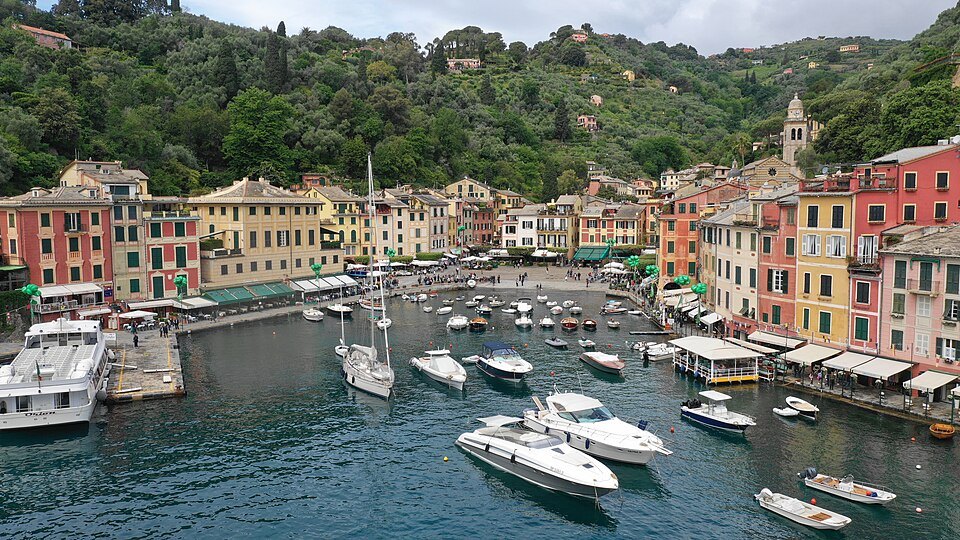
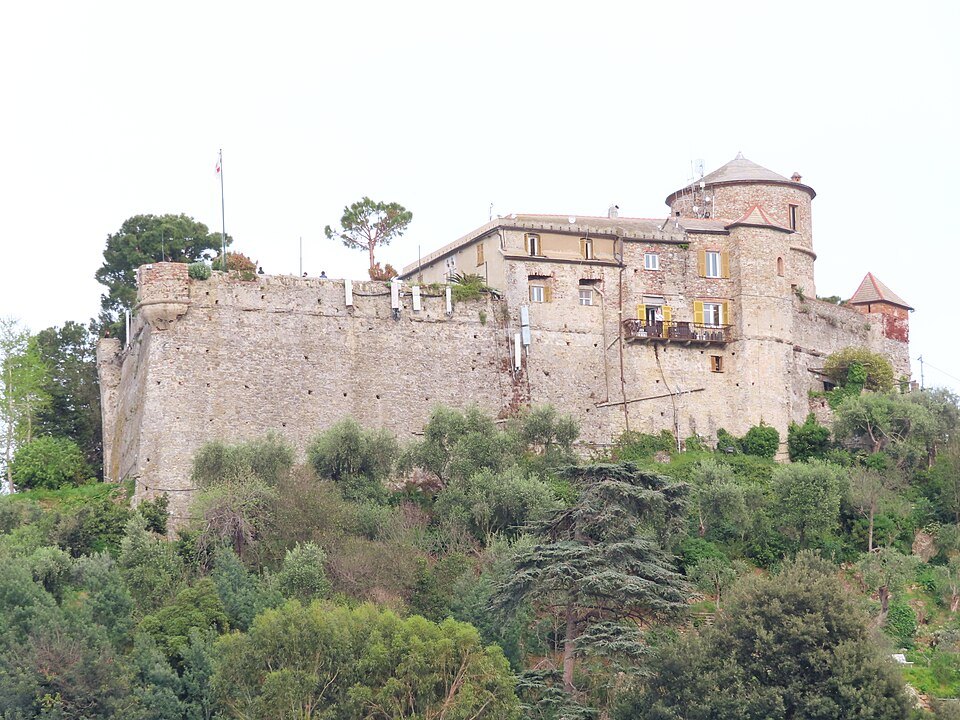
Portofino is a very small harbour with very expensive boats in it, and its fame outruns its size: a semicircle of pastel houses, a castle above, and a walk out to the lighthouse on the point.
The practical approach is to take the train to Santa Margherita Ligure — a proper town with hotels, a seafront and a harbour of its own — and continue by bus or boat for the last three kilometres.
The coastal path between the two is an easy hour on foot and the best way to arrive. In season, doing it in reverse and returning by boat avoids the worst of the queues.
Santa Margherita is the better place to eat and to stay; Portofino is the photograph.
The Cinque Terre
The five villages — Monterosso, Vernazza, Corniglia, Manarola and Riomaggiore — are about an hour and a half east by train, on the coast toward La Spezia. Terraced vines, stacked houses, small harbours and a footpath network between them.
They are also the most visited stretch of coastline in Italy, and in summer the trains and paths are full. A day from Genoa works best out of season, or started very early.
Buy the through ticket that covers the local trains between the villages; walking the whole way is a serious hill walk rather than a stroll, and sections of the coastal path shut after landslides.
If the aim is a Ligurian village rather than the famous five, Camogli and the villages of the Portofino headland give the same landscape an hour closer.
The terraces are the real monument. Dry stone walls run for thousands of kilometres across these slopes, built over centuries to make vineyards out of cliffs, and keeping them standing is now a public project as much as a private one.
Inland and the other direction
West of the city the coast is less famous and less crowded: Pegli with its villa gardens, Arenzano with its pine woods, and Varazze with a long beach — all reachable on the same suburban trains.
Behind the city, the Genoa–Casella railway climbs into the Apennine valleys on a narrow-gauge line from a small station near Piazza Manin. It is slow, rural and completely unlike the coast.
If a day of rain settles in, the answer is to go inland and urban: Milan is about an hour and three quarters by Intercity from Piazza Principe, and the trains run through the day.
Pegli deserves a note of its own: two villa parks, one of them a romantic garden of lakes, grottoes and temples laid out in the eighteen-forties, and a naval museum — all about twenty minutes by train from Principe.
Making it work
Check the return times before you leave rather than on the platform at the end of the day; regional services thin out in the evening, particularly on the eastern line.
Take a swimsuit between June and September. Every town on this coast has somewhere to get into the water, and most have no sand at all — rocks, pebbles and concrete platforms instead.
For anything involving a boat, watch the weather. Services along the coast stop in a swell, and the crossing to San Fruttuoso is the first to go.
None of these trips needs a car. If you have one, the coast road is slow and parking in the villages is scarce and expensive — see getting here.
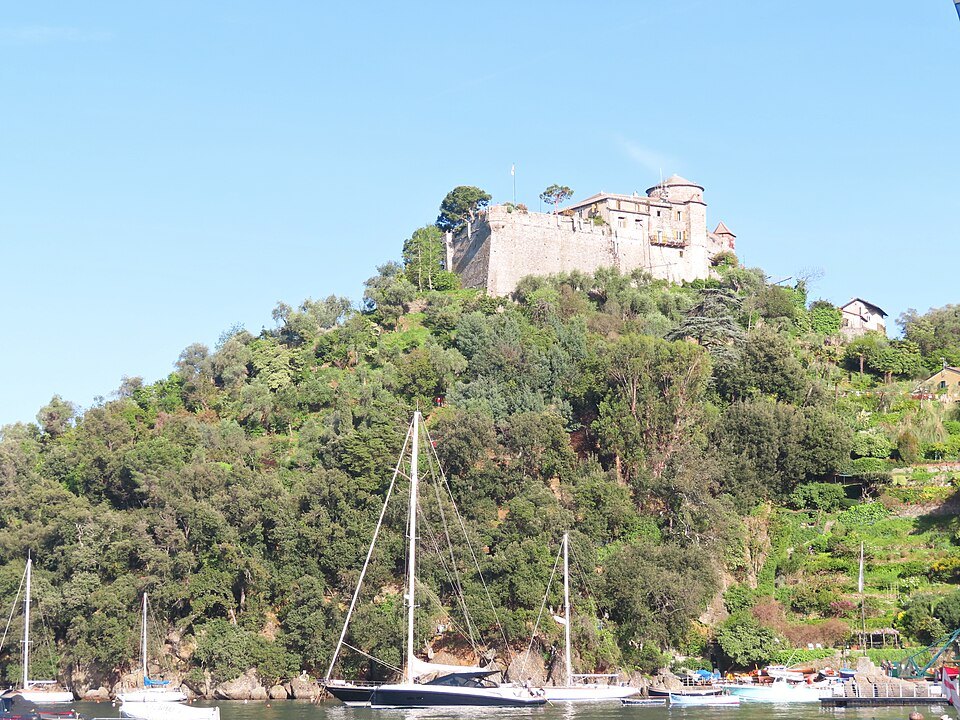
A last piece of advice: do not try to see the Cinque Terre and Portofino on the same day. They are on the same coast and an hour apart by train, and the day becomes a series of platforms.
Services we link to
Some links on this page are affiliate links. If you book through one we may earn a commission, at no extra cost to you. It does not affect what is recommended here, and no sight page on this site carries one.
For an airport run at either end of a trip along the coast:
More photographs
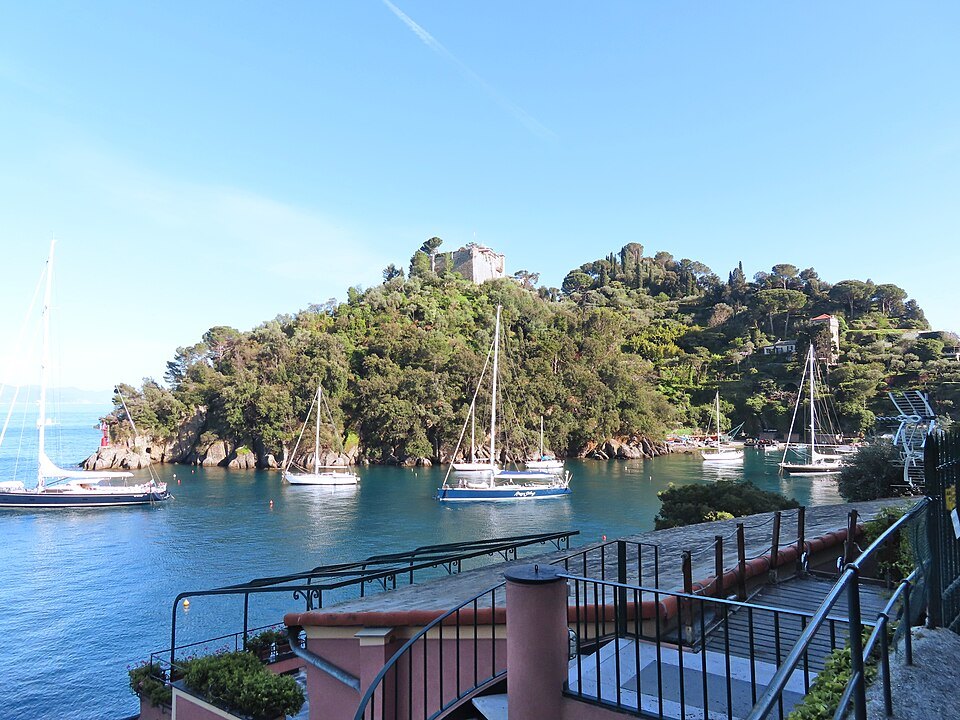
The point at Portofino from the coast path, yachts in the inletParma1983, Wikimedia Commons, CC BY-SA 4.0 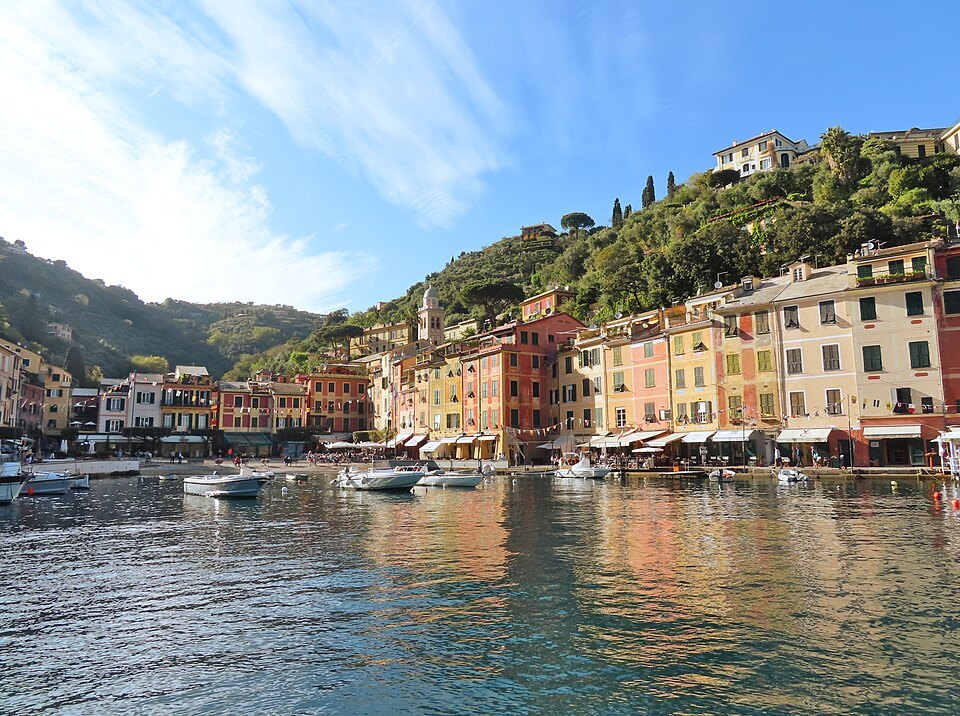
The Piazzetta at Portofino from the ferry moleParma1983, Wikimedia Commons, CC BY-SA 4.0