The routes, and where each one puts you
By train
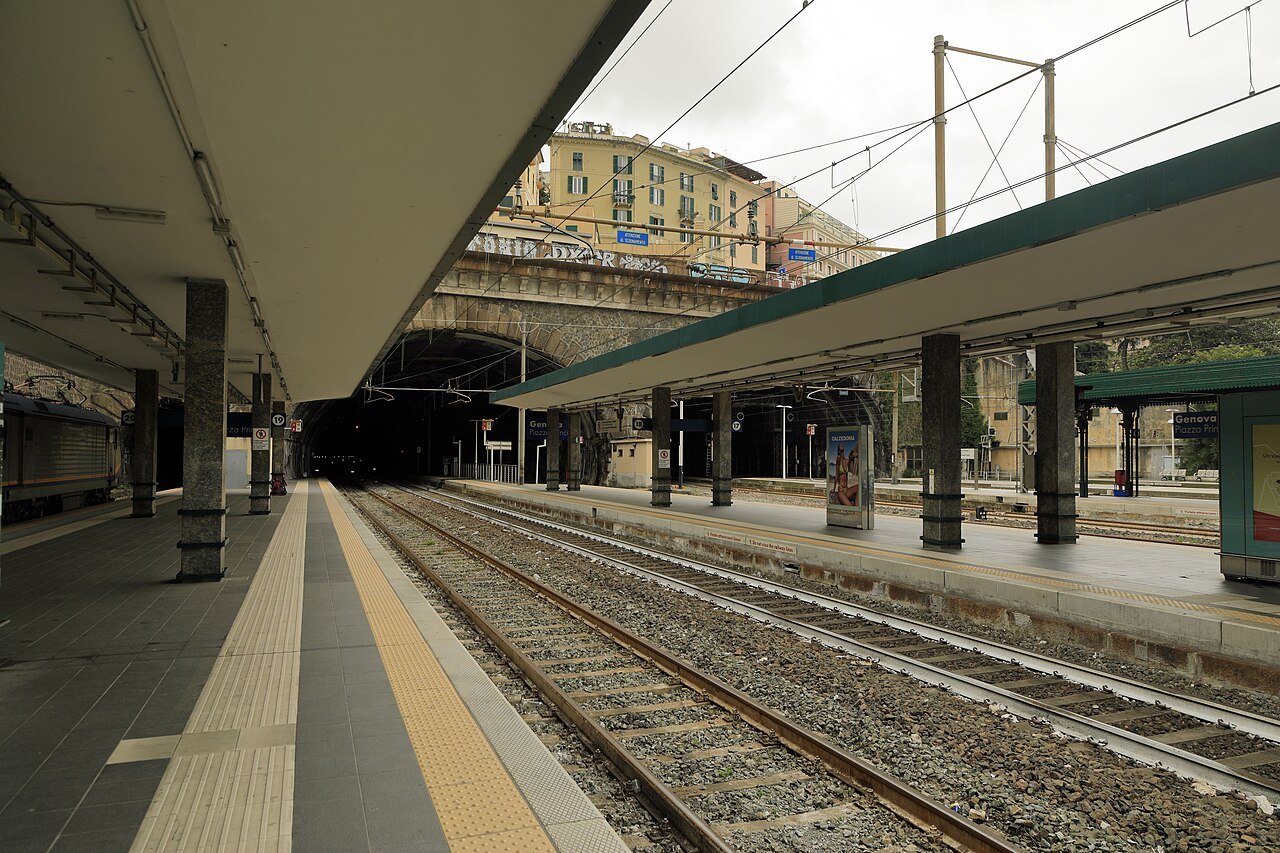
Two main stations, and which one you want depends on where you are staying: Piazza Principe sits at the western end of the centre, Brignole at the eastern. Almost every long-distance train calls at both.
- Milan
- about an hour and three quarters by Intercity
- Turin
- about two hours
- Pisa
- about two hours
- Florence
- about three hours by the fastest connection
- Rome
- between four and five hours
- Nice
- about four hours with a change
Principe for Via Balbi, the Palazzo Reale and the western old town; Brignole for the shopping streets, Corso Italia and the eastern quarters. The metro links the two in a few minutes.
By air
Genova Cristoforo Colombo airport sits on an artificial peninsula about seven kilometres west of the centre, at Sestri Ponente. It is small, with a single terminal and mostly European traffic.
- Volabus to Principe and Brignole
- about half an hour
- Taxi to the centre
- fifteen to twenty minutes in normal traffic
- Milan Malpensa by coach
- the usual alternative for long-haul arrivals
The Volabus stops outside arrivals and runs to both main stations; the same ticket includes a connecting hour on the city network.
By sea
Genoa is Italy's busiest passenger port, with ferries to Sardinia, Sicily, Corsica, Tunisia and Spain, and a separate cruise terminal.
- Ferry terminal
- ten minutes on foot from Principe station
- Cruise terminal
- at Ponte dei Mille, beside the ferry terminal
- Metro Dinegro
- the nearest station to both
Both terminals are west of the old town. Walk east along the waterfront and you are at the Porto Antico in a quarter of an hour.
By car
Three motorways meet above the city and drop into it on viaducts; the coastal road runs along the front on the Sopraelevata. Driving in the centre is a poor idea: the old town is a maze of alleys with no through roads at all.
- A7 from Milan
- the northern approach, into the Genova Ovest exit
- A10 from France
- along the coast from the west
- A12 from Tuscany
- along the coast from the east
Leave the car in a garage — there are large ones at the Porto Antico and near both stations — and use the metro, the lifts and your feet.
Getting Here in detail
Which station to aim for
Genoa is long and thin, so the choice between its two stations is really a choice about which end of the city you want. Piazza Principe, opened in the eighteen-fifties at the foot of Via Balbi, serves the western centre: the royal palace, the old port, the ferry terminal.
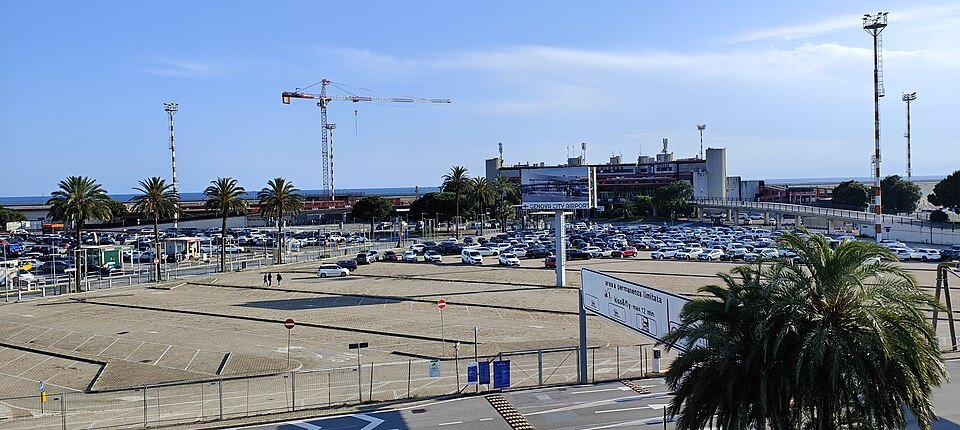
Brignole, at the eastern end, serves the nineteenth-century city: Via XX Settembre, the shopping streets, Corso Italia and the buses out to Boccadasse. Regional trains along the coast, including those to Nervi, mostly start here.
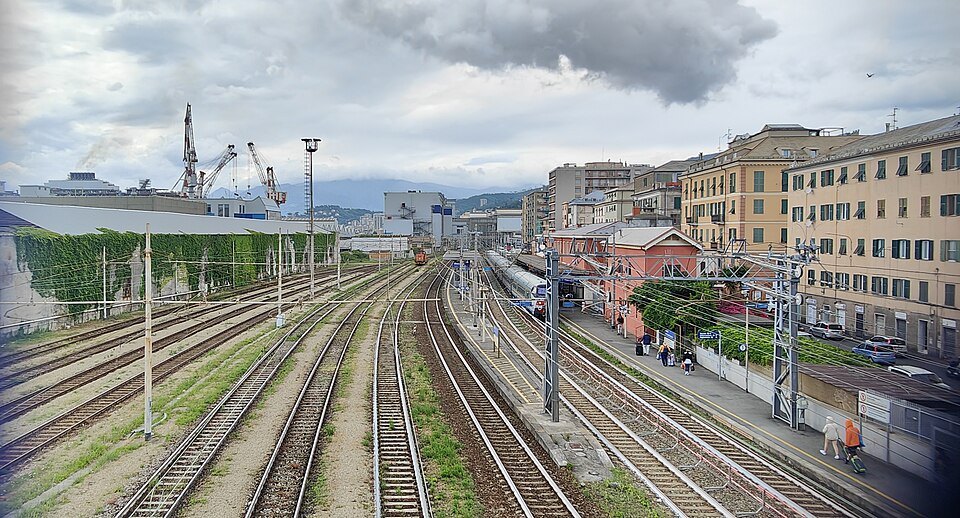
The two are joined by the metro in four minutes and by frequent buses, so arriving at the wrong one costs very little. Long-distance trains generally call at both; check which your ticket names.
Both stations have left luggage, and there are independent storage points around them as well — useful on a day when you arrive early or leave late.
Principe is the older and grander of the two, with a colonnaded hall and a square in front of it that has the Columbus monument at its centre. Brignole is the more useful for regional trains and sits directly on the city's main shopping axis.
Neither station is a place to linger. Both are surrounded by ordinary city — bus stands, hotels, traffic — and the parts of Genoa worth your time begin a few streets away in each case.
The airport and the bus in
The airport is close, which is unusual, and awkward, which is not: it sits on reclaimed land beyond the container port, with no rail link of its own.
The Volabus is the practical answer. It runs from outside the terminal to Piazza Principe and on to Brignole in about half an hour, roughly every half hour through the day, and the ticket includes an hour on the buses and metro afterwards.
Taxis are metered and take fifteen to twenty minutes in normal traffic. There is no cheaper option that is meaningfully faster.
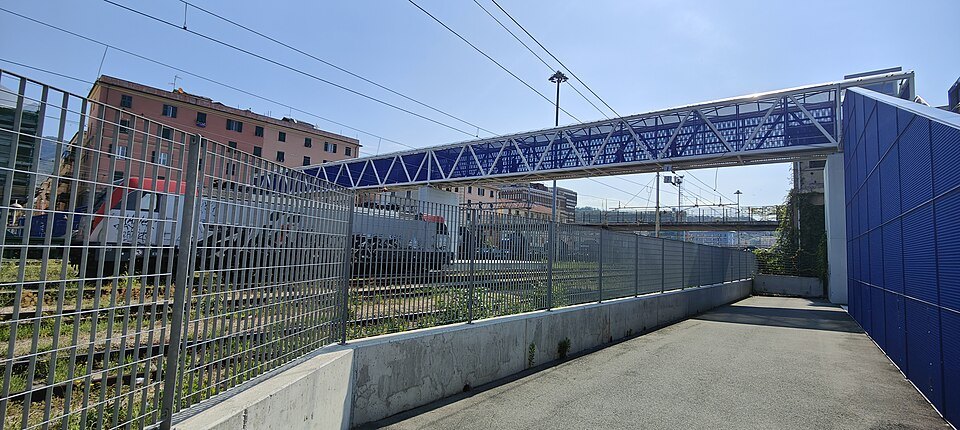
For long-haul flights, most travellers arrive at Milan and take the train down; the connection is straightforward and the journey is under two hours from Milan Centrale.
The airport is named after Christopher Columbus, who was born in the city, and it is built on an artificial peninsula beside the container terminals, so the approach by air is over cranes and ships. Seats on the left coming in from the east give the whole city at once.
Because the airport is small, connections are limited outside the summer season, and Genoa is often cheaper to reach by flying to Milan or Pisa and taking a train along the coast.
Arriving by sea
Few Italian cities are still entered from the water by ordinary travellers, and Genoa is one of them. The ferries for Sardinia, Sicily, Corsica, Tunisia and Barcelona leave from the Stazione Marittima and the terminals around it.
The approach into the port is the best introduction the city offers: the hills, the stacked buildings, the Lanterna on its rock, and the cranes.
Cruise ships dock alongside, at Ponte dei Mille. From either terminal the old town is a walk of fifteen or twenty minutes, or a short ride on the metro from Dinegro.
The ferries are working transport rather than cruises: lorries, families, motorbikes and deck passengers, sailing mostly overnight. They are also the cheapest way to reach Sardinia or Sicily with a car.
If you arrive on a cruise ship for a day, the shape of a good visit is fixed by geography: the old town and the cathedral are twenty minutes on foot, and the Porto Antico is between the two.
Arriving by road
The motorways arrive above the city and come down to it on long viaducts, which is spectacular and slow in the rush hour. The Sopraelevata, the elevated road along the waterfront, carries traffic past the old port.
Once you are here, a car is a liability. The historic centre has no road access to speak of, restricted-traffic zones cover much of the rest, and street parking is scarce and complicated.
The sensible pattern is to park in a garage for the duration — the Porto Antico and Piazza della Vittoria have the largest — or to keep the car outside the city and come in by train.
A car earns its keep only for the coast and the hills: the Riviera villages, the passes behind the city, and the day trips described on the day trips page.
The viaduct that replaced the Morandi bridge, opened in 2020 as the Ponte Genova San Giorgio, carries the western approach. It is a reminder that this city's road network is built on structures, and that they are maintained under pressure.
The first hour
Whatever way you come in, the first thing to do is get above the city. The lift to Castelletto or the Bigo at the old port both take ten minutes and turn a confusing place into a legible one.
Buy a day ticket for the urban network at a tobacconist or on the app; it covers buses, the metro, the funicular and the public lifts, which in this city is a genuine advantage.
If you are staying in the old town, take a photograph of the street sign nearest your door. The alleys are numbered in two colours — red for commercial premises, black for residential — and finding an address here is a skill.
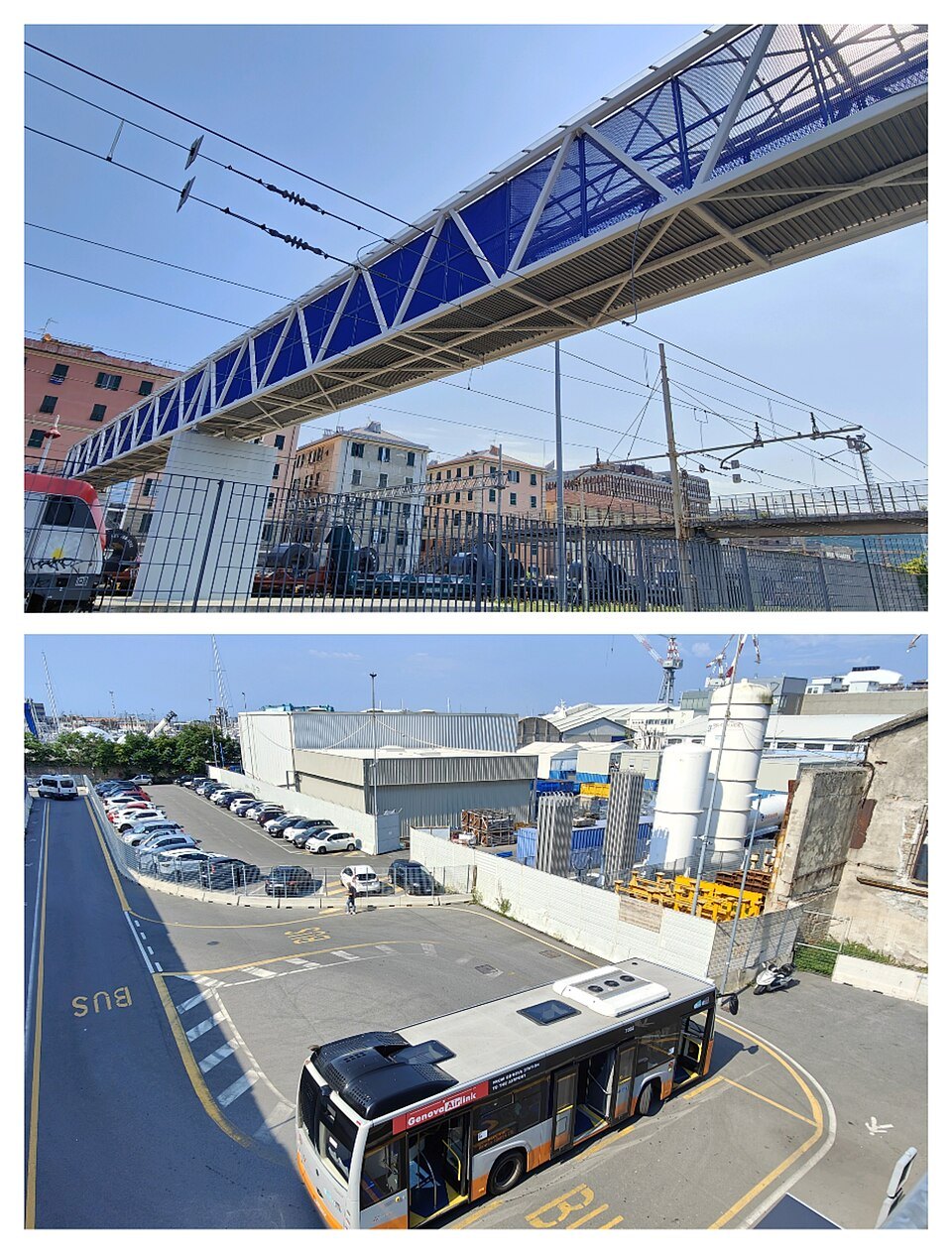
Leave any expectation of a grid behind. Genoa's streets follow the contours and the watercourses, the old town is medieval in plan, and a map that works in Turin will not help here. The vertical transport is the key to the city, and the lifts are on the same ticket as the buses.
Services we link to
Some links on this page are affiliate links. If you book through one we may earn a commission, at no extra cost to you. It does not affect what is recommended here, and no sight page on this site carries one.
Arranged before you land:
More photographs
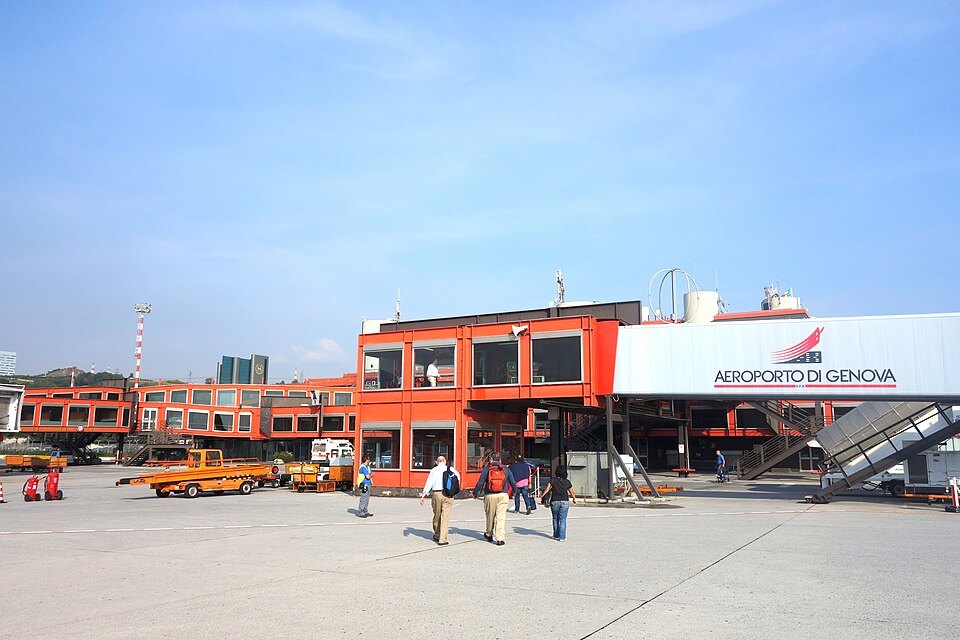
The terminal building at Genoa airport, with the apron in frontDaderot, Wikimedia Commons, CC0 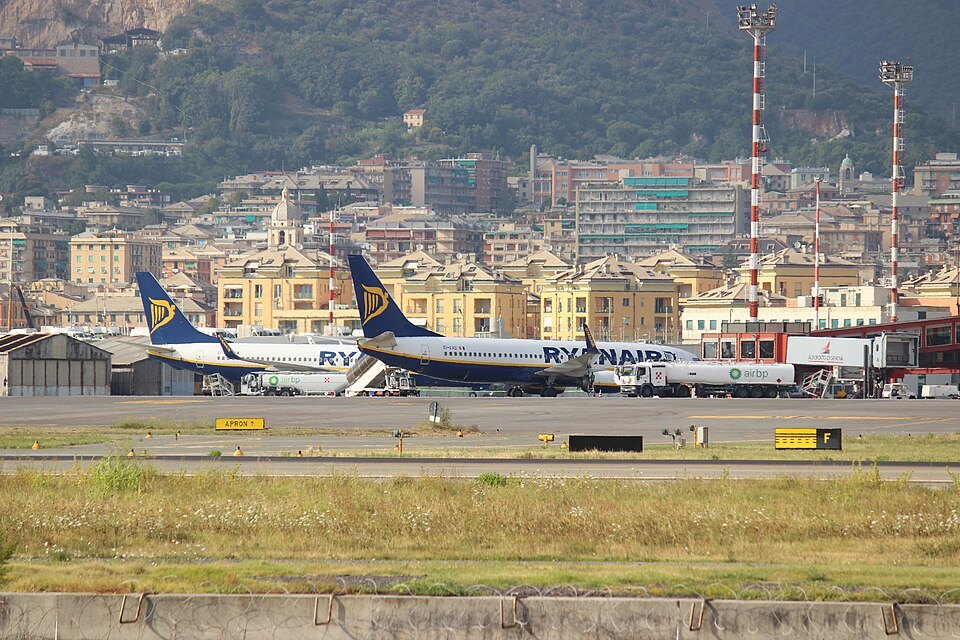
Aircraft at Genoa airport, the city and the hills rising behindAlessio Sbarbaro User_talk:Yoggysot, Wikimedia Commons, CC BY-SA 3.0