The sights, by the level they stand on
On the water
The rebuilt old port, the aquarium, the sea museum and the lighthouse at the harbour mouth.In the medieval maze
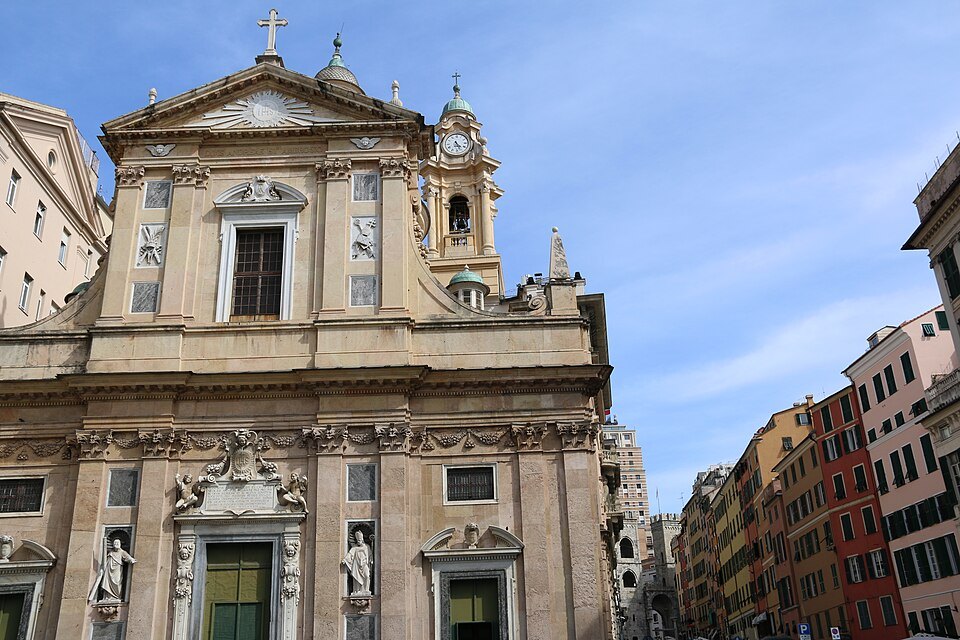
The cathedral, the doges' palace, the Doria square, the Jesuit church and the gate of the old walls.The palace streets
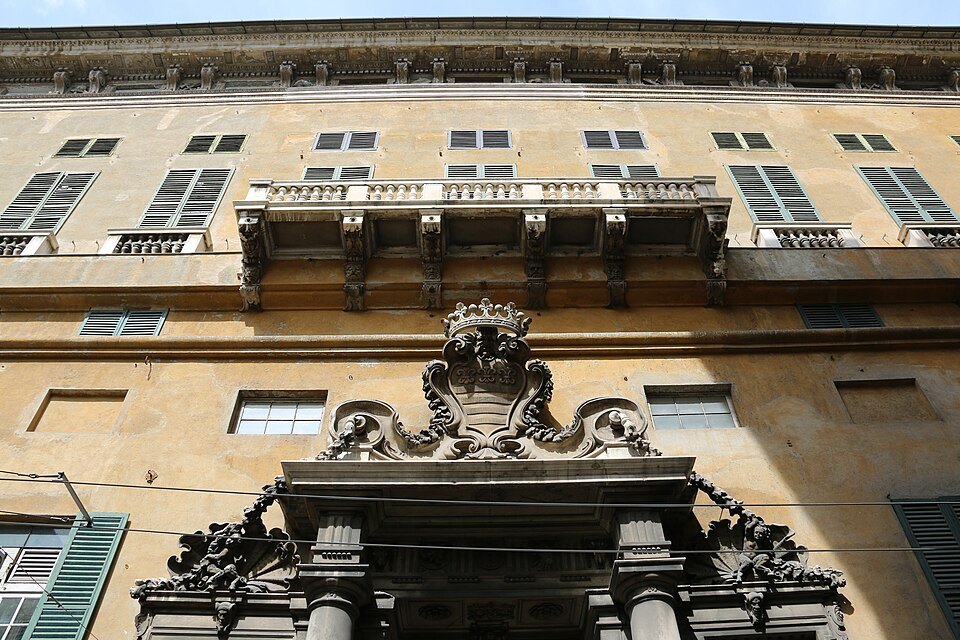
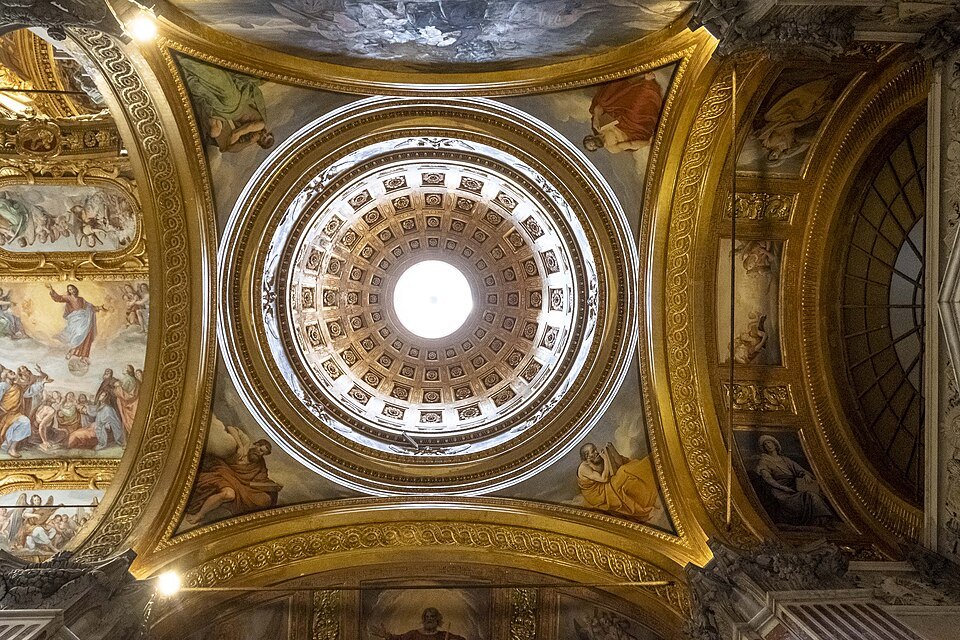
Via Garibaldi and the Strada Nuova museums, the royal palace on Via Balbi, and the gilded Annunziata.Up the hills
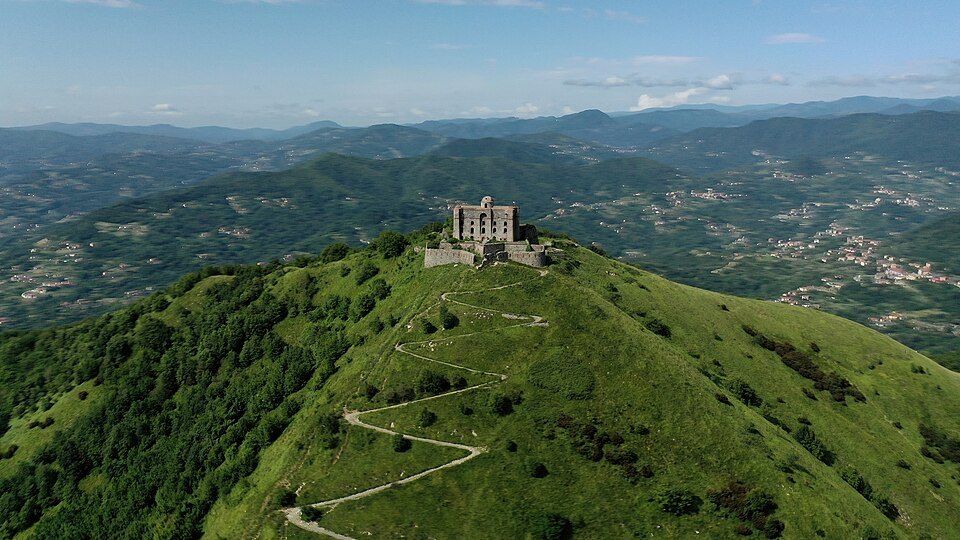
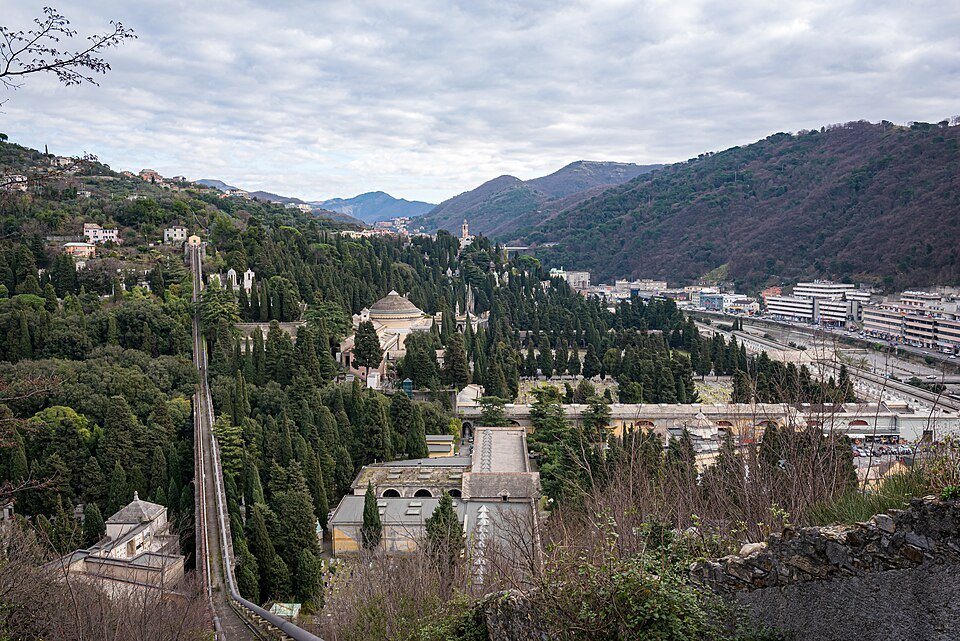
The terrace at Castelletto, the funicular to the walls and forts, and the marble cemetery up the valley.Along the east shore
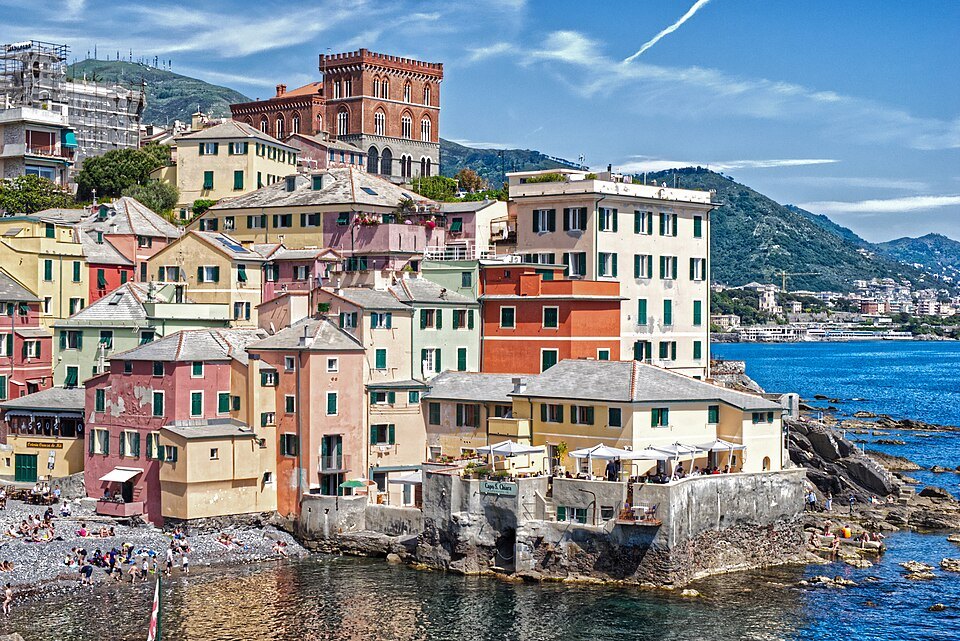
The fishing cove at Boccadasse and the cliff walk and villa parks at Nervi.
The Sights in detail
How to use this list
Genoa is stacked rather than spread, and the eighteen pages here are grouped by the level each sight stands on. That is not a filing convenience: it is the practical way to plan, because moving between levels costs time and moving along one costs almost none.
Each page says what the place is, what you actually see, how long to give it and what to combine it with, and each one is honest about what is a reconstruction and what is not.
No page quotes an admission price or an opening time. Those change, and the operator is the only source that is right on the day you travel.
There are eighteen pages because eighteen places genuinely repay a visit of their own. Genoa has many more churches, palaces and viewpoints than that, and several of them are mentioned inside these pages rather than given a page of their own — the Spinola gallery, Santa Maria di Castello, the Biosfera, the villa parks at Pegli.
The order within each group is geographic rather than ranked. Nothing here is a top ten, and the sight most visitors remember is often the lift, the market or the walk along the harbour rather than a monument.
Every photograph on these pages comes from Wikimedia Commons and is credited on the page it appears on, with the photographer and licence named.
On the water
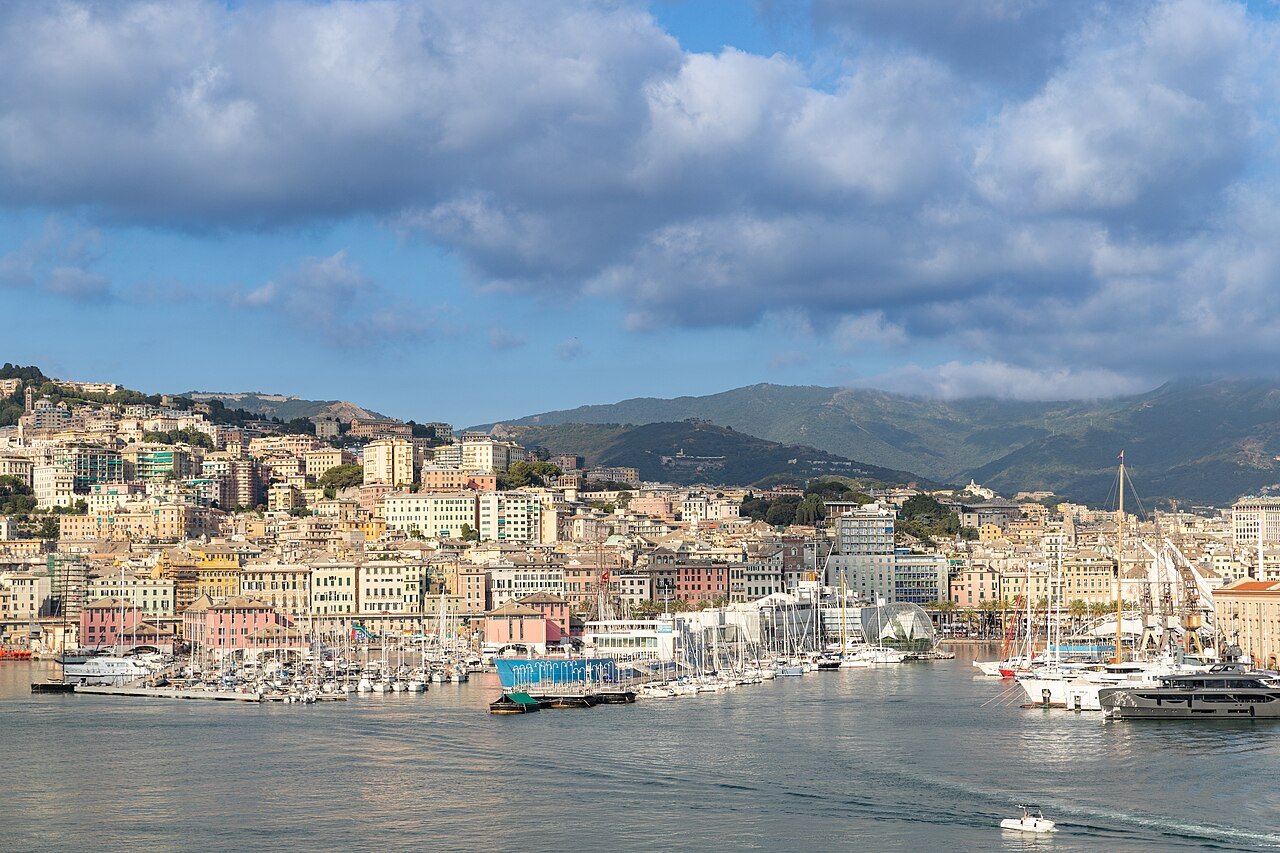
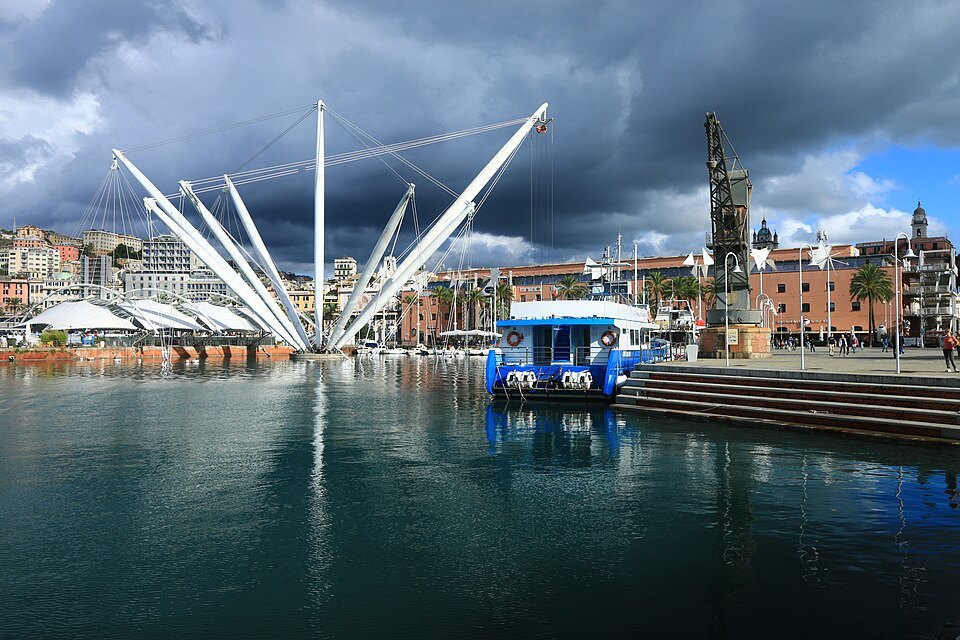
The old port is where most visits begin: a rebuilt waterfront with the aquarium, the sea museum and the Bigo lift along one quay.
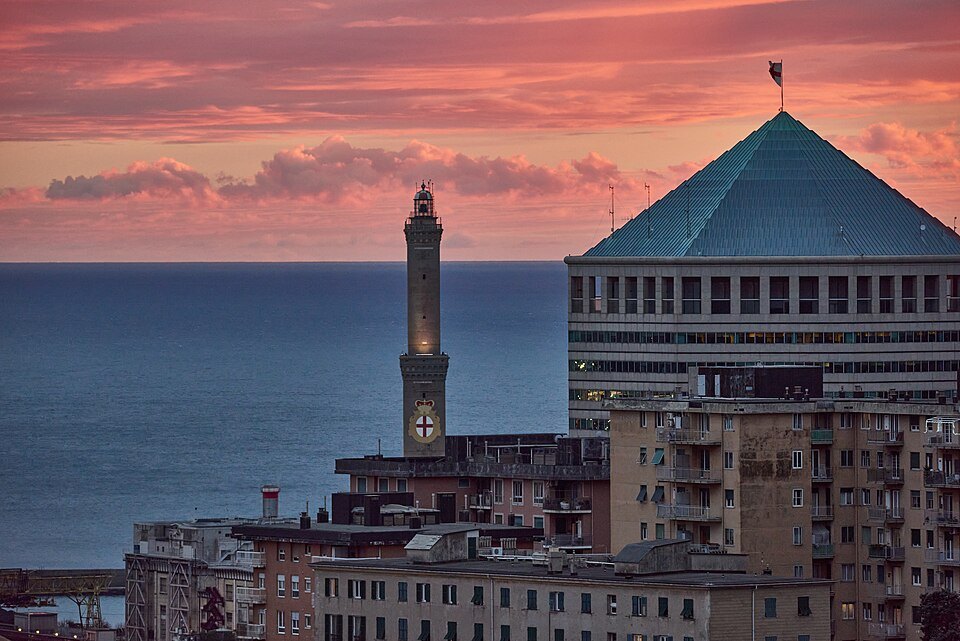
West of it, past the ferry terminal, the Lanterna stands on its rock at the harbour mouth, reached by a walkway along the old walls above the working docks.
This is the flattest part of the city and the easiest half-day, and it is the layer that explains all the others: everything Genoa built was paid for by what happened here.
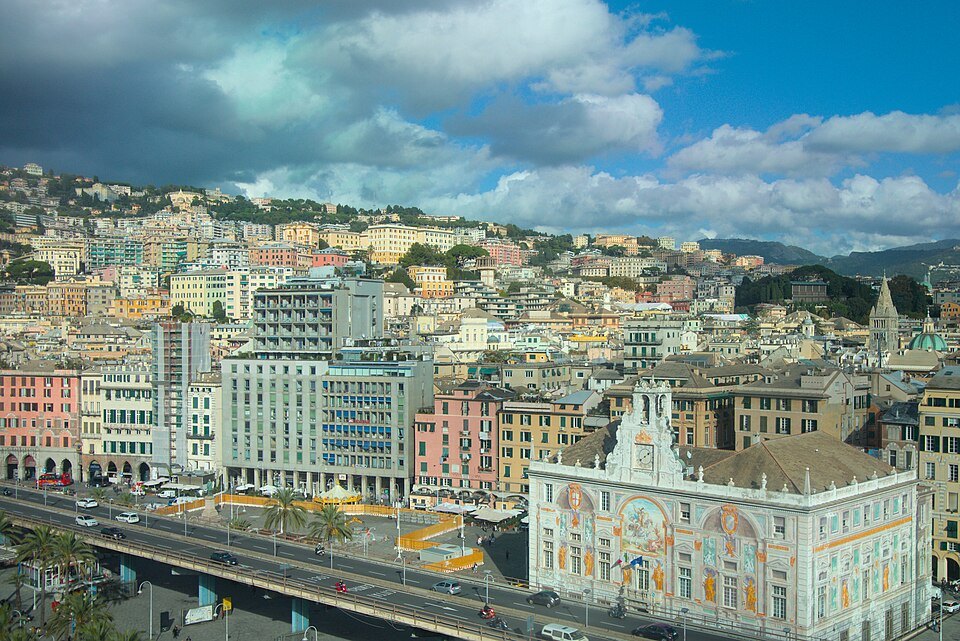
Two things to know before you go down there. The waterfront is rebuilt, not preserved — the docks were reopened to the city for Expo '92 — and the working port is still immediately west, which is why the view includes cranes.
The quay is also the only genuinely flat walking in the centre, and the one part of the city that is easy with a pushchair or a wheelchair.
In the medieval maze
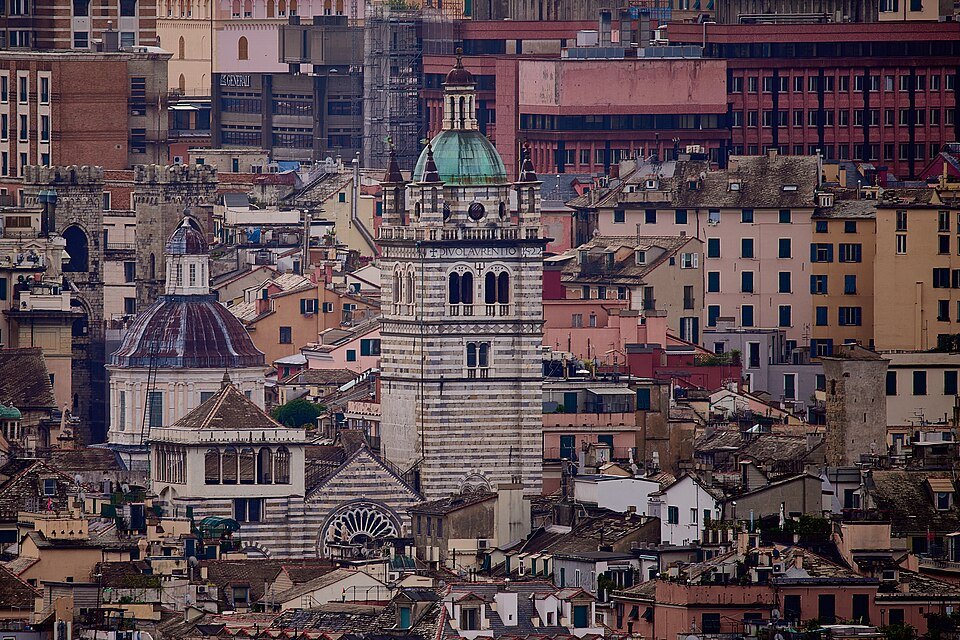
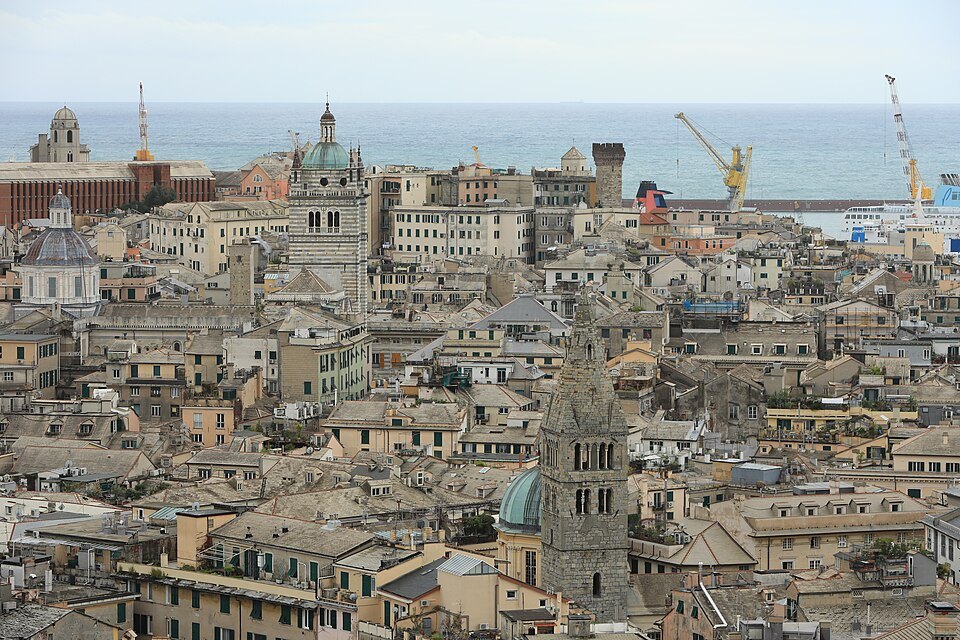
Behind the quay the lanes begin. The cathedral is inside them rather than on a square of its own, and so are the Doria square and the Jesuit church.
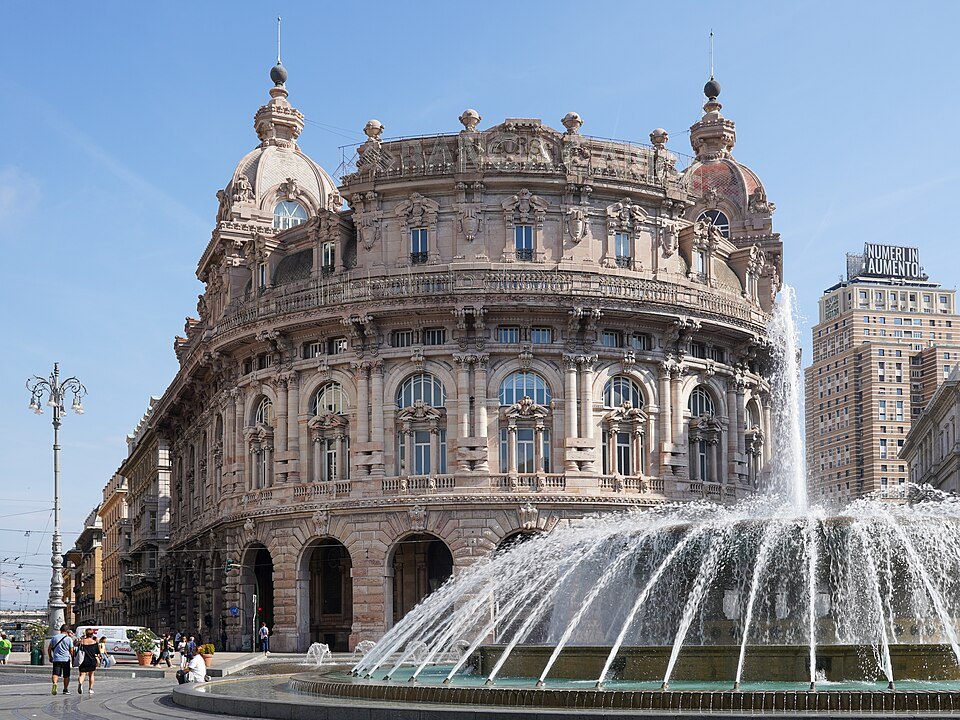
The Palazzo Ducale sits on the edge of the maze facing Piazza De Ferrari, which is where the medieval city ends and the nineteenth-century one begins.
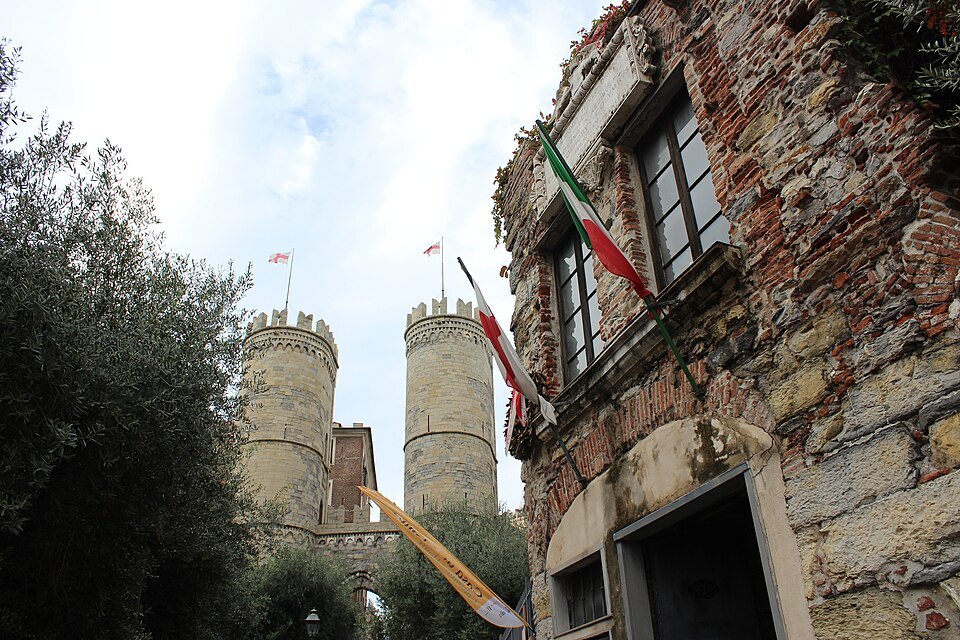
At the top of the rise, Porta Soprana keeps the gate of the twelfth-century walls, with the house tradition gives to the Columbus family below it.
The maze is a residential quarter, not a museum district: shops, homes, deliveries by hand-cart, and churches that shut for lunch. Walking it is described on the caruggi page, which is the one to read before you set off.
Distances inside it are tiny — the cathedral, the Doria square and the Ducale are within five minutes of each other — but the lanes will not let you walk straight between them, and that is the point.
The palace streets and the hills
A level above the lanes are the streets the banking families built for themselves: Via Garibaldi with its three museum palaces, the royal palace on Via Balbi, and the Annunziata between them.
Above those, the hills. The lift to Castelletto reaches the terrace over the old town in a minute; the funicular to the Righi reaches the seventeenth-century walls and the forts along the ridge.
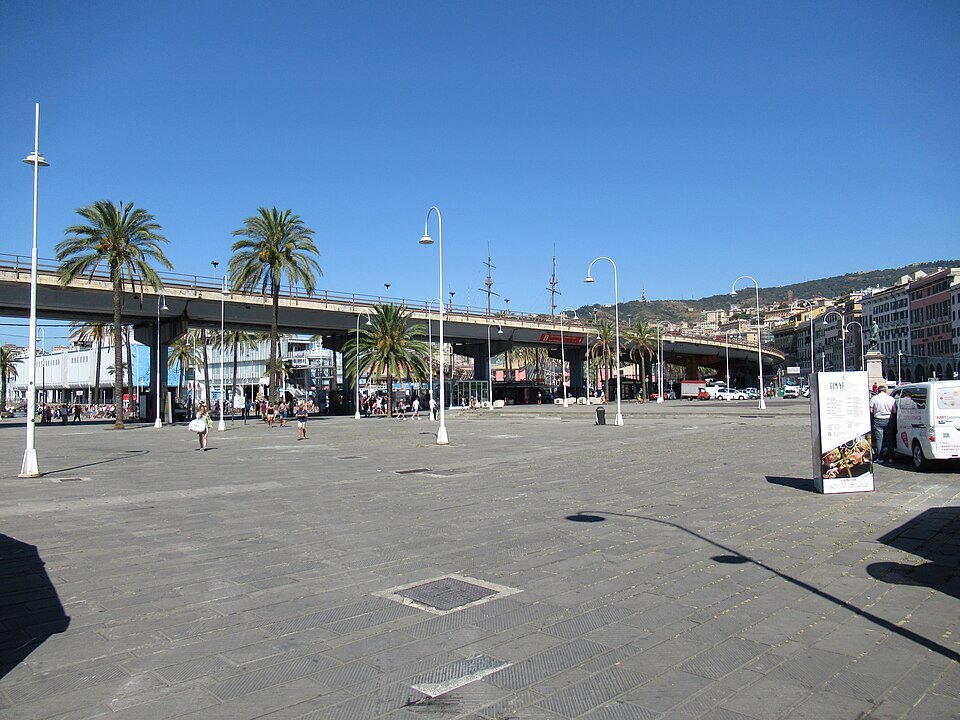
Up the valley behind the city, Staglieno is a square kilometre of monumental sculpture and the least expected sight in Genoa.
The palaces keep museum hours and shut on one day a week; the hills keep none at all. If the forecast is good, put the ridge and the terraces first and leave the interiors for the afternoon or the rain.
Along the shore
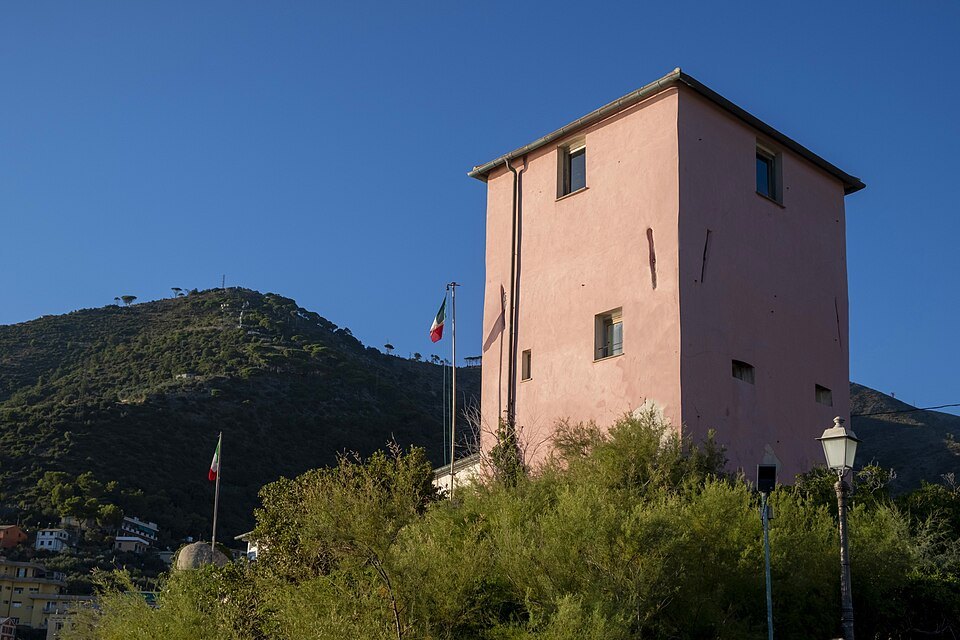
East of the centre the seafront runs out to Boccadasse, a fishing cove of painted houses inside the city, and further east to Nervi, with its cliff path and villa parks.
Both are reachable by bus or train in half an hour and both are places to sit down rather than to tick off, which is why they belong at the end of a day rather than the start.
In summer both shore sights double as swimming: pebbles at the cove, rock platforms along the cliff walk. Neither has sand, and neither needs a ticket.
If you only do three things
Walk the lanes from Via Garibaldi down to the harbour, taking in the cathedral on the way. That single line contains most of what makes the city unlike anywhere else.
Go up. The Castelletto lift is a minute and changes how you read everything you have walked past.
Eat standing up in a fried-food shop in the old town, and then sit down somewhere at the water in the evening. Genoa is a working port that happens to be beautiful, and both halves are worth your time.
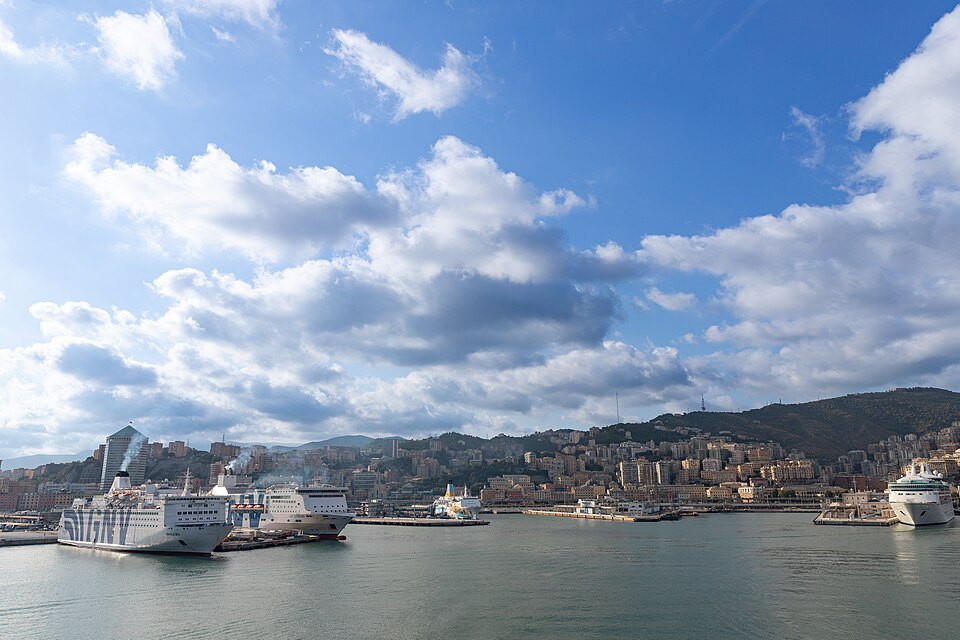
One warning about photography, since it decides where people go: the famous view of Genoa is from above, and the light on the old town is best in the late afternoon from the terraces on the hill. The harbour is better in the morning, when the sun is behind you at the quay.
More photographs
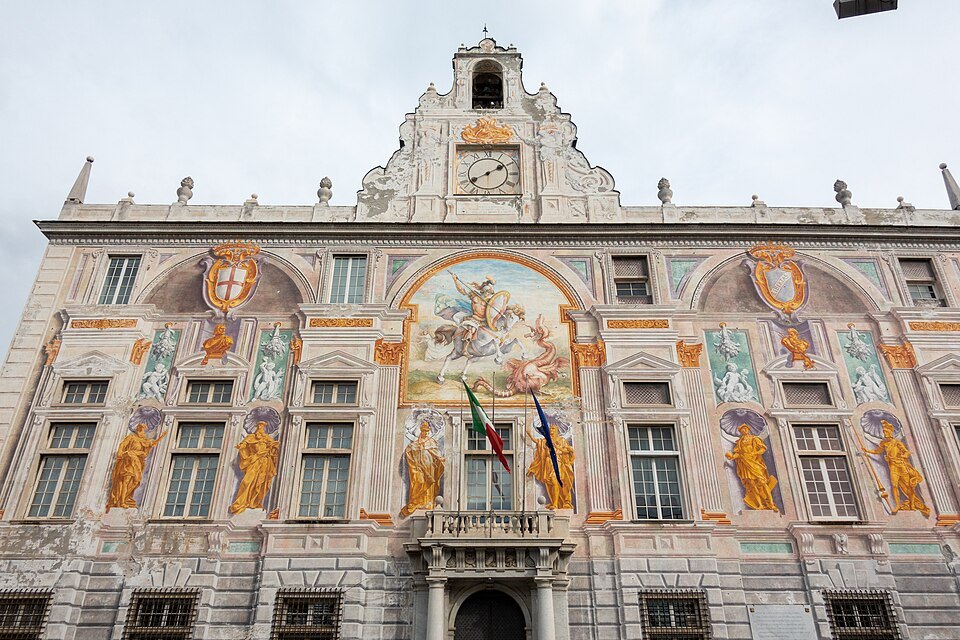
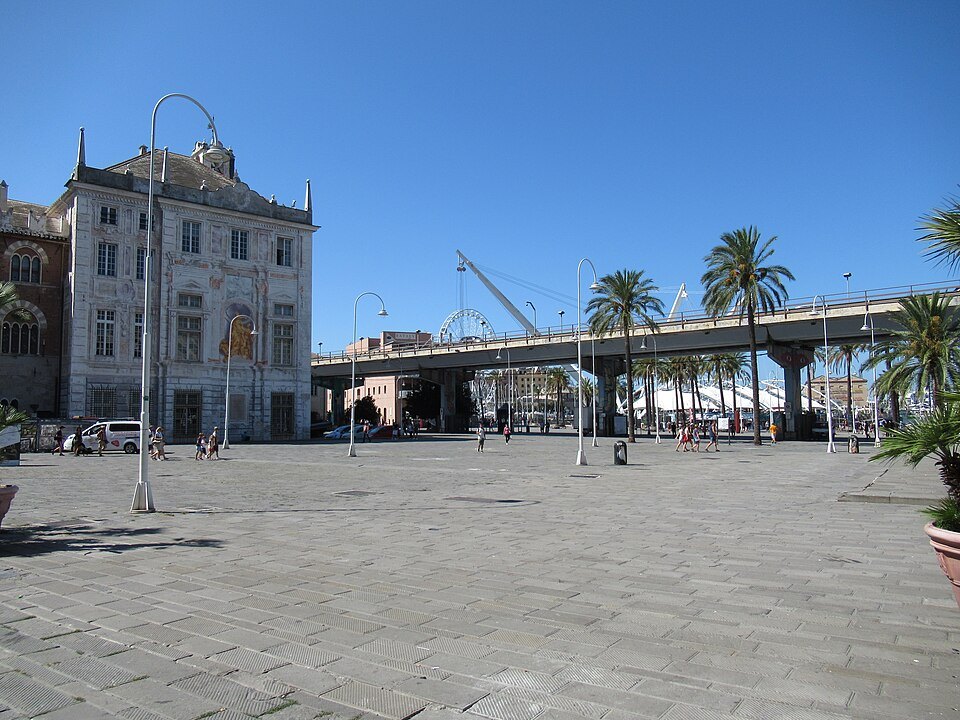
The frescoed front of Palazzo San Giorgio at the old portKent Wang from Barcelona, Spain, Wikimedia Commons, CC BY-SA 2.0 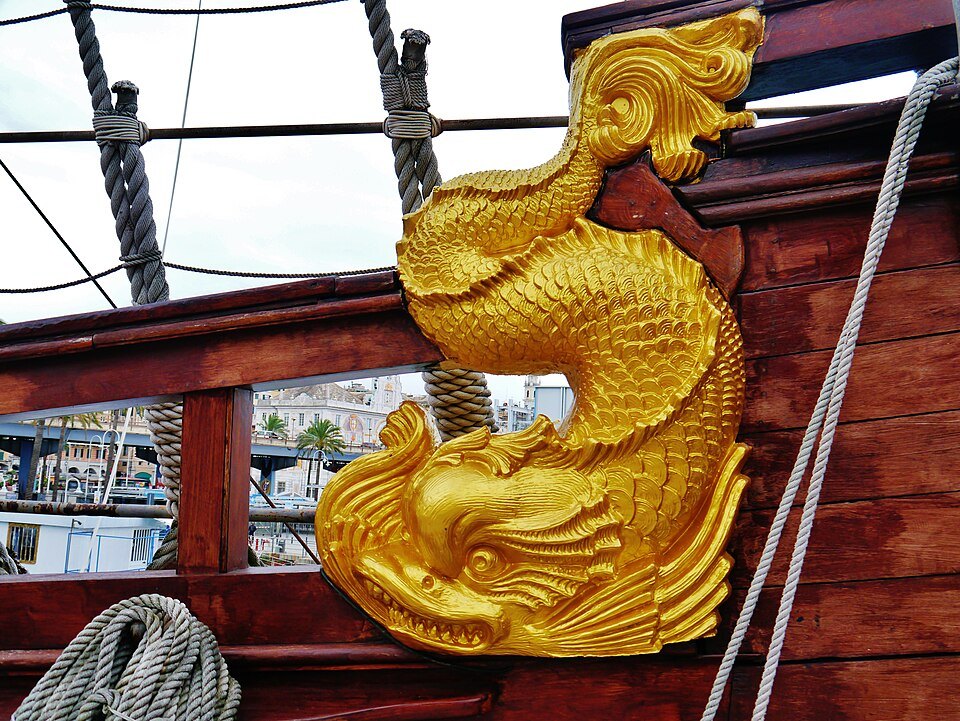
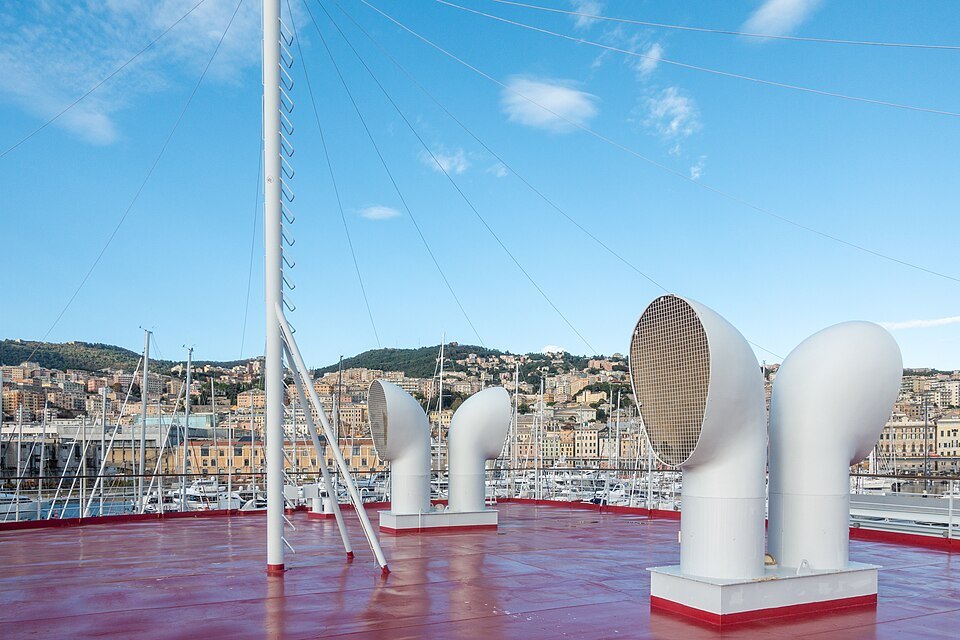
The gilded dolphin figurehead of the Neptune galleon at the old portZairon, Wikimedia Commons, CC BY-SA 4.0