Read the city
What Genoa is
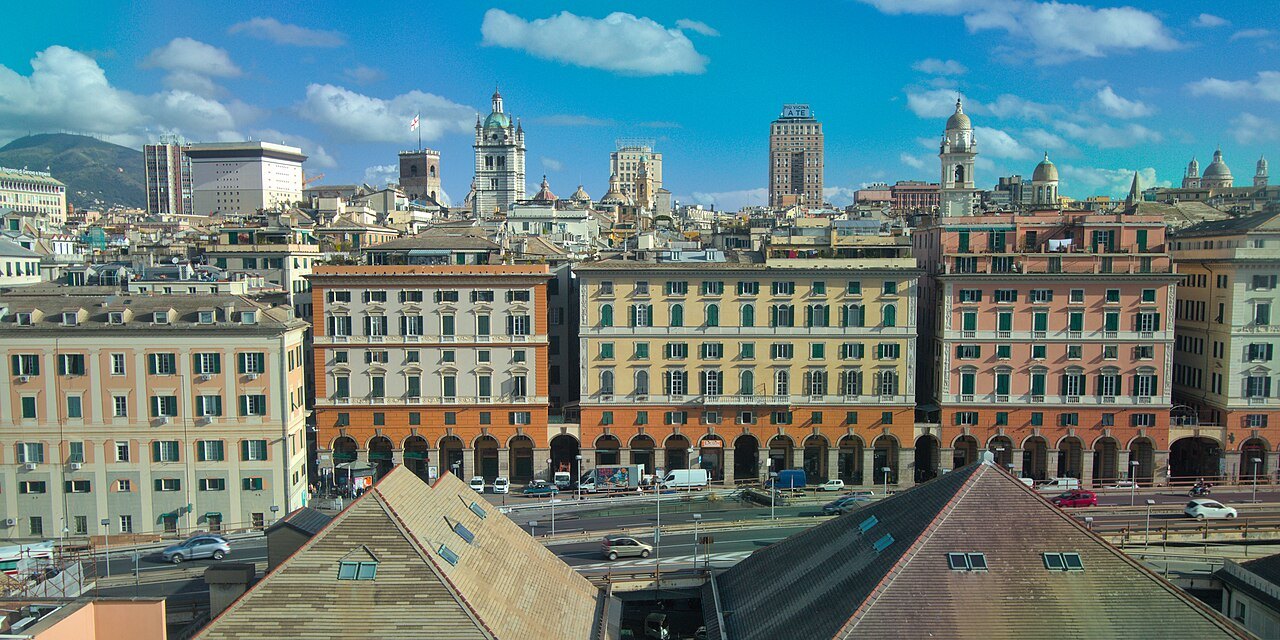
Genoa — Genova in Italian — is a port city of about 566,000 people and the capital of Liguria, on the gulf where the Italian Riviera bends. It is built on a narrow strip between the sea and steep hills, so the city climbs: the medieval center lies along the old harbor, the palace streets sit a level higher, and newer quarters fill the slopes. Deciding between them is most of where to stay. Trains arrive at Piazza Principe and Brignole (getting here), and you get around on foot, by metro, and by public lift.
What you walk past
For more than seven centuries, until 1797, Genoa was the capital of one of the great maritime republics, and Petrarch called it la Superba, the superb one. Its oldest streets are the caruggi, alleys so narrow the sky is a strip overhead. In the 16th and 17th centuries its banking families built new streets of palaces above them; forty-two of those palaces went onto the UNESCO list in 2006 as the Rolli palaces. Rubens drew them for a book published in 1622.
What it is known for
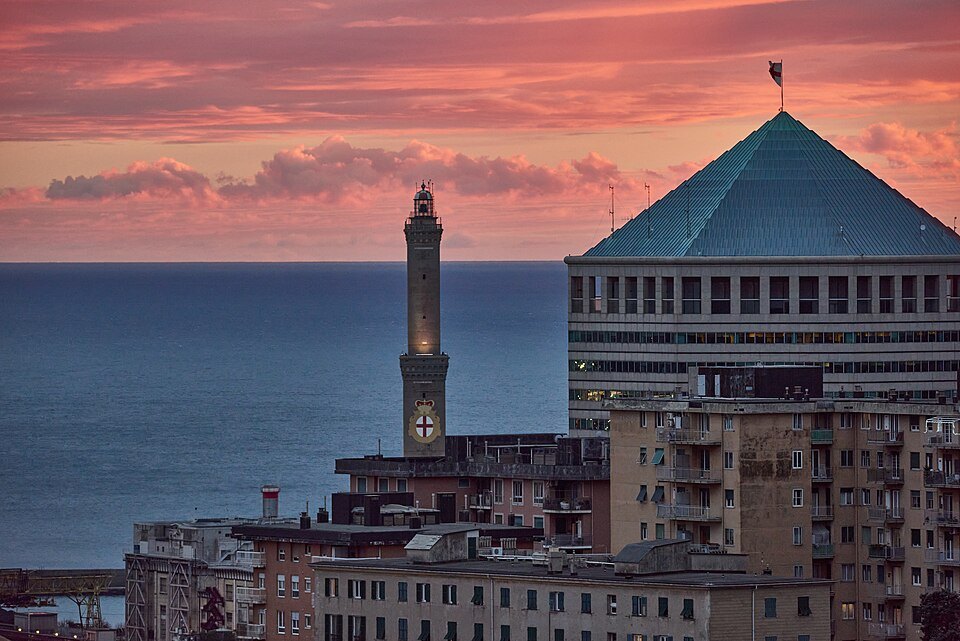
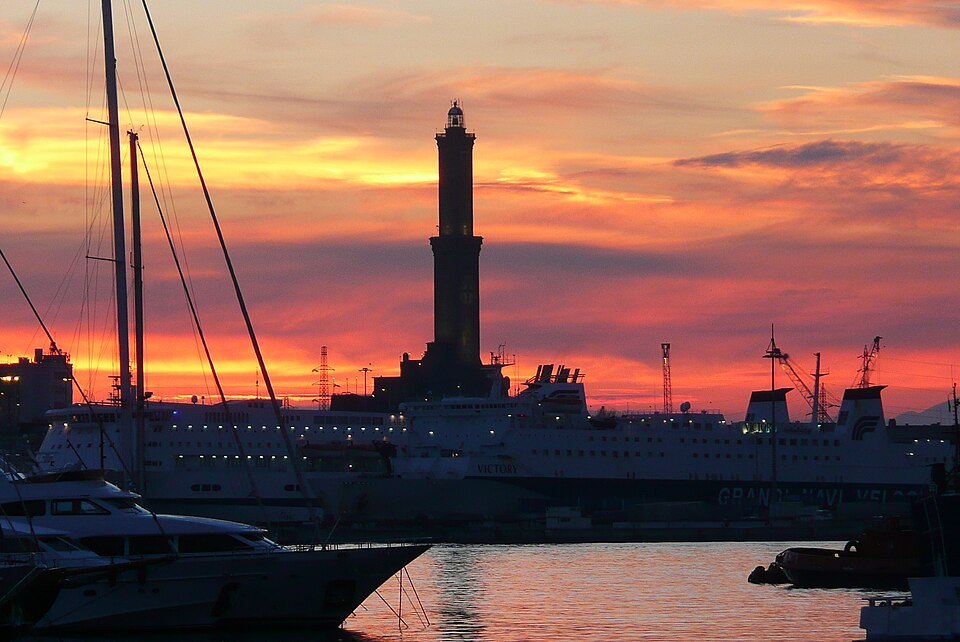
For the Lanterna, the old lighthouse over the port, and the harbor Renzo Piano, who was born here, redesigned for Expo '92. For Christopher Columbus, born in the city, and for Paganini's violin. For pesto, focaccia and farinata (eating and drinking). Begin with the sights, see what is worth booking ahead, pick a season and an itinerary, and keep a day for the day trips along the coast to Camogli and Portofino.
- The Lanterna
- Palazzo Reale and Via Balbi
- Santissima Annunziata del Vastato
- Via Garibaldi and the Strada Nuova Museums
- Spianata di Castelletto
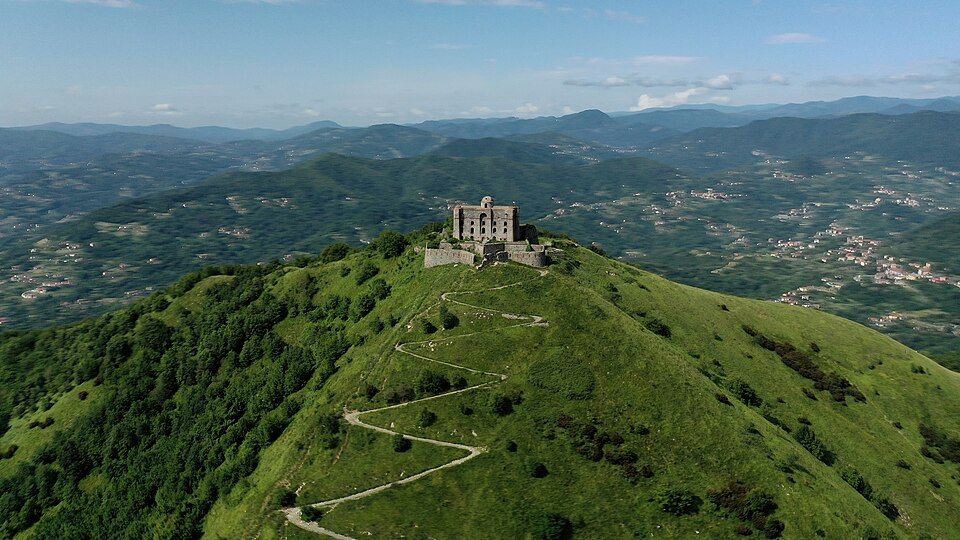
- The Righi Funicular and the Forts
- Piazza San Matteo
- Palazzo Ducale
- Piazza De Ferrari
- Porta Soprana and Columbus's House
- The Church of the Gesù
- San Lorenzo Cathedral
- The Porto Antico
- The Aquarium of Genoa
- Galata Museo del Mare
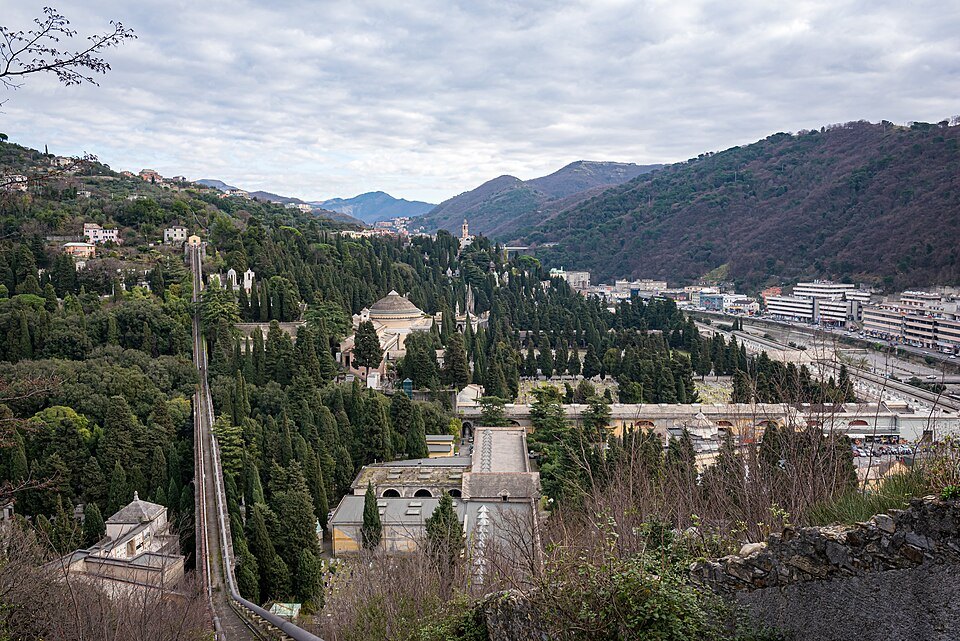
- Staglieno Cemetery
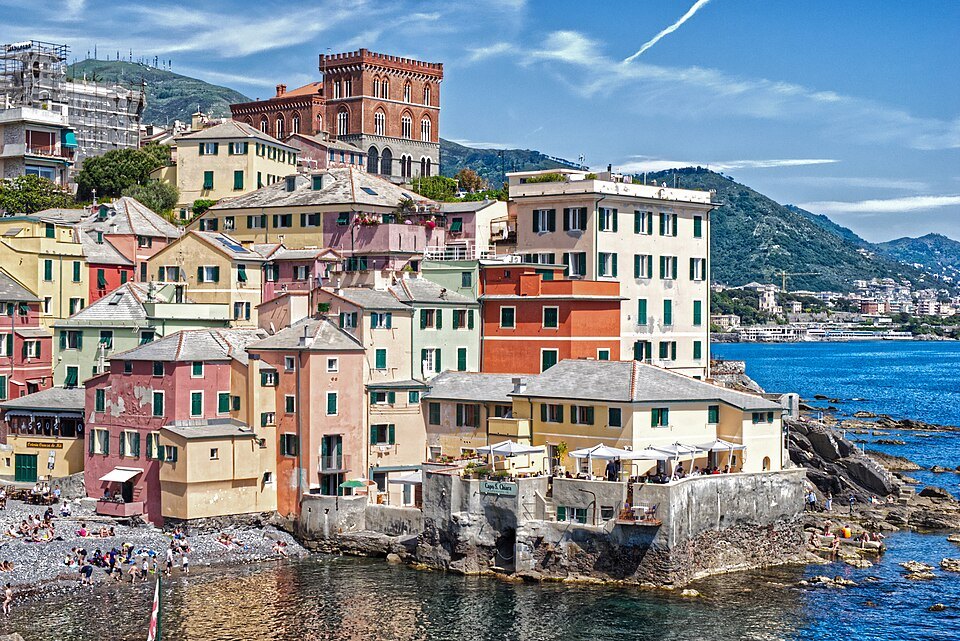
- Boccadasse
- Nervi and Its Promenade
A walk through the city
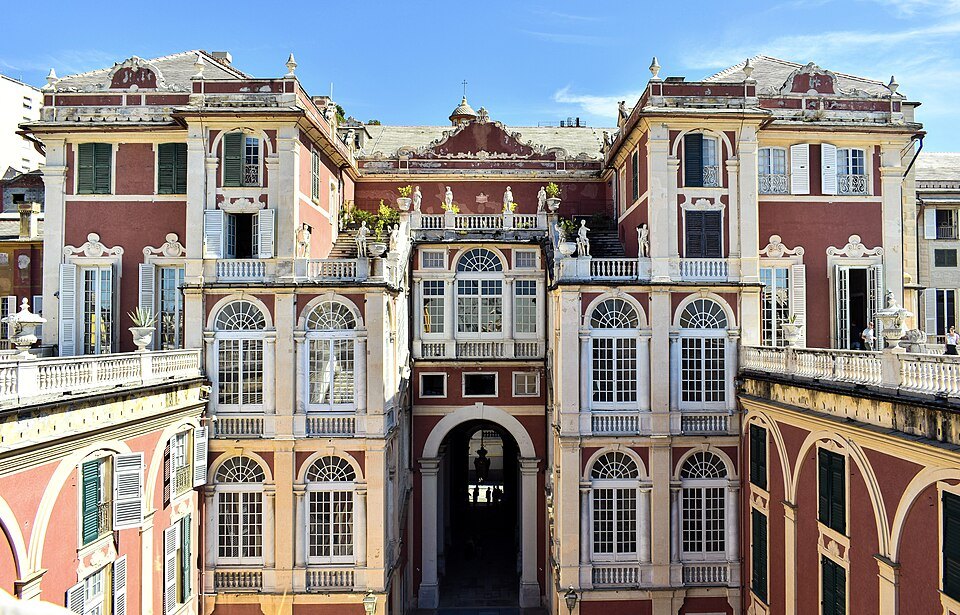
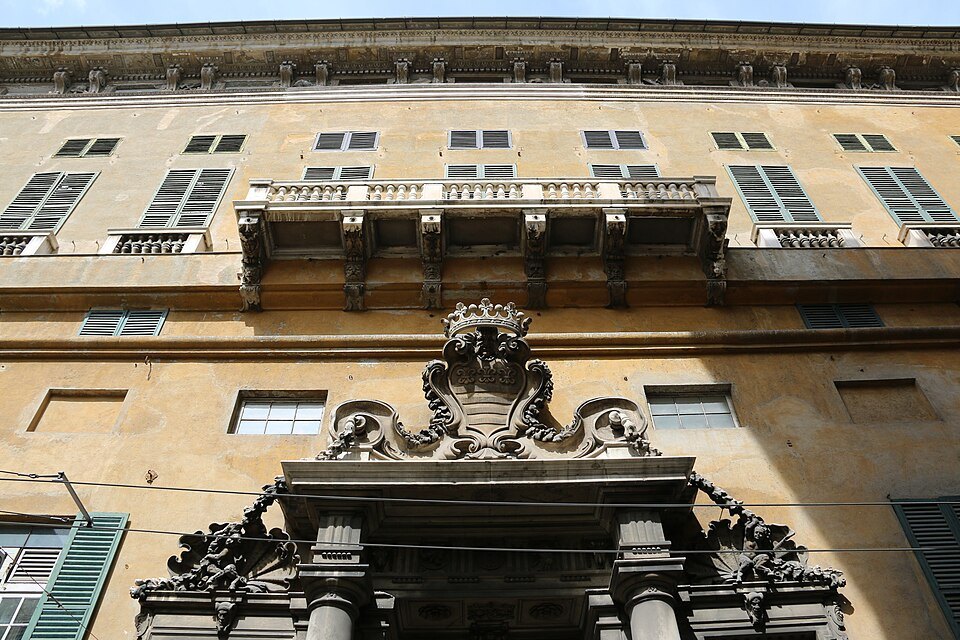
The painted front of the Palazzo Reale seen across its courtyardJulian Lupyan, Wikimedia Commons, CC0 1The street of the Balbi
Start near Piazza Principe station, on Via Balbi, laid out between 1602 and 1620 for the Balbi banking family. The largest of its palaces passed to the Durazzo in 1677 and to the royal house of Savoy in 1823, which is why it is now called the Palazzo Reale; its terrace looks over the port.
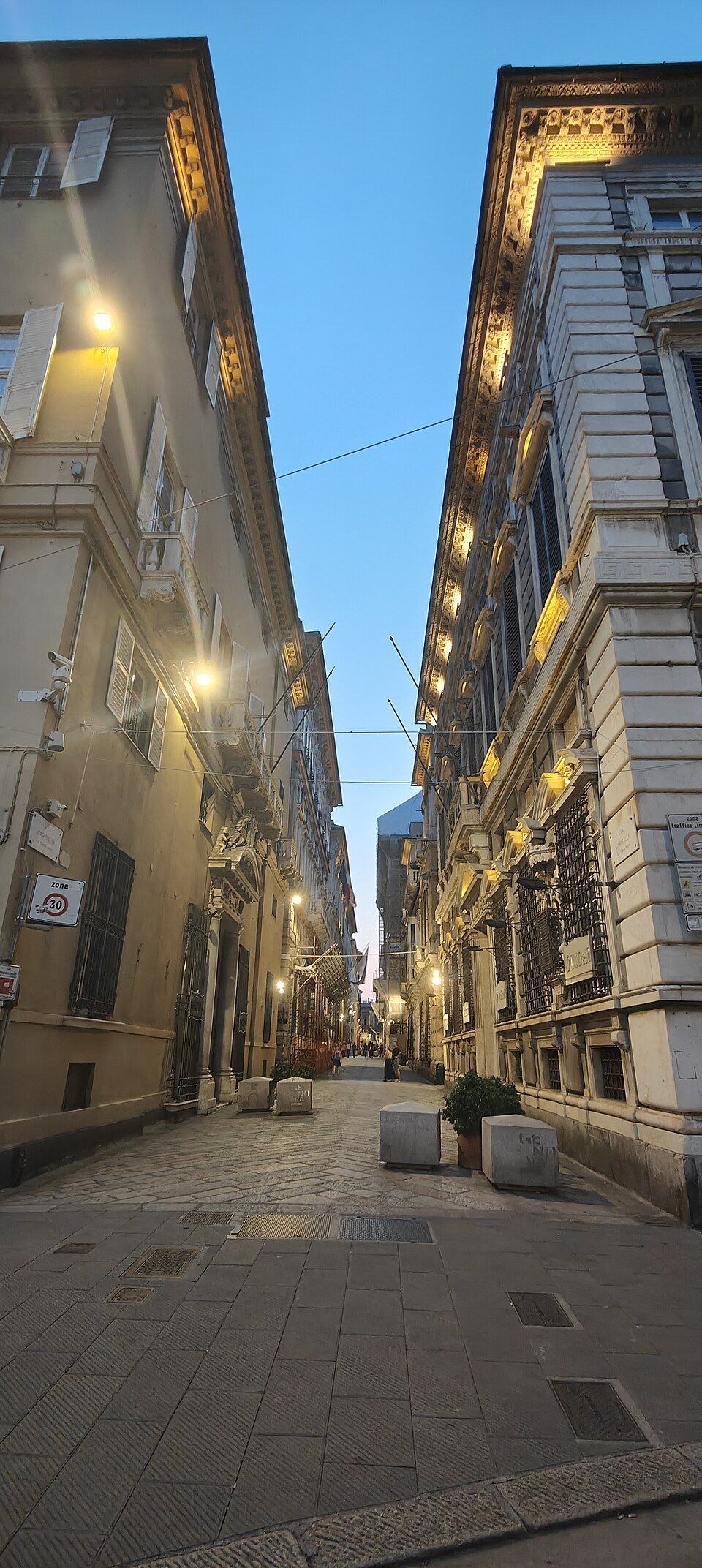
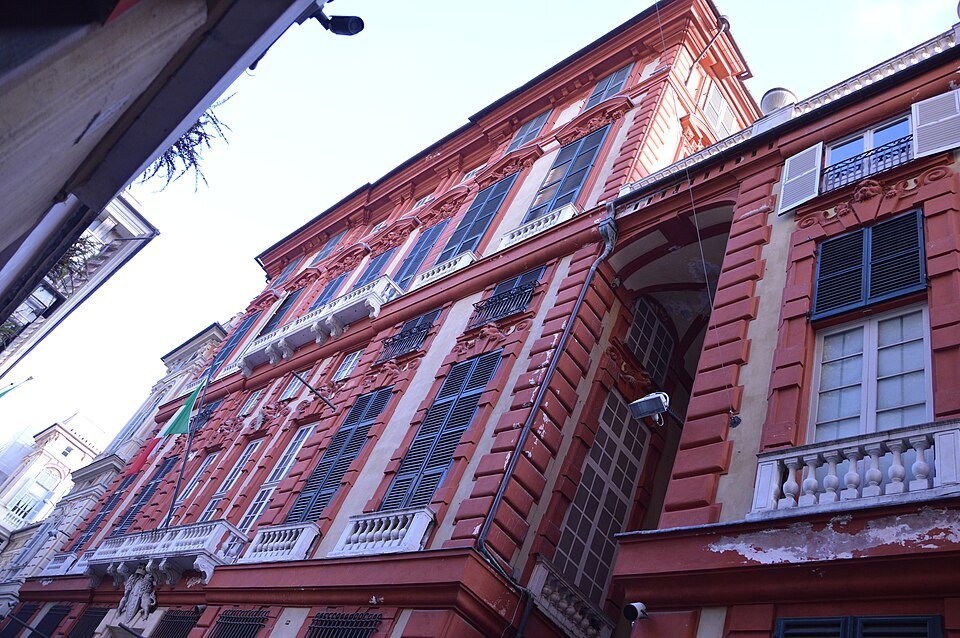
Via Garibaldi running between its palacesAl*from*Lig, Wikimedia Commons, CC BY-SA 4.0 2The Strada Nuova
Past the Annunziata, the lanes lead to Via Garibaldi. The republic sanctioned the street in 1550 and it was built between 1558 and 1583 as the Strada Nuova, the New Street, lined with palaces of the richest families; it took Garibaldi's name in 1882. Three of them, Palazzo Rosso, Palazzo Bianco and Palazzo Tursi, are one museum.
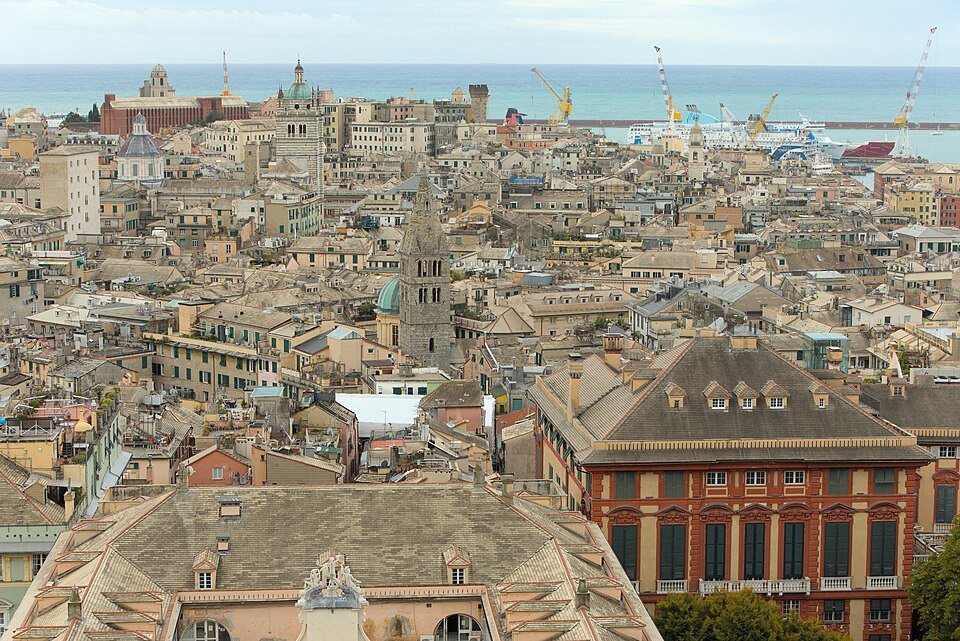
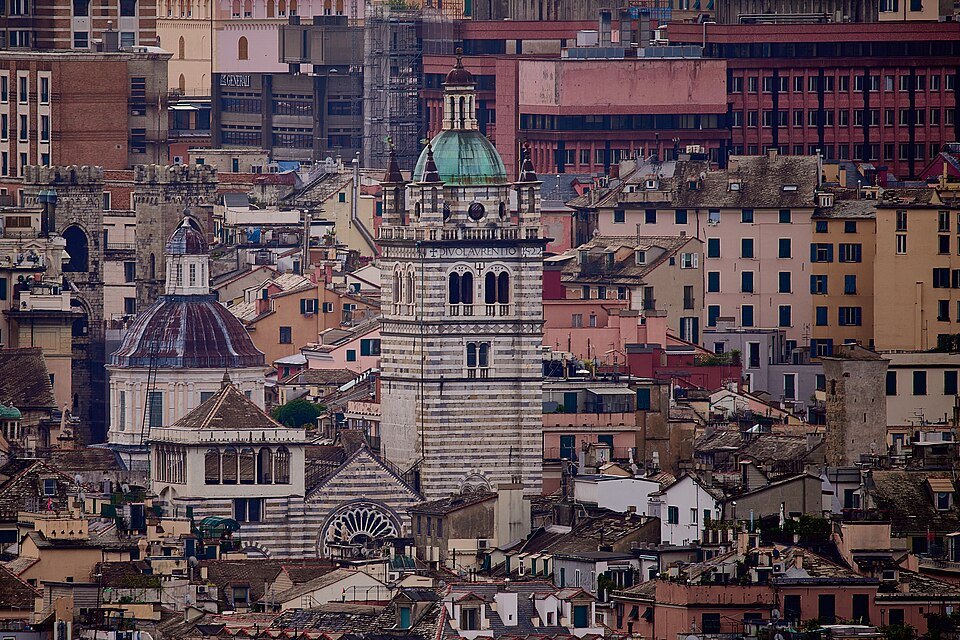
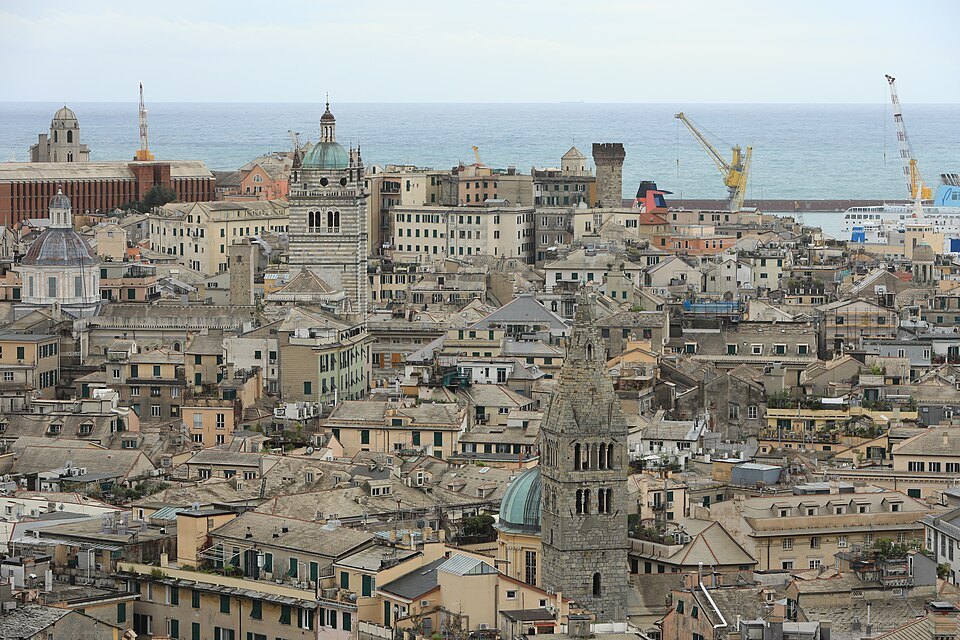
Roofs of the old town below the Belvedere Montaldo at CastellettoBenjamin Smith, Wikimedia Commons, CC BY-SA 4.0 3Up to Castelletto
From Piazza del Portello, just off the street, a public lift climbs to the Spianata di Castelletto, the terrace where a small fort once stood. From the belvedere the roofs of the old town, the domes and the port lie spread out below, with the Lanterna far to the west.
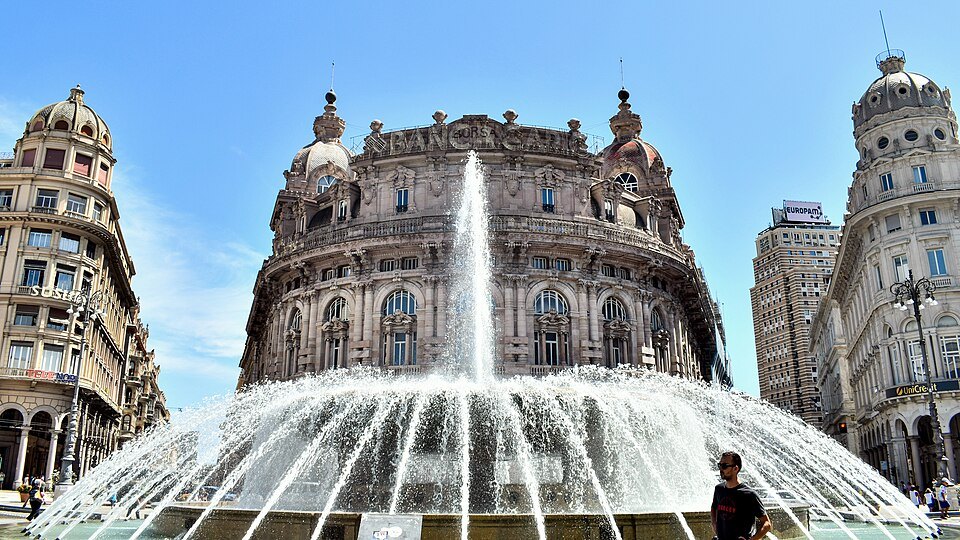
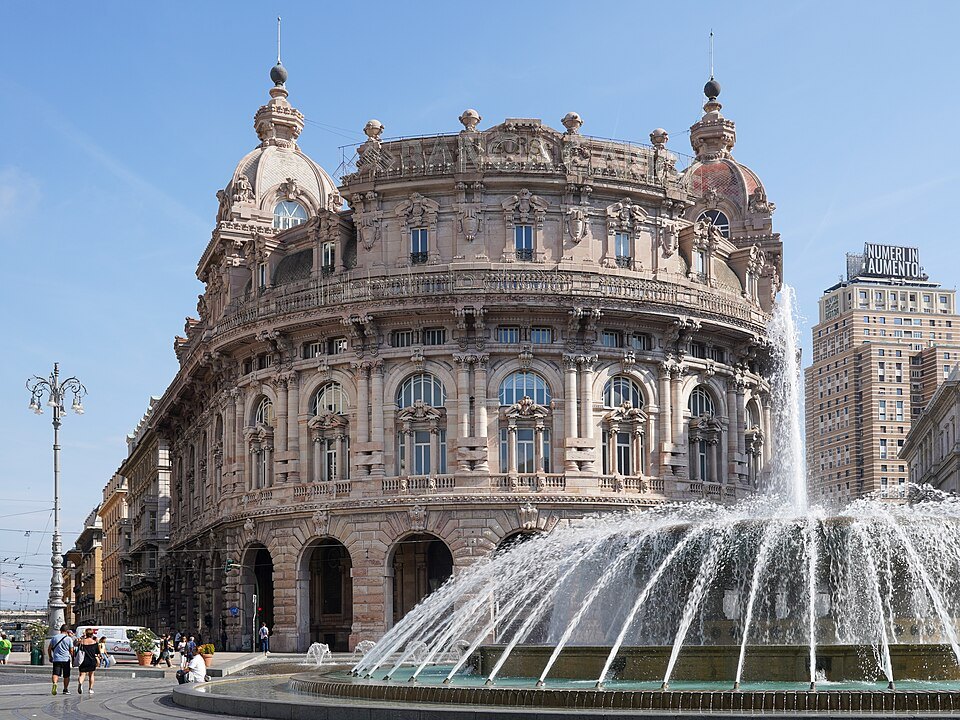
The fountain of Piazza De Ferrari before the domed former stock exchangeJulian Lupyan, Wikimedia Commons, CC0 4The doges' square
Back down, Piazza De Ferrari opens around the bronze fountain built in 1936. One side is the Palazzo Ducale, the palace of the doges from the first in 1339 until the end of the republic; today it is a museum and a center for exhibitions.
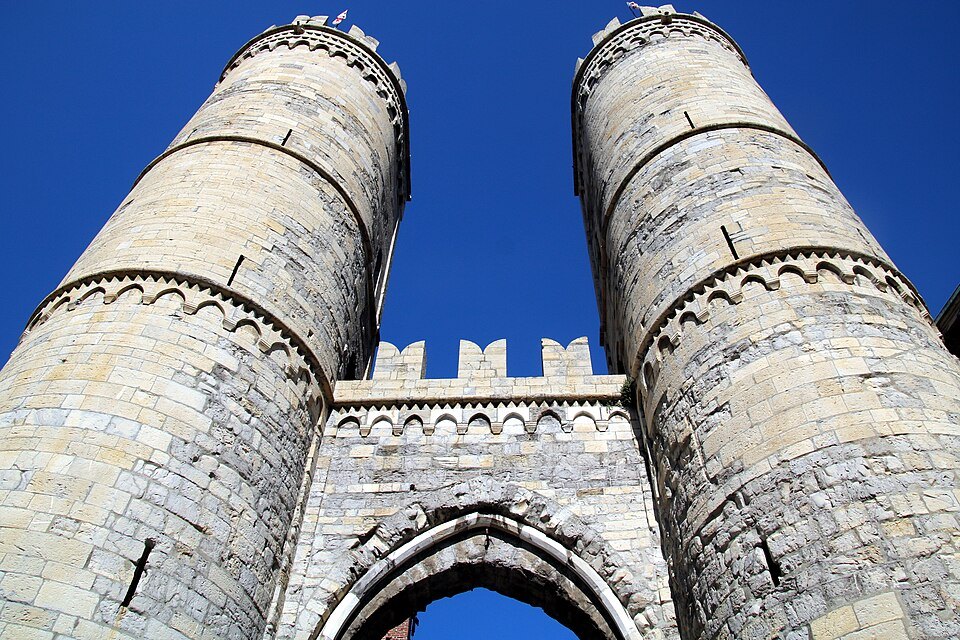
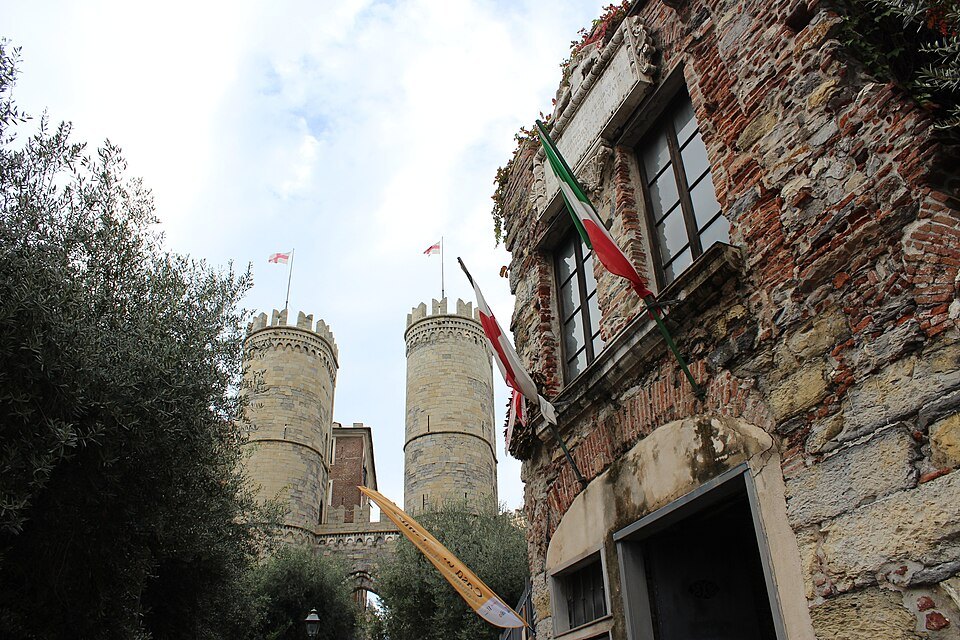
The two towers of Porta Soprana against a clear skyMongolo1984, Wikimedia Commons, CC BY-SA 4.0 5The gate of the walls
A short climb south, the twin towers of Porta Soprana mark the walls the city raised in 1155–1159 against Frederick Barbarossa. Below the gate stands the house tradition gives to Columbus's family — an 18th-century rebuilding of the one where he grew up.
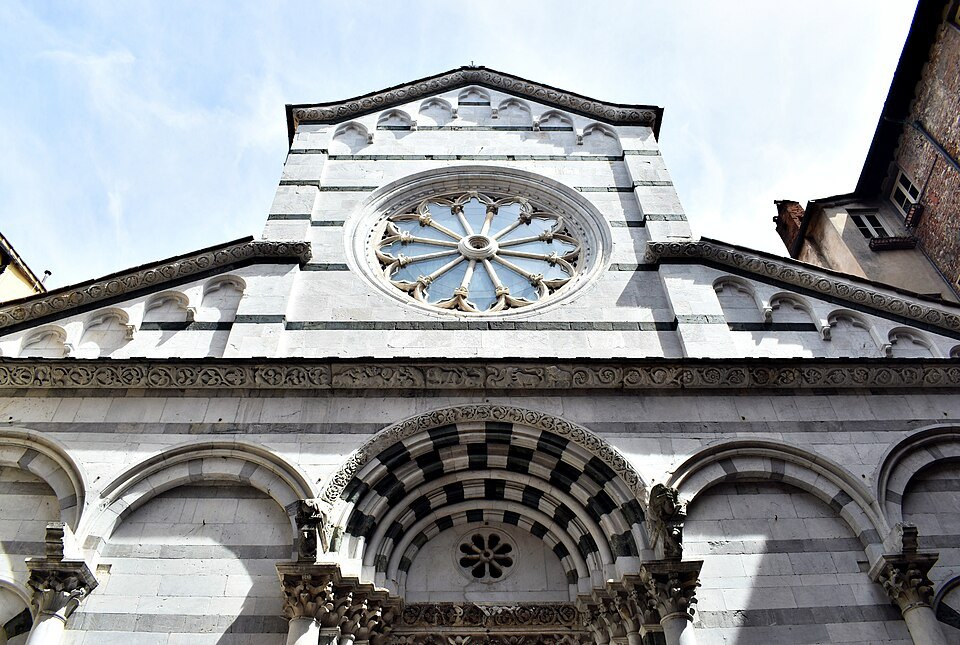
Black-and-white bands and the rose window on the front of San LorenzoJulian Lupyan, Wikimedia Commons, CC0 6The striped cathedral
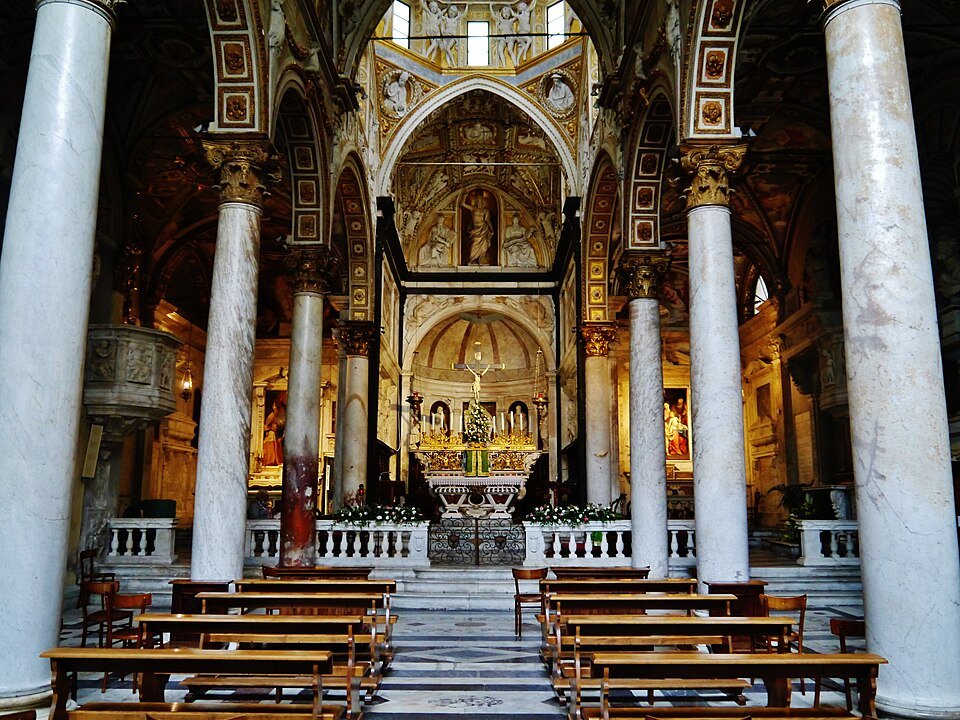
Into the alleys and down to San Lorenzo, the cathedral consecrated in 1118, its front banded in black and white stone with lions on the steps. On 9 February 1941 a British naval shell crashed through the roof and did not explode; it sits inside the nave.
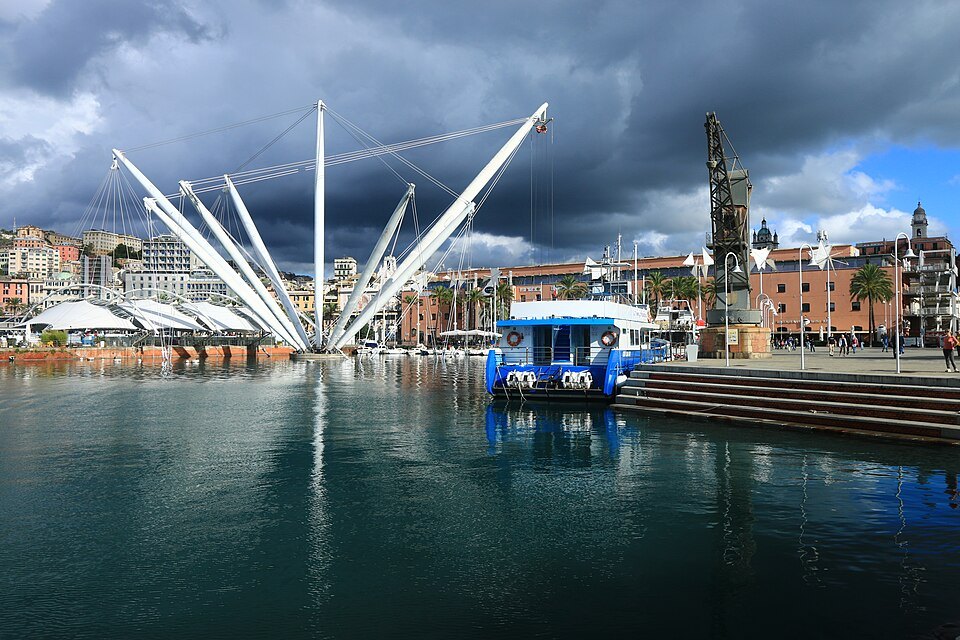
The white masts of the Bigo over the water of the Porto AnticoBenjamin Smith, Wikimedia Commons, CC BY-SA 4.0 7The old harbor
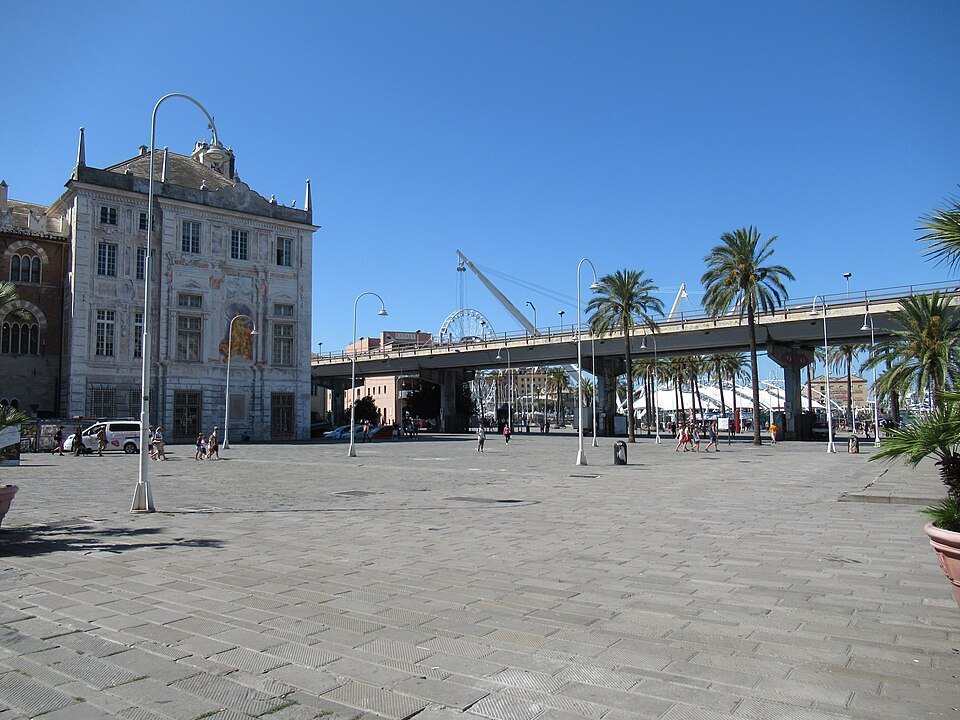
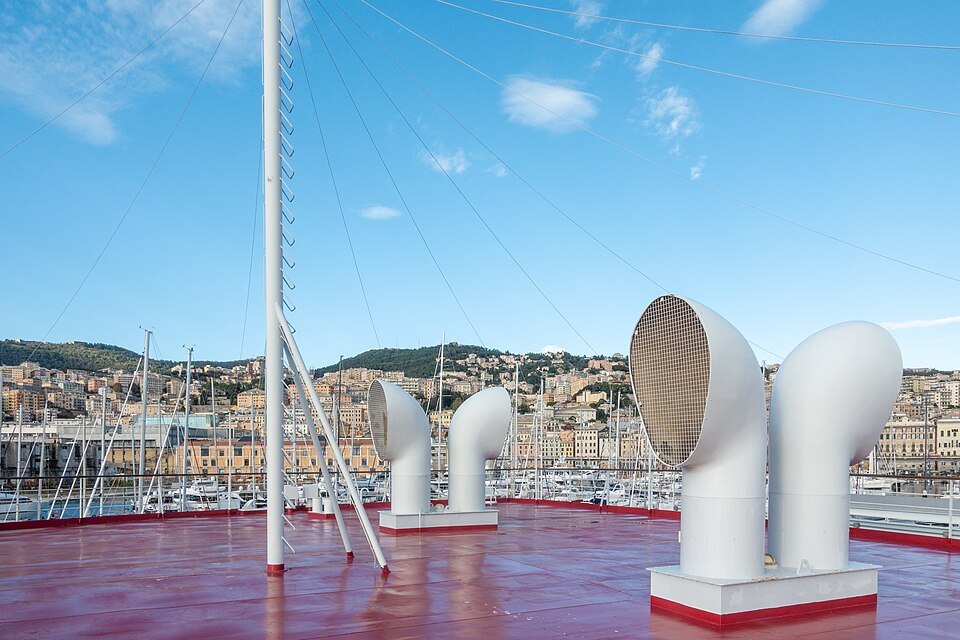
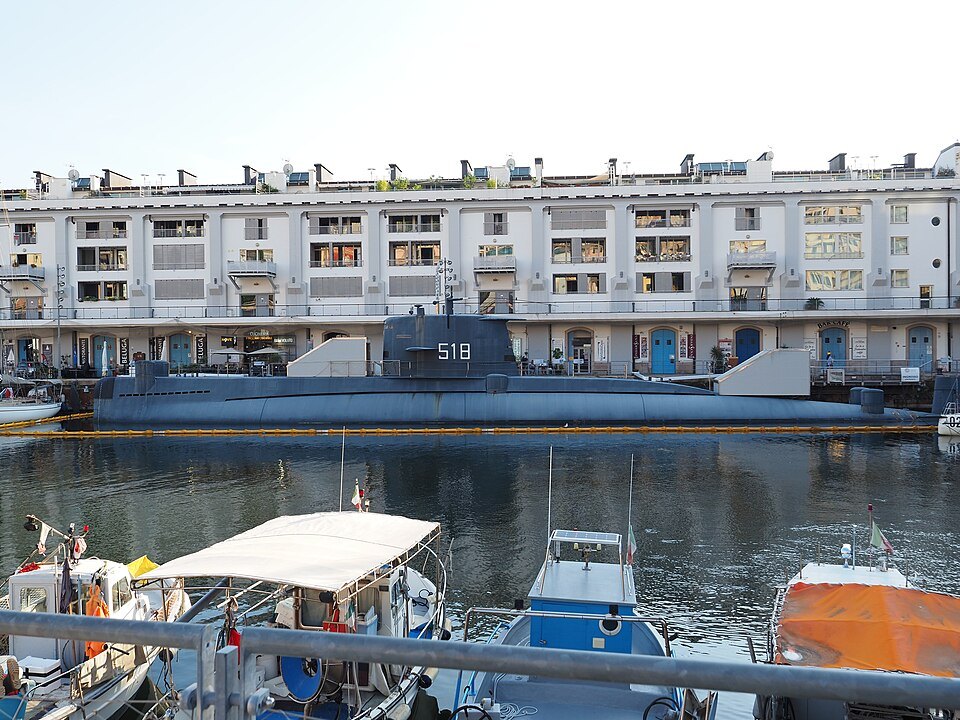
At the bottom of the lanes lies the Porto Antico, the old docks Renzo Piano rebuilt for Expo '92, with the white arms of the Bigo, the Aquarium — the largest in Italy — and the Galata sea museum. Along the quay, the Lanterna stands 77 meters tall on its rock at the harbor mouth.
Three things to know first
- ArrivingTwo stations and an airport bus.Trains from Milan reach Piazza Principe in about an hour and three quarters. From the airport, the Volabus runs to Principe and Brignole stations in about half an hour.Getting here
- The streetsWalk the alleys, ride the hills.The old town is a maze to cross on foot. One metro line runs beneath it, and public lifts and funiculars climb the slopes above.Getting around
- The calendarMild winters, stormy autumns.The sea keeps winters gentler than inland, while autumn brings the heaviest rain. Summer is hot and long, with the most sunshine of the year.When to come
Italy · LiguriaAbout 566,000 peopleItalianEuroA maritime republic until 1797UNESCO World Heritage since 2006
The register of this guide
- I
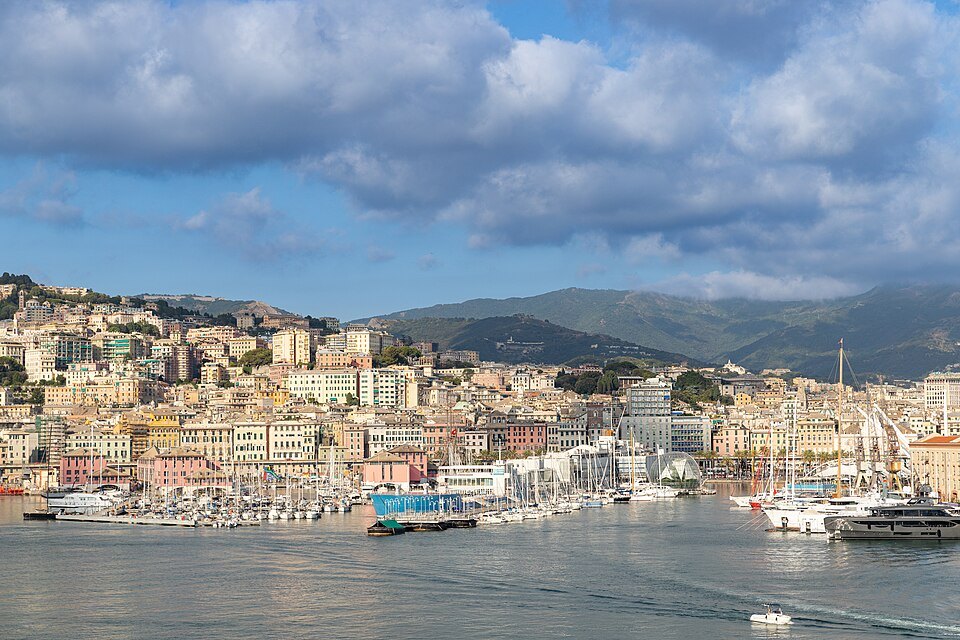 Eighteen places, one page eachThe SightsFrom the Lanterna to the cliff path at Nervi: what each one is, what you see, and how long to give it.
- II
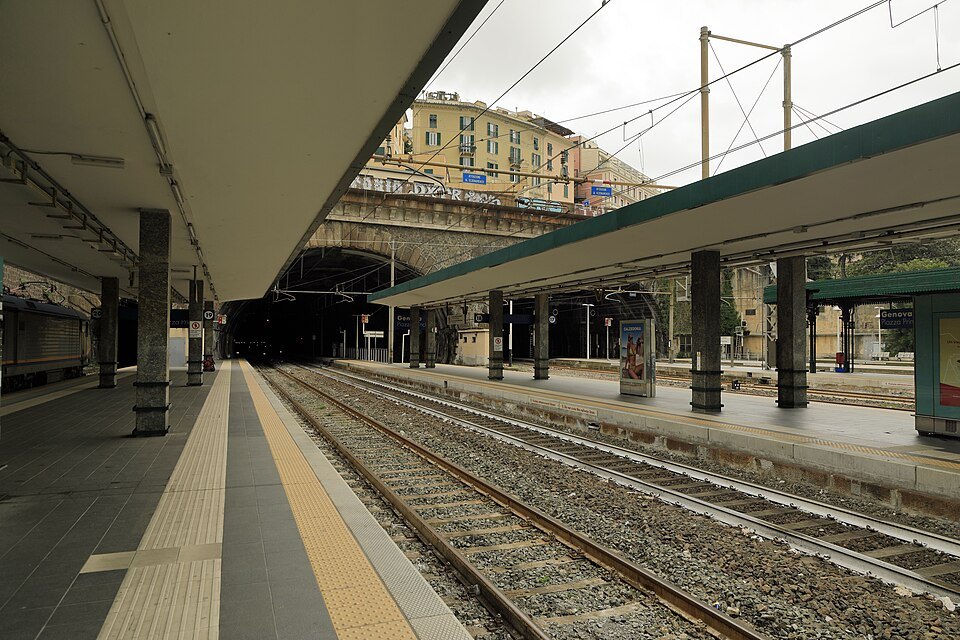 Rail, air, sea and roadGetting HereTwo main stations, the airport bus, the ferry port, and where a car should stop.
- III
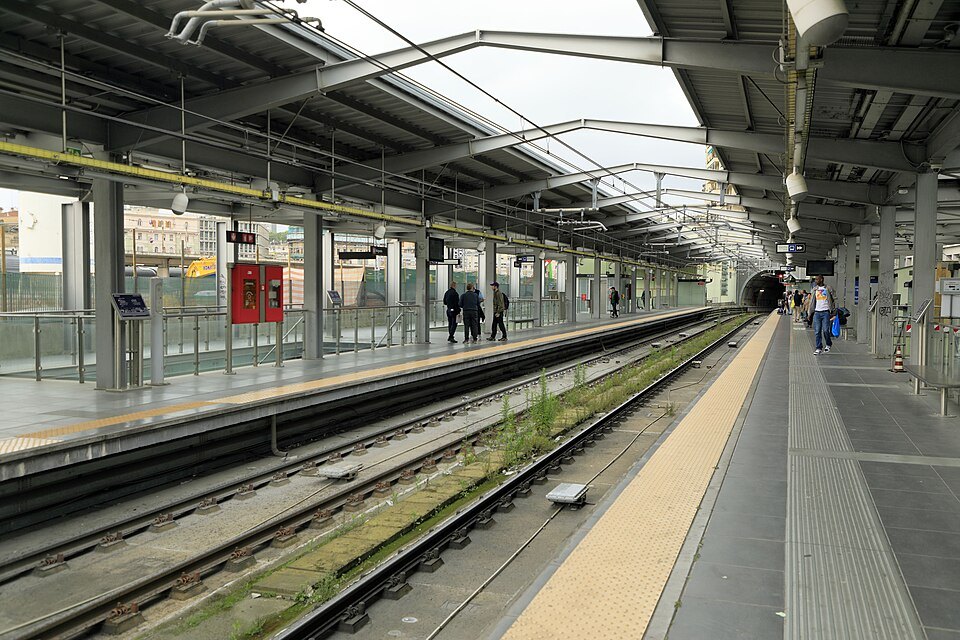 On foot, and then upwardGetting AroundThe alleys you walk, the metro under them, and the public lifts and funiculars up the hills.
- IV
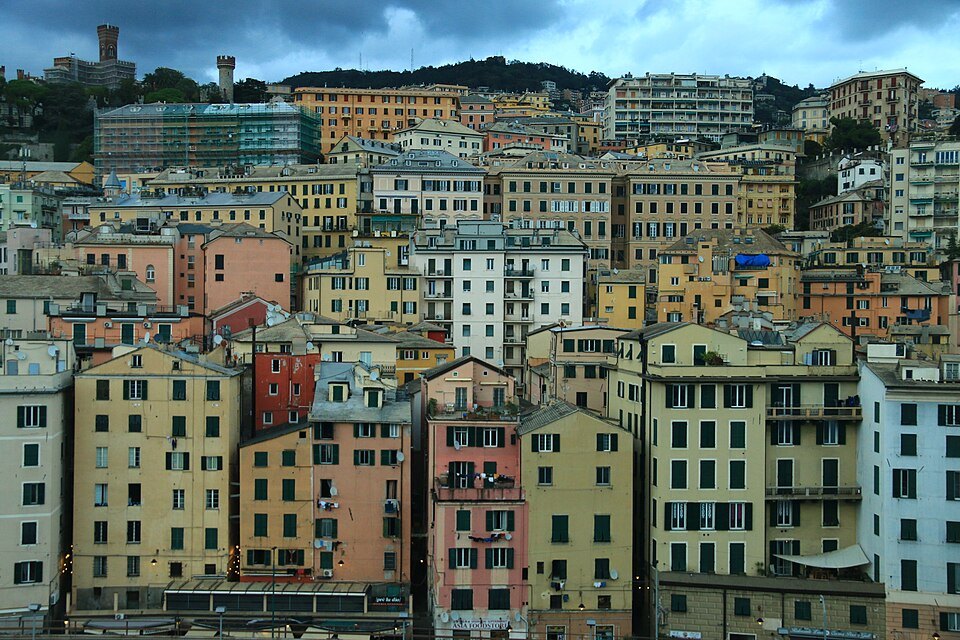 The medieval alleysThe CaruggiHow the narrow lanes between the port and the squares were built, and how to walk them.
- V
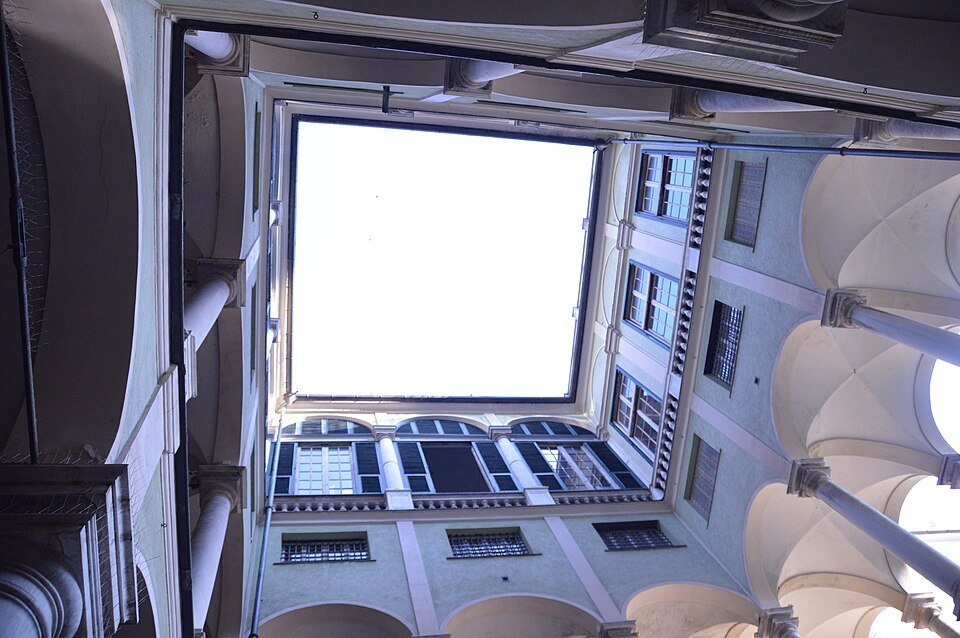 Forty-two palaces on the UNESCO listThe Rolli PalacesThe lists that lodged a republic's guests, and which of the palaces open their doors.
- VI
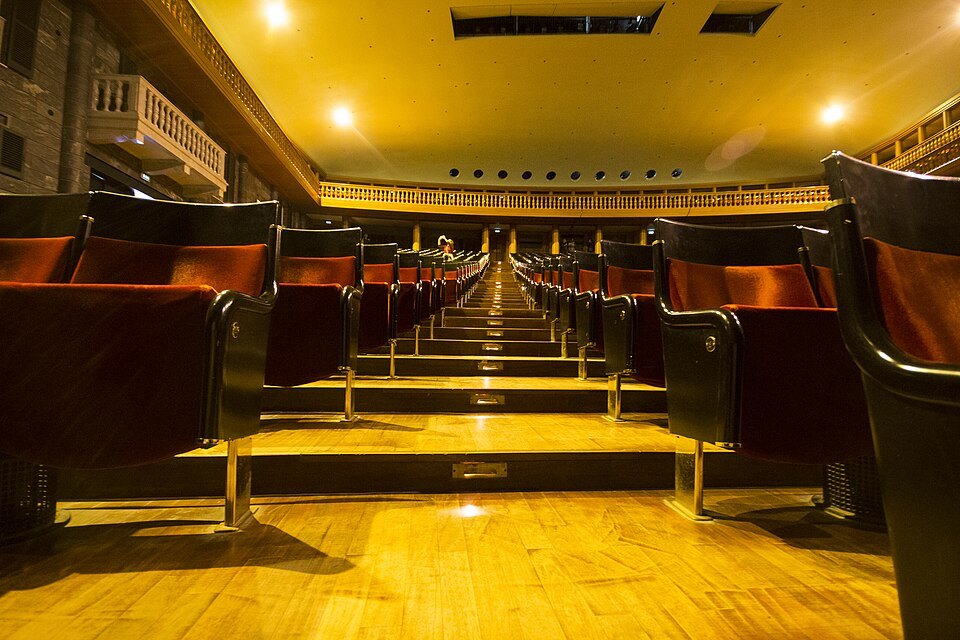 What to arrange firstBooking AheadThe few things in Genoa worth fixing a time for, and the many that need nothing.
- VII
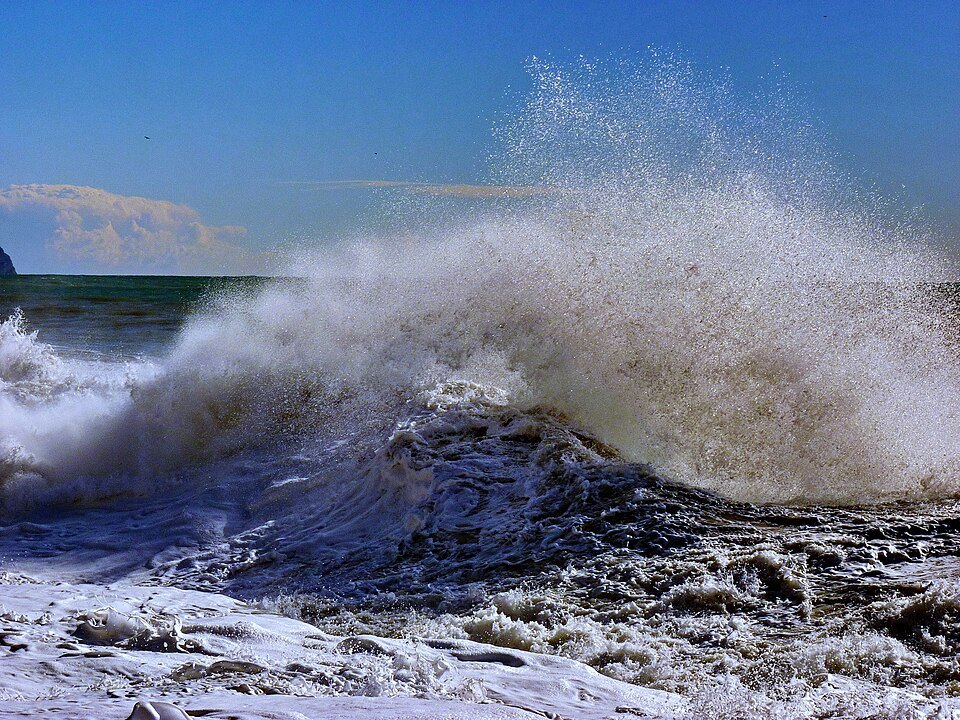 The year in GenoaWhen to ComeMild winters, autumn storms, summer on the rocks at Boccadasse, month by month.
- VIII
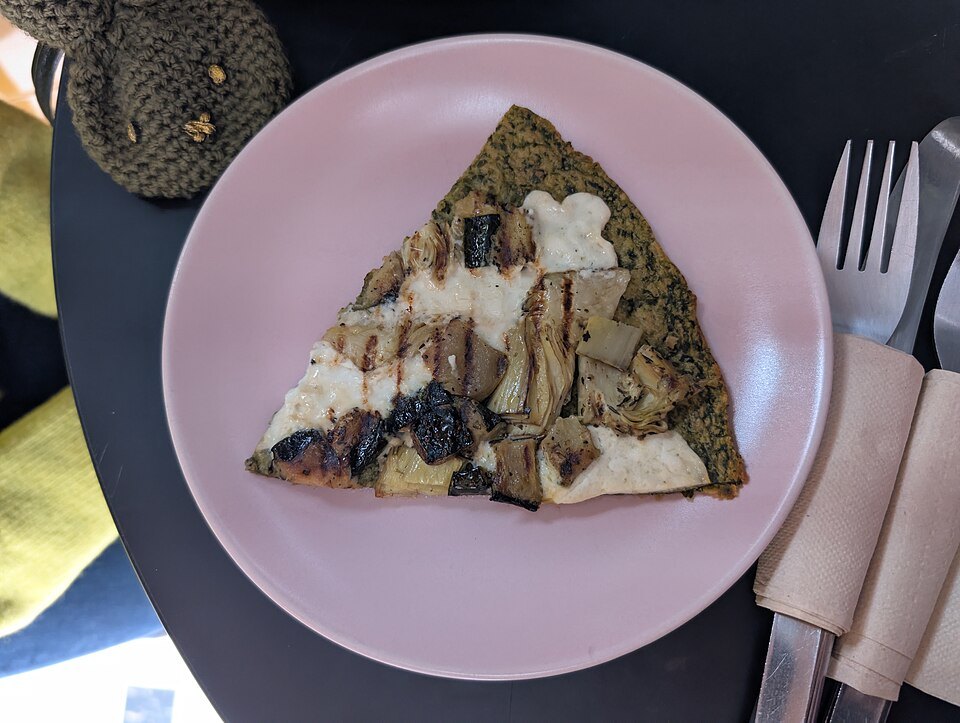 Pesto, focaccia and farinataEating & DrinkingThe dishes that belong to Genoa and Liguria, and where the city eats them.
- IX
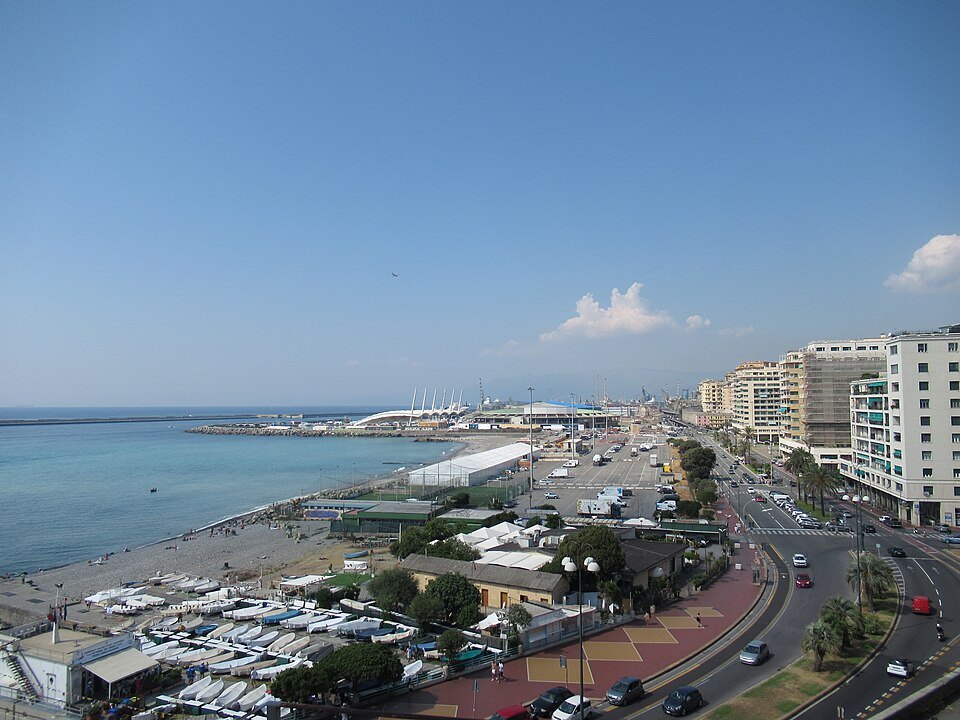 From the port to the hillsWhere to StayEach part of the city for a night or a week, drawn on a map.
- X
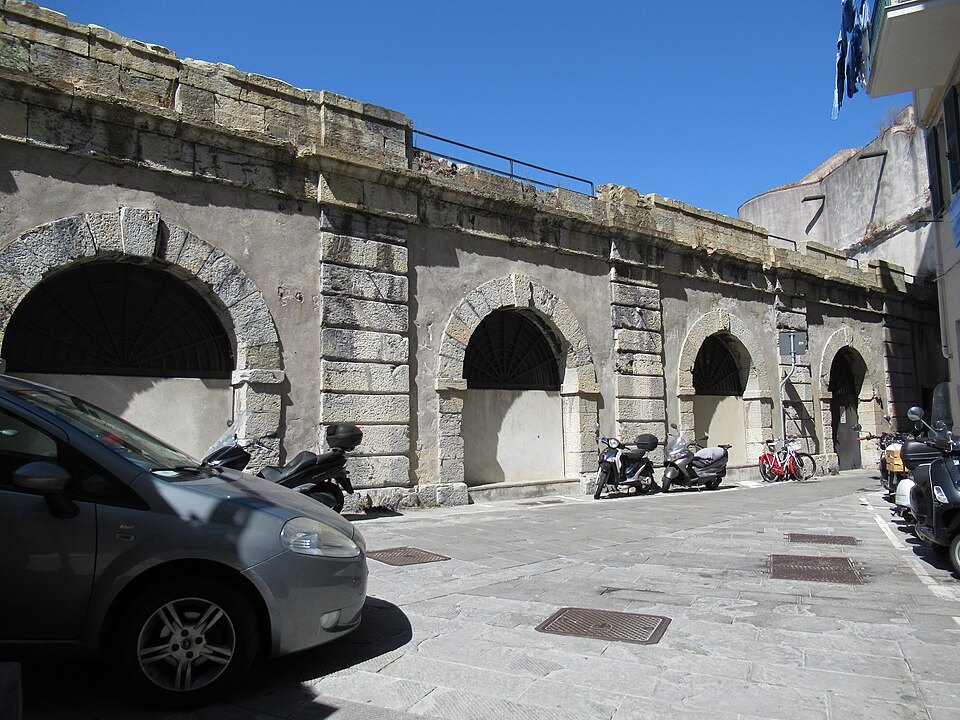 One day, two days, threeItinerariesRoutes by the length of your stay, planned around what closes when.
- XI
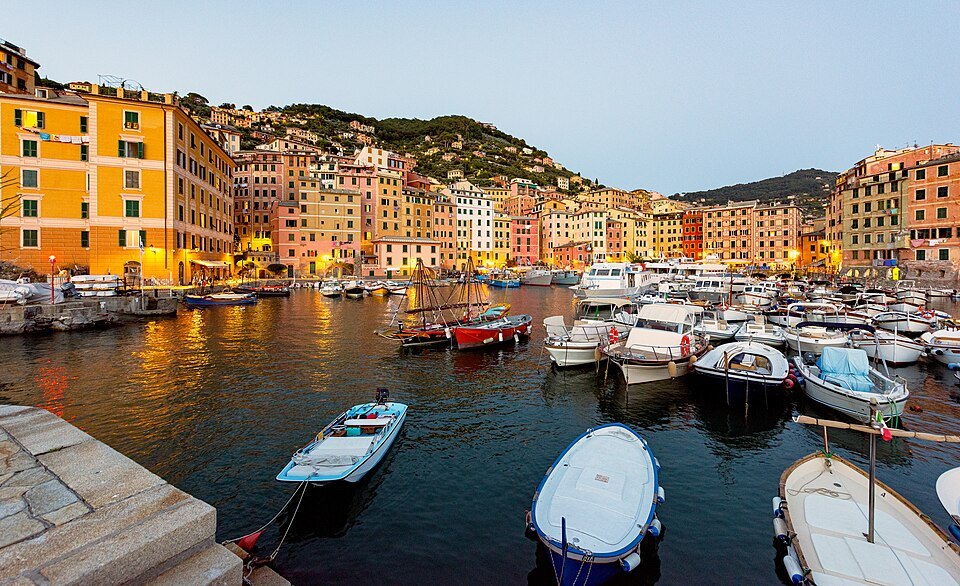 Camogli, Portofino, the Cinque TerreDay TripsWhere the coast trains and boats out of Genoa lead in a day.
- XII
 Questions answered at lengthThe JournalVisitor questions about Genoa, answered in full, with new pieces as they are written.
All eighteen sights
On the water
The old port and its museumsIn the medieval maze
The caruggi between the port and the squaresThe palace streets
The Strade Nuove of the 16th and 17th centuriesUp the hills
Lifts, a funicular, walls and a cemetery valleyAlong the east shore
The fishing village and the cliff walk