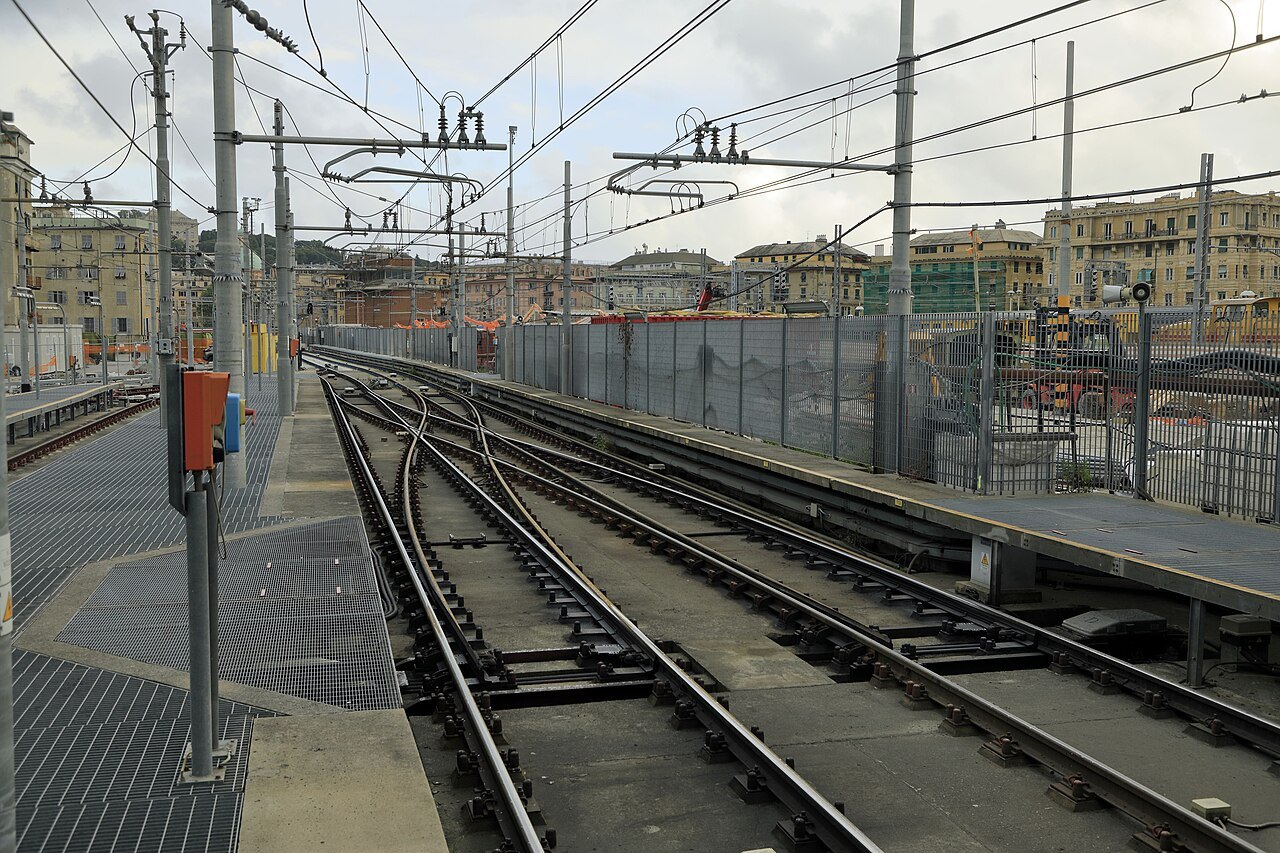
Why the city has them
Genoa is built on a strip of flat ground a few hundred metres wide, with hills rising behind it almost immediately. People have always lived on those slopes, and for a century the city has moved them up and down by machine rather than by road.
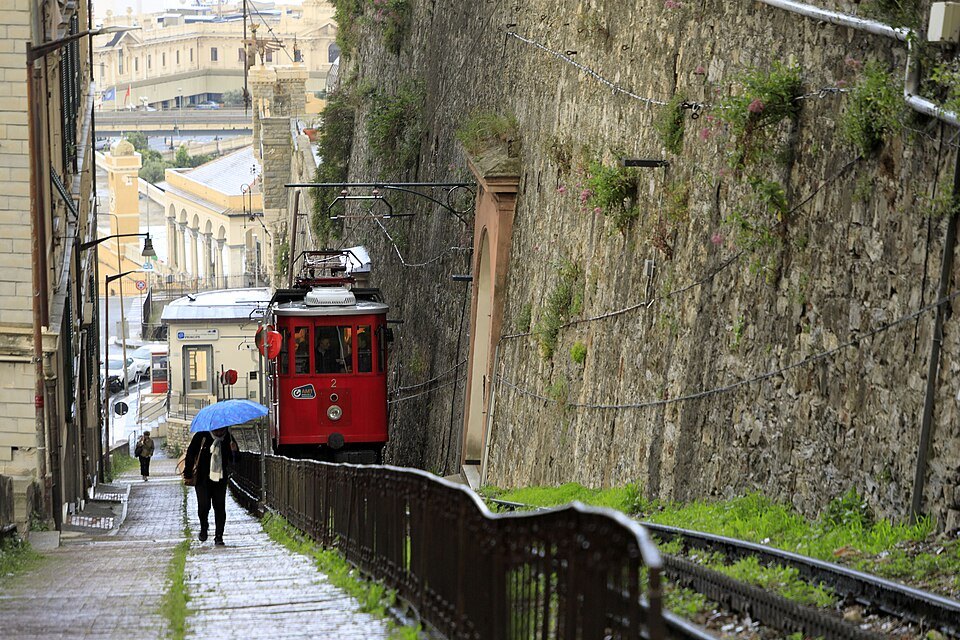
The result is a public transport network that goes vertically as well as horizontally: ten public lifts inside the rock, two funiculars, and a rack railway, all run by the city's transport company and all on the same ticket as the buses and the metro.
This matters to a visitor for two reasons. It makes the hills accessible without a climb, and riding the machines is one of the genuine pleasures of the city — they are old, they are ordinary, and they are full of people going home with the shopping.
None of this is a tourist attraction, which is the best thing about it. The lifts are listed on the transport map beside the bus routes, they run to timetables, and the fare is the fare — a few dozen people a minute use them to get to work.
Some links on this page are affiliate links. If you book through one we may earn a commission, at no extra cost to you. It does not affect what is recommended here, and no sight page on this site carries one.
Tickets, timetables and the lift map are all easier with mobile data from arrival.
The Castelletto lift
If you ride only one, ride this. It leaves from Piazza del Portello, a small square at the foot of the hill behind Via Garibaldi, and climbs inside the rock to the Spianata di Castelletto, the terrace directly above the old town.
The tunnel entrance is easy to miss: a doorway beside the traffic, with a plaque carrying the verses the poet Giorgio Caproni wrote about this lift. The cabins were rebuilt in 2020 to the original early-twentieth-century drawings, panelled in pine.
The ride takes under a minute and comes out through a door onto the terrace, which is the single best view of the old town — roofs, domes, the port, and the Lanterna away to the west.
Walk back down rather than riding: the stepped lanes drop through gardens to Largo della Zecca in about ten minutes and are one of the best short walks in Genoa.
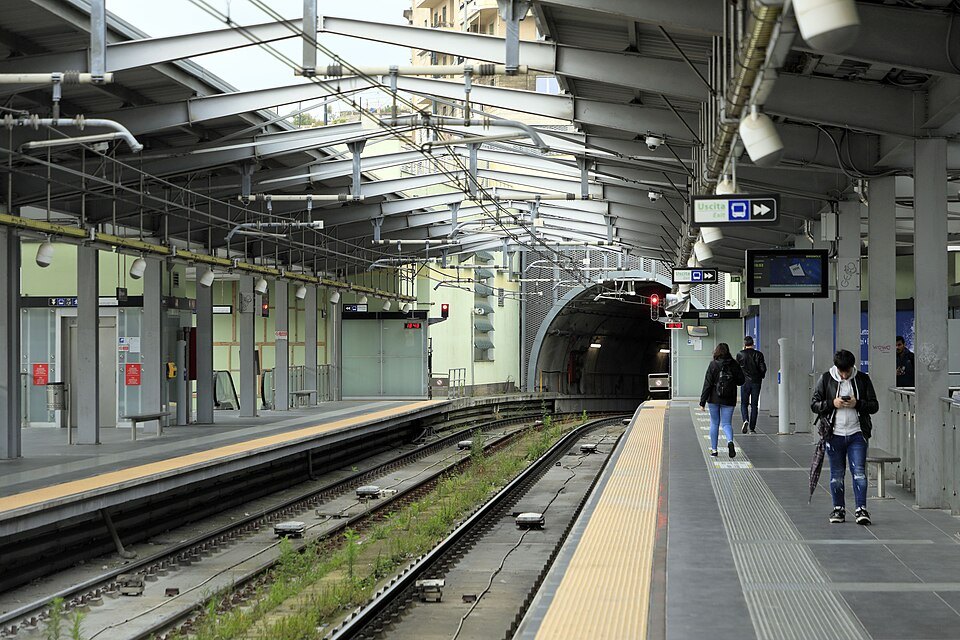
The terrace at the top is a neighbourhood space rather than a viewpoint: palms in tubs, benches, a kiosk, children on bicycles in the late afternoon. Nobody will try to sell you anything, which in a city this visited is worth noting.
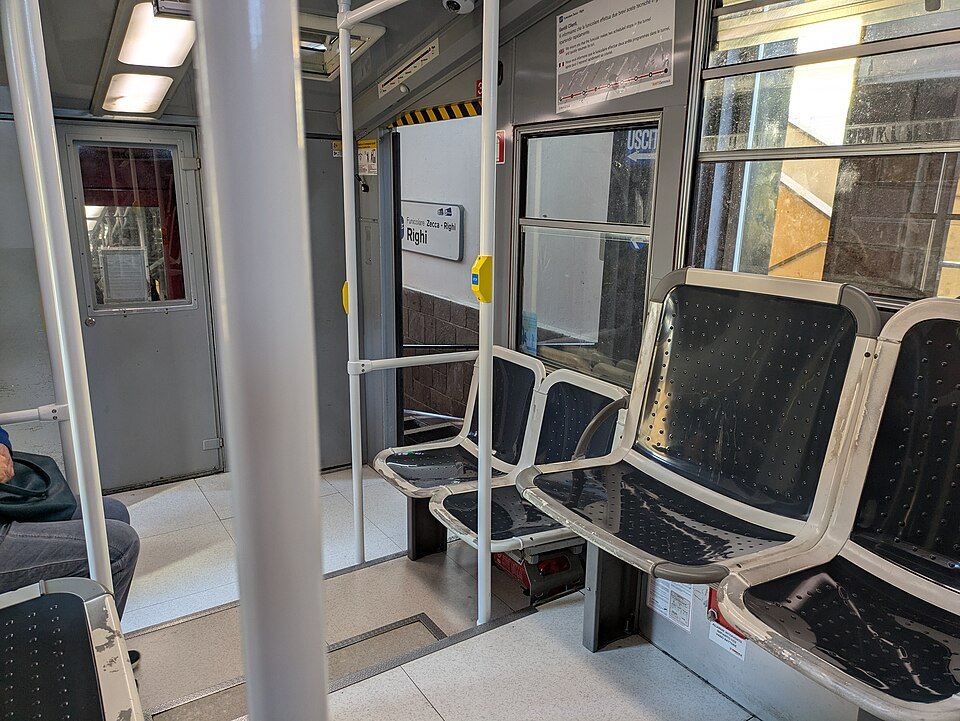
The Zecca–Righi funicular
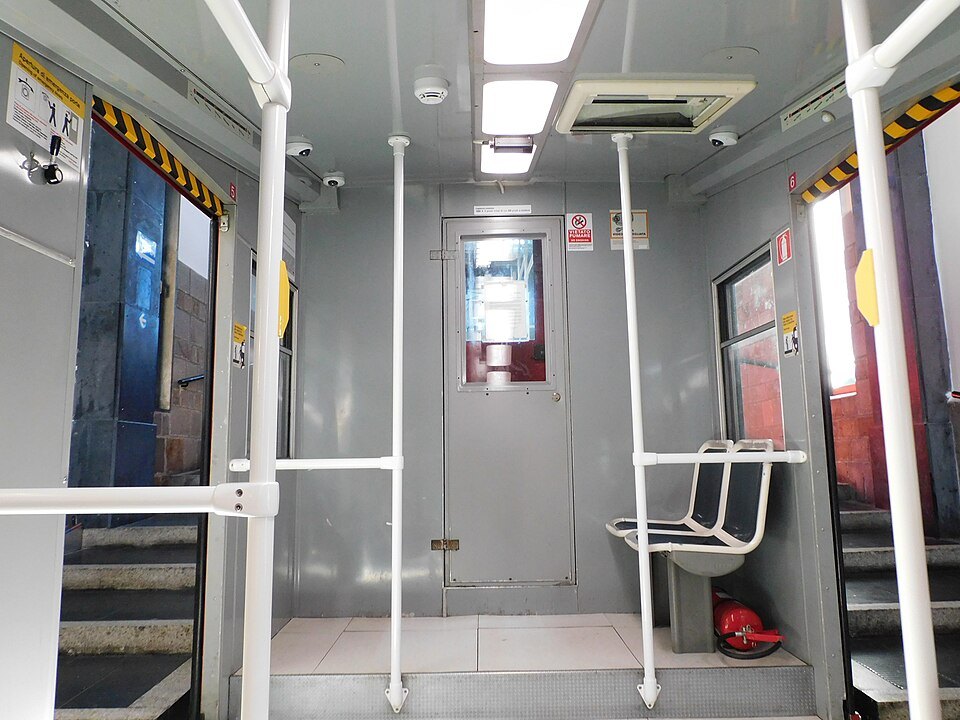
This is the long one. From Largo della Zecca, at the western edge of the old town, a funicular climbs to the Righi, three hundred metres above the city, with five intermediate stops on the way.
The lower section opened in 1897 and runs in tunnel; the upper section, from 1895, climbs in the open between garden walls and apartment blocks. They were joined into a single line in the mid-nineteen-sixties, with a passing loop at San Nicola.
At the top there is a terrace, a restaurant, a bus turning circle and the start of the walks along the seventeenth-century walls to Forte Sperone and the other forts.
It is a commuter service, so it is busy at the ends of the working day and near empty in the middle of the morning.
The intermediate stations are the interesting part if you have time. Getting out at Madonnetta or San Nicola puts you in a hillside quarter of stepped lanes, garden walls and views over the roofs that no visitor ever sees.
The Sant'Anna funicular and the rack railway
The Sant'Anna funicular is the oldest of the lot and the most domestic: two small cars on a steep alignment from Piazza Portello up to Corso Magenta, through a quarter of narrow streets and convent walls. It has been running since the eighteen-nineties.
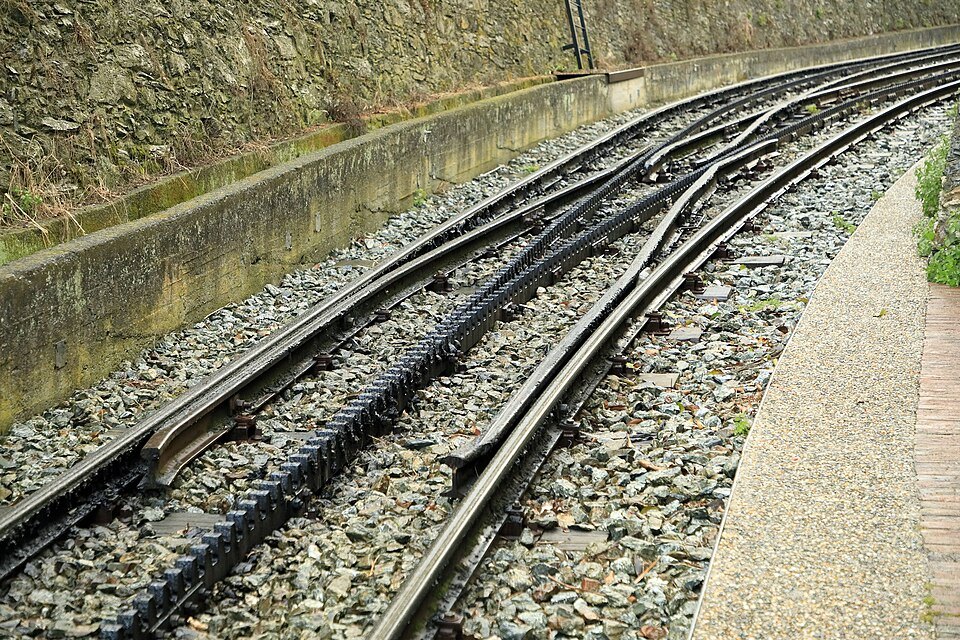
The Principe–Granarolo rack railway is stranger still — a two-carriage train that climbs a residential hill from behind Piazza Principe station, stopping at what are effectively garden gates.
Neither goes anywhere a visitor needs to be. Both are worth riding if you like machines, and both cost the same as a bus.
The other lifts
The remaining public lifts are ordinary transport: Montegalletto to the Castello d'Albertis museum, Quezzi, Villa Scassi, the Ponte Monumentale lift on Via XX Settembre, and a handful of others linking streets separated by a cliff.
The Montegalletto one is worth knowing about. It is the strangest machine in the city: the cabin travels horizontally through a tunnel and then rises vertically, and it puts you at the door of a museum most visitors never find.
The Ponte Monumentale lift saves a short climb on the main shopping street and is used by half the city without a second thought.
Together they form a network that is mapped and ticketed like any other, and the transport company's own map marks each one. It is worth a look before you plan a day, because a lift often replaces a twenty-minute detour on foot.
How to use them
Buy an urban ticket before you board — tobacconists, kiosks, machines at metro stations, or the transport app. One ticket covers the buses, the metro, the lifts, the funiculars and the rack railway for a set time from validation, and day tickets exist.
Validate on entry. On the lifts and funiculars the machine is at the lower station or inside the cabin, and inspections do happen.
Most run from early morning to late evening, with a thinner service on Sundays, and each keeps its own timetable posted at the lower station. Maintenance closures are common and are announced on notices at the door.
Children, by and large, love them, which makes them the easiest way to get a reluctant family up a hill. The cabins are small, and at busy times you may wait for the second car.
Worth a detour, or not
Worth a detour: the Castelletto lift, every time, and the Righi funicular if you are going up to the walls and the forts.
Worth riding if they fit your day: the Montegalletto lift on the way to the Castello d'Albertis, and the Sant'Anna funicular for its age.
Not worth planning around: the rest. They are useful to the people who live above them and harmless fun for everybody else.
One warning. If a lift is out of service, the alternative is a stair — Genoa's salite are long, steep and paved in stone. Allow ten minutes of climbing for every minute of lift you miss.
More from the journal
- ItinerariesWhat can you see in Genoa on a six-hour cruise stop?A plan for a short day in Genoa from the cruise terminal: what is close, what is worth the walk, and what to leave for a longer visit.Read the piece
- The Righi Funicular and the FortsHow do you reach the forts above Genoa without a car?A funicular from the edge of the old town, a path along seventeenth-century walls, and four forts on the skyline — a half day from the centre with no car and no tour.Read the piece