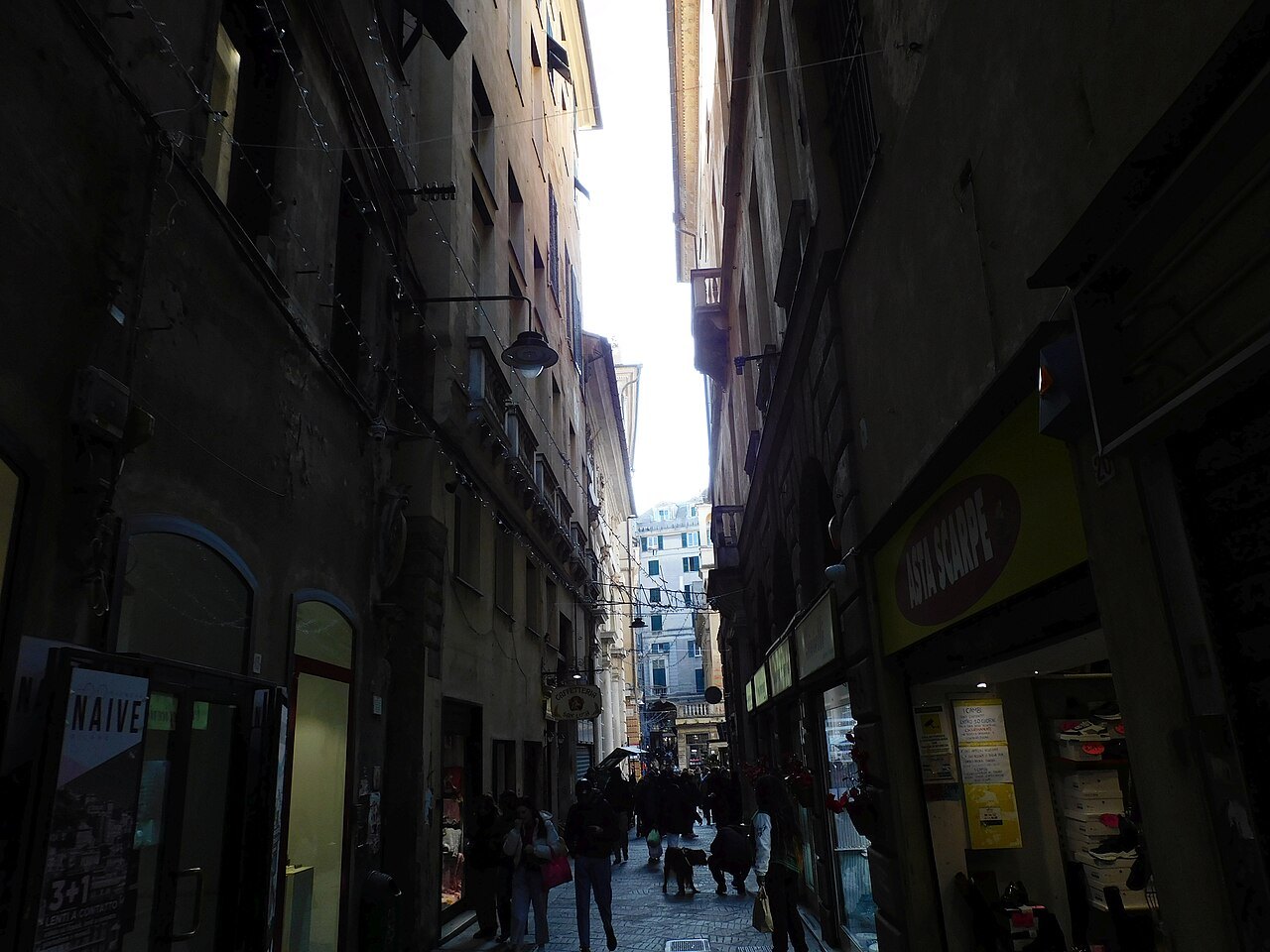
What is up there
Behind Genoa, along the ridge that closes the city to the north, run the Mura Nuove — the New Walls — begun in 1626 after a Savoyard army came too close. They are among the longest city walls in Europe.
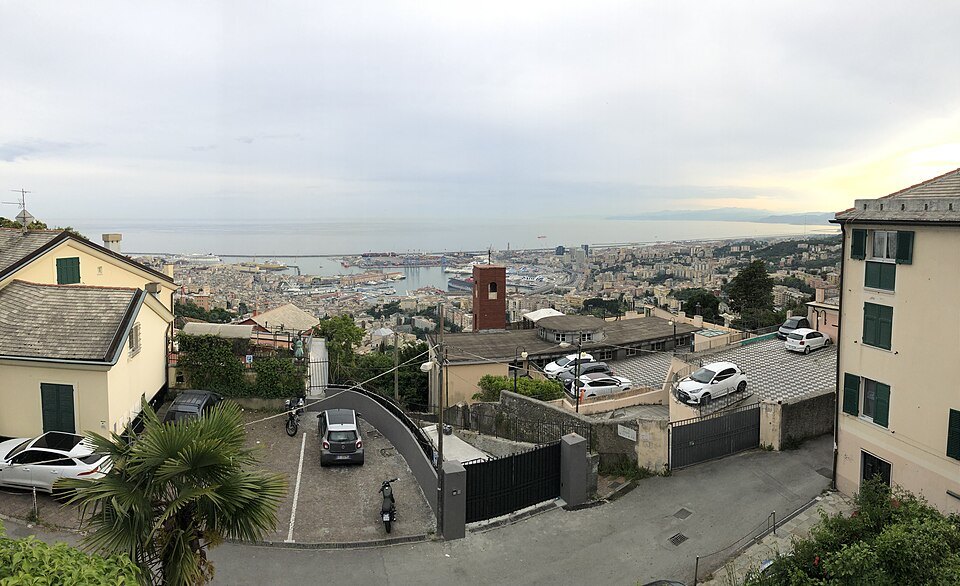
Studded along them and on the peaks beyond are forts: Sperone at the apex where two arms of the wall meet, Begato along the ridge, Castellaccio with its watchtower above the city, and Diamante alone on a summit further out.
Almost none of it is fenced. You can walk the wall, go into the forts, and look down on the whole city, the port and the sea from the parapet — and on a clear winter day across the gulf to the Alps.
The system was built for artillery, so the walls are low, thick and angled rather than tall, with sloping faces meant to throw off cannon shot. The Savoy government extended and rebuilt the forts in the nineteenth century, which is why several look more Victorian than baroque.
Getting up
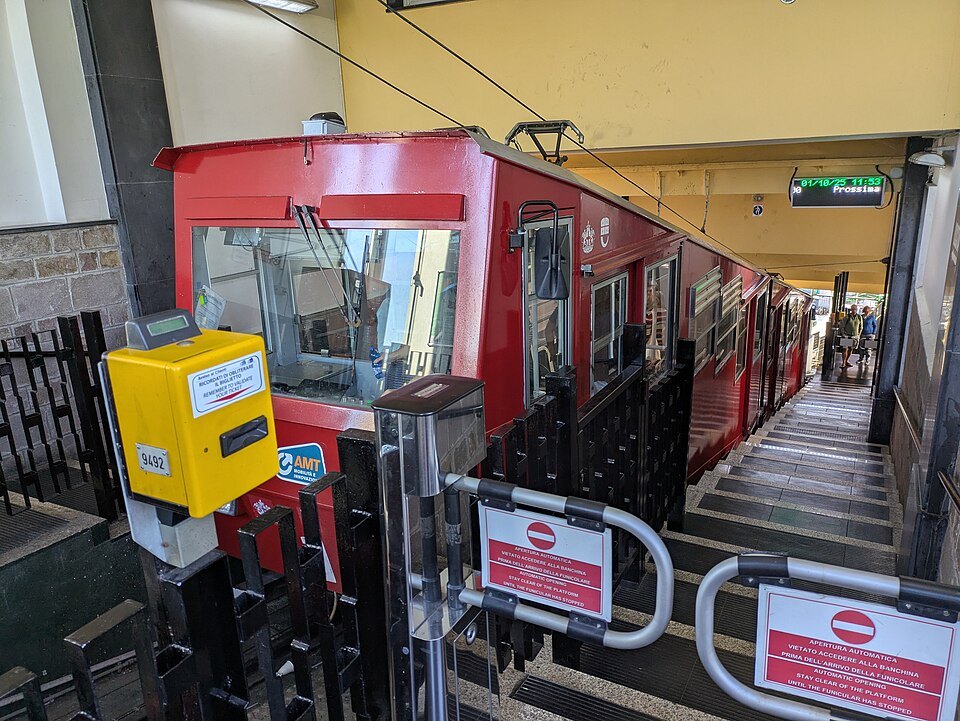
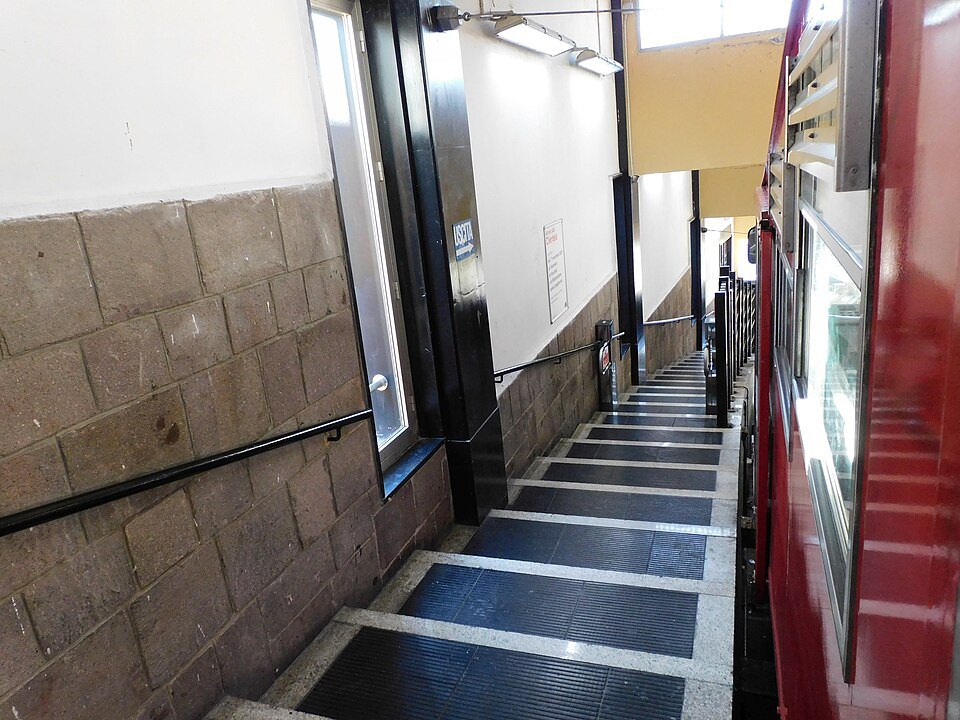
The simplest way is the Zecca–Righi funicular. It starts at Largo della Zecca, at the western edge of the old town and two minutes from Piazza della Nunziata, and climbs to the Righi in a few minutes with five stops on the way.
It is ordinary public transport: the same ticket as the buses and the metro, cabins every quarter of an hour or so, and commuters rather than visitors on board.
Buses also run to Righi and to Granarolo when the funicular shuts for maintenance, and the Principe–Granarolo rack railway climbs the neighbouring hill from behind Piazza Principe station.
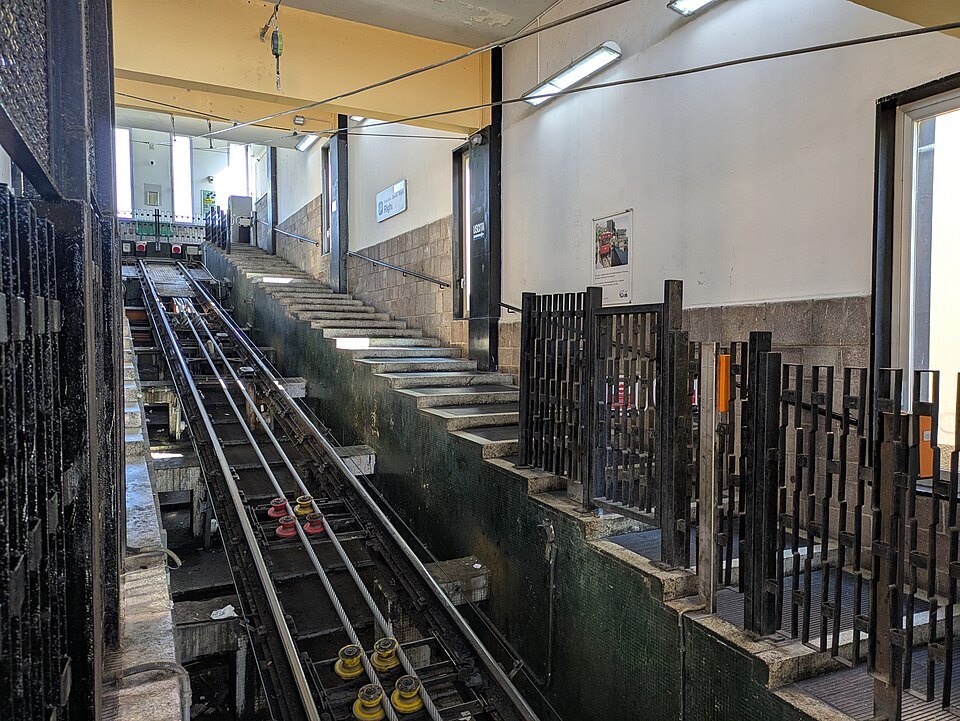
At the top there is a terrace with a view, a restaurant, a bus turning circle, and the start of the walks.
The lower funicular station is easy to miss: a doorway under an apartment block with a ticket machine inside. Buy before boarding — tobacconists and the metro machines sell the urban ticket — and validate in the cabin.
The walk along the walls
From Righi a signposted path follows the line of the walls uphill. In places it runs along the top of the rampart, with the city on one side and the valleys behind on the other.
Forte Sperone is about twenty minutes up: a huge arrowhead of masonry with vaulted galleries, courtyards and gun positions, used for concerts in summer and open to walk into at other times.
From Sperone the ridge continues to Forte Begato, another twenty minutes on a track, and a branch leads to Forte Castellaccio and the Torre Specola above the city.
Forte Diamante is the prize and the long one: about an hour and a half from Righi, out along the ridge above the valleys, and the most complete of the forts.
Signposting along the ridge is adequate rather than generous: wooden posts with walking times at the junctions. Download the area on a phone map before you go up, because the mobile signal is patchy behind the ridge.
What the walk is like
This is hill walking rather than a stroll. The paths are stony, the gradients are real, and there is no shade on the ridge; the wind that makes the city comfortable in summer is stronger up here.
Take water — there is none on the ridge — and shoes with grip. In summer, go early; in winter, this is the best walking near the city and the air is clearest.
The area is a park, the Parco delle Mura, used by Genoese for running and dog-walking. You will meet more locals than visitors.
The ground underfoot changes constantly — stone paving on the wall, gravel on the tracks, and bare rock on the steeper stretches. Trainers are enough in dry weather; after rain, the clay sections are slippery.
The forts themselves
They are unstaffed ruins rather than museums: no tickets, no guides, no railings in most places. Vaults stand open, there are unguarded drops on the ramparts, and there is graffiti.
That is also what makes them worth the walk. You can stand in a nineteenth-century gun position and look straight down two hundred and fifty metres at the cathedral.
Go in daylight, stay off the wall tops where they are broken, and treat the buildings as what they are — abandoned military architecture on a mountainside.
A little history helps on the way round. These are not medieval castles: Sperone and its neighbours took their present shape between the seventeenth and the nineteenth centuries, and the last serious fighting on this ridge was in the Napoleonic siege of 1800, when the city starved behind its walls.
Fitting it into a day
A half day covers the funicular, Sperone and the wall, and a ride or walk back down. A full day is needed for Diamante.
It combines well with the Spianata di Castelletto, lower down and reached by public lift, if you want two views at different heights on the same morning.
It combines badly with anything indoors: after a couple of hours on the ridge, the appetite for a palace tends to be gone.
If the weather is uncertain, keep it flexible. The forts are pointless in cloud, and the same half day works perfectly well the next morning.
For anyone who would rather not walk far, there is a shorter version: ride up, walk the twenty minutes to Sperone, look at the view from the parapet and ride back. That alone justifies the fare.
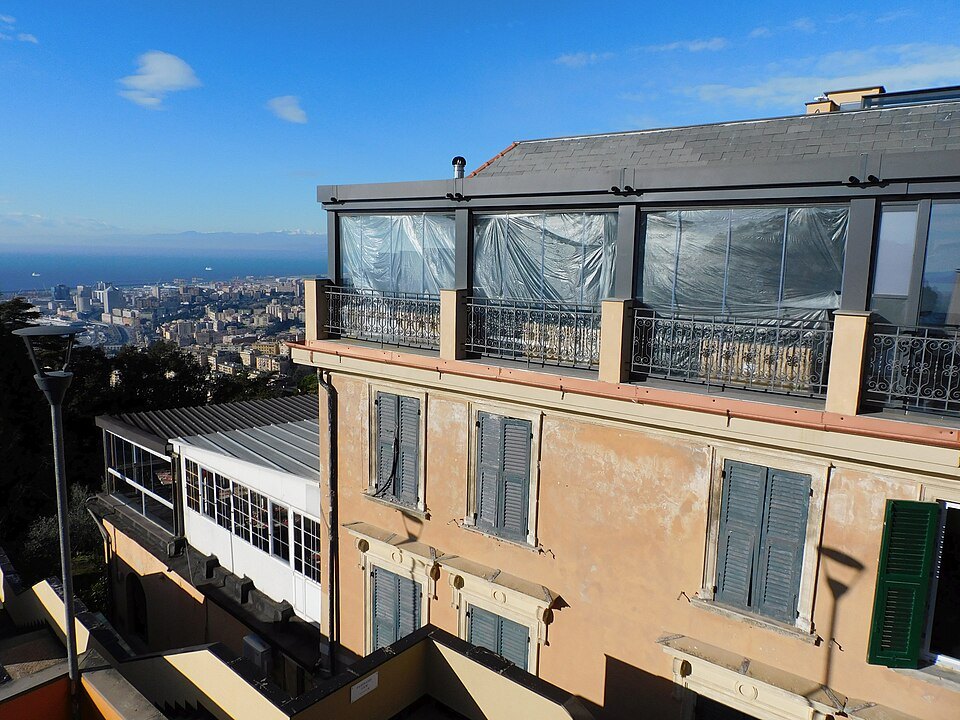
Whatever you do up there, look back at the city on the way down. From the ridge the whole arrangement is visible at once: the wall on the skyline, the town packed below it, the port at the bottom, and the sea beyond — which is the shape Genoa has kept for four hundred years.
More from the journal
- Getting AroundWhich of Genoa's lifts and funiculars are actually worth riding?Genoa runs ten public lifts, two funiculars and a rack railway on the ordinary bus ticket. Here is what each one is for, which are worth a detour, and how to use them.Read the piece
- ItinerariesWhat can you see in Genoa on a six-hour cruise stop?A plan for a short day in Genoa from the cruise terminal: what is close, what is worth the walk, and what to leave for a longer visit.Read the piece