Boccadasse
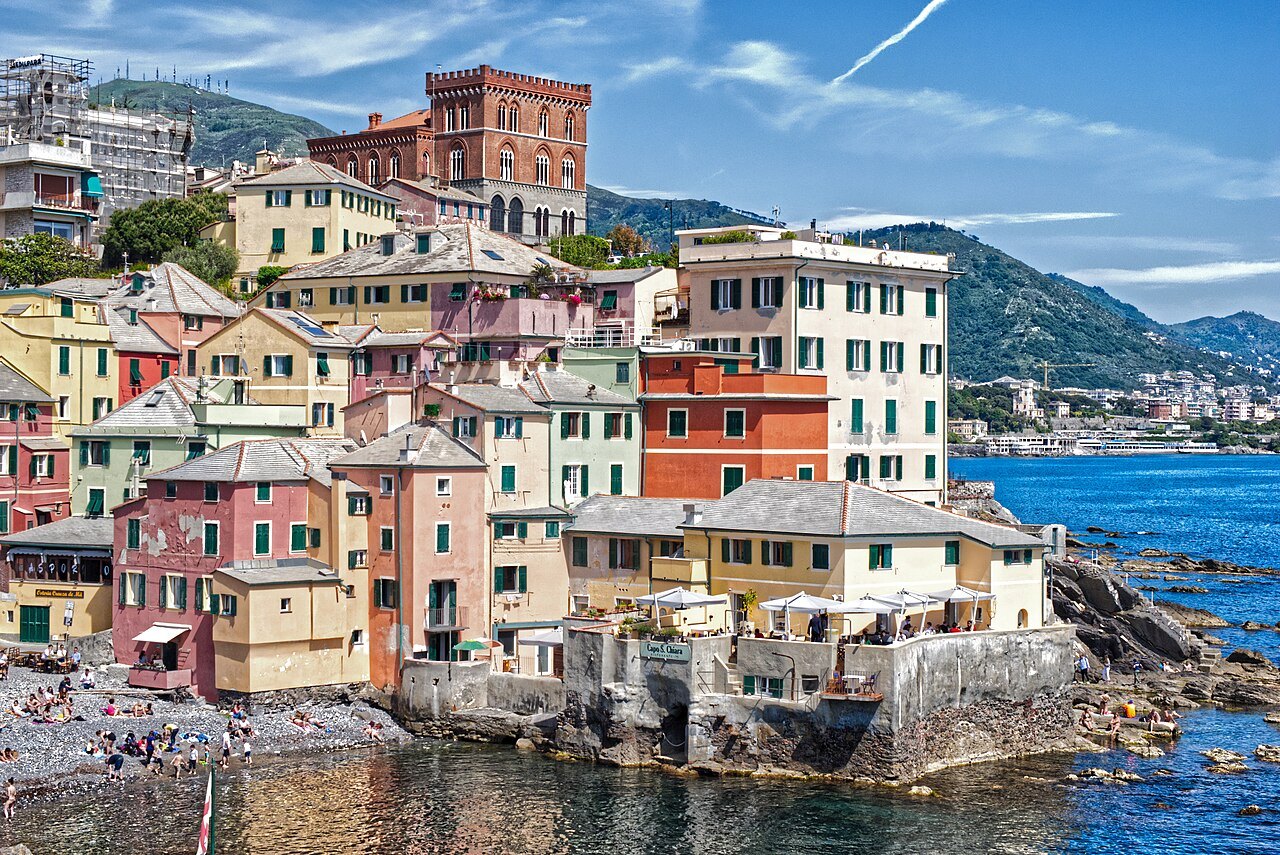
- IThe pebble beachA small strand of round stones between the houses, with boats hauled up on it
- IIThe painted housesFishermen's houses in ochre, pink and red, stacked around the inlet
- IIISant'AntonioThe village church on the rise above the cove, with a view along the coast
- IVCorso ItaliaThe seafront promenade that leads here, about two and a half kilometres from the Foce
- VThe gelaterieIce cream shops around the cove, the reason half the city walks out here on a Sunday
- VICapo Santa ChiaraThe headland beyond, with a terrace above the rocks and the open sea
The sight in detail
Why it matters
Boccadasse is what people picture when they picture the Ligurian coast — coloured houses around a tiny harbour, nets, boats, the smell of salt — and it sits inside a city of half a million people, twenty minutes from the centre by bus.
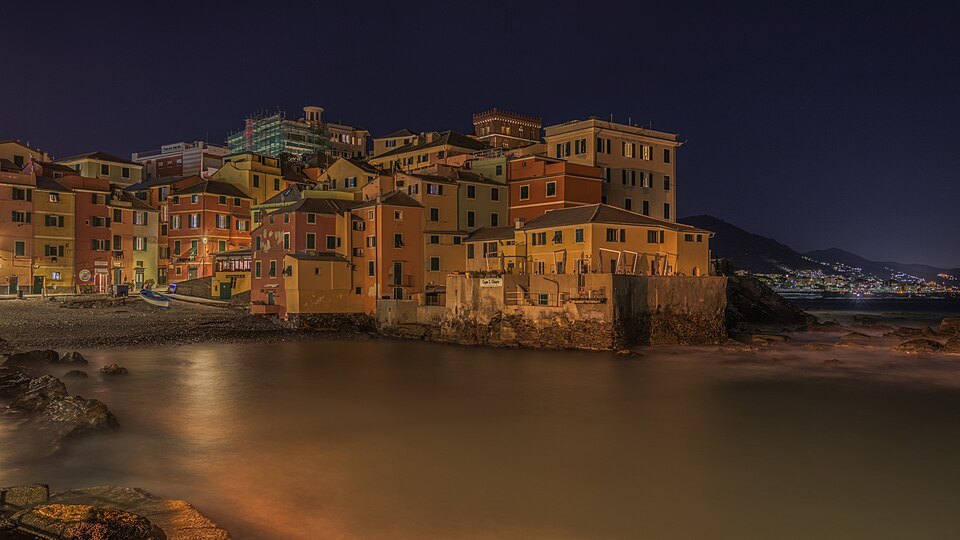
It survived because there was nothing to build on. The cove is a notch in the rock at the eastern end of the seafront, too small for a port and too steep for blocks of flats, so the fishermen's houses stayed, and the city grew around rather than over them.
That makes it a genuine piece of old Genoa rather than a reconstruction, but it also makes it crowded. On a fine Sunday afternoon the whole city is here, queueing for ice cream and sitting on the rocks.
It is also the end of a habit rather than a destination in itself. Genoese walk out along the seafront in the evening and turn round at the cove, and the ice cream at the end is part of the ritual; the shops here are among the oldest in the city and take the queue seriously.
What you actually see
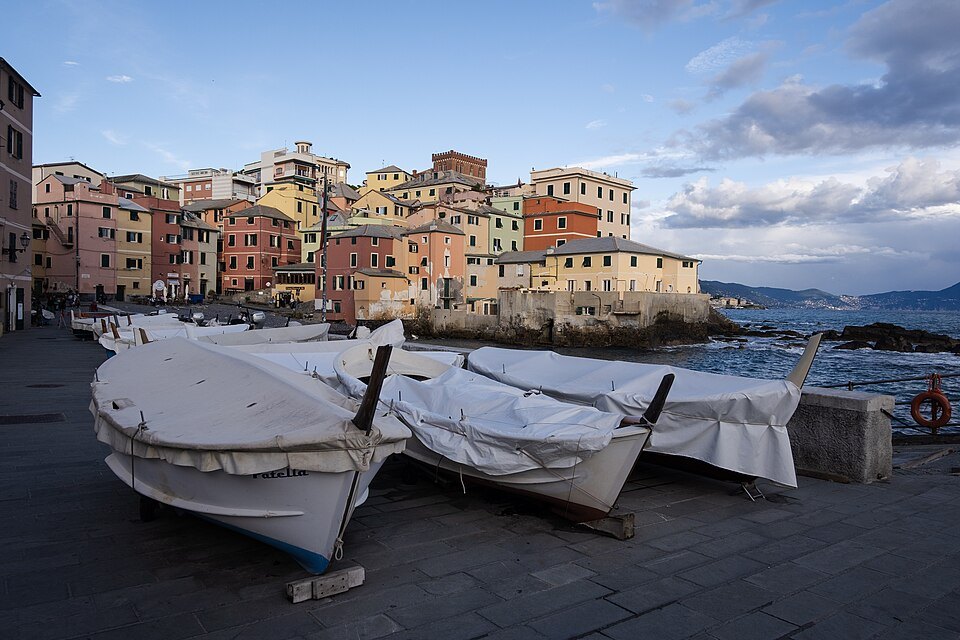
The cove is small: a curve of pebbles perhaps fifty paces across, with wooden boats pulled up above the waterline, a slipway, and houses rising straight from the stones in ochre, pink, cream and Genoa red.
The buildings are the point. They are ordinary fishermen's houses, four or five storeys, narrow, with green shutters and washing on the balconies, and they are still lived in. The bars and ice cream shops occupy the ground floors.
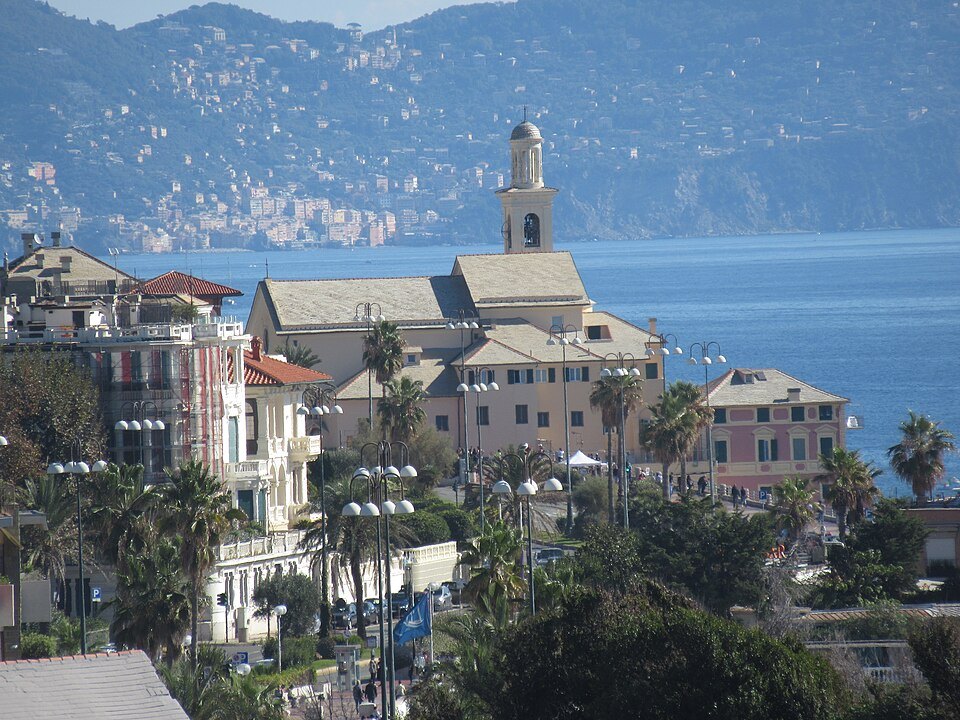
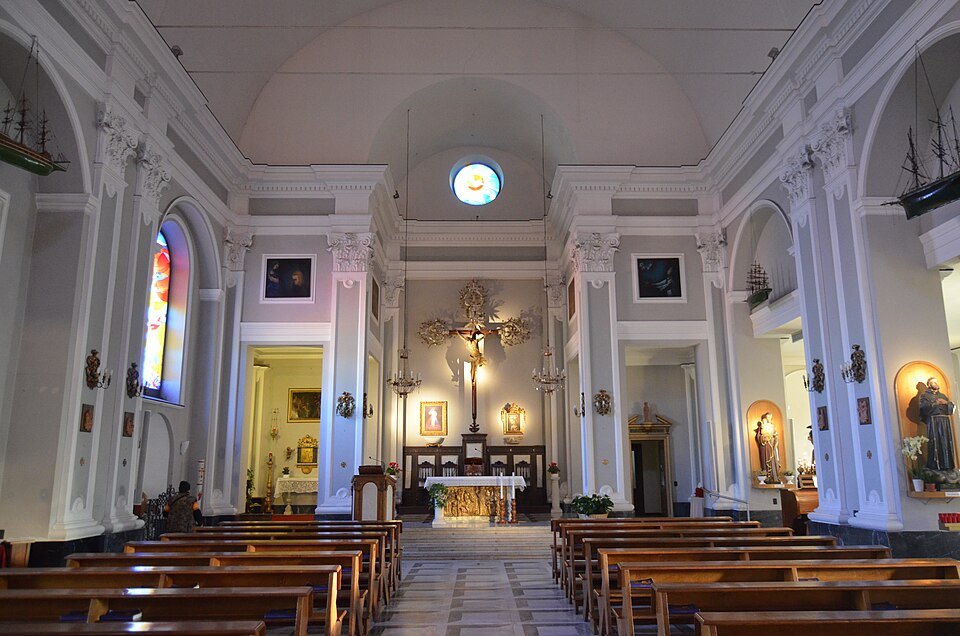
Above the cove stands the church of Sant'Antonio, reached by steps from the waterfront, with a terrace beside it looking east along the coast toward Nervi.
Walk on round the headland of Capo Santa Chiara and the scene changes: a small castle above, flat rocks where people swim from, and open sea. This is where Genoese come to sit when the cove itself is full.
The water is clean enough to swim in, and people do, from the pebbles and from the rocks. There is no sand and there are no facilities beyond the bars.
The boats are working boats, or were until recently: flat-bottomed, brightly painted, winched up above the tideline because there is no harbour wall to protect them. In a storm they are moved further back, and the sea comes up the pebbles to the doors of the houses.
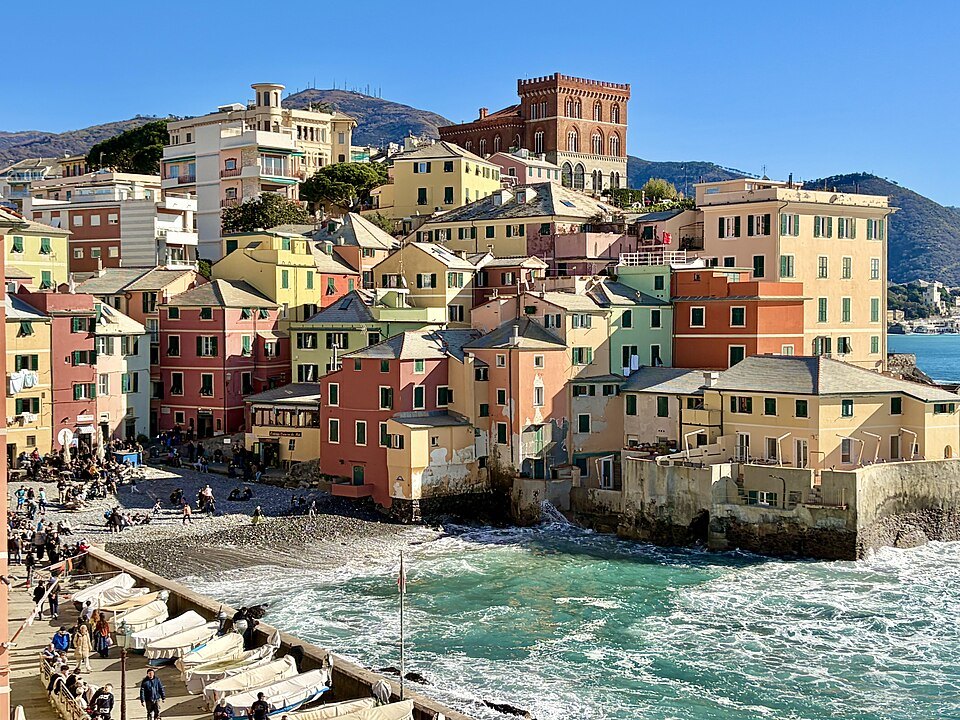
Look up at the roofline. The houses are built into the rock in steps, each one a little higher than its neighbour, with outside stairs and terraces threaded between them — the same vertical logic as the rest of Genoa, in miniature.
Getting there and the walk
The natural approach is on foot along Corso Italia, the seafront promenade that runs about two and a half kilometres from the Foce, past lidos, rowing clubs and the church of San Giuliano, with the sea on one side and apartment buildings on the other.
The walk takes half an hour at an easy pace and is flat the whole way. It is the city's outdoor living room: runners, prams, dogs, teenagers, all day and most of the evening.
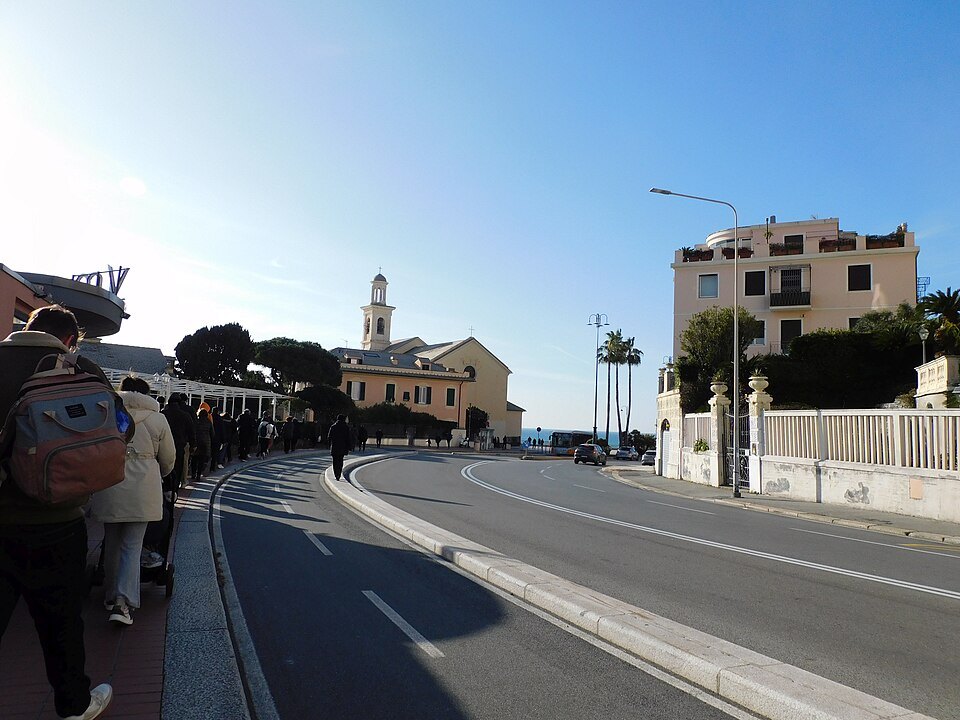
Buses run the length of Corso Italia from the Foce and from Brignole station, so it is easy to walk one way and ride back. See getting around for how the city tickets work.
Corso Italia was laid out in the nineteen-thirties along the shore below the Albaro district, which is why the buildings behind it are large and confident and the promenade is generous. It has lidos, a rowing club and several bars with terraces facing the water.
How to visit
An hour at the cove, two with the walk along the seafront.
Go early in the morning for the boats and the light, or in the evening for the crowd and the ice cream; the middle of a summer afternoon is the worst of both.
There is nothing to book, nothing to pay and no museum. This is a place to sit down, which is exactly why it is on this list.
In winter the cove is at its best: the light is low, the sea is loud, and the bars are full of people from the neighbourhood rather than visitors.
Honest notes
It is small. Visitors who arrive expecting a whole coastal village are surprised by how quickly they have seen it; the pleasure is in staying a while, not in covering ground.
Parking is effectively impossible, and the lanes down to the cove are steps. Come by bus or on foot.
The name is often explained as bocca d'asino, the donkey's mouth, from the shape of the inlet. It is a pleasant story and not a certain one.
The cove has no public toilets and few benches; the rocks beyond the headland are where people settle for an afternoon, and they are hard stone, so something to sit on helps.
Where to go next
- NEXT DOORNervi and Its PromenadeA former fishing town seven kilometres east, with a two-kilometre walkway cut along the cliffs, a chain of villa parks above it, and three small museums among the palms.Read the page
- NEXT DOORThe LanternaThe tower that has stood for the city since the Middle Ages: seventy-seven metres of masonry on a rock at the harbour mouth, rebuilt in 1543, reached by a walkway along the old walls.Read the page
- NEXT DOORThe Porto AnticoThe docks Renzo Piano turned back toward the city for Expo '92: the Bigo's white arms, a glass bubble of tropical plants, the aquarium, and a quay you can walk from end to end.Read the page