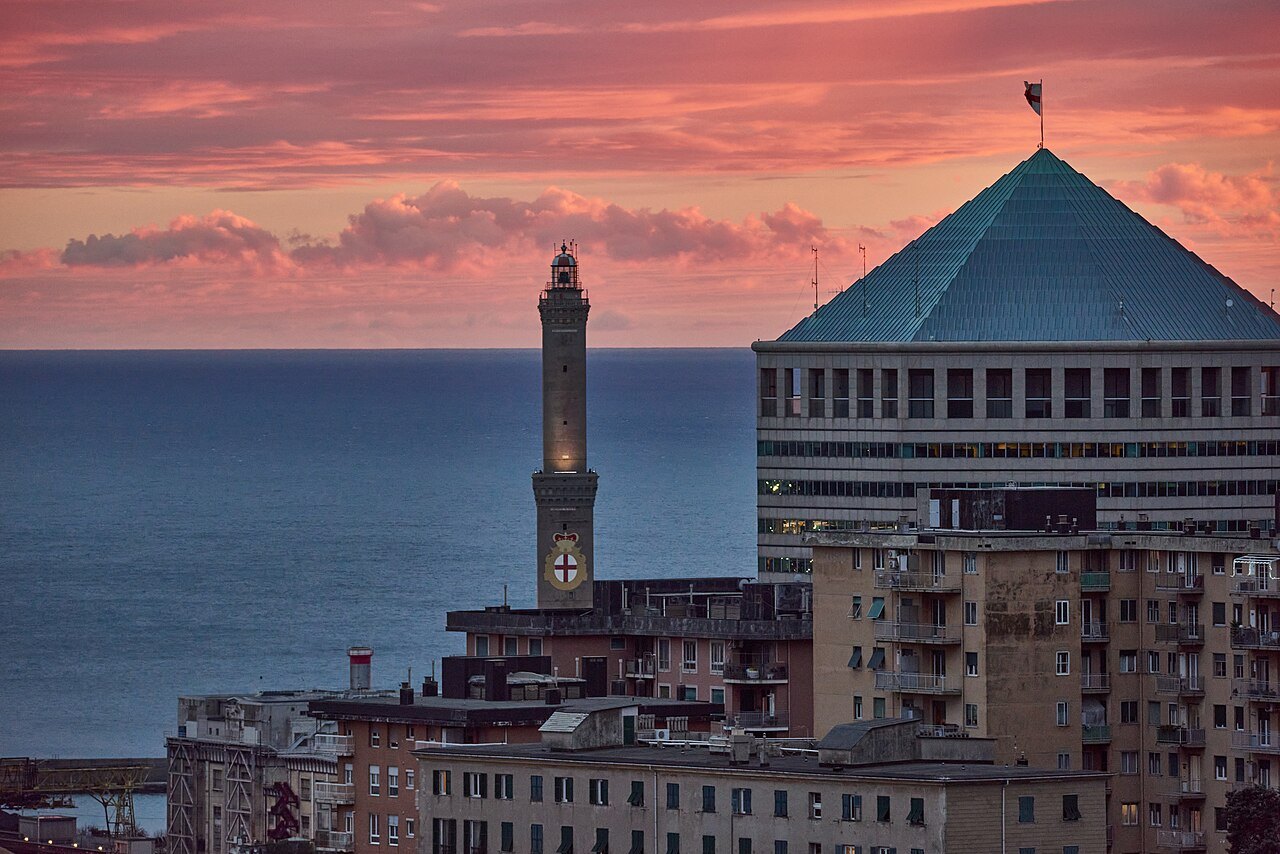
The Lanterna
- IThe two stagesTwo square shafts, each capped by a terrace, one set back above the other
- IIThe lanternThe glazed chamber at the top, still a working light for the port of Genoa
- IIIThe coat of armsThe city's arms were painted high on the lower stage in 1340 and are still renewed
- IVThe walkwayA raised path of about eight hundred metres along the old walls, above the working quays
- VThe museumRooms in the fortifications at the foot of the tower, on the city and its port
- VIThe first terraceOne hundred and seventy-two of the tower's three hundred and sixty-five steps lead to it
The sight in detail
Why it matters
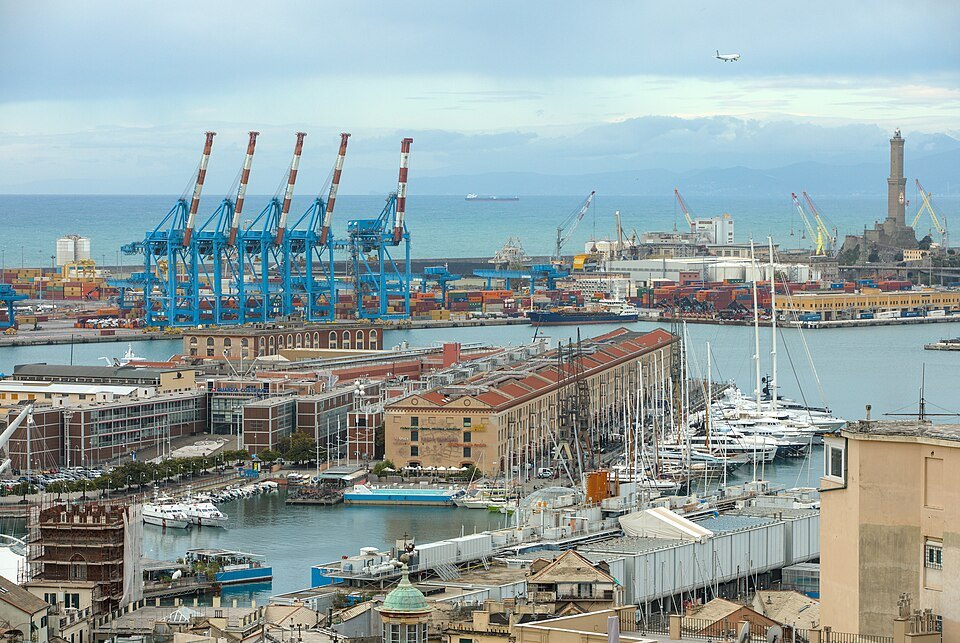
No other building stands for Genoa the way this one does. The Lanterna is on the football badges, the beer labels and the road signs; sailors have steered by it for eight hundred years; and it is the tallest traditional masonry lighthouse in the Mediterranean, seventy-seven metres of tower on a rock that lifts it to a hundred and seventeen metres above the water.
It is also a working light, operated by the navy, which is why only part of it can be climbed. The second terrace and the lantern chamber are naval property and not open; the public climb stops at the first terrace, which is high enough.
The tower's age is often overstated. A light stood on this rock from the early twelfth century, but the tower you see was rebuilt in 1543, after the earlier one was wrecked in the fighting between Genoa and its neighbours, and the work was paid for by the Bank of Saint George.
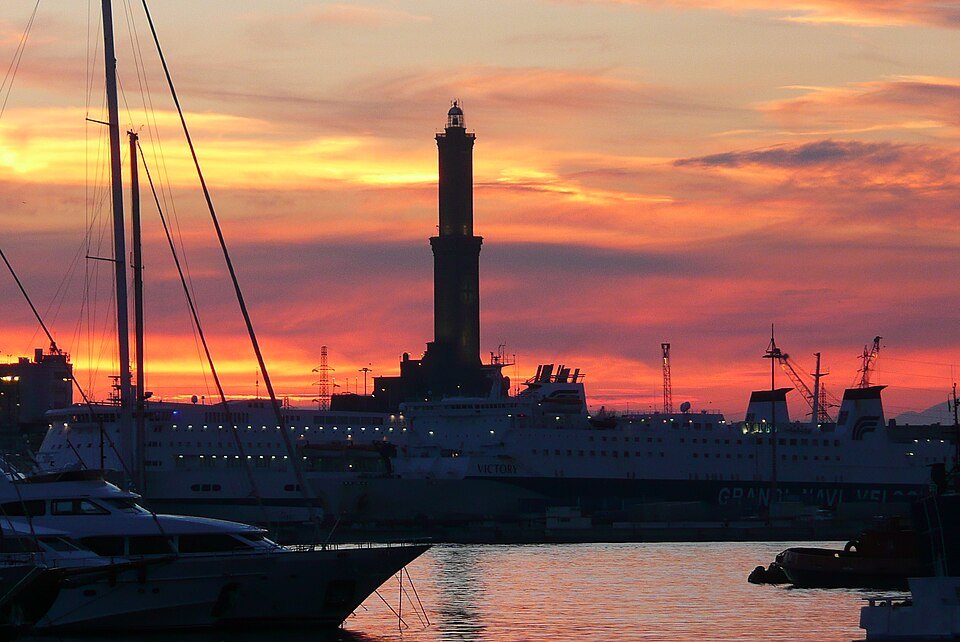
Its shape is unusually legible for a lighthouse: two square towers stacked rather than a single tapering shaft, each with a projecting terrace, the upper one set back from the lower. That silhouette is what makes it recognisable in profile from thirty kilometres out at sea, and what makes it so easy to draw that the city has used it as a logo for the best part of a century.
The walk out to it
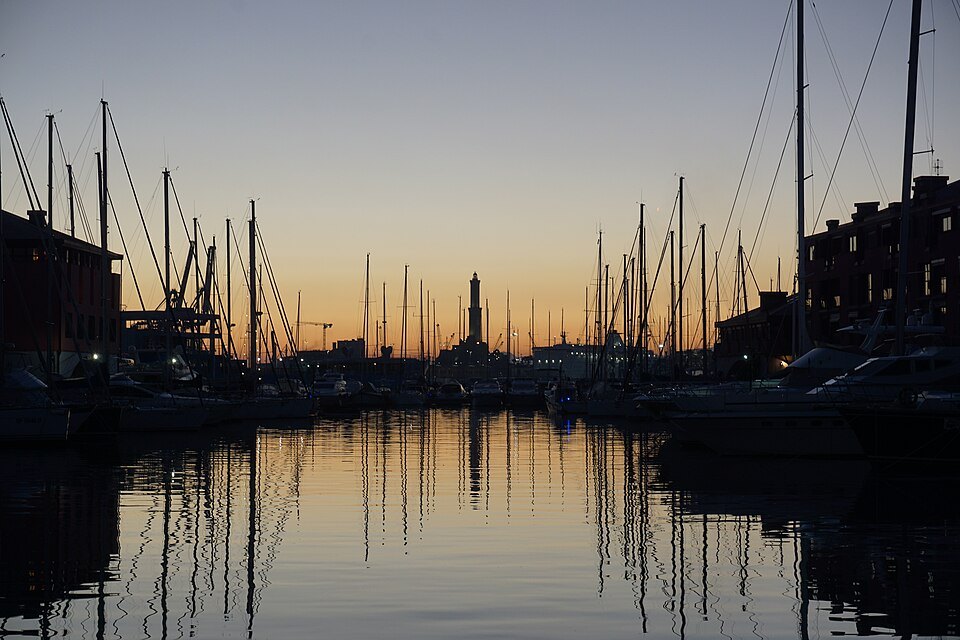
Getting there is half the visit. The Lanterna cannot be reached through the port gates, which are controlled, so the way in is a pedestrian walkway of about eight hundred metres that runs from the ferry terminal, mostly cantilevered outside the old city walls and above the working quays.
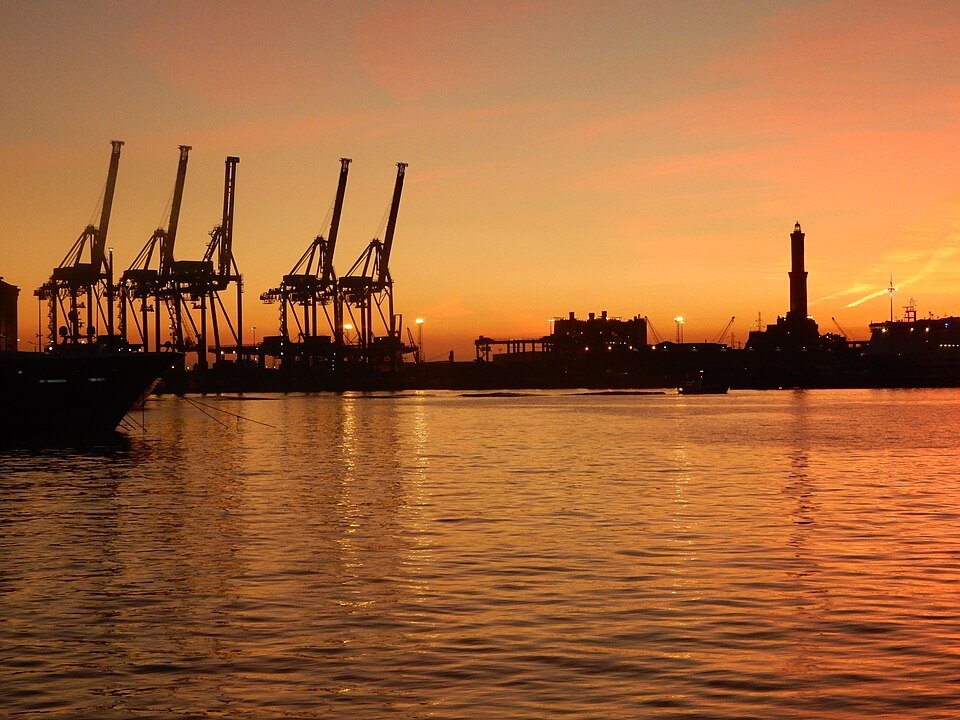
It is an unusual piece of city. On one side the wall of seventeenth-century stone; on the other, below, the ferries loading for Sardinia and Sicily, the tugs, the containers and the cranes. Few European cities let a visitor walk this close to a live port.
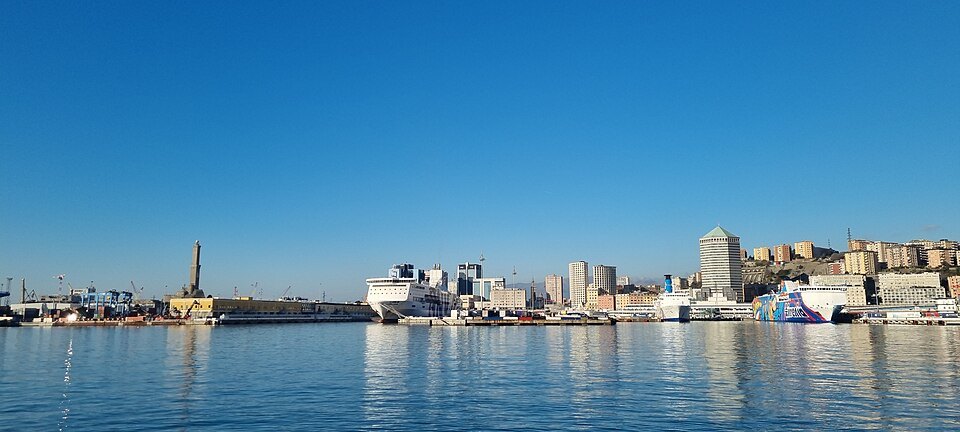
The walkway begins near the ferry terminal, served by city buses and about four hundred metres from Dinegro metro station; Piazza Principe station is roughly a kilometre and a half away. It is exposed, so it is windy in a blow and hot at midday in summer.
The walkway was opened in the nineteen-nineties as part of the same effort that rebuilt the waterfront, and it solved a real problem: the tower had been stranded inside the port since the nineteenth century, visible from everywhere and reachable by almost nobody. Walking out along it, with the wall on one side and the cranes below on the other, is the clearest possible statement of how this city and its port fit together.
Halfway along, the path passes the Porta Lanterna, one of the old gates of the seventeenth-century walls, and a short stretch of rampart. The park at the tower's foot is a grassy shelf above the quays, with benches and, on a clear day, a view east over the whole arc of the city.
What you actually see
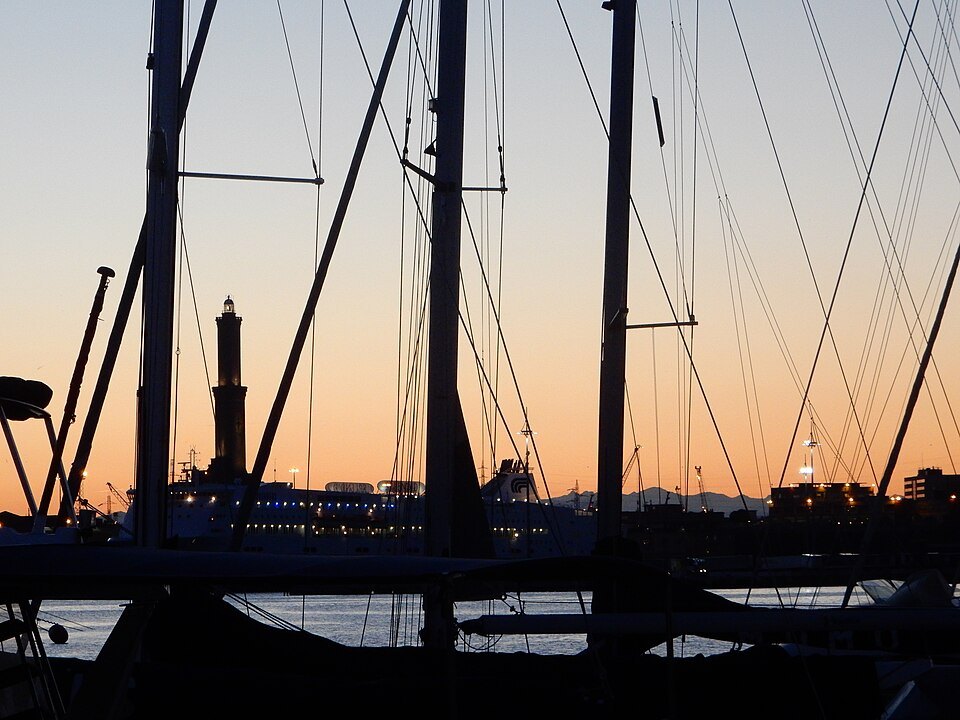
The tower is severe: two plain square stages with cornices, a spiral of tiny windows, and nothing decorative except the painted arms of the commune high on the lower shaft, first put there in 1340 by a painter named Evangelista di Milano and repainted many times since.
At the foot, in the old fortifications, is a small museum about the city, the port and the tower itself, with the machinery and optics of earlier lights. It is modest, and it is included with the climb.
The climb is a masonry stair inside the wall, one hundred and seventy-two steps to the first terrace. From it you look straight down the mole, west over the container port and east over the whole city, stacked up its hillside with the hills and forts behind.
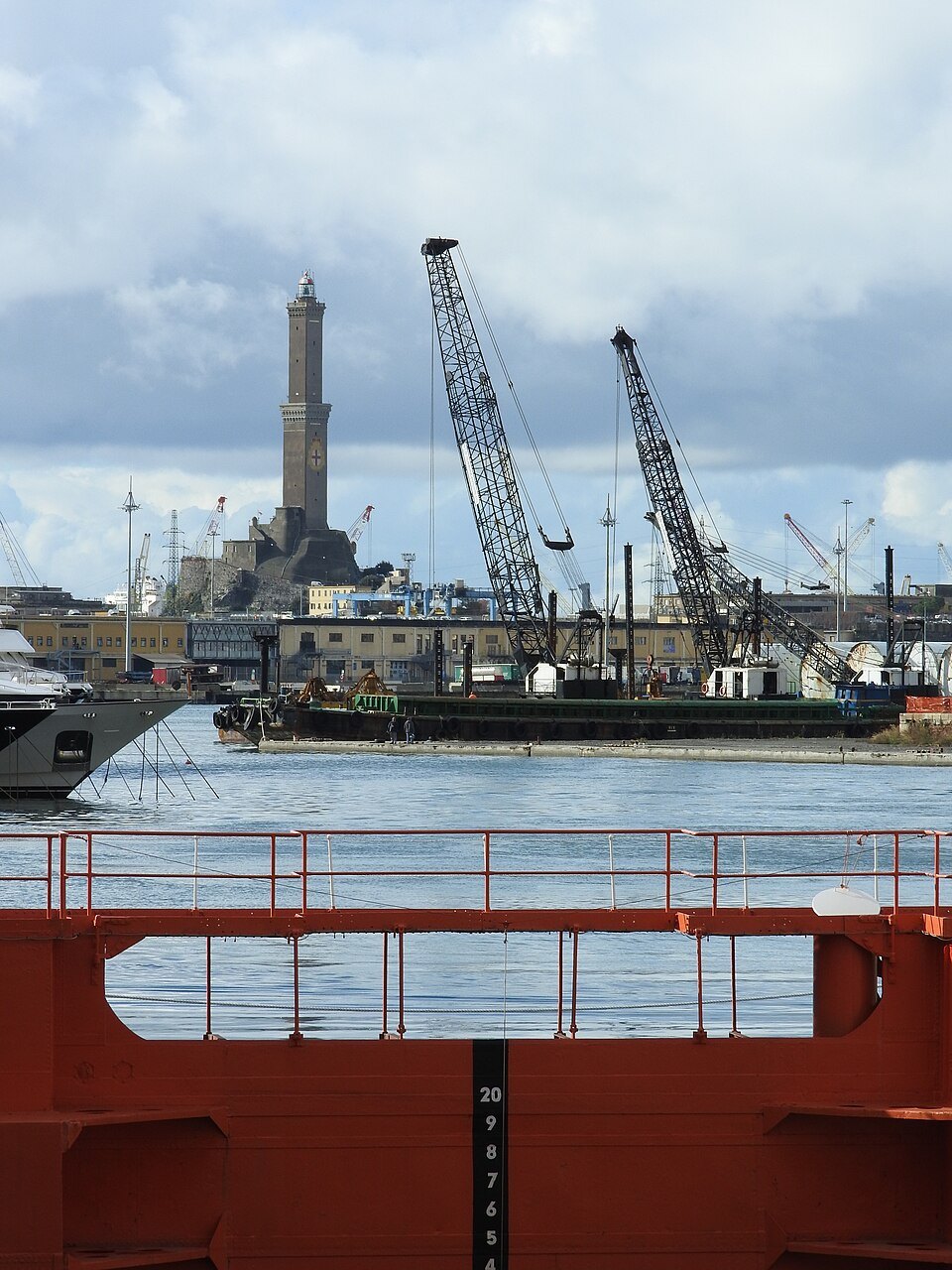
The rock the tower stands on is no longer at the water's edge. Land reclamation for the port pushed the sea back, so the Lanterna now stands a short distance inland, above the quays rather than in the waves — a change that surprises people who know it from old pictures.
The tower has been repaired many times. Storm, siege and lightning each did damage, the light itself was modernised with a rotating Fresnel lens in the eighteen-forties, and the building was patched again after the Second World War, when the port around it was bombed heavily. What survives is a Renaissance tower carrying modern equipment.
How to visit
Two hours covers the walk out, the museum and the climb at an unhurried pace.
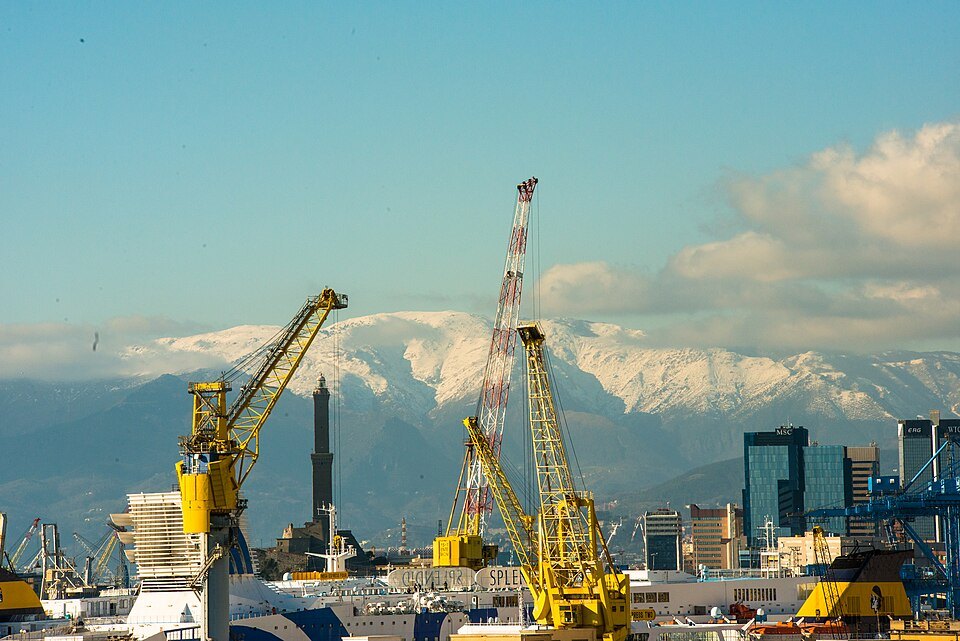
The tower does not open every day; it is usually a weekend visit, and it shuts in bad weather because the walkway and the terrace are both exposed. Check before making the trip, which is not a short one.
Shoes with grip help on the stair, which is worn. There is no lift, and the walkway itself is level but long.
It combines naturally with the Porto Antico, a walk or one metro stop away, and with the sea museum if you want the port's history indoors first.
Honest notes
The Lanterna is best seen from a distance as well as up close: from the Bigo, from the terraces of Castelletto, or from a ferry leaving the port.
The surroundings are industrial and will stay that way. This is a monument inside a working port, not in a park.
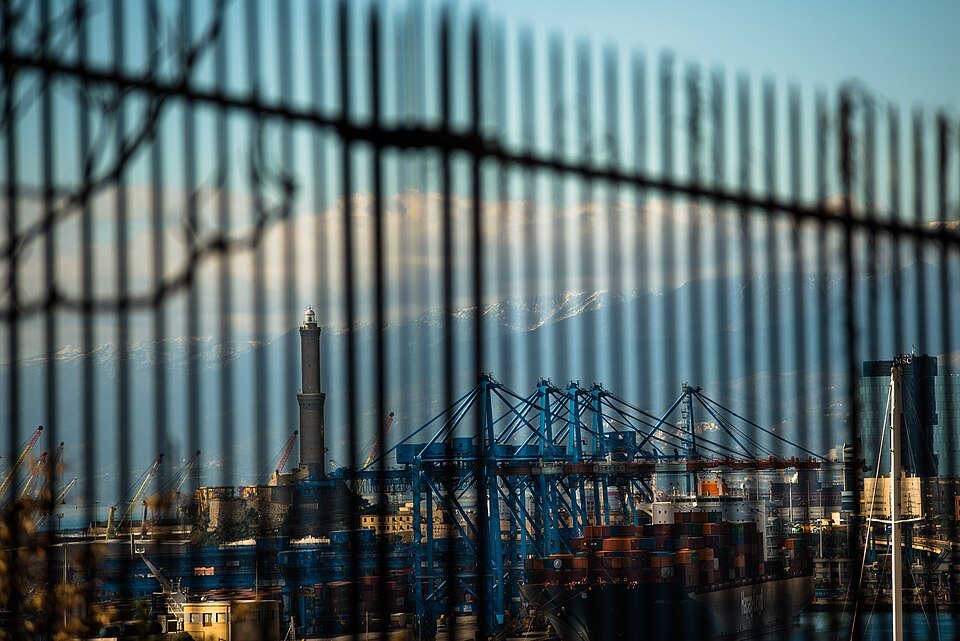
The second terrace, the one in every photograph taken from the sea, cannot be visited. What you climb to is the lower of the two.
Where to go next
- NEXT DOORThe Porto AnticoThe docks Renzo Piano turned back toward the city for Expo '92: the Bigo's white arms, a glass bubble of tropical plants, the aquarium, and a quay you can walk from end to end.Read the page
- NEXT DOORGalata Museo del MareThe largest maritime museum in the Mediterranean, in the old arsenal where Genoa built its galleys: a full-size galley to walk through, an emigration gallery, and a submarine moored alongside.Read the page
- NEXT DOORBoccadasseA cove of pastel houses, boats pulled up on a pebble beach and an ice cream in your hand, at the end of the city's seafront promenade and still inside Genoa.Read the page