The Porto Antico
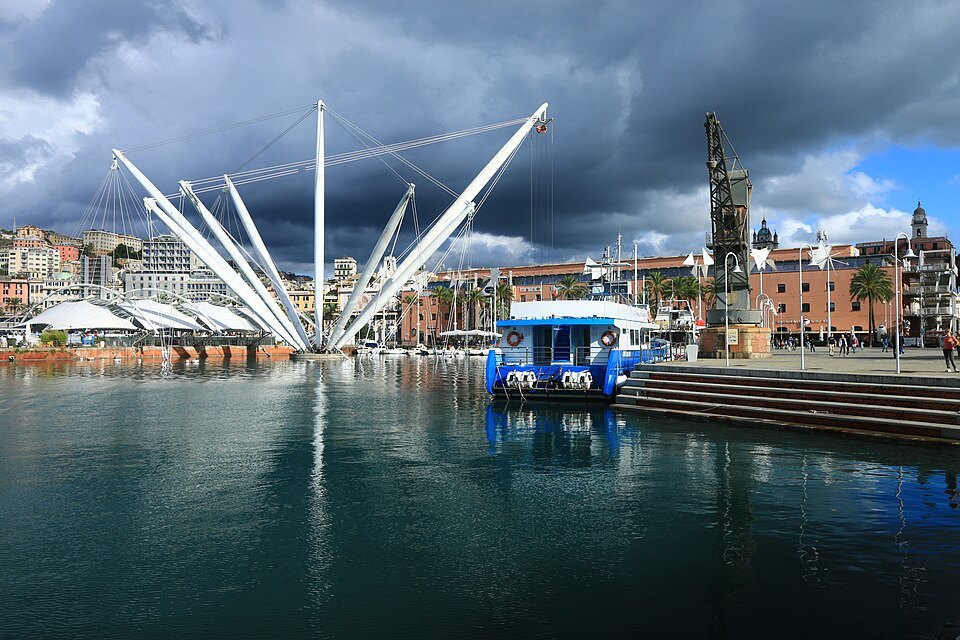
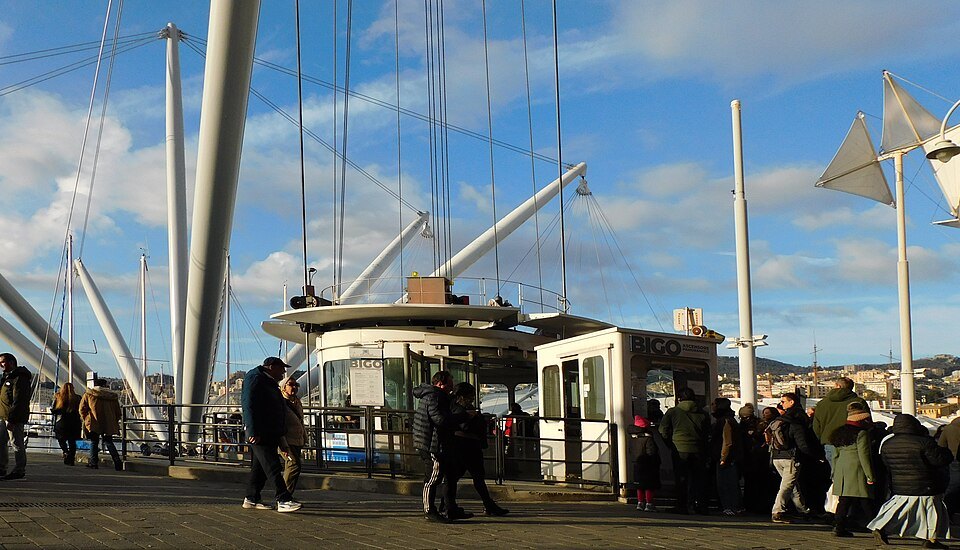
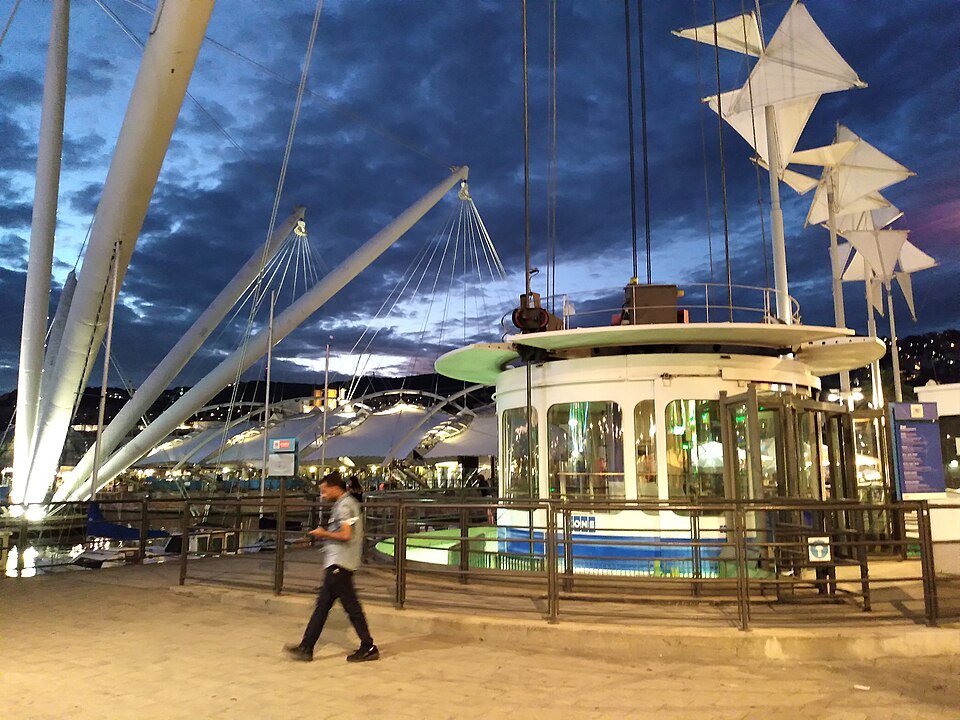
- IThe BigoRenzo Piano's white derrick of 1992, with a lift that turns slowly above the water
- IIThe BiosferaA glass sphere on the water holding a small tropical ecosystem, added in 2001
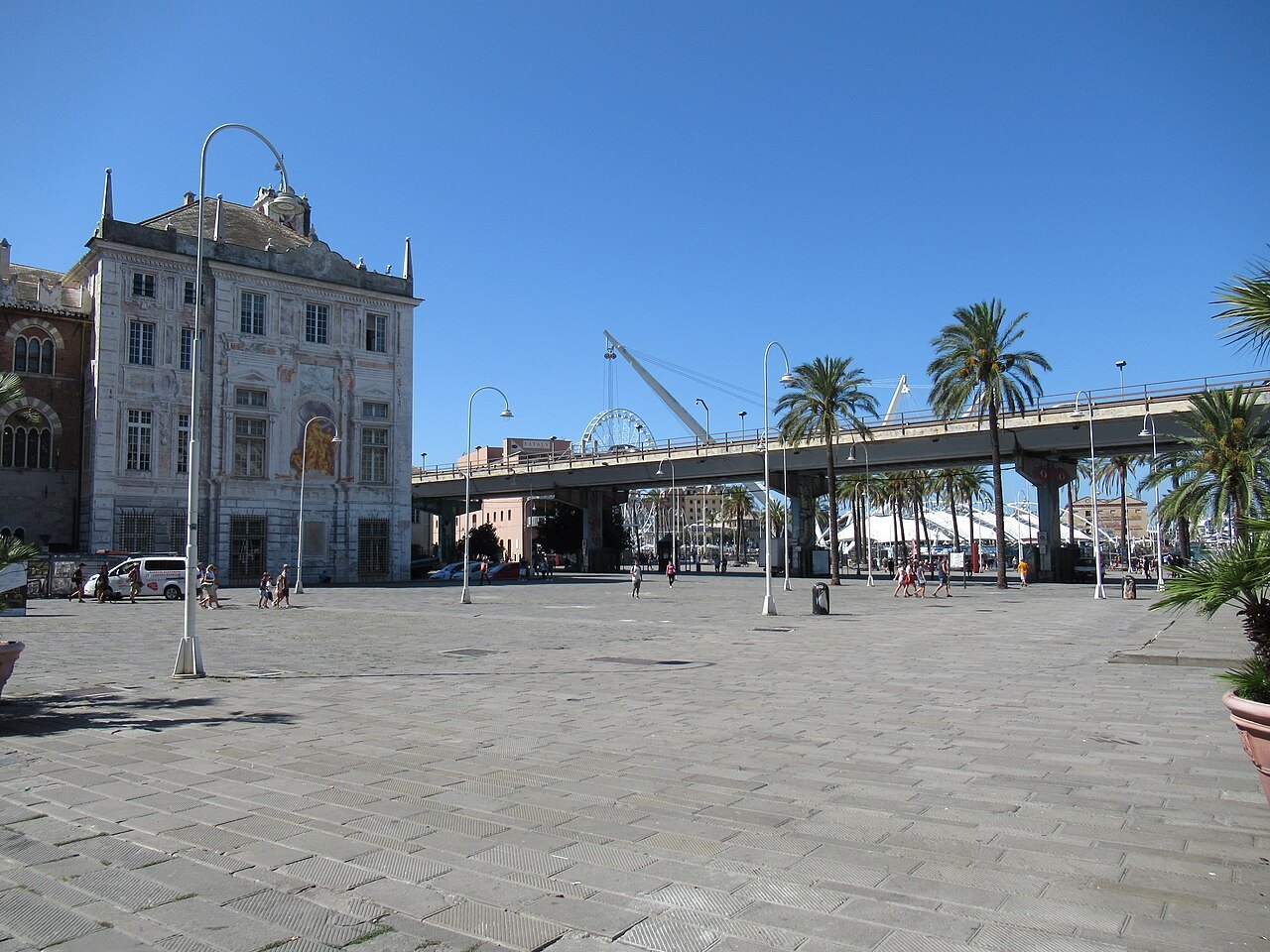
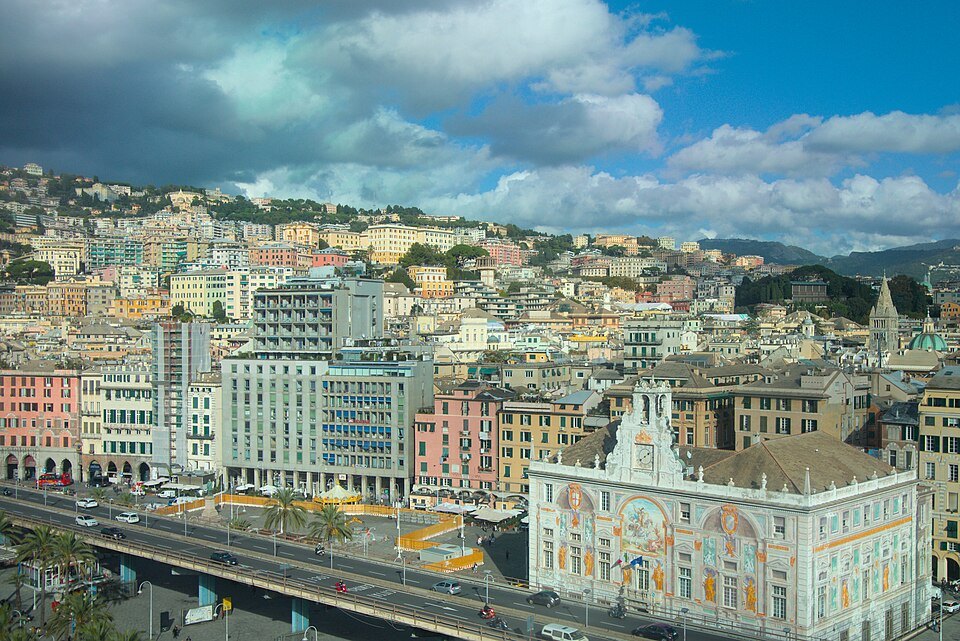
- IIIPiazza CaricamentoThe long arcaded front where cargo was once loaded, now the square between city and port
- IVPalazzo San GiorgioThe frescoed palace of the Bank of Saint George, painted on its harbour side
- VSottoripaThe medieval arcade behind the quay, dark, deep and full of fried-fish counters
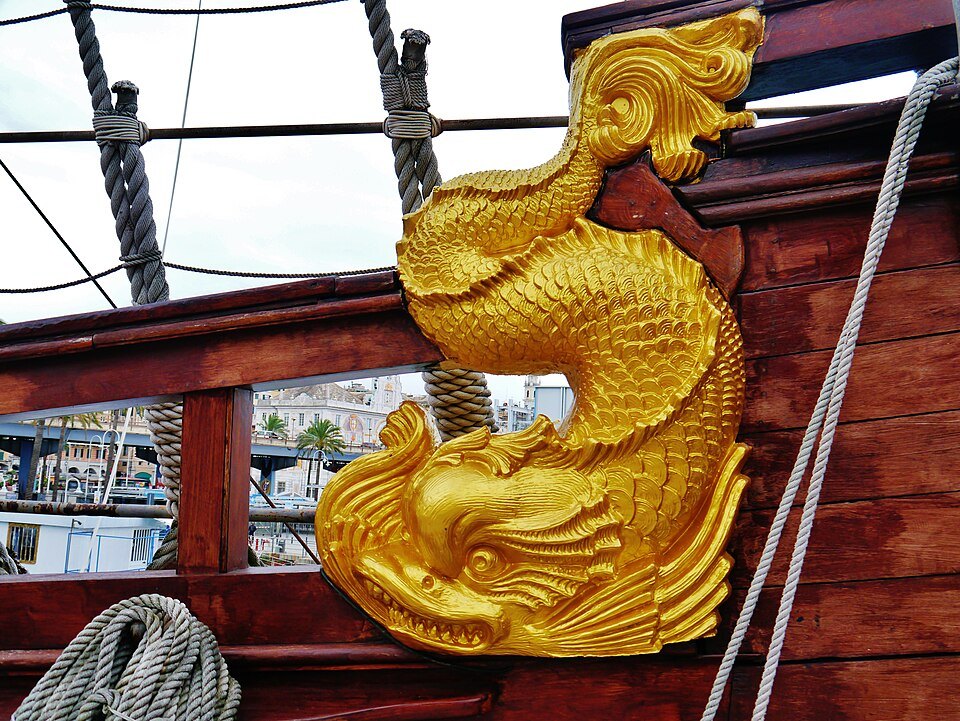
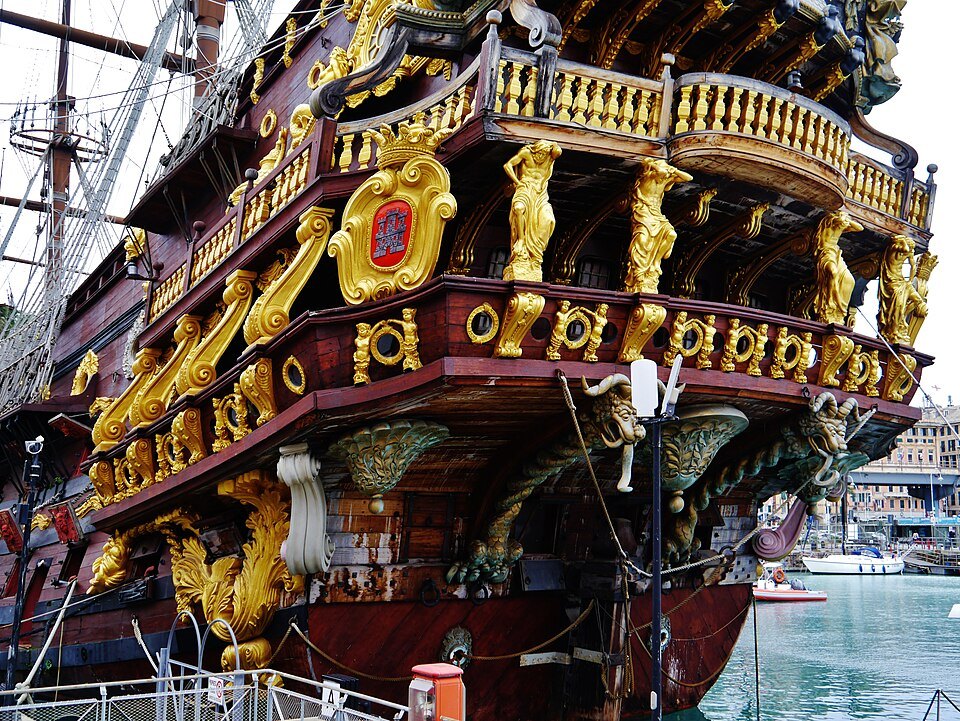
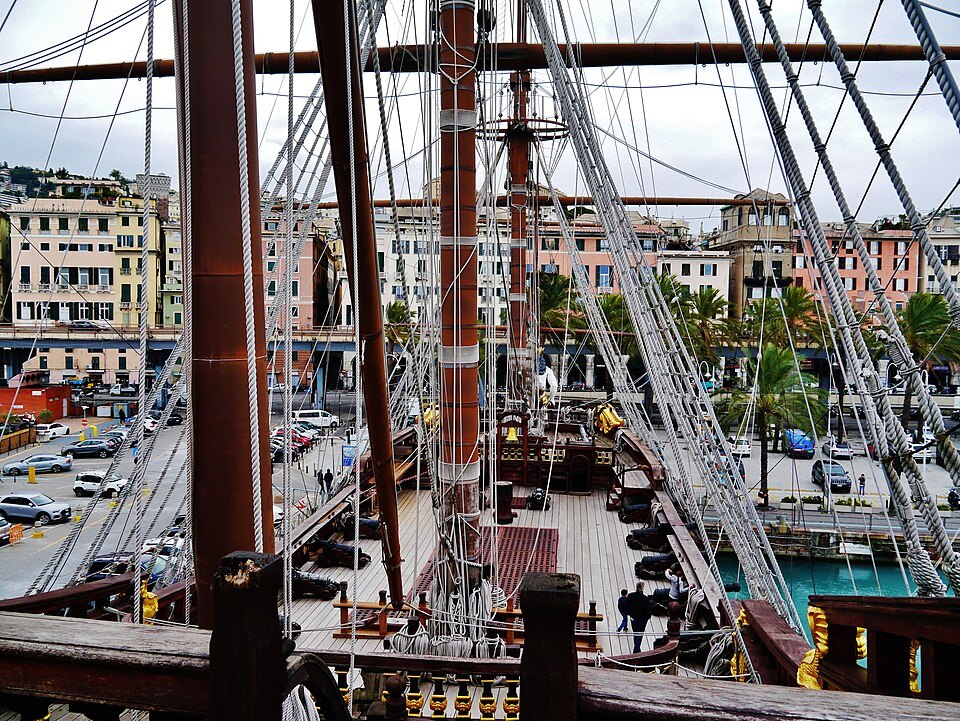
- VIThe Neptune galleonA film-set galleon moored at the quay, built for a Polanski film in 1985
The sight in detail
Why it matters
For a century the city was cut off from its own harbour. The waterfront belonged to cargo, rail and customs, and from the nineteen-sixties an elevated road ran along it. What changed things was an anniversary: for Expo '92, the five hundredth of Columbus's crossing, the old docks were rebuilt to a design by Renzo Piano, who was born in the city, and handed back to the public.
That is why the Porto Antico feels unlike the rest of Genoa. It is wide, flat and modern, with water on one side and the wall of the old town on the other. Most visits to the city begin or end here, because the aquarium, the sea museum and the harbour boats all lie along the same quay.
The rebuilding also settled an argument about what a port city should do when its cargo moves elsewhere. Genoa did not turn its docks into a marina for other people; the working port is still there, immediately west, and the container cranes are part of the view from every terrace above the city.
What you actually see
The Bigo is the emblem. Its white steel arms, modelled on the derricks that once unloaded ships, carry a panoramic lift that rises and rotates slowly, giving a view over the roofs of the old town and back across the harbour. It is the cheapest way to understand the shape of the city: a thin strip of buildings pressed between water and hills.
Beside it the Biosfera, a glass sphere set on the water and added in 2001, holds ferns, tree frogs and hummingbirds in a warm, damp air a few paces from the sea. It takes ten minutes and is best seen as a curiosity rather than a botanical garden.
Along the quay are the Aquarium, the largest in Italy, and further west the Galata sea museum in the old arsenal buildings. Between them, moored against the stone, is the Neptune, a full-size wooden galleon built for a film in 1985 and now a walk-on attraction.
On the landward side the long arcaded front of Piazza Caricamento faces the water. Behind it, Palazzo San Giorgio stands with its harbour front painted in fresco; it housed the Bank of Saint George, founded in 1407 and one of the earliest institutions of its kind in Europe. Behind that again begins Sottoripa, a medieval arcade running parallel to the quay, dark and narrow, lined with fryers and grocers — the oldest continuously commercial street in the city.
Look at the ground as well as the buildings. The quay keeps its rails, bollards and mooring rings, and the old dock basins are still basins, with fishing boats and harbour craft in them rather than yachts alone. The Magazzini del Cotone, the long cotton warehouses closing the eastern side, are nineteenth-century sheds converted rather than replaced, and their length gives the scale of the trade that once passed here.
Walking the quay
The whole waterfront can be walked in half an hour, from the Darsena in the west, where the Galata stands, to the Marina and the cotton warehouses in the east, now cinemas and shops.
It is the one part of Genoa that is genuinely flat and easy, and the only place where the city's relationship with the sea is visible from ground level rather than from a terrace. Cruise ships dock further west; the harbour tour boats leave from the quay in front of the aquarium.
The elevated road, the Sopraelevata, still runs above part of the waterfront. It is loud, and it is also the thing that keeps the port visible as a working port rather than a promenade, which is not the worst outcome.
Two short detours are worth making. From the Darsena, a lane leads back into the old town at Via di Prè, which is the sailors' quarter and still looks it. From Piazza Caricamento, the arcades of Sottoripa run east to Piazza Banchi, the old exchange square, where a church was built above shops so the rents could pay for it.
How to visit
Half a day if you are going into the aquarium, an hour if you are not. The quay is public and open at all hours.
The Bigo lift and the Biosfera are separate tickets, both short visits. In bad weather the lift may not run.
Come early if you want the quay to yourself: by late morning in season it is the busiest place in the city. The light is better here in the afternoon, when the sun turns and lights the facades of the city behind rather than the water.
Honest notes
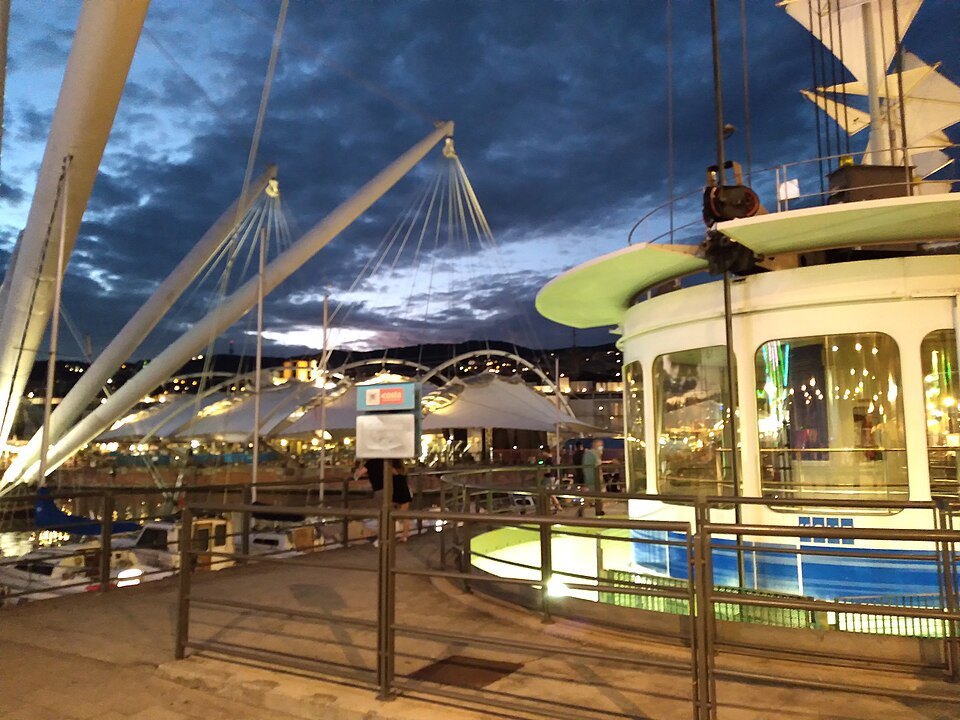
This is a rebuilt waterfront, not a preserved one. Nothing you walk on is medieval, and some of it — the shopping arcades in the cotton warehouses — is ordinary.
The galleon is a film prop, and the museum ships along the quay are separate tickets from the sea museum itself.
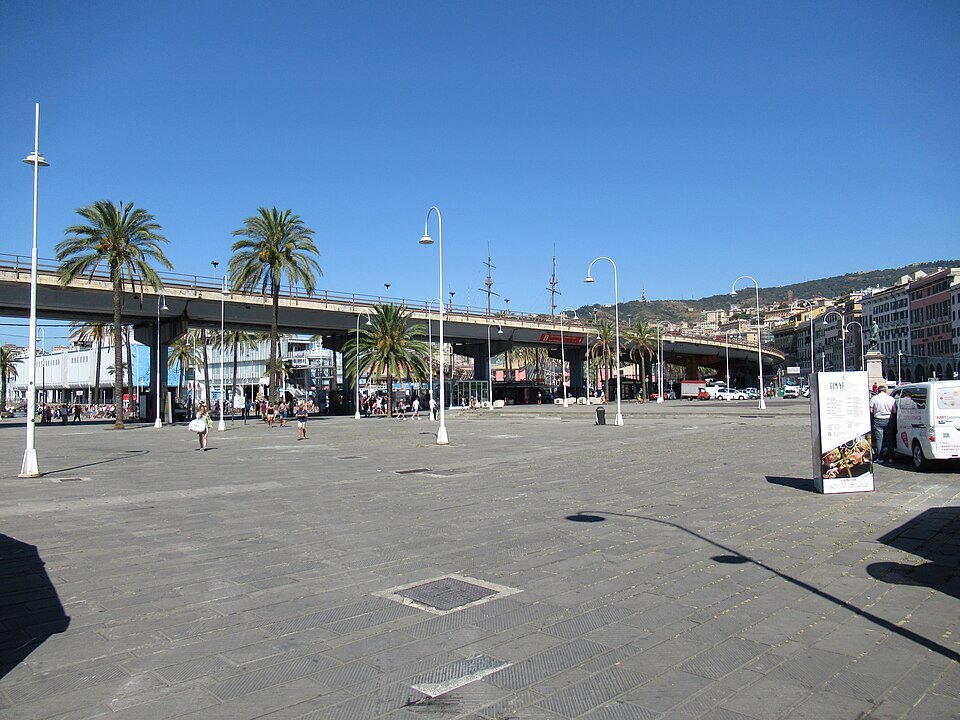
For the old harbour city, look behind you rather than at the water: the arcade of Sottoripa and the frescoed front of Palazzo San Giorgio are the medieval port, and they are a minute from the quay.
Where to go next
- NEXT DOORThe Aquarium of GenoaRenzo Piano's aquarium on the old quay, built for Expo '92: dolphins in open-air tanks, a shark bay, manatees, penguins and a touch pool of rays, on a walk of about two hours.Read the page
- NEXT DOORGalata Museo del MareThe largest maritime museum in the Mediterranean, in the old arsenal where Genoa built its galleys: a full-size galley to walk through, an emigration gallery, and a submarine moored alongside.Read the page
- NEXT DOORThe LanternaThe tower that has stood for the city since the Middle Ages: seventy-seven metres of masonry on a rock at the harbour mouth, rebuilt in 1543, reached by a walkway along the old walls.Read the page