Galata Museo del Mare
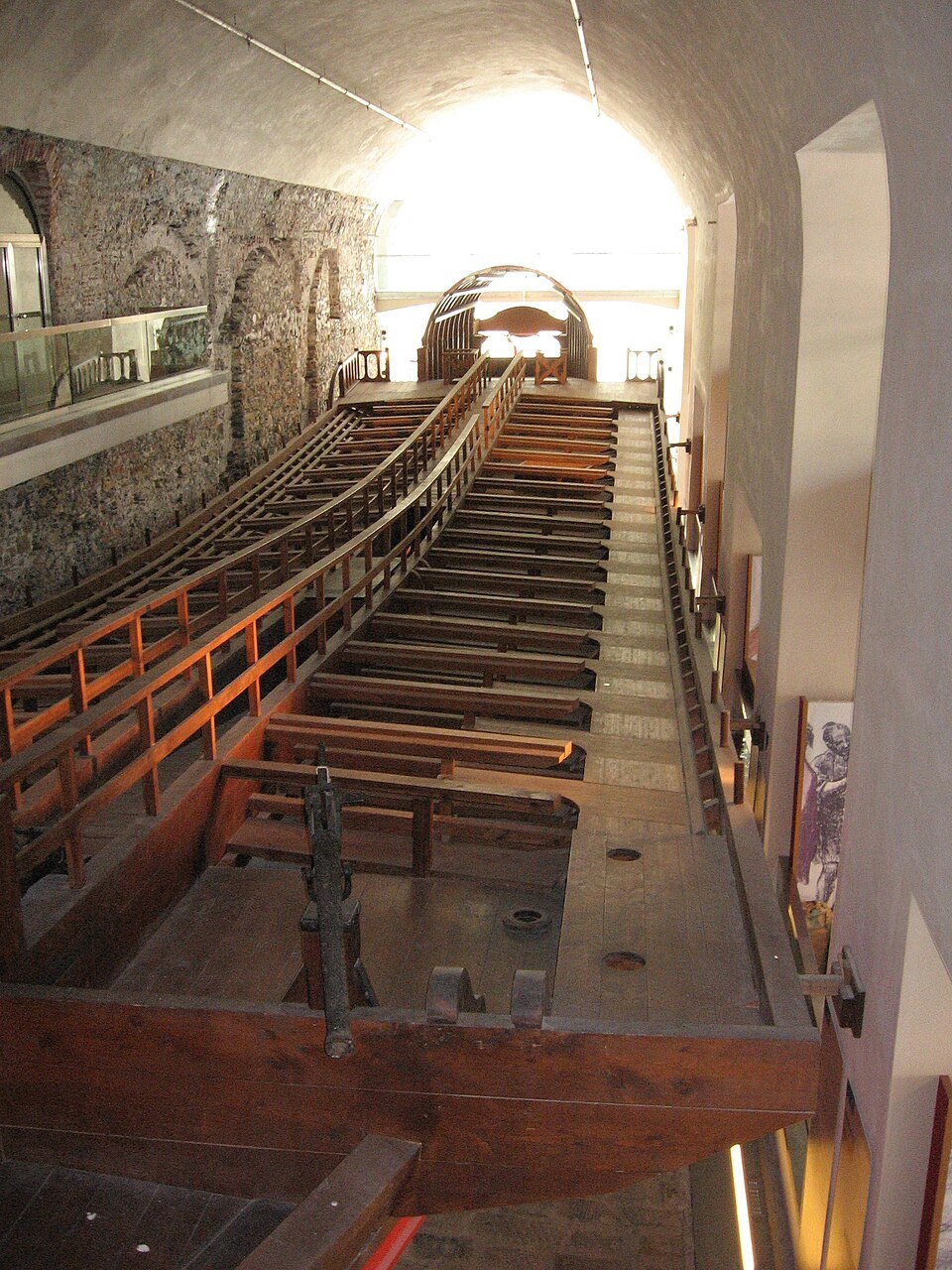
- IThe galleyA full-size reconstruction of a seventeenth-century Genoese galley, built inside the museum
- IIThe age of sail roomsDecks, cabins and a storm simulator recreating a voyage round Cape Horn
- IIIMemoria e MigrazioniA gallery on emigration from this port, opened in 2011, and on migration today
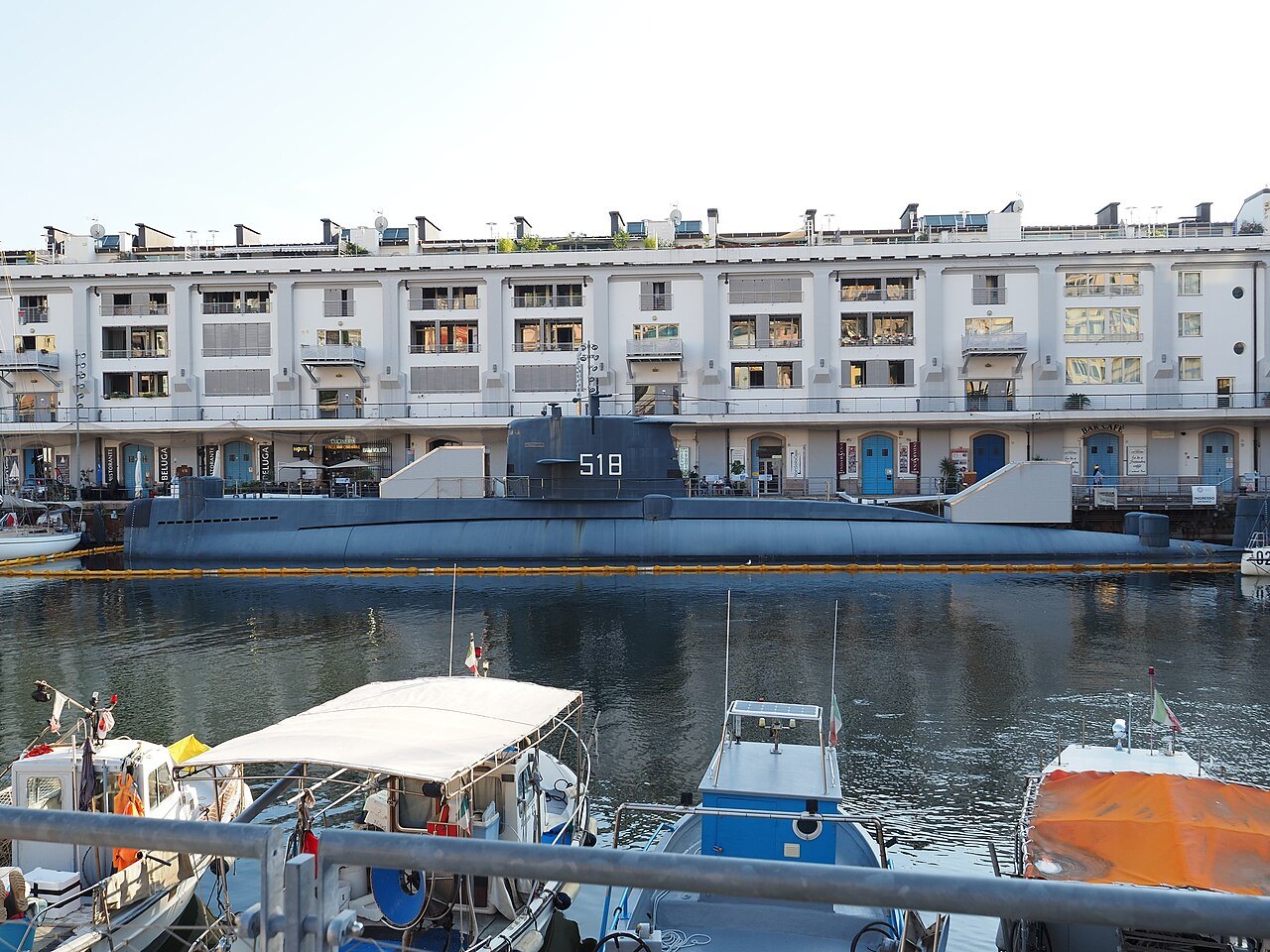
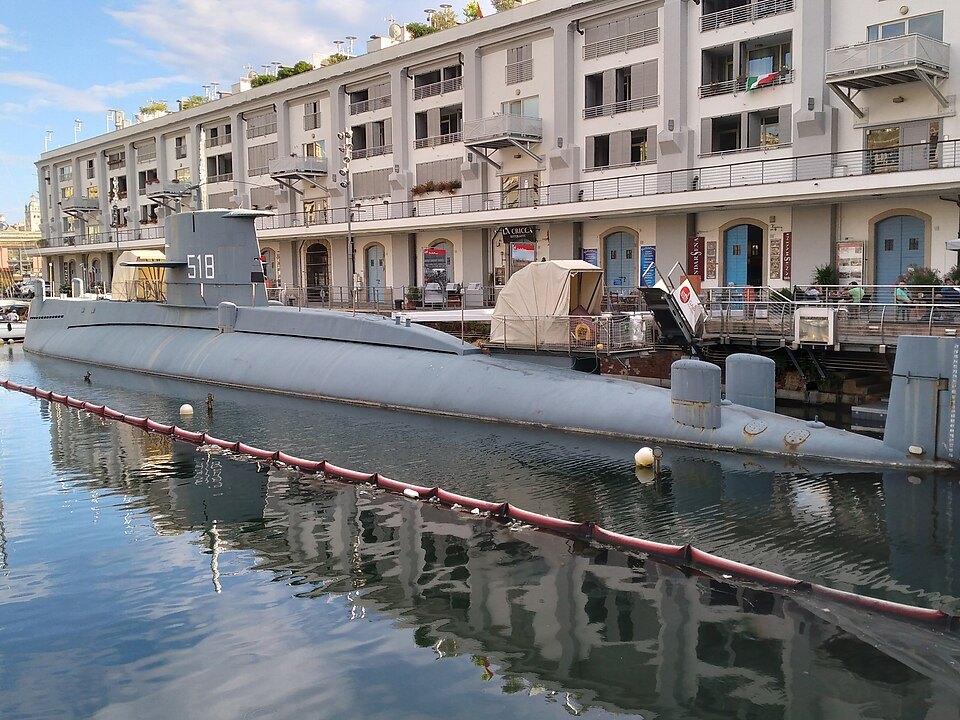
- IVThe submarine Nazario SauroA 1980 Italian submarine moored at the quay and entered as part of the visit
- VThe roof terraceA glazed top floor and open terrace over the Darsena and the port
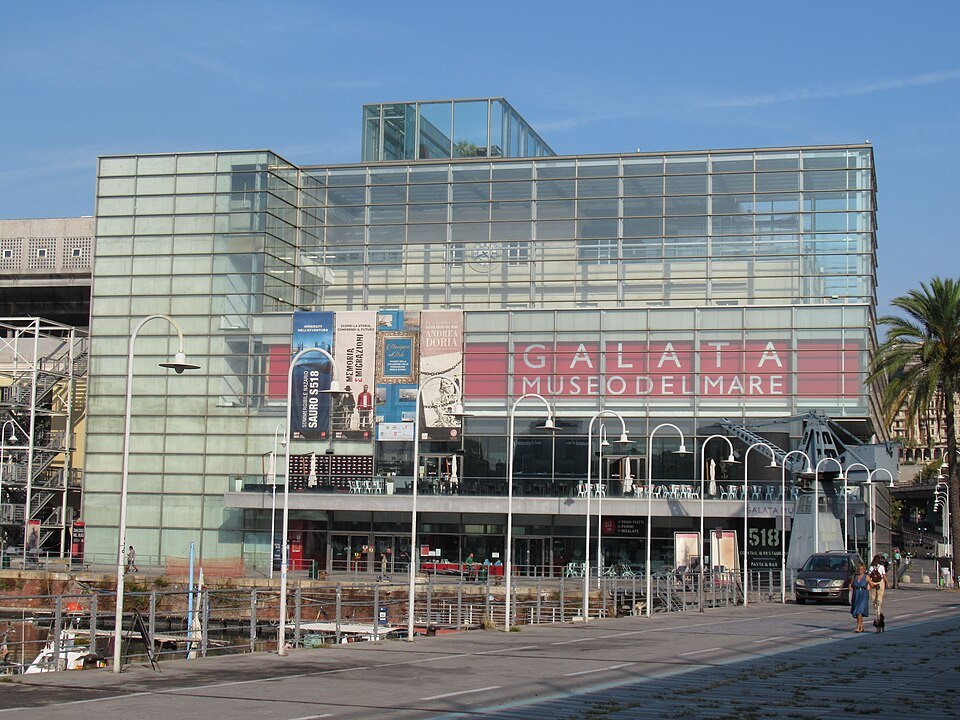
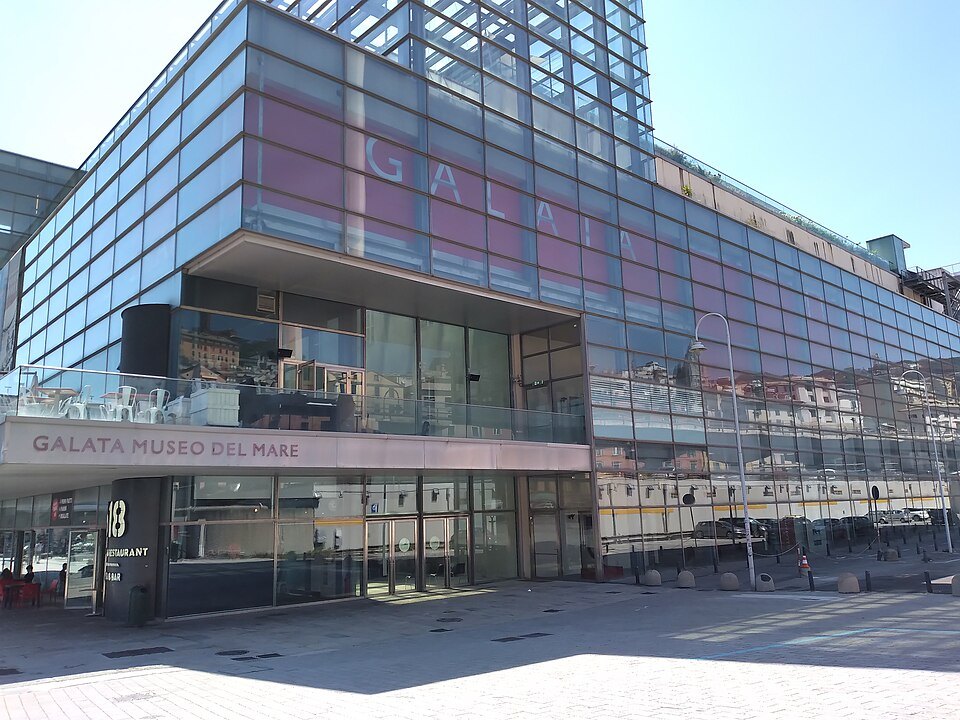
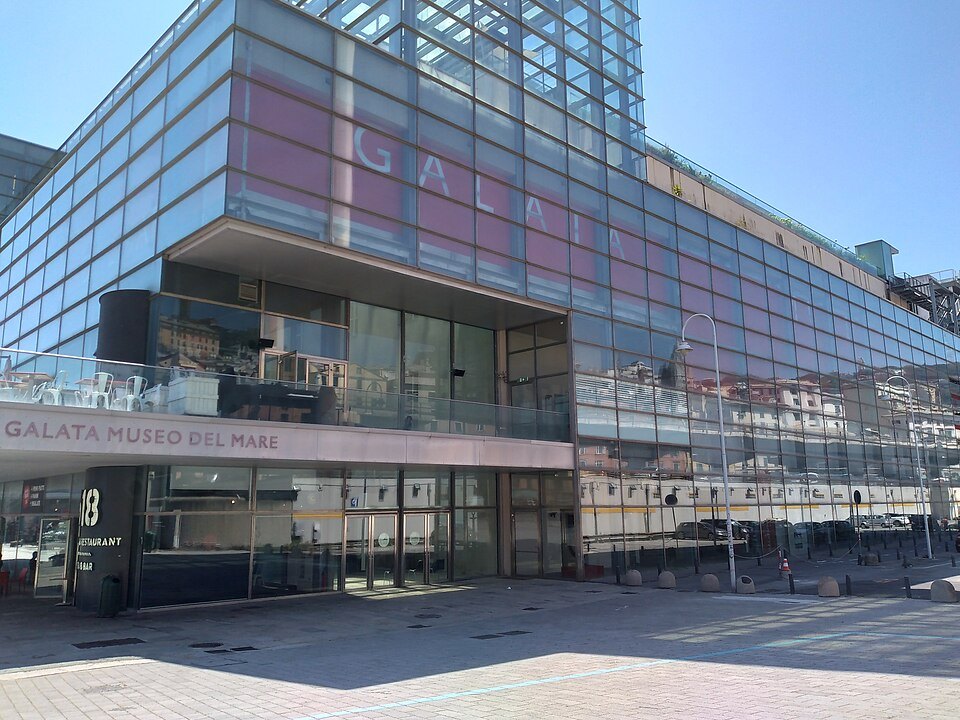
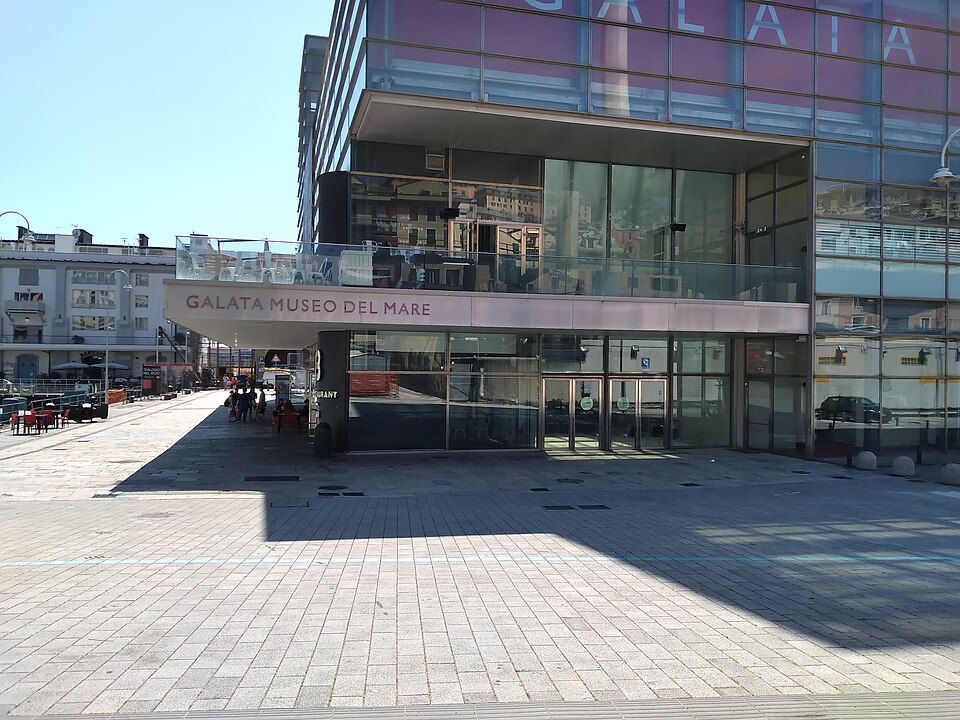
- VIThe buildingThe Palazzo Galata in the old arsenal basin, converted by Guillermo Vázquez Consuegra
The sight in detail
Why it matters
Genoa's history is its port, and this is the museum that tells it. It opened in 2004, the year the city was European Capital of Culture, in a building of the old arsenal at the Darsena — the basin where the republic's galleys were actually built.
It is the largest maritime museum in the Mediterranean and unusually good at making an abstract subject physical: you walk through a galley, climb a ship's side, sit in a cabin, and come out onto a terrace over the water the whole thing is about.
It also does something few Italian museums do: it treats emigration as central rather than as a footnote. Millions left for the Americas through this port, and the gallery devoted to them connects that history directly to migration across the Mediterranean now.
A galley is the right object to build a museum around. Genoa's power rested on them for four centuries: long, narrow, rowed ships that could work the Mediterranean regardless of wind, crewed partly by paid oarsmen and partly by convicts and slaves. The reconstruction inside the museum does not soften that arrangement.
What you actually see
The first floor is the age of the galley. At its centre is a full-size reconstruction of a Genoese galley, built inside the museum, with the rowing benches, the gangway and the cramped spaces below; around it are charts, instruments and the machinery of a state that lived by sea power.
The floors above move forward in time: the age of sail, with reconstructed decks, a cabin and a simulated rounding of Cape Horn in a storm; then steam, the liners, and the port as it industrialised.
Memoria e Migrazioni, on the upper floor, follows the emigrant's route from the quay to the ship, the crossing and arrival at Ellis Island or Buenos Aires, using documents, luggage and recorded voices. It ends with today's crossings, which is the point of putting the two together.
Moored outside is the Nazario Sauro, an Italian submarine of 1980, entered through a hatch and walked end to end. It is small, hot and completely convincing, and it is the part most visitors remember.
The top of the building is glazed, with a terrace looking over the Darsena, the roofs of the sailors' quarter behind, and the cranes beyond. It is a good place to end, and there is a café.
Objects are used sparingly and well: a compass, a set of dividers, a sea chest, a bundle of letters. The museum leans on reconstruction and film rather than on cases of artefacts, which makes it a better first museum for children than most, and a slightly thinner one for specialists.
There is a room devoted to Christopher Columbus, treated as a Genoese sailor of his period rather than as a hero, with charts and instruments of the fifteenth century and an account of the four voyages.
The building itself
The Palazzo Galata takes its name from the Genoese colony of Galata at Constantinople. The lower part of the building was where galleys were constructed, and it belonged to the arsenal, the most important military and maritime complex in the city.
The conversion, by the Spanish architect Guillermo Vázquez Consuegra, kept the old shell and slid a new structure of glass and steel inside and above it, which is why the museum reads as modern from the quay and as old from within.
It is part of a group of museums that also includes the museum at the Lanterna, the naval museum at Pegli and the emigration collections in the medieval Commenda di Prè, across the road.
From the terrace you look straight down into the Darsena basin, where the galleys were launched. The water is still there, edged now by apartments and university buildings, and the shape of the old arsenal is easy to read from above.
How to visit
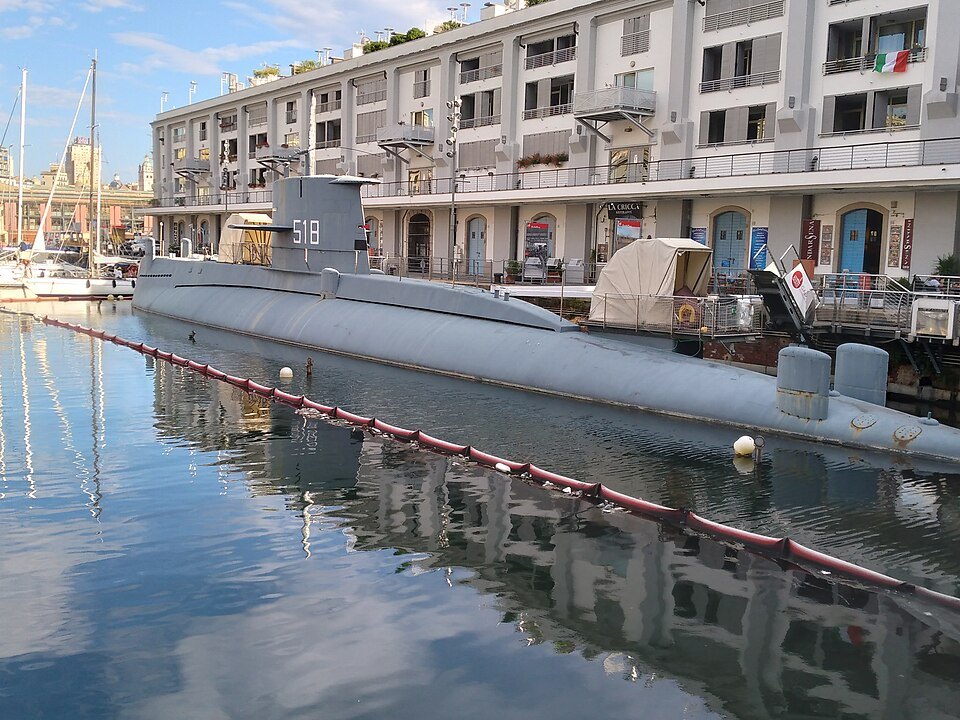
Two hours for the museum, two and a half with the submarine, which is entered separately from the quay and has its own queue.
It is at the western end of the old port, a few minutes' walk from the aquarium and directly opposite Darsena metro station.
Combined tickets with the aquarium and the other waterfront attractions are sold at the same desks. The submarine is not suitable for anyone who dislikes ladders or confined spaces.
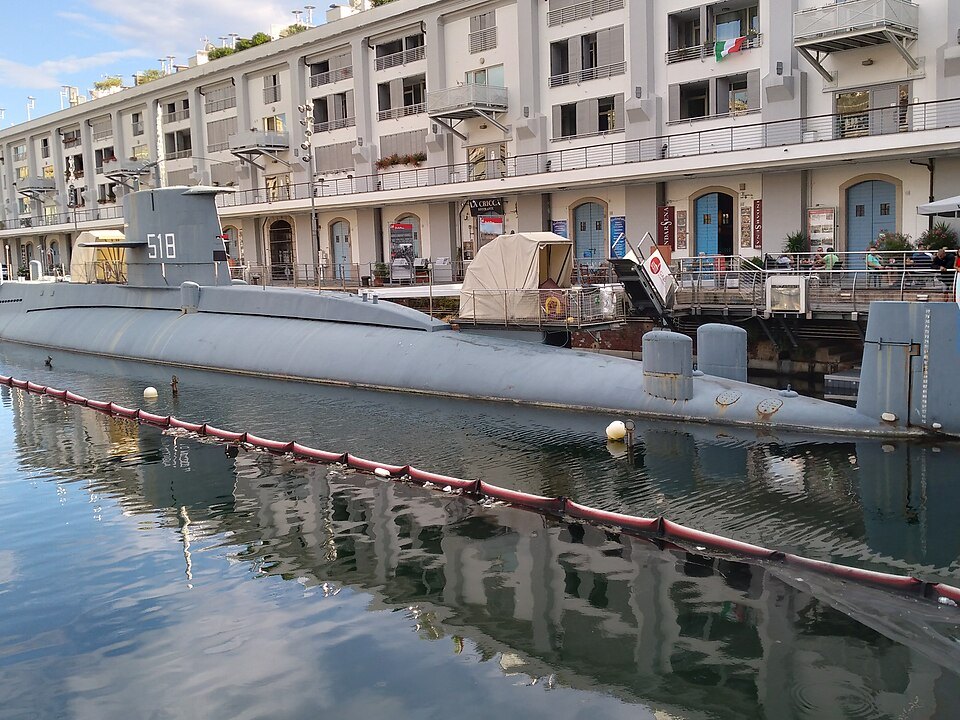
Allow extra time in bad weather: this is the best indoor half-day in the city, and it fills when the rain comes in off the sea. The submarine shuts in heavy weather because it is boarded from an open gangway.
Honest notes
The reconstructions are reconstructions: the galley is a modern build, and the storm room is a theatrical effect. They are honest about it, and they work.
Labels are in Italian and English throughout, but the audio material in the migration gallery is mostly Italian.
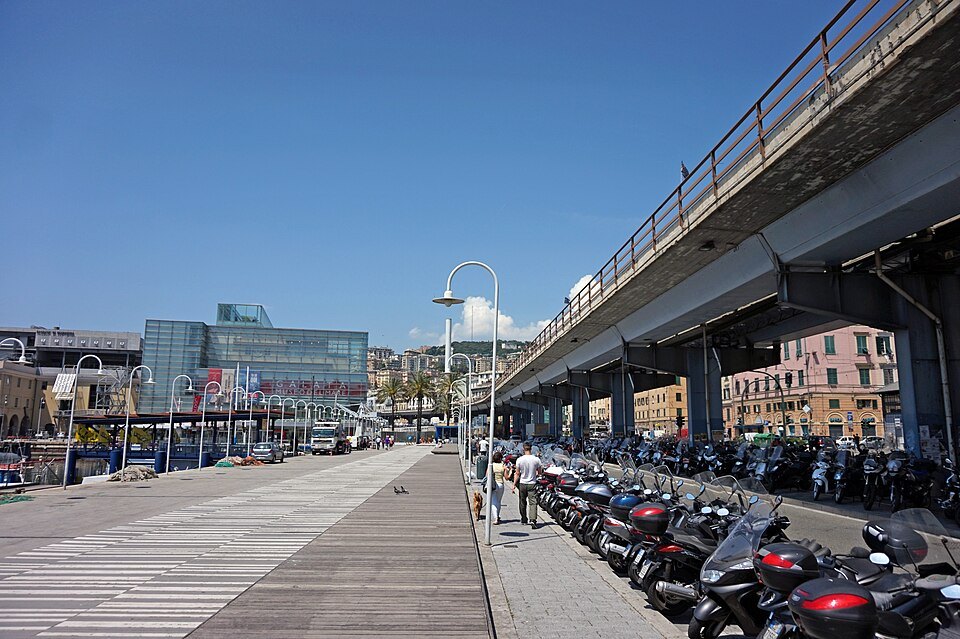
The surrounding quarter, Prè, is the old sailors' district and has a rough reputation; the streets near the museum are ordinary enough by day, and the metro station is at the door.
Where to go next
- NEXT DOORThe Porto AnticoThe docks Renzo Piano turned back toward the city for Expo '92: the Bigo's white arms, a glass bubble of tropical plants, the aquarium, and a quay you can walk from end to end.Read the page
- NEXT DOORThe Aquarium of GenoaRenzo Piano's aquarium on the old quay, built for Expo '92: dolphins in open-air tanks, a shark bay, manatees, penguins and a touch pool of rays, on a walk of about two hours.Read the page
- NEXT DOORThe LanternaThe tower that has stood for the city since the Middle Ages: seventy-seven metres of masonry on a rock at the harbour mouth, rebuilt in 1543, reached by a walkway along the old walls.Read the page