The Aquarium of Genoa
- IThe dolphin pavilionLarge open-air tanks at the seaward end, with an underwater viewing gallery
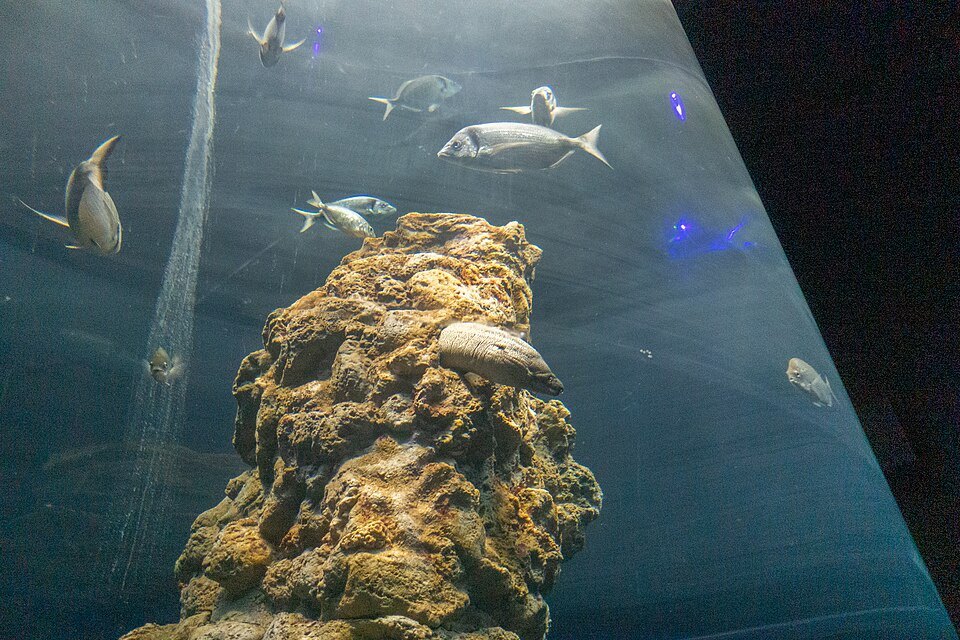
- IIThe shark bayA deep tank crossed by a half-tunnel, with morays in the rocks beside it
- IIIThe manateesOne of the few European tanks holding them, in a warm freshwater gallery
- IVThe touch poolA shallow tank where rays come to the surface under supervision
- VThe Nave BluA moored barge added later, holding the biggest tanks on the water itself
- VIThe Biosfera nearbyPiano's glass sphere of tropical plants and birds, a short walk along the quay
The sight in detail
Why it matters
The aquarium is the most visited paying attraction in Italy outside Rome and Florence, with well over a million people a year, and it is the reason a great many families come to Genoa at all. It was built for Expo '92 as the centrepiece of the rebuilt old port, designed by Renzo Piano with exhibition design by Peter Chermayeff's team, and it made the waterfront work.
It is also large: more than seventy tanks, some four hundred animal species and two hundred plant species, on a route that runs to several kilometres of walking if you take every gallery.
The original idea was a pairing — the meeting of the Old World and the New in 1492, and the environmental thinking of 1992 — which is why the collections lean toward the Ligurian Sea, the Atlantic and the Caribbean rather than trying to cover everything.
It also changed the shape of a Genoa visit. Before 1992 the waterfront was a barrier; now the aquarium anchors a run of attractions along one quay, and a family can spend a whole day between the tanks, the Bigo lift, the glass Biosfera and the galleon without crossing a road.
What you actually see
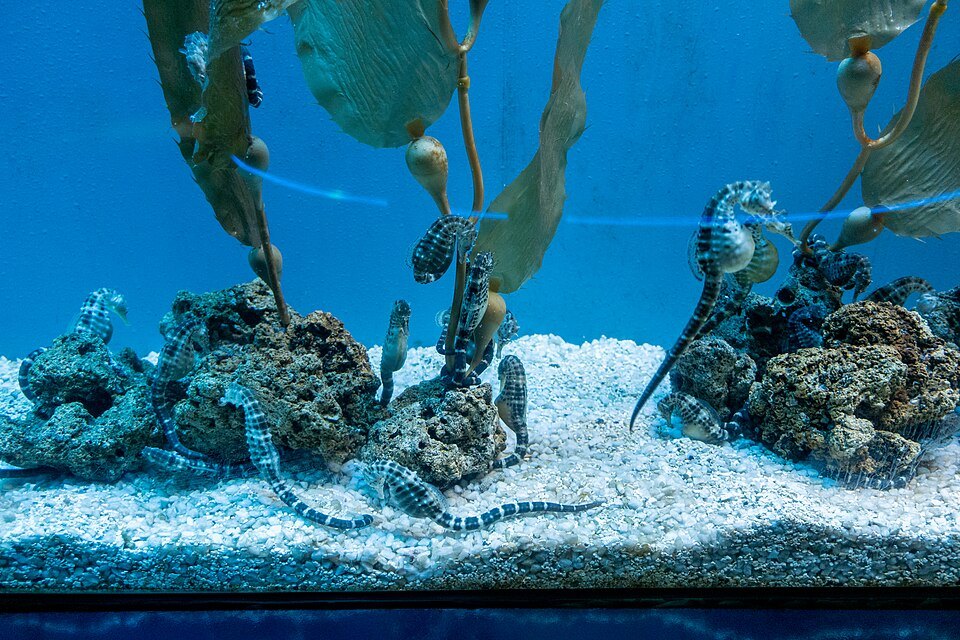
The route is one-way and begins indoors with the Mediterranean tanks, the ones that matter most locally: groupers, rays, the seagrass meadows that are disappearing from this coast.
Then come the Atlantic and Caribbean galleries, the shark bay with its half-tunnel, the moray grotto, penguins, seals and the manatee tank, which is one of very few in Europe. Reptiles and amphibians have their own rooms, and there is a tropical lagoon and a jellyfish gallery where the light does most of the work.
The dolphins are kept in large open-air tanks at the seaward end, visible from above and through an underwater gallery. They are the part of the visit visitors argue about, and the aquarium publishes its research and breeding programme rather than hiding the question.
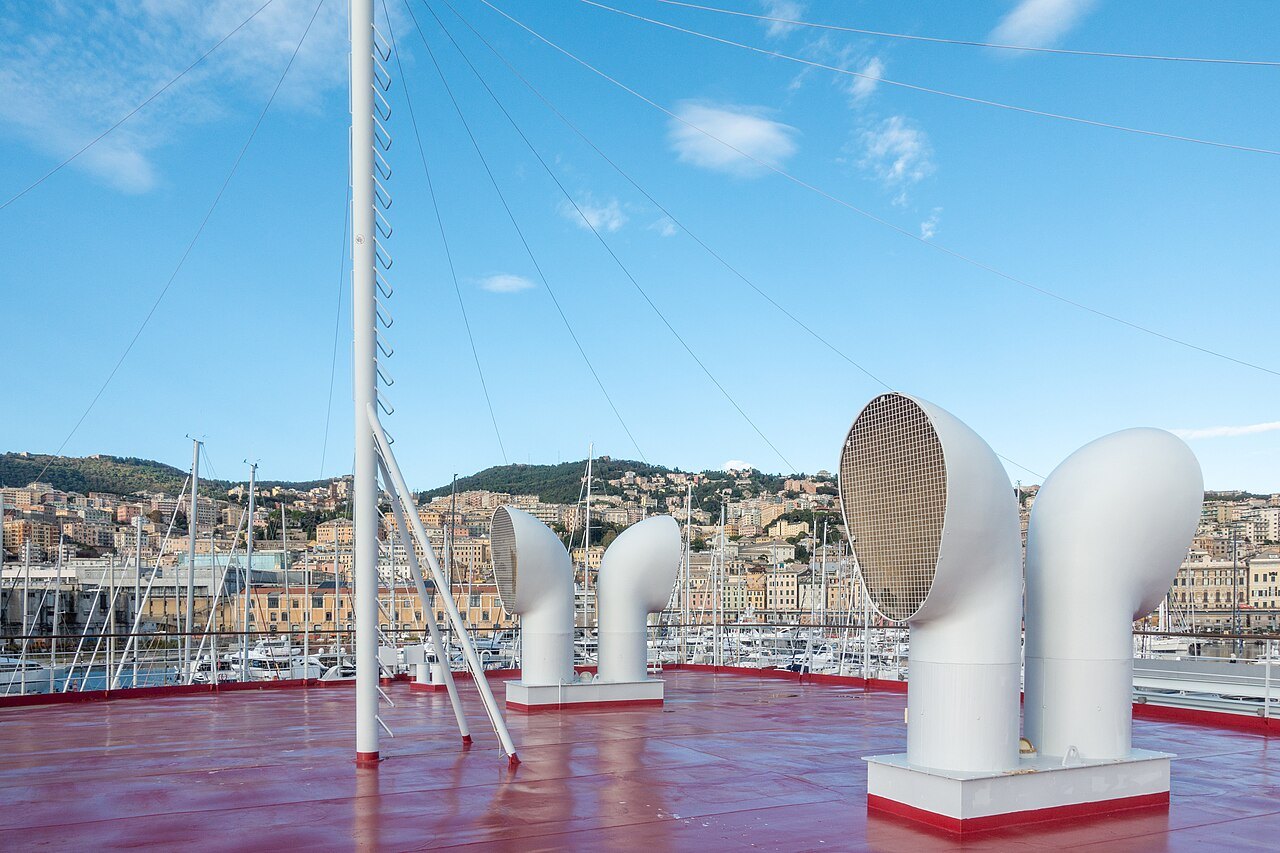
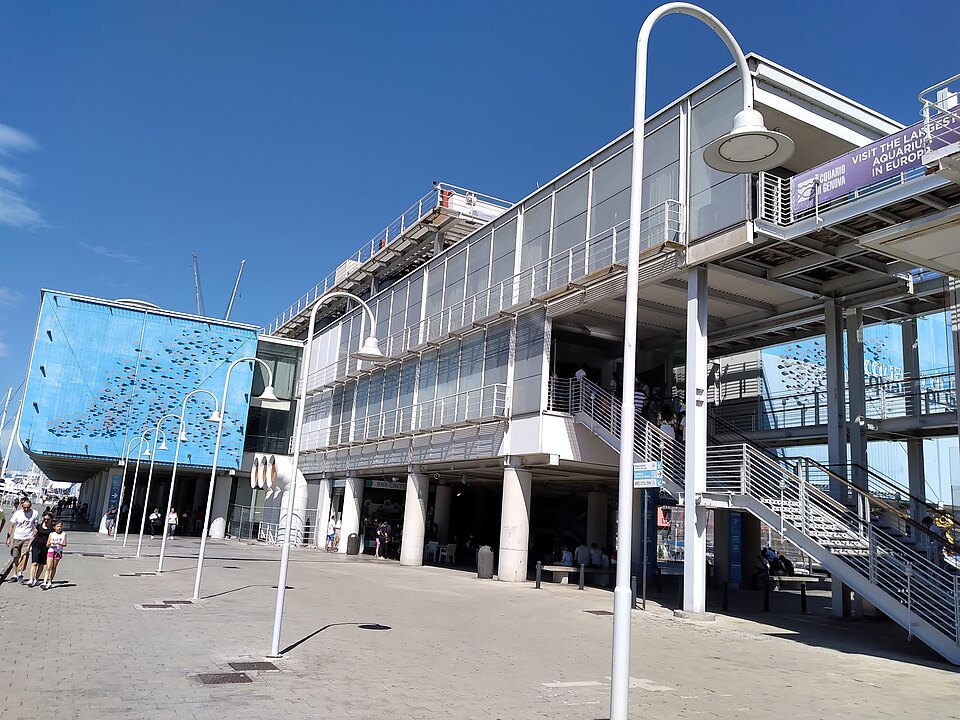
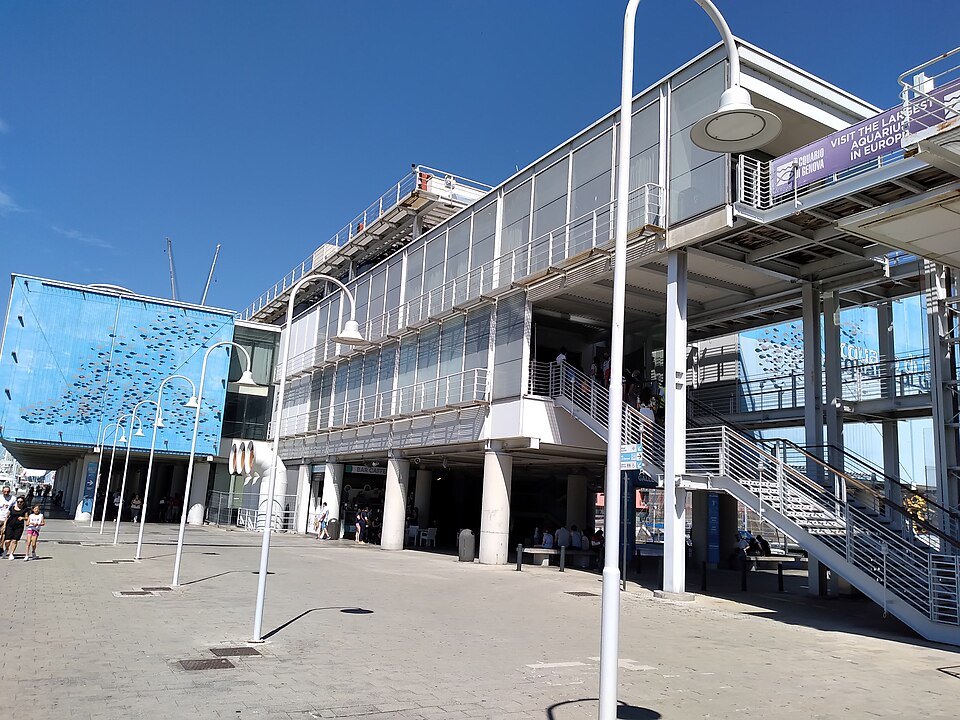
The last section is on the water: a moored barge, added after the original building, holding the deepest tanks and the dolphin pool. Walking onto it, with the harbour visible past the glass, is the moment the building stops feeling like a museum and starts feeling like a port.
Between galleries there are windows back out to the harbour, which is a deliberate piece of design: the building keeps reminding you that the sea it explains is immediately outside. The Ligurian tanks in particular are worth more time than they usually get, because everything in them can be seen while swimming a few kilometres from here.
Interpretation is bilingual throughout, in Italian and English, and the panels are unusually good on conservation: what has been lost from this coast, what the aquarium's own research programme works on, and which species in the tanks are part of European breeding programmes.
Coming with children
This is the one place in Genoa built for families, and it shows: pushchair routes, low viewing panels, feeding times posted at the tanks, and staff who explain in English as well as Italian.
The touch pool, where rays rise to be stroked, is supervised and has its own queue. So does the dolphin gallery at busy times.
If the aquarium is the reason for the trip, the combined tickets with the Bigo lift, the Biosfera and the sea museum are sold at the same desk and are all within a few minutes' walk.
There is a café and a picnic area inside the complex, and the route can be broken halfway without leaving the building, which matters with small children. Lockers and a pushchair park are near the entrance, and large bags are not allowed into the galleries.
How to visit
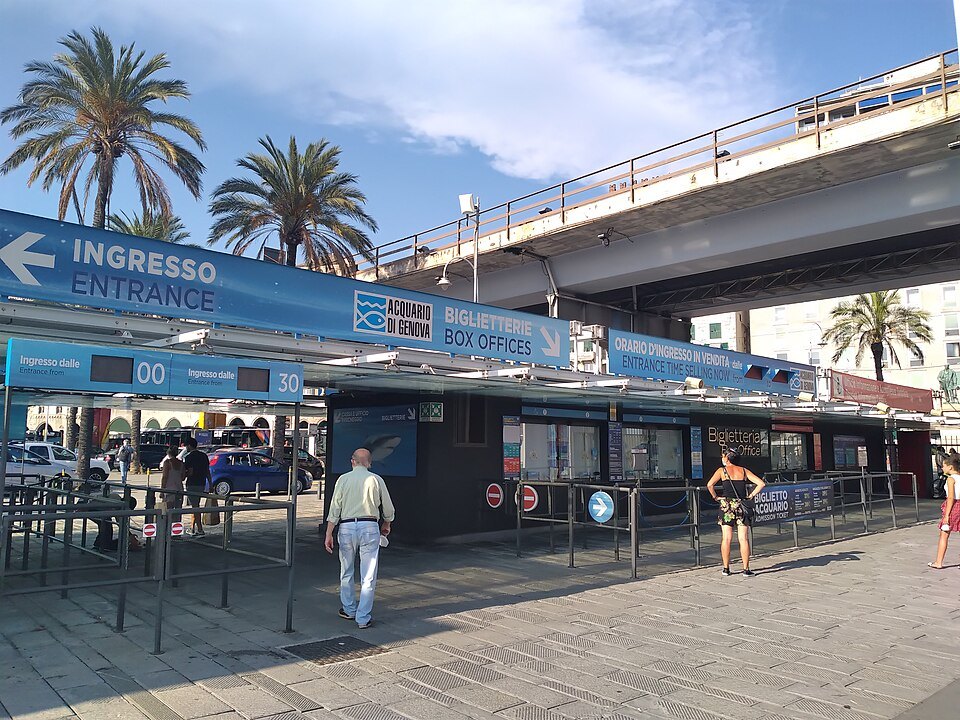
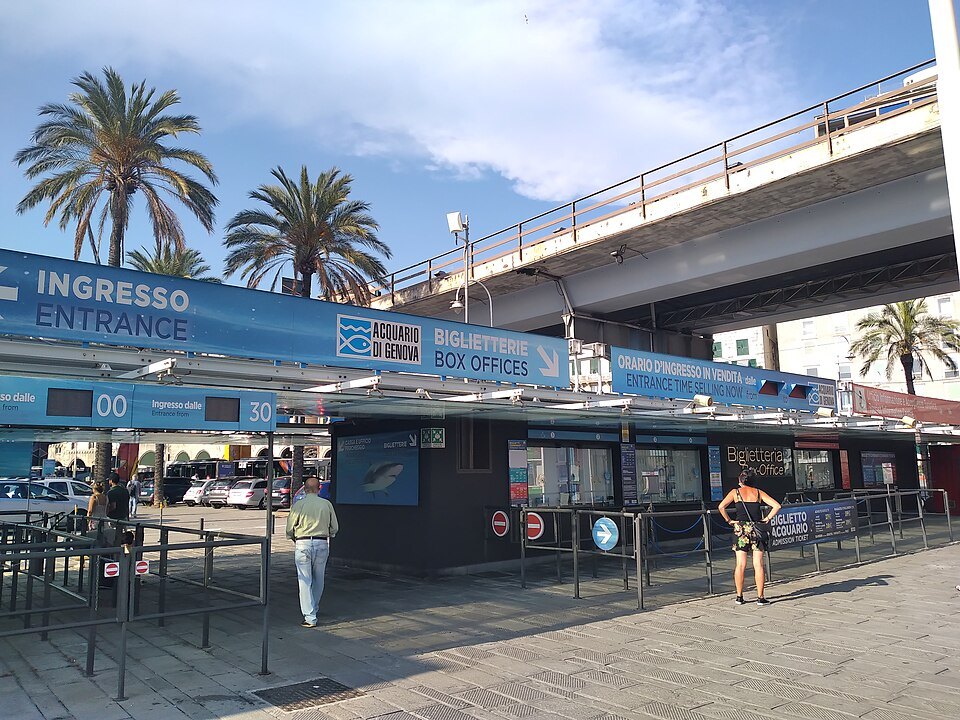
Two hours is the honest minimum; families take three. The queue outside can be long in summer and at weekends, and timed entry booked in advance is the difference between walking in and standing on the quay — see booking ahead.
Go early in the day, or late: the middle of the day is when tour groups and school parties are inside.
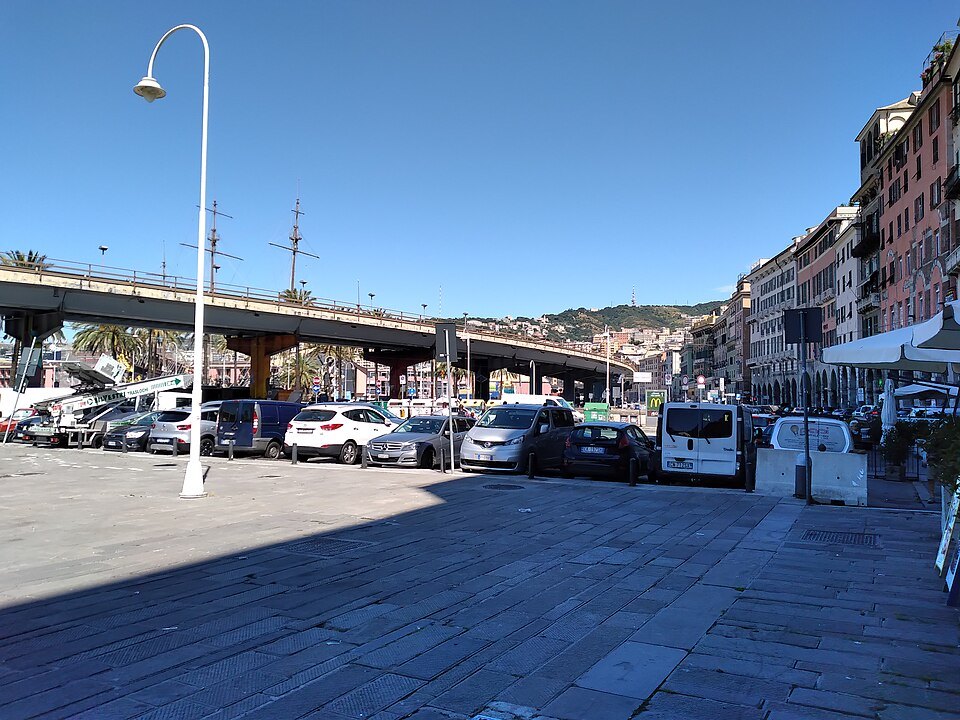
It is reached in a few minutes on foot from the metro at San Giorgio, or from Piazza De Ferrari down through the alleys.
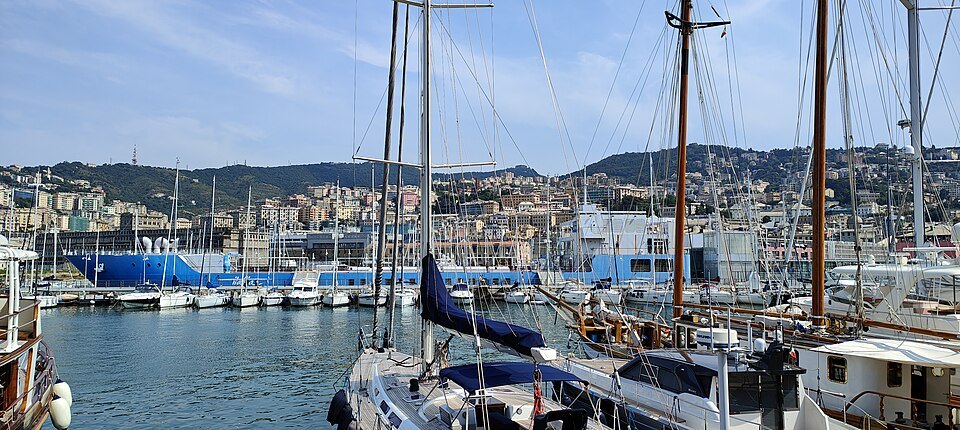
The building is on the quay itself, so it is exposed: the queue is in the sun and the wind. In high summer the first or last entry of the day is a different experience from the middle, when the tanks are three deep in people.
Honest notes
Keeping dolphins in captivity is contested, and the aquarium is the largest such collection in Italy. Visitors who would rather not support that can see the rest of the building without the dolphin gallery, or skip the aquarium entirely.
The lighting is deliberately low and the route is long; there is little natural daylight until the barge at the end.
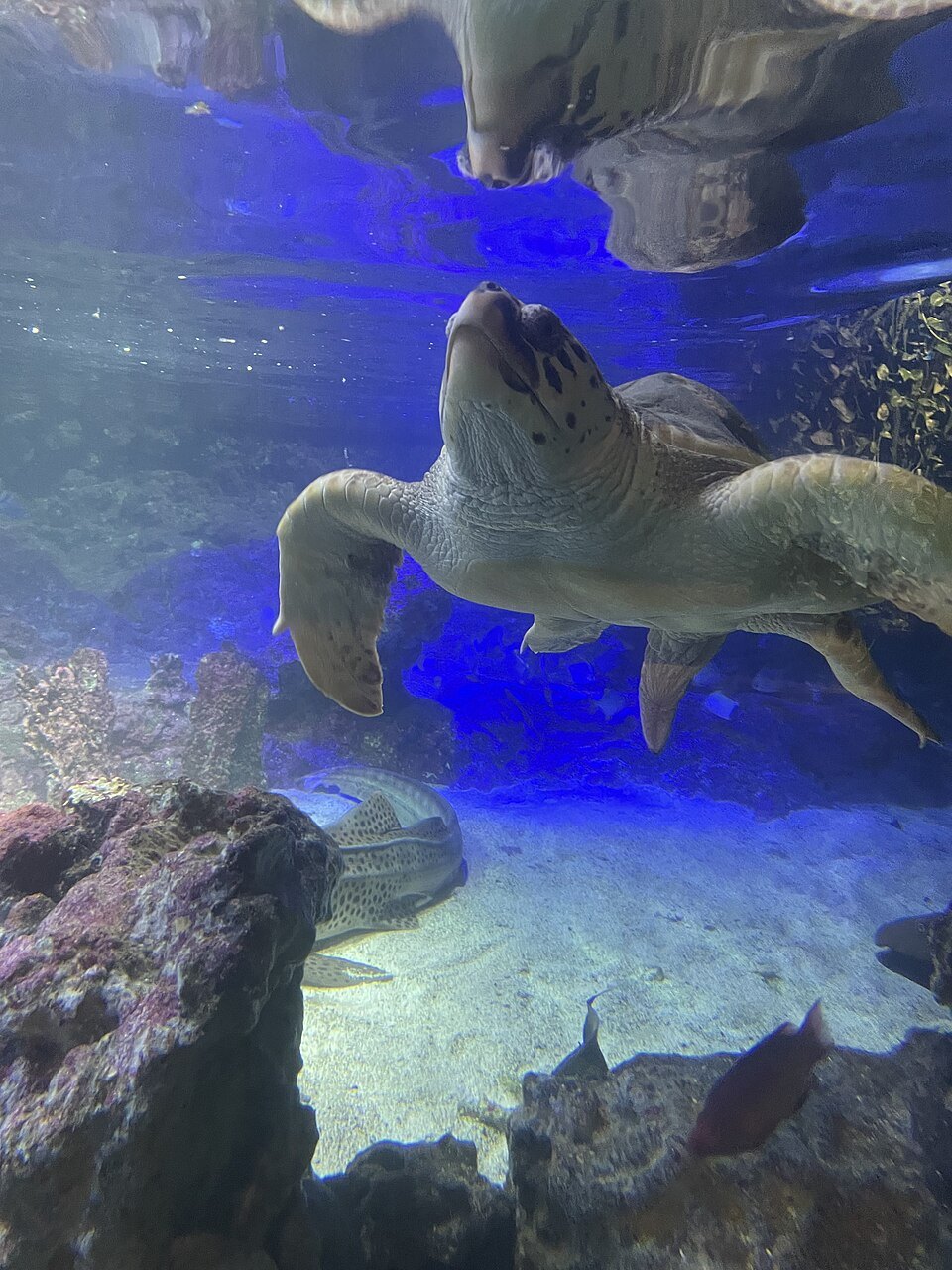
It is expensive relative to everything else in the city, and it is the only sight in Genoa where the crowd is a real factor in the experience.
Where to go next
- NEXT DOORThe Porto AnticoThe docks Renzo Piano turned back toward the city for Expo '92: the Bigo's white arms, a glass bubble of tropical plants, the aquarium, and a quay you can walk from end to end.Read the page
- NEXT DOORGalata Museo del MareThe largest maritime museum in the Mediterranean, in the old arsenal where Genoa built its galleys: a full-size galley to walk through, an emigration gallery, and a submarine moored alongside.Read the page
- NEXT DOORThe LanternaThe tower that has stood for the city since the Middle Ages: seventy-seven metres of masonry on a rock at the harbour mouth, rebuilt in 1543, reached by a walkway along the old walls.Read the page