The Church of the Gesù
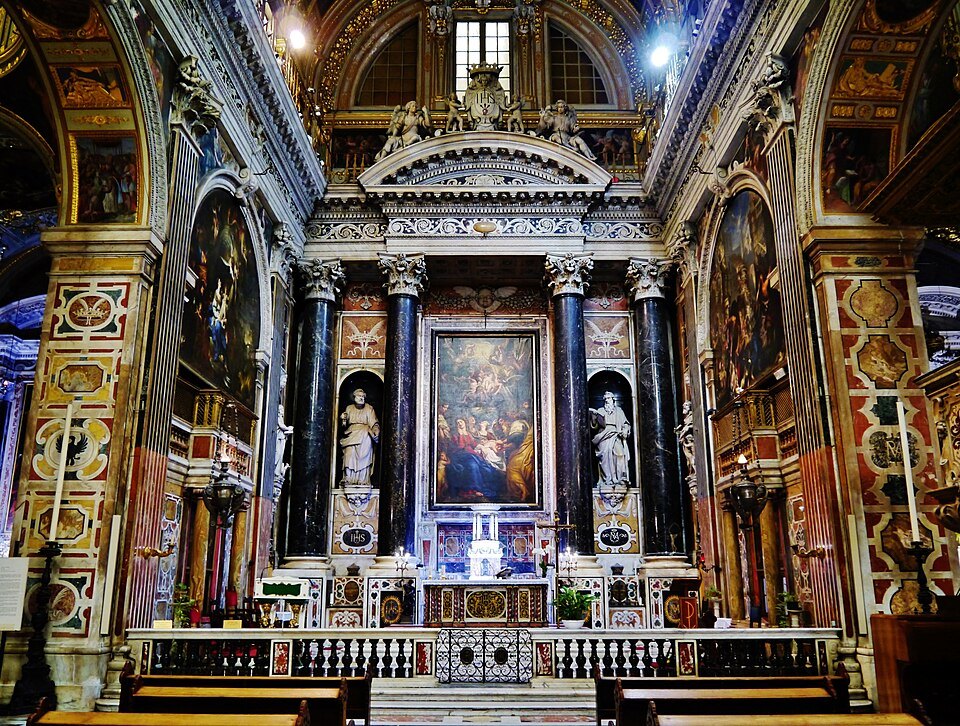
- IThe Rubens altarpiecesThe Circumcision over the high altar and the Miracles of Saint Ignatius in a side chapel
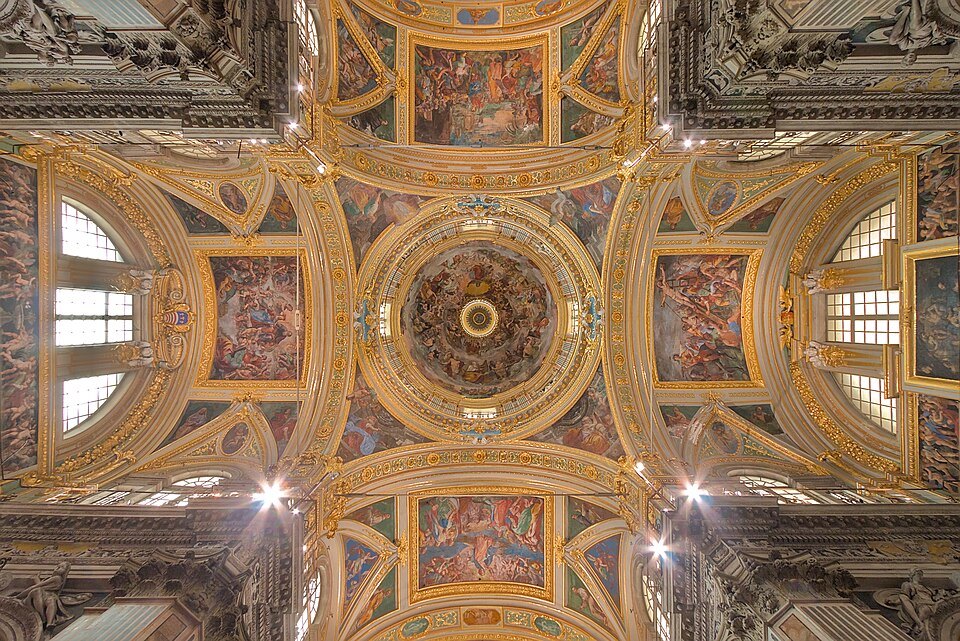
- IIThe Carlone vaultsScenes of the life of Christ frescoed by the brothers Giovanni and Giovanni Battista Carlone
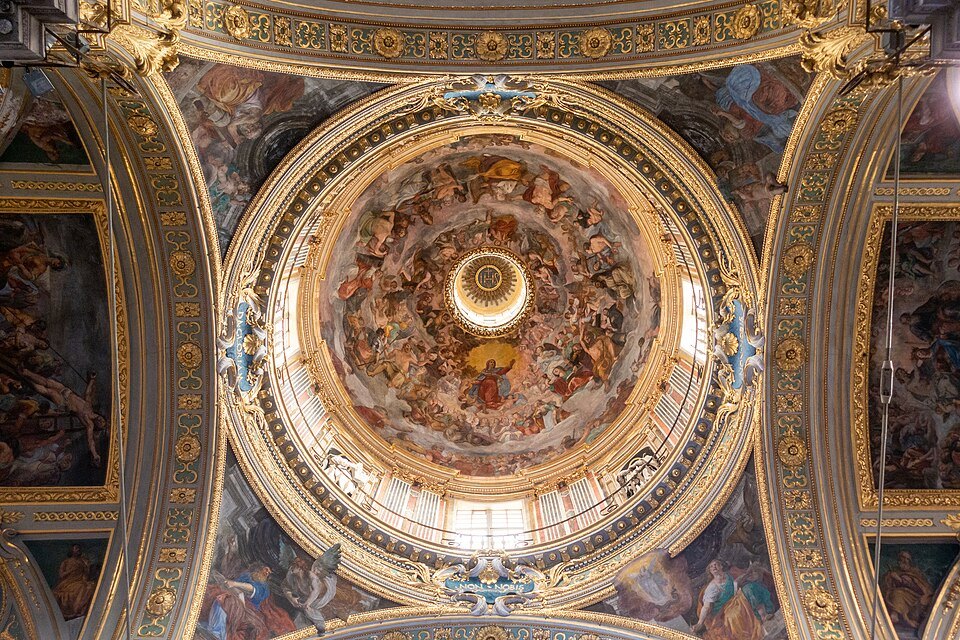
- IIIThe domeThe Triumph of the Name of Christ, the usual Jesuit subject, painted in the main cupola
- IVThe family chapelsSide chapels paid for by the Durazzo and Raggio, their arms cut into the marble
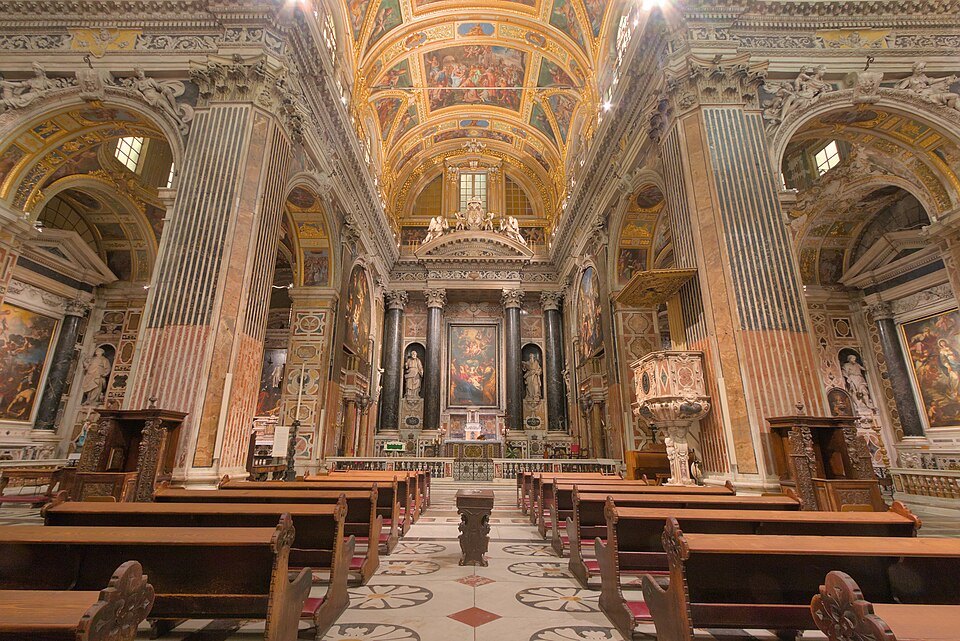
- VThe marble revetmentColoured marbles covering wall and pier, the richest surface in the city
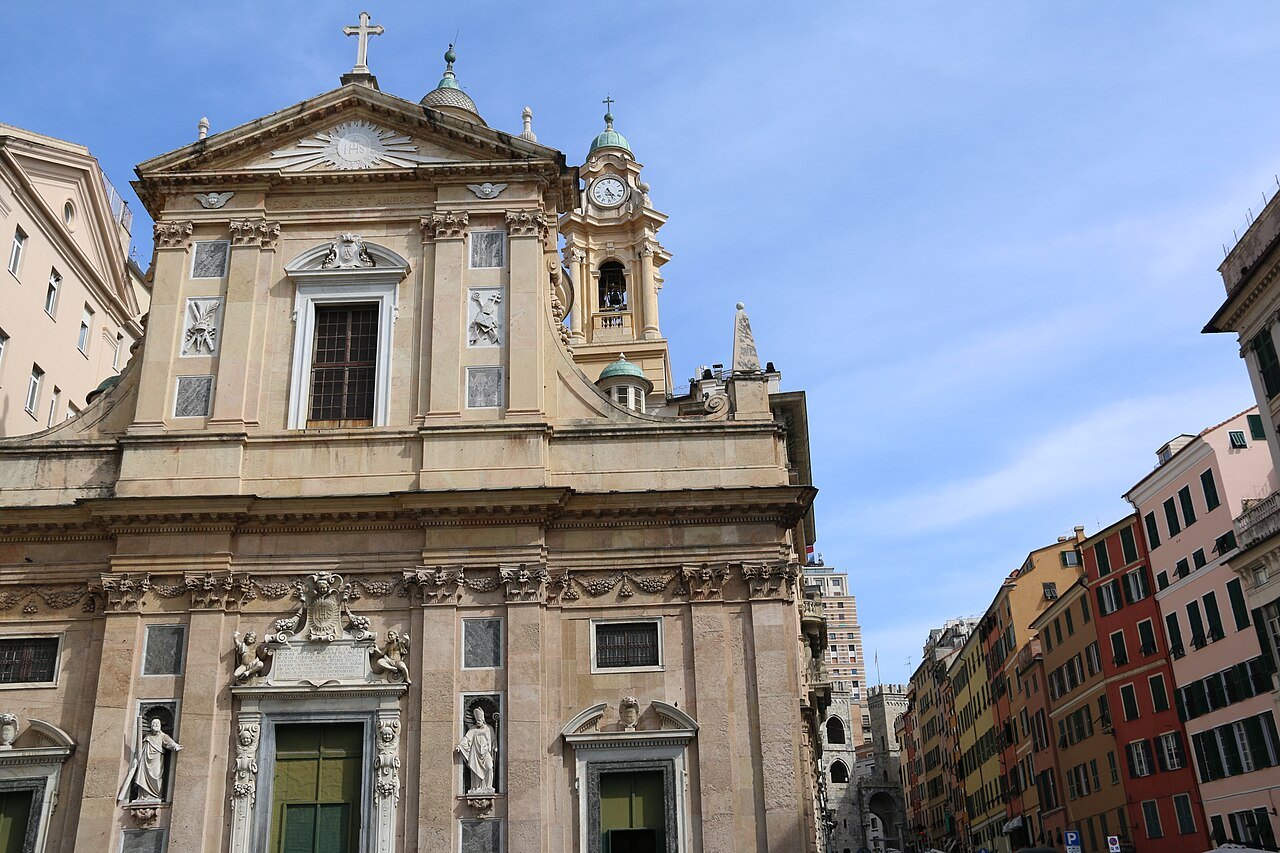
- VIThe frontA nineteenth-century facade built to drawings by Rubens, who had published the church's plan
The sight in detail
Why it matters
This is where the Genoese baroque starts. The Jesuits arrived in the city in 1552 and rebuilt an ancient church on this site from 1589, to a design by the Jesuit architect Giuseppe Valeriano, paid for by the Pallavicini family. Within twenty years its chapels held work by Rubens, Guido Reni and Simon Vouet.
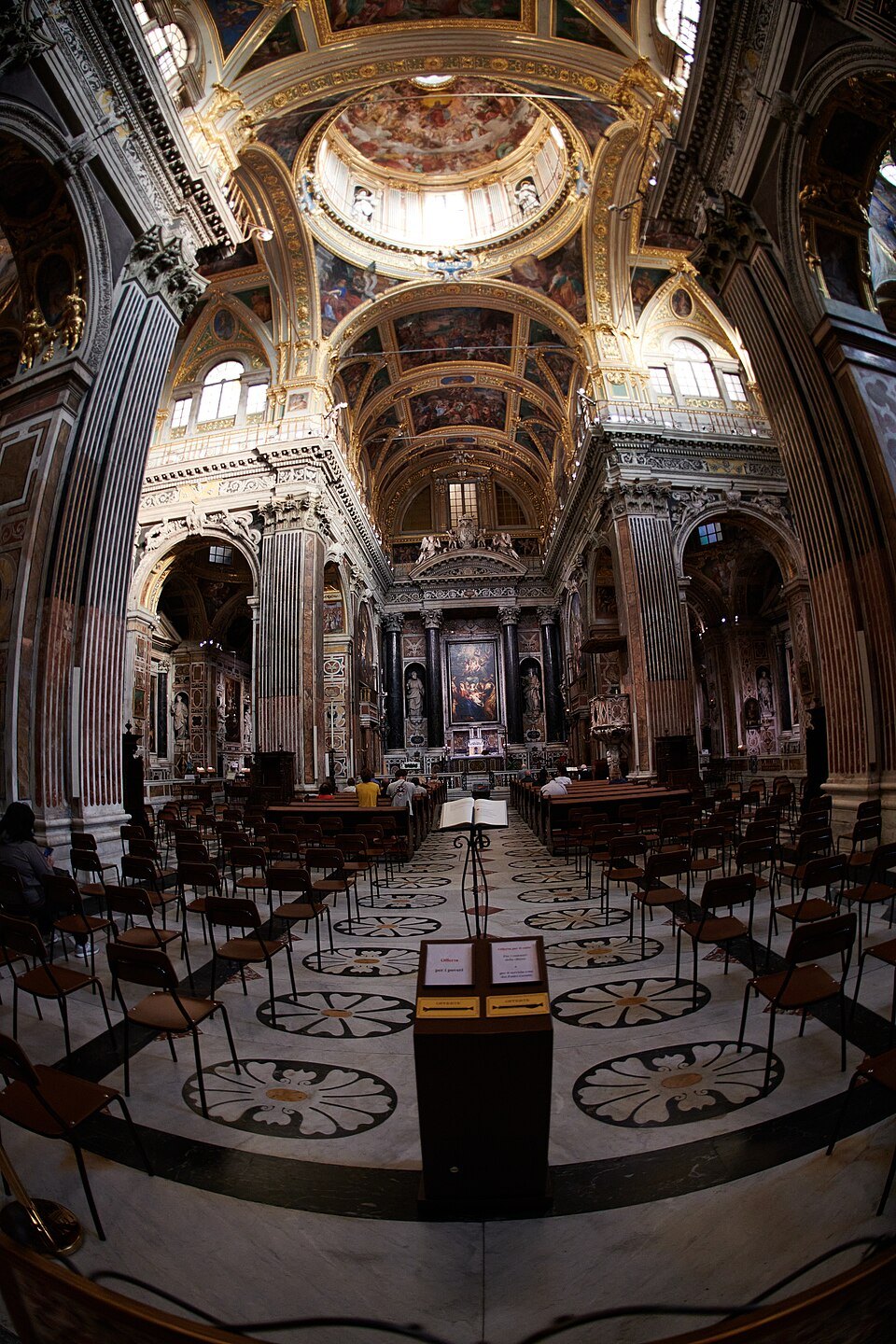
The building is small on the outside and overwhelming inside, which is deliberate: the plan is compact, the walls are sheathed in coloured marble, and every vault is painted. After the grey stone of the streets around it, the effect is almost physical.
It matters for a second reason too. Peter Paul Rubens worked in Genoa in the early sixteen-hundreds and published the city's palaces as engravings in 1622; the plan of this church appears among them, and the facade added in the nineteenth century was based on his drawings.
The Jesuits built to a formula across Europe — one wide nave, chapels instead of aisles, a dome over the crossing, so that a large congregation could see and hear a preacher — and Genoa's version is among the least altered. What changes from city to city is the decoration, and here the money was Ligurian and so were most of the painters.
What it replaced
The church before it was Sant'Ambrogio, whose origins go back to clergy arriving from Milan in the early Middle Ages — hence the double dedication the church still carries, to the Gesù and to Saints Ambrose and Andrew.
Valeriano's plan was worked out from Galeazzo Alessi's church of Santa Maria Assunta in Carignano, built a few years earlier on the hill above: a square set with five domes. A bay was later added at the entrance, turning the square into a rectangle, and that is the shape you walk into.
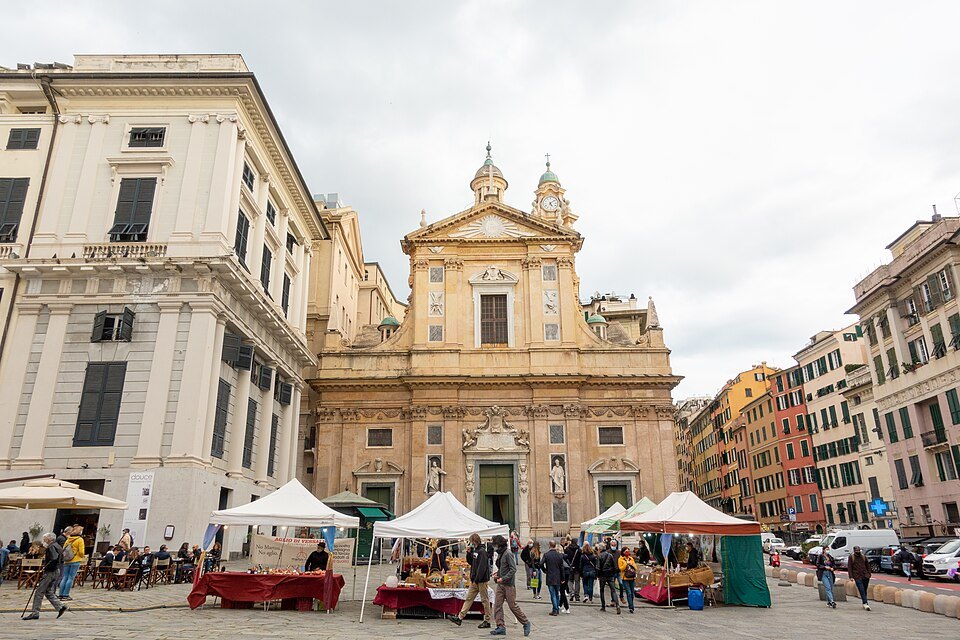
Until the nineteenth century the church was joined directly to the Palazzo Ducale by a covered passage, so the doge could come to mass without crossing the square. The passage went when the palace's outer curtain was demolished.
The Jesuits also ran a college beside the church, and the buildings behind it were part of that establishment. When the order was suppressed in the eighteenth century the college passed to the state, and the church became a parish church, which it remains.
What you actually see
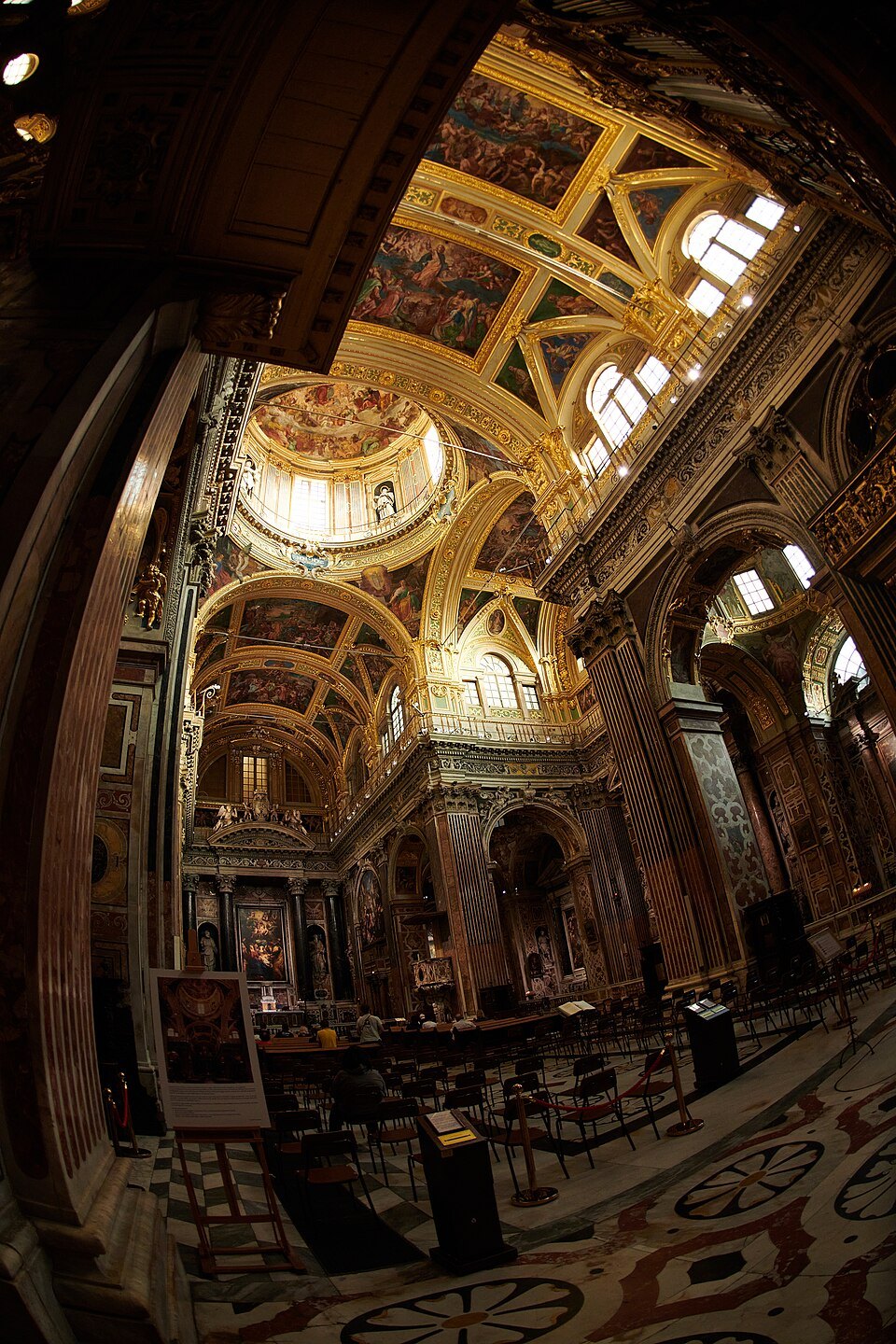
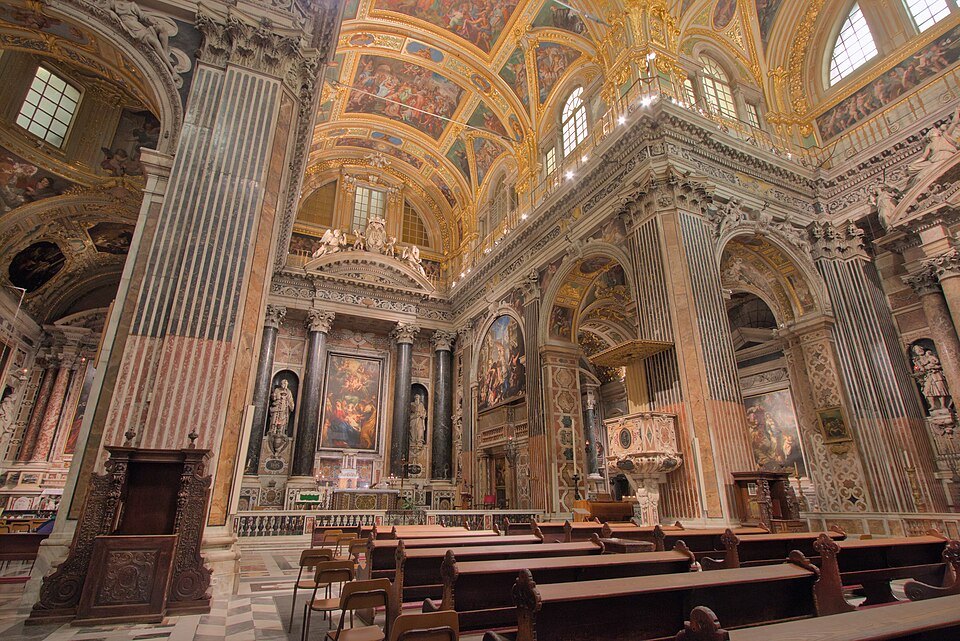
Give your eyes a moment; the interior is deliberately dim. What emerges is a shell of marble in dark reds, greens and greys, with gilded stucco between, and above it the vaults painted by the Carlone brothers with the life of Christ and the Virgin, and the dome with the Triumph of the Name of Christ.
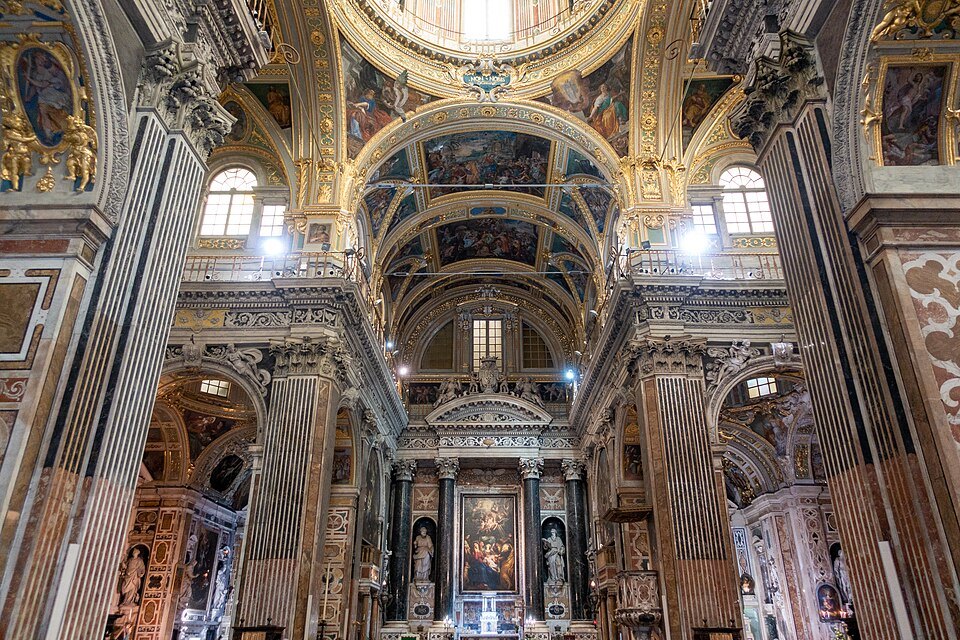
Over the high altar hangs Rubens's Circumcision, painted for this church around 1605, a night scene lit from the centre. In a chapel on the left is his Miracles of Saint Ignatius, a later work and a crowded one; both were made for the position they still occupy, which is rare.
The side chapels belong to the families who paid for them, and their coats of arms are carved into the marble surrounds. Guido Reni's Assumption is among the altarpieces, and there is work by Vouet and by the Genoese painters of the same generation.
The floor deserves a look as well: inlaid marble in geometric patterns, worn by four centuries of feet, and in places repaired with plain slabs where the original gave out.
The two Rubens pictures were painted at opposite ends of his Genoese connection. The Circumcision belongs to his years in Italy, when he was in his twenties and working for Italian patrons; the Saint Ignatius canvas was sent from Antwerp much later, when he was the most sought-after painter in northern Europe and Genoese families were among his clients.
Notice how the light is handled. There are few windows at eye level; almost all the daylight comes from the dome and the lantern above the crossing, so the marble reads as dark and the gilding catches what little falls on it. On a grey day the church is nearly black, and on a bright one it glows.
How to visit
Twenty minutes is enough, half an hour if you want the paintings properly. It is a working church, and the lights over the altarpieces are usually on a timer or a coin box.
Photography without flash is generally accepted; tripods are not. Services take priority, and the church shuts for a long break in the middle of the day, as most Genoese churches do.
It stands on Piazza Matteotti, so it can be picked up directly after the courtyards of the Palazzo Ducale and before walking down to the cathedral.
The square outside, Piazza Matteotti, is one of the few flat open spaces in the old town, and the steps of the church are a good place to sit and work out where to go next.
Honest notes
The Rubens paintings hang high and in low light. Bring patience rather than expecting gallery conditions.
The facade is Victorian, not baroque, though it follows Rubens's published drawings. The seventeenth-century church was never finished on the outside.
If you see only one church interior in Genoa, this or the Annunziata is the choice; they are five minutes apart and make the same argument in different keys.
Where to go next
- NEXT DOORPalazzo DucaleThe seat of the doges of Genoa from 1339 until the republic ended, rebuilt after a fire, and now the city's main hall for exhibitions — with two courtyards you can walk through for nothing.Read the page
- NEXT DOORSan Lorenzo CathedralGenoa's cathedral, banded in black and white stone, with two stone lions on its steps, a treasury in the crypt and a British naval shell that came through the roof and did not explode.Read the page
- NEXT DOORSantissima Annunziata del VastatoA neoclassical portico hiding one of the most lavish interiors in Italy: a gilded and frescoed basilica paid for by the Lomellini, five minutes from the station.Read the page