San Lorenzo Cathedral
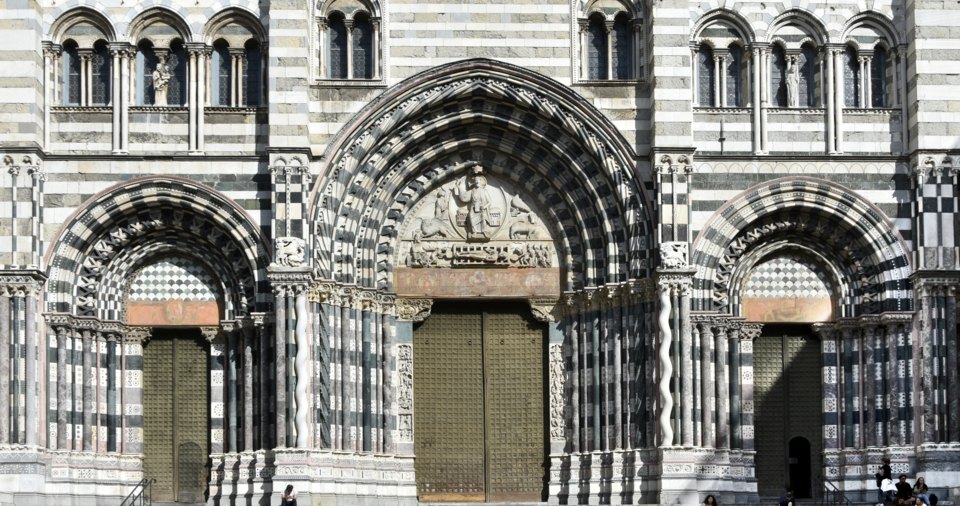
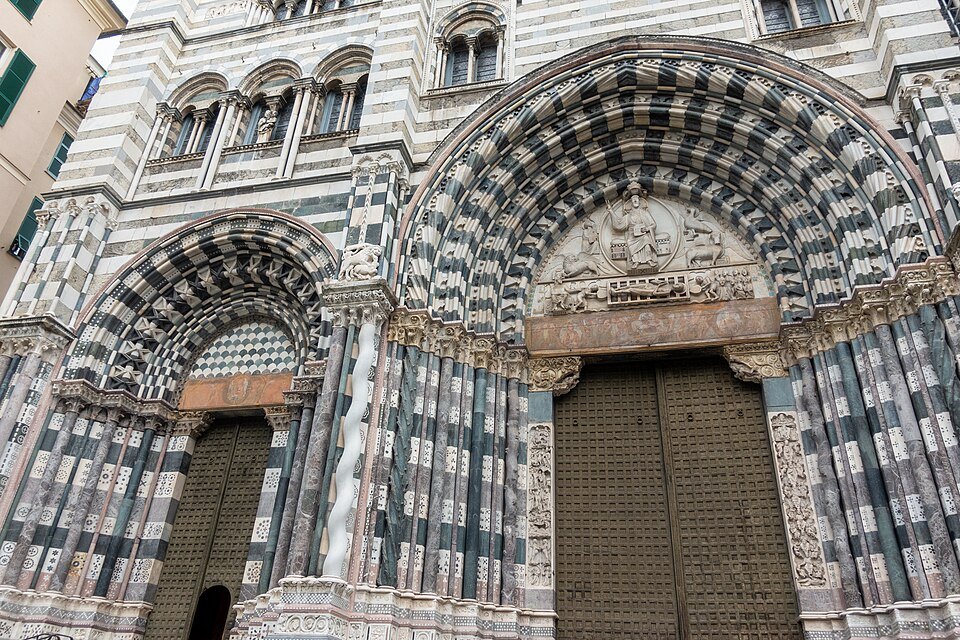
- IThe three portalsFrench-inspired Gothic doorways, carved in deep receding arches, added in the thirteenth century
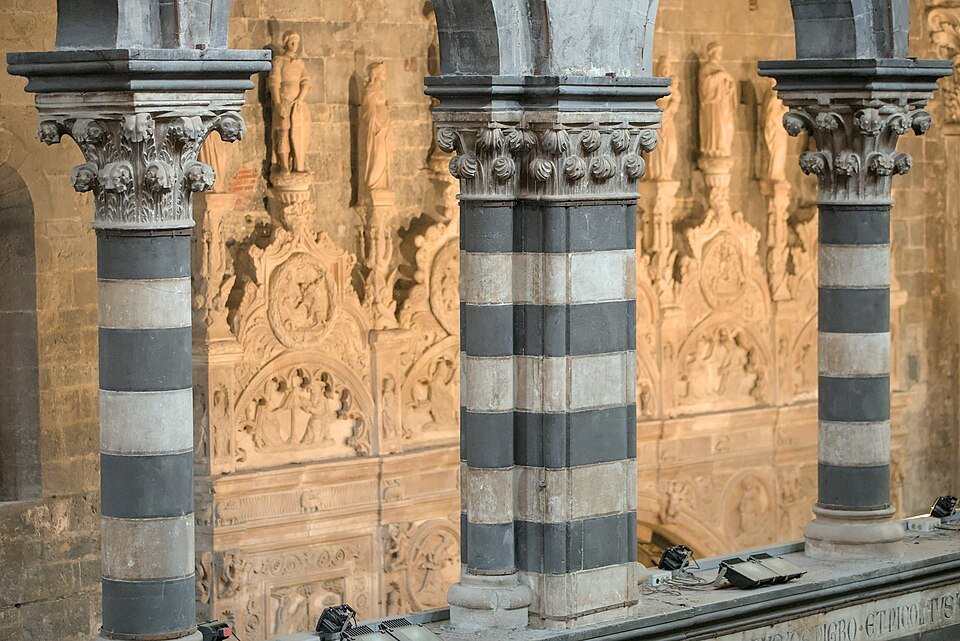
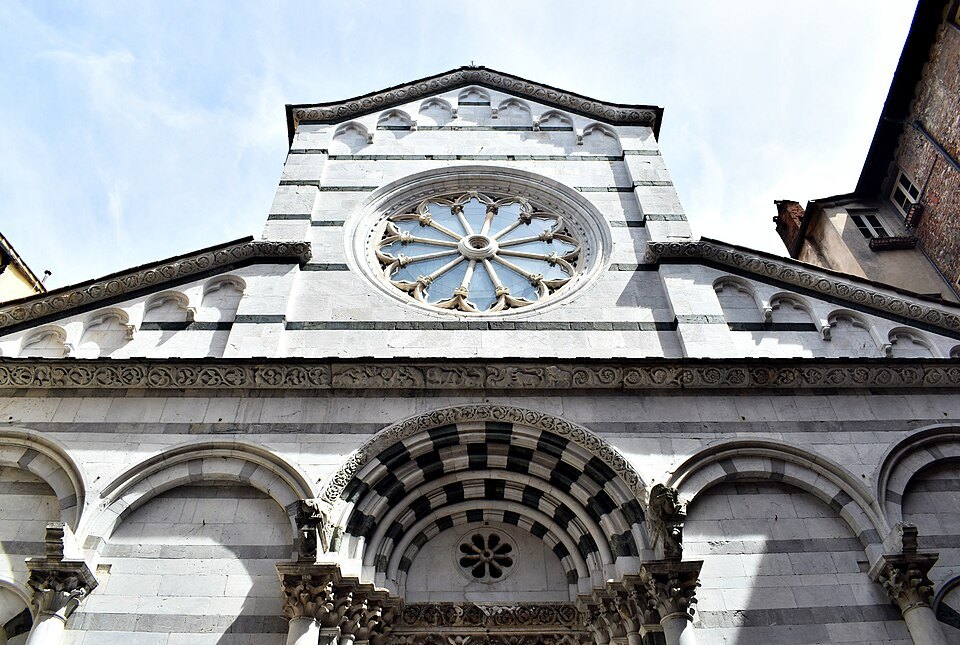
- IIThe black and white bandsLocal slate and white marble laid in courses, the badge of a Genoese church
- IIIThe lions on the stepsTwo nineteenth-century marble lions flanking the stairs, the city's favourite meeting point
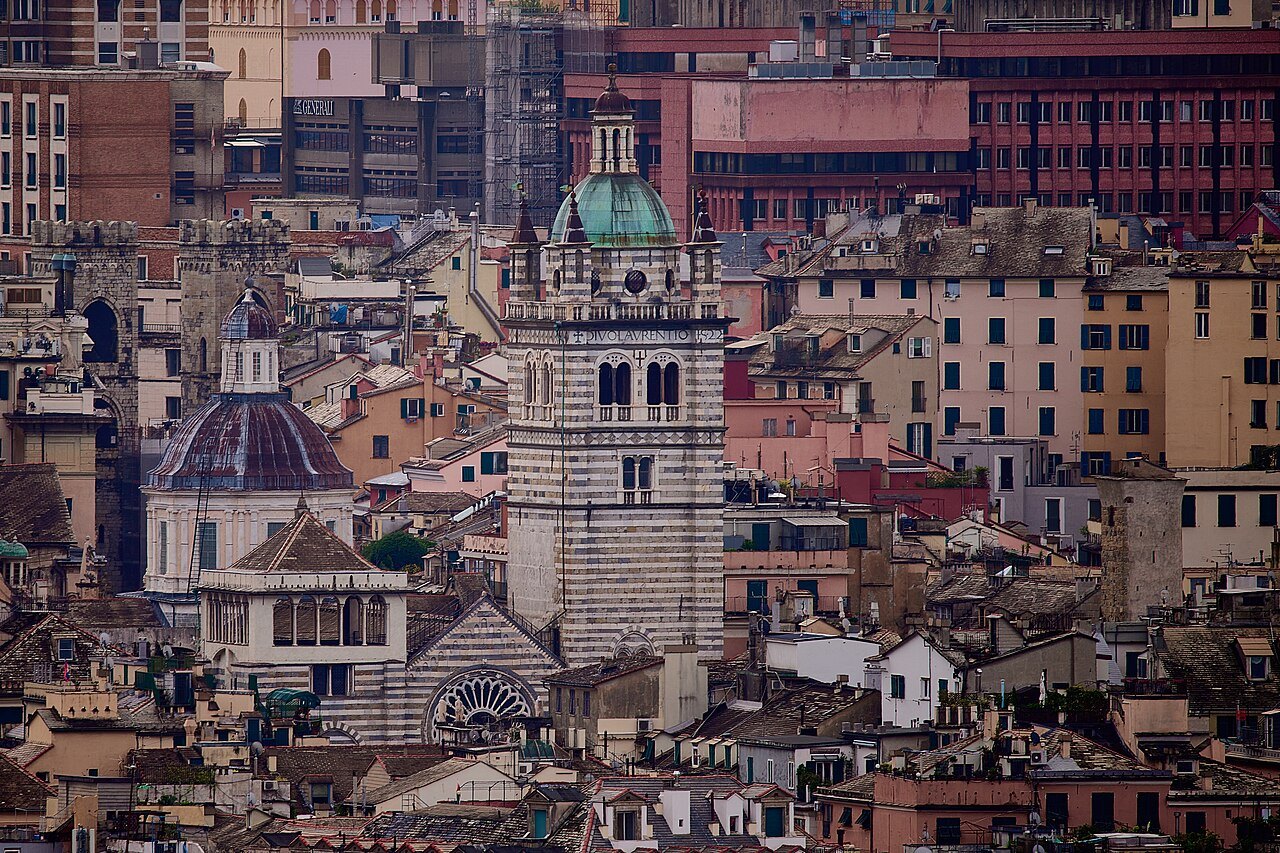
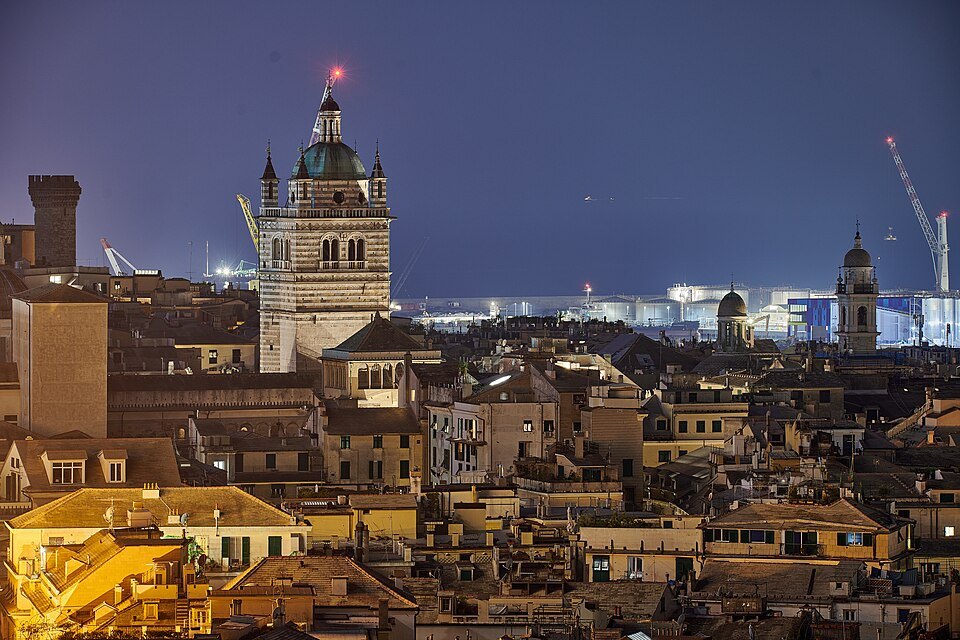
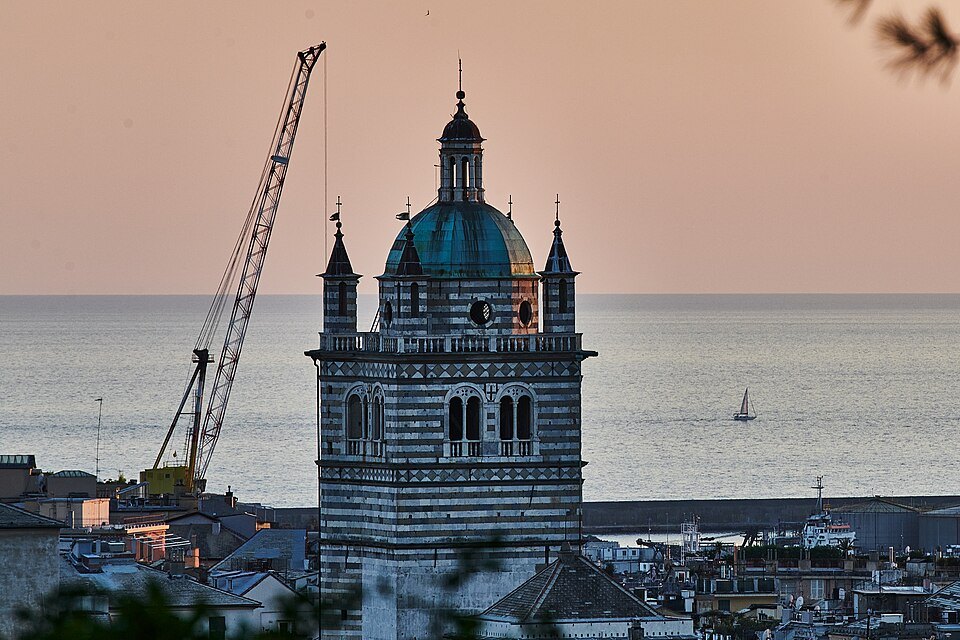
- IVThe right-hand towerOnly one bell tower was finished, between 1307 and 1312; the left one stops at roof height
- VThe Chapel of Saint John the BaptistBuilt in the left aisle to hold the ashes of the city's patron saint
- VIThe Treasury museumUnderground vaults of dark stone holding the Sacro Catino and the cathedral's plate
- VIIThe shell in the right aisleA British naval shell fell through the roof on 9 February 1941 and never went off
The sight in detail
Why it matters
San Lorenzo is the cathedral of a republic that made its money at sea, and it looks the part. The front is a wall of black and white stone laid in courses, the bands running unbroken across the three portals and up between them, so that the whole facade reads as one striped sheet rather than as separate storeys. The stone is local: dark slate from the Ligurian valleys, white marble from the coast.
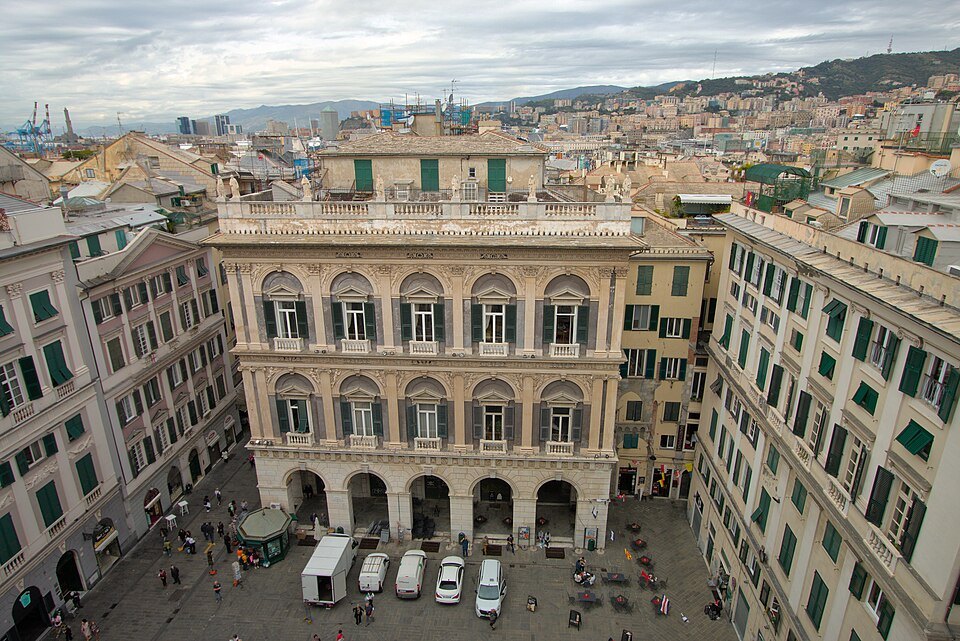
Its position matters as much as its stone. The cathedral does not stand on a wide square. It sits in the middle of the old town, its steps opening onto a small paved space between the alleys, and the first sight of it is usually a slice of stripes at the end of a lane. That is how the medieval city worked — the great buildings are inside the maze, not set apart from it.
For visitors it is also the easiest introduction to the Genoese way of building. Once you have seen the bands here, you begin to notice them everywhere: on San Matteo, on the portals of ordinary houses, on the gates of the old walls.
What it is built from
The church that stands here was begun around 1098, during the years when Genoese ships were carrying crusaders east, and it was paid for out of the proceeds. Pope Gelasius II consecrated it on 10 October 1118, and in 1133 Genoa was raised to an archbishopric, which fixed the building's status.
From about 1230 the Romanesque church was rebuilt in the Gothic manner, and it is this campaign that gave the cathedral its striped west front and the three great doorways. The plan was for two matching towers. Only the right one was finished, between 1307 and 1312; on the left, the stump was roofed over, and the asymmetry it leaves is now part of the building's face.
Later centuries kept adding. The dome over the crossing is a sixteenth-century work, and chapels were cut into the aisles from the fourteenth century onward. The result is layered rather than uniform: Romanesque flanks and side doors, a Gothic front, a Renaissance top.
What you actually see
Come at the front first. The three portals are set in deep arches of receding columns, carved with figures and beasts; the central one has a scene of Saint Lawrence's martyrdom in the arch above the door. The bands of stone run straight across the whole width, and a rose window sits above the middle portal.
The two marble lions on the steps are nineteenth-century additions and have become the city's meeting point; there is usually somebody sitting between their paws. Walk along the flank on the north side to see the older, plainer Romanesque doorway, and to understand how much of the earlier church survives behind the Gothic show front.
Inside, the same bands continue along the nave arcade, which makes the interior feel taller and darker than its size suggests. The left aisle holds the Chapel of Saint John the Baptist, built to receive the ashes of the city's patron, brought back to Genoa at the time of the First Crusade. The chapel is a complete Renaissance room in itself, screened from the aisle by columns.
In the right aisle, in a plain case, stands the casing of an armour-piercing naval shell. It came through the roof during a British bombardment on 9 February 1941, buried itself in the corner of the nave, and did not detonate; the church was saved by a fuse that failed. What is displayed today is an exact replica of the casing.
The treasury
Steps in the left aisle lead down to the Museo del Tesoro, a set of underground chambers of dark stone built in the middle of the twentieth century to hold the cathedral's plate. The room itself is worth the descent: circular vaults, very little light, objects lit one by one.
The famous piece is the Sacro Catino, a shallow dish of green glass taken as spoil in the eastern Mediterranean, which Genoese tradition long held to be the vessel of the Last Supper — the Holy Grail. It is an Islamic glass object, and the Grail identification is a medieval claim, not a fact; the dish is broken, damaged during its travels to Paris and back after Napoleon seized it.
How to visit
Half an hour is enough for the church, an hour if you go down to the treasury as well. The cathedral is a working church: services run through the day, and parts of it close for them.
Dress as you would for any Italian church — shoulders and knees covered — and expect the treasury to be visited on a short guided round rather than freely.
It sits so centrally that it is hard to plan around: most walks through the old town pass its steps at some point. Combine it with the Palazzo Ducale, three minutes uphill, and with the alleys of the caruggi that run down from it to the harbour.
Honest notes
The Sacro Catino is often still described as the Holy Grail on signs and in guidebooks. The glass is Islamic work and the identification belongs to legend; the museum itself says so.
The unexploded shell is real history, but the object on display is a replica of the casing, not the shell that fell.
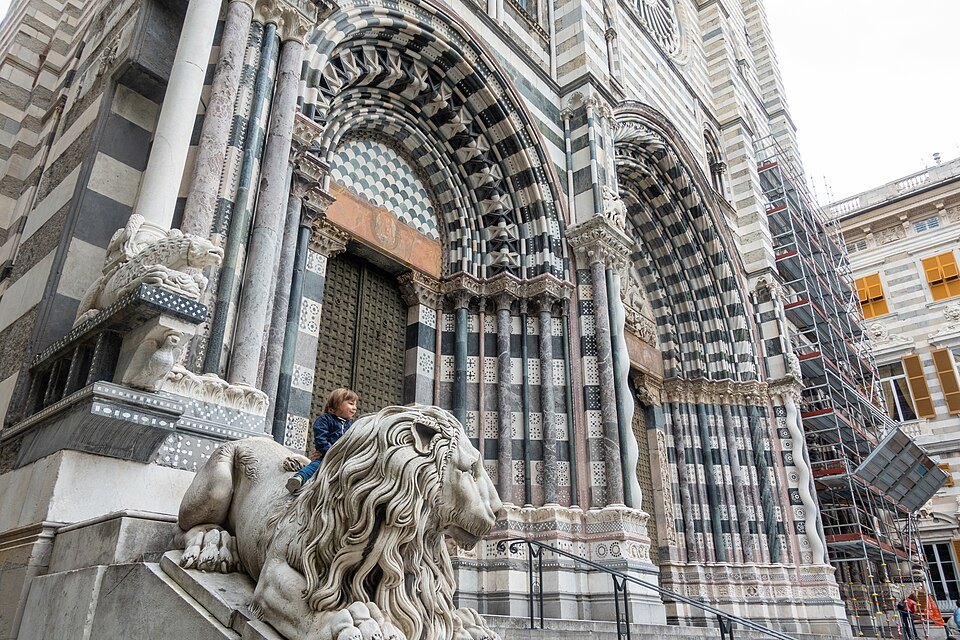
The cathedral's exterior is the point, and it is best in flat light. Strong sun throws the deep portals into shadow and flattens the bands.
Where to go next
- NEXT DOORPalazzo DucaleThe seat of the doges of Genoa from 1339 until the republic ended, rebuilt after a fire, and now the city's main hall for exhibitions — with two courtyards you can walk through for nothing.Read the page
- NEXT DOORPiazza San MatteoA small square of striped stone that one family built for itself: the Doria church of 1125, their palaces around it, their victories cut into the marble, and Andrea Doria's tomb in the crypt.Read the page
- NEXT DOORPorta Soprana and Columbus's HouseTwin towers of 1155 that guarded the road in from the east, restored a century ago, with the house tradition gives to Columbus's family and a re-erected cloister at their feet.Read the page