Santissima Annunziata del Vastato
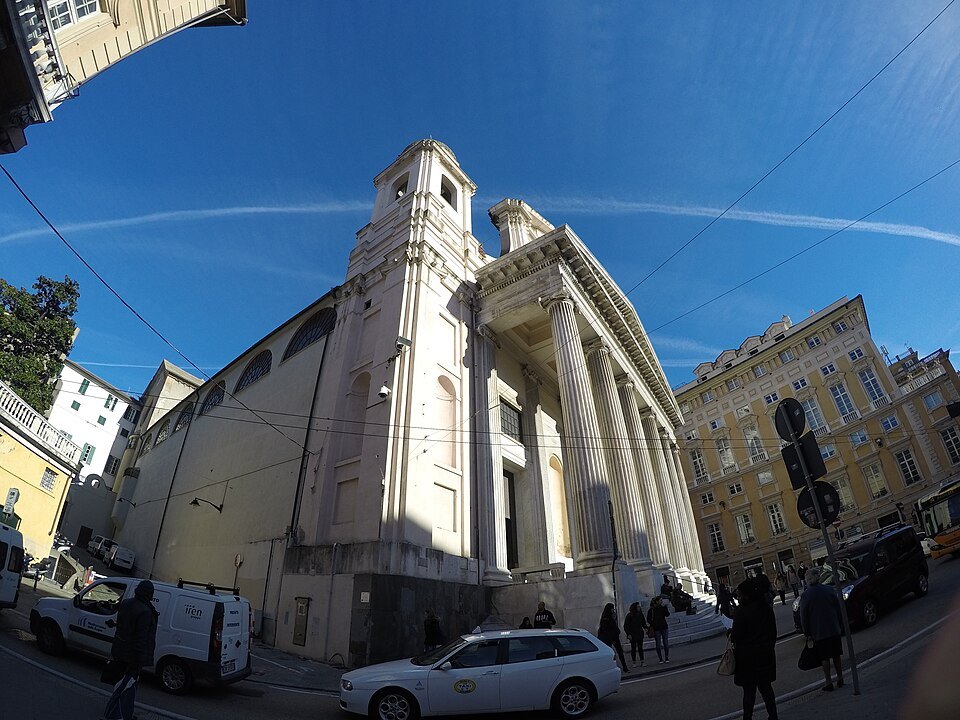
- IThe porticoA Greek revival front of the eighteen-thirties by Carlo Barabino, added to a much older church
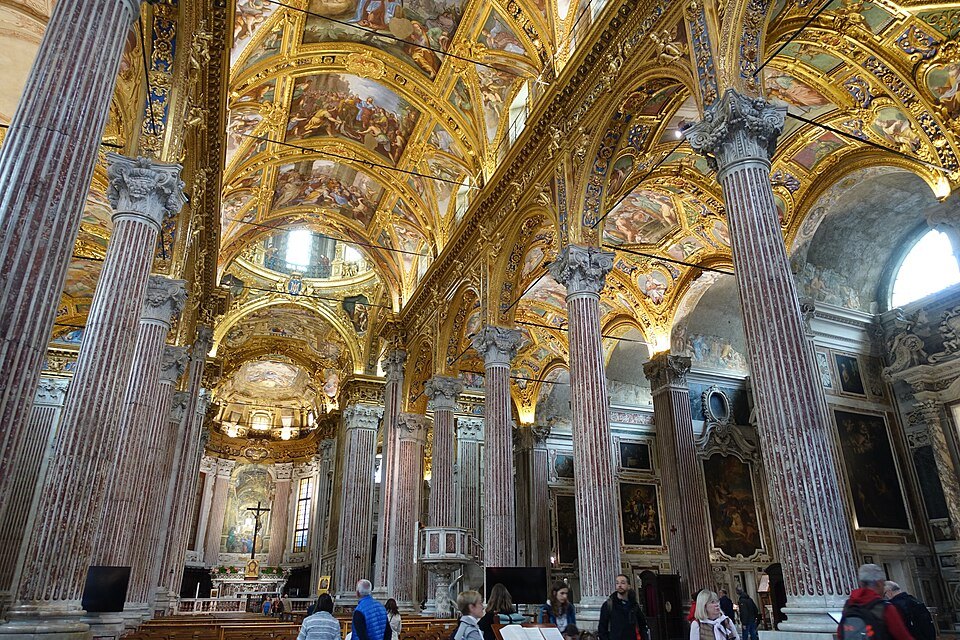
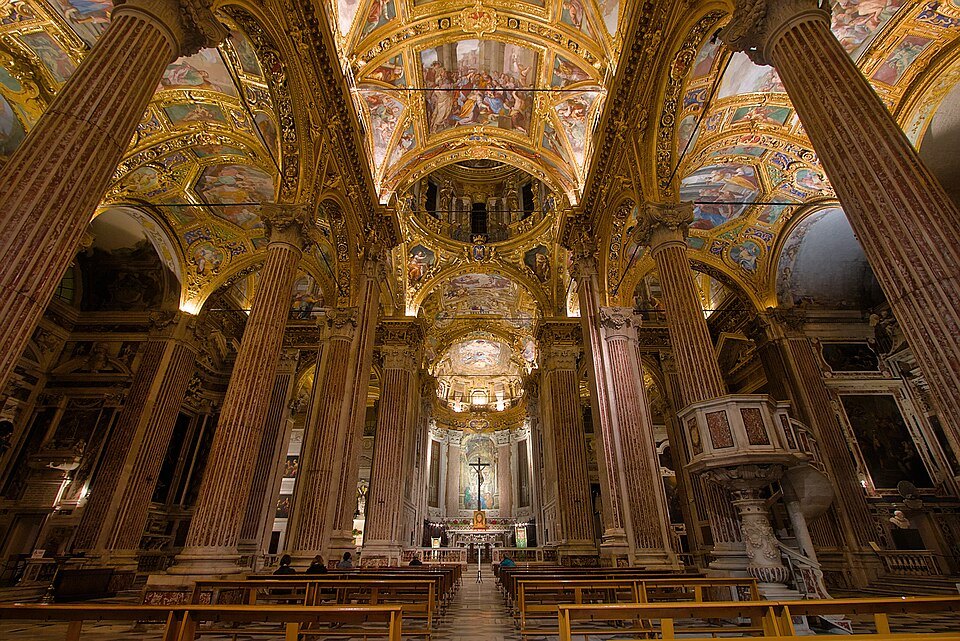
- IIThe gilded naveVaults and piers covered in gold leaf and stucco over a seventeenth-century scheme
- IIIThe Carlone frescoesScenes of the life of Christ by the brothers Giovanni and Giovanni Battista Carlone
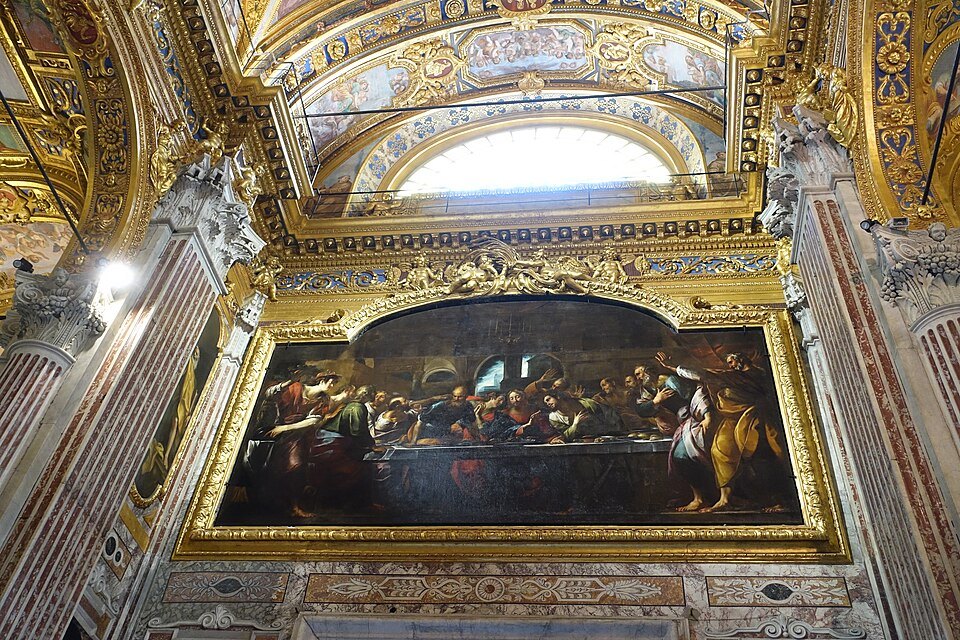
- IVProcaccini's Last SupperA large canvas above the door to the central nave
- VThe family chapelsSide chapels of the Lomellini and other houses, each a small gallery in itself
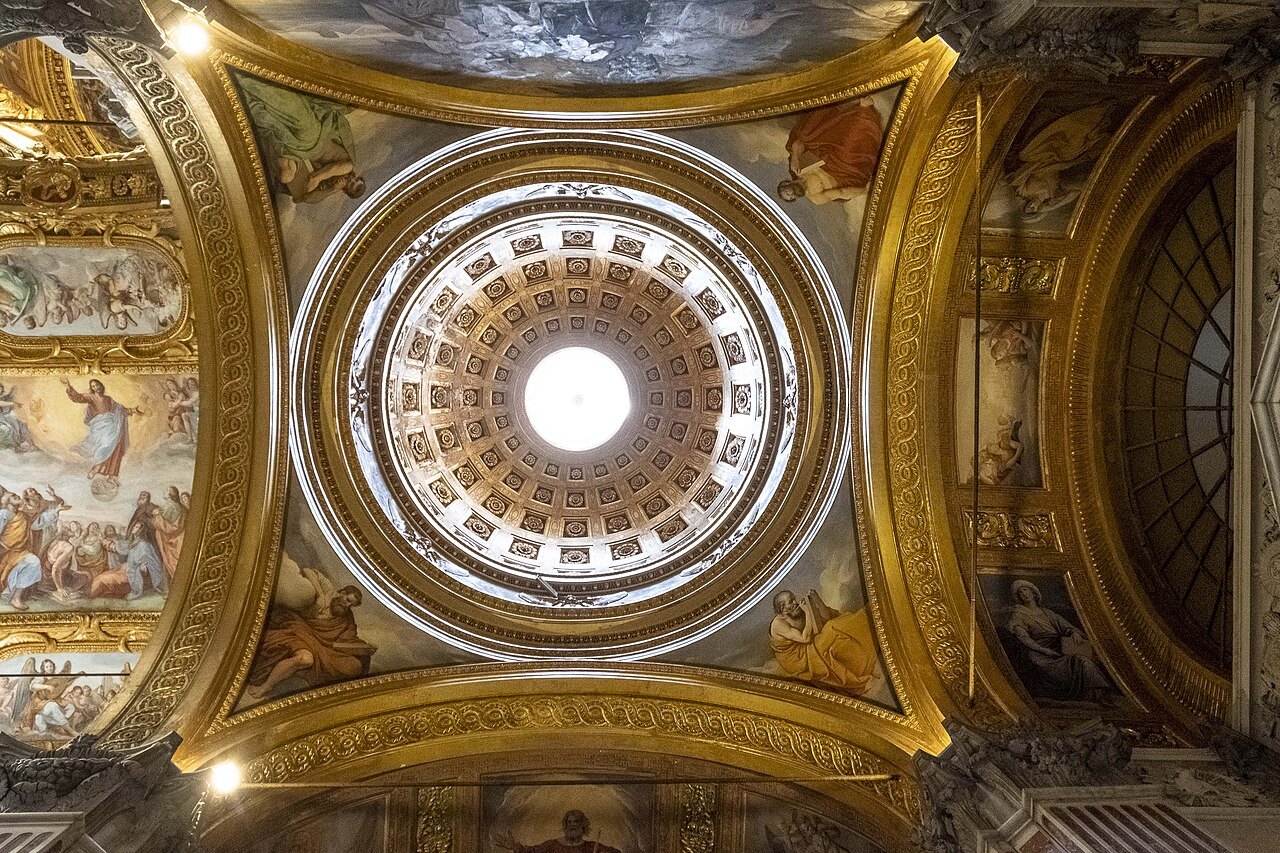
- VIThe domeRebuilt after bombing in the Second World War, and repainted to the old design
The sight in detail
Why it matters
Genoa's wealth did not go only into palaces. From 1591 the Lomellini, one of the richest families of the republic, took over the rebuilding of this church and kept paying for it for decades, with Taddeo Carlone directing the work. The result is a basilica that a small state's leading family built as its own monument.
The contrast is the point. Outside is a sober grey portico of columns; inside is gold, colour and painted vaults from end to end. Nothing on the street prepares you for it, and the moment of walking in is the reason to come.
It also stands where visitors arrive. The church is a few minutes' walk from Piazza Principe station and from Via Balbi, at the top of the street the Balbi built, so it is often the first great interior a traveller sees in Genoa.
It is also the clearest demonstration of a Genoese habit: spending on the inside rather than the outside. The city's palaces do the same thing, presenting plain fronts to the street and keeping the display for the courtyard and the piano nobile, and the church simply applies the rule to a public building.
How it came to be
The name records what was here before the city grew: the vastato, the cleared ground outside the medieval walls, kept open for defence. A church stood on it from the thirteenth century, and a Franciscan convent took it over in the fifteenth.
The rebuilding paid for by the Lomellini from 1591 gave the church its present shape, and through the seventeenth century the great Genoese decorators covered it: the Carlone brothers on the vaults of the nave, Domenico Piola, Giovanni Andrea Ansaldo and Giulio Cesare Procaccini in the chapels and over the doors.
The portico came much later, in the eighteen-thirties, when Carlo Barabino — the architect of the opera house on Piazza De Ferrari — added a Greek revival front to a square that was being rebuilt around it.
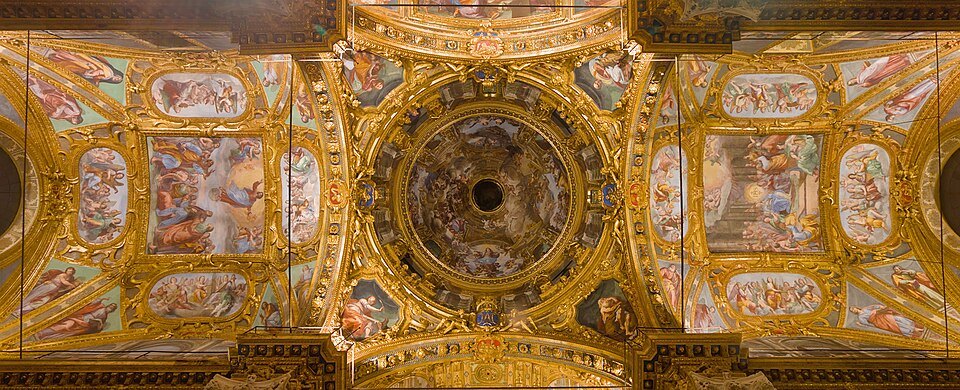
In 1942 bombs took the dome and damaged the nave. The restoration rebuilt the structure and repainted the lost decoration to the original scheme, which is why the gold reads as unusually fresh for a seventeenth-century interior.
The Lomellini were not only donors. They were one of the families on the rolli lists, they owned the island of Tabarka off Tunisia and the coral trade that went with it, and their money came from exactly the kind of long-distance venture that built this city. The chapel they kept for themselves is the one beside the high altar.
What you actually see
The nave is wide, with two aisles behind colonnades and a barrel vault above, and every surface of it is worked: gilded stucco frames, painted scenes, marble facing on the piers. It is easiest to take in from the far end, looking back toward the doors.
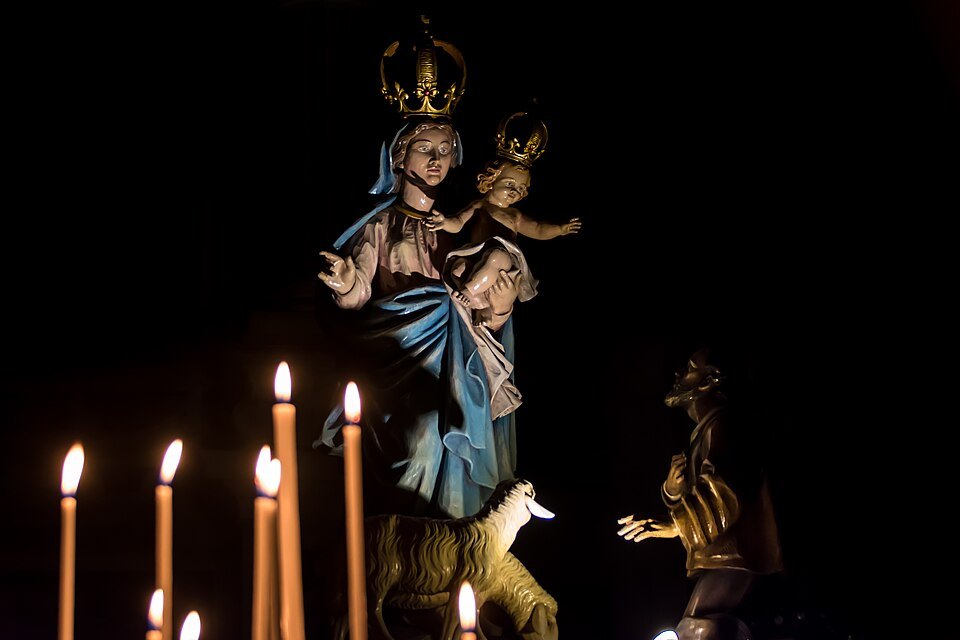
Above the central door hangs Procaccini's Last Supper, flanked by prophets attributed to painters of the same circle. On the vaults, Giovanni Carlone painted the Epiphany, the Entry into Jerusalem and the Agony in the Garden; his brother Giovanni Battista the Resurrection and the Coronation of the Virgin.
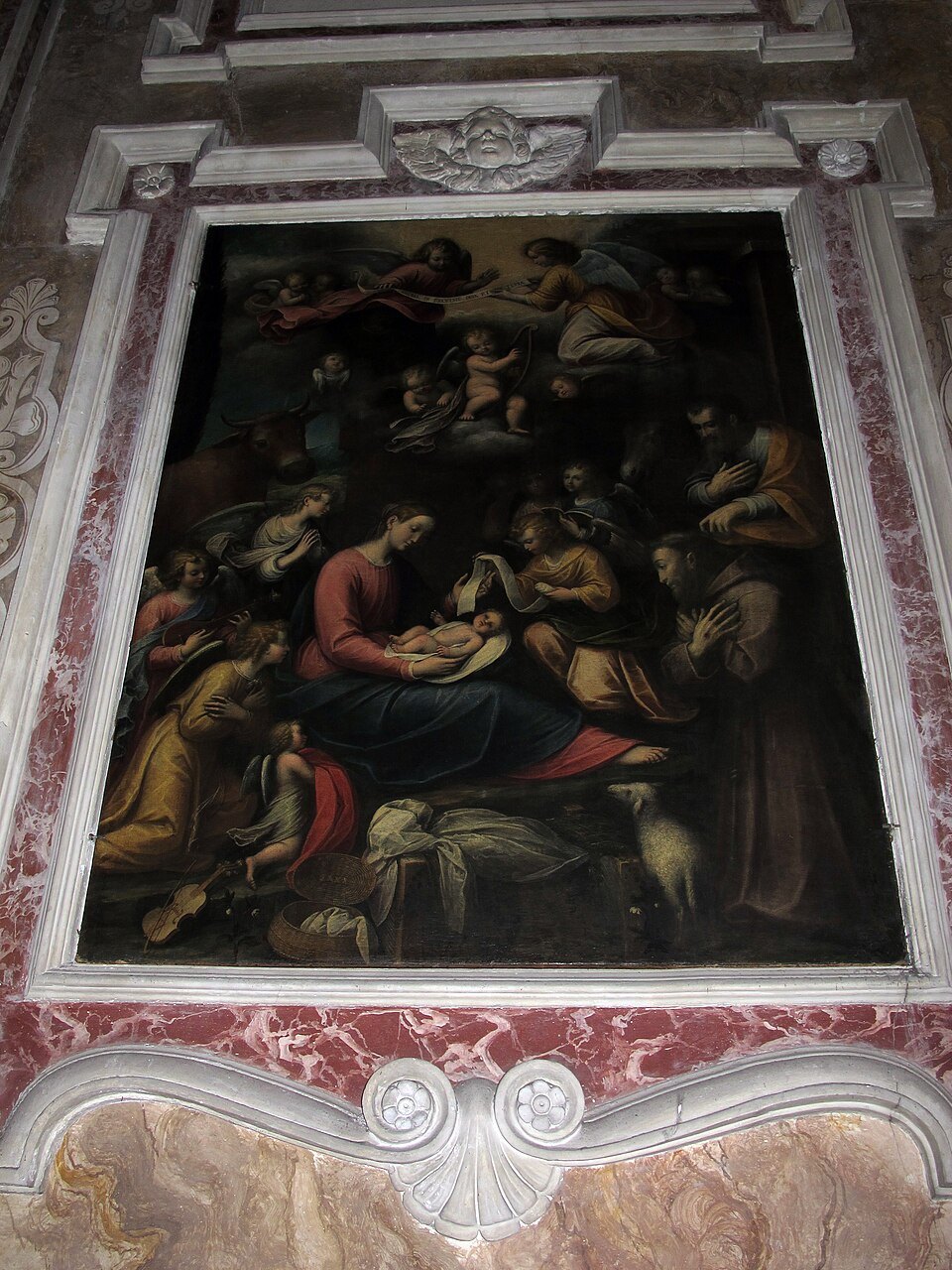
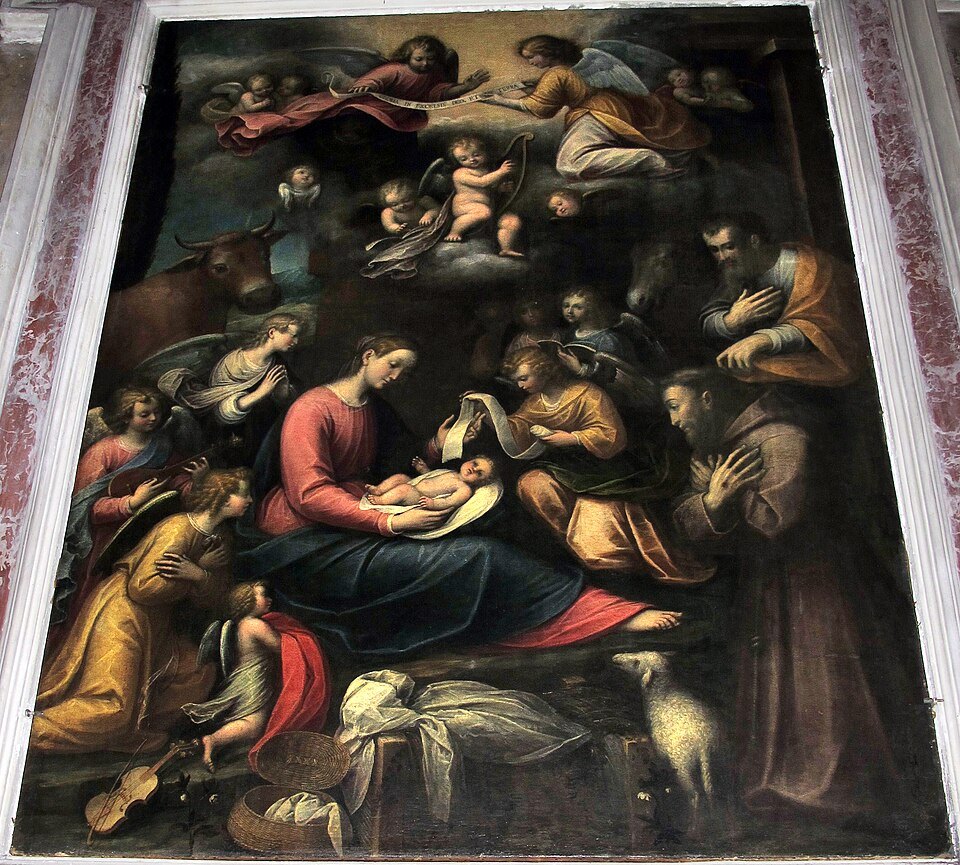
The side chapels are where the families are. Each has its altarpiece, its marble and its arms, and several are by painters worth knowing — Domenico Piola, Aurelio Lomi, Giovanni Battista Carlone again.
The dome, rebuilt after the war, carries its painted decoration back to the pendentives, and the light that falls from it is the only strong daylight in the building.
Look for the war damage if you want to understand the restoration: in a few places the new stucco is slightly flatter than the old, and the joins are visible from the side aisles. The city chose to restore the scheme rather than leave the loss visible, and it says so on the panel at the entrance.
How to visit
Half an hour. The church keeps ordinary parish hours and shuts in the middle of the day; it is free.
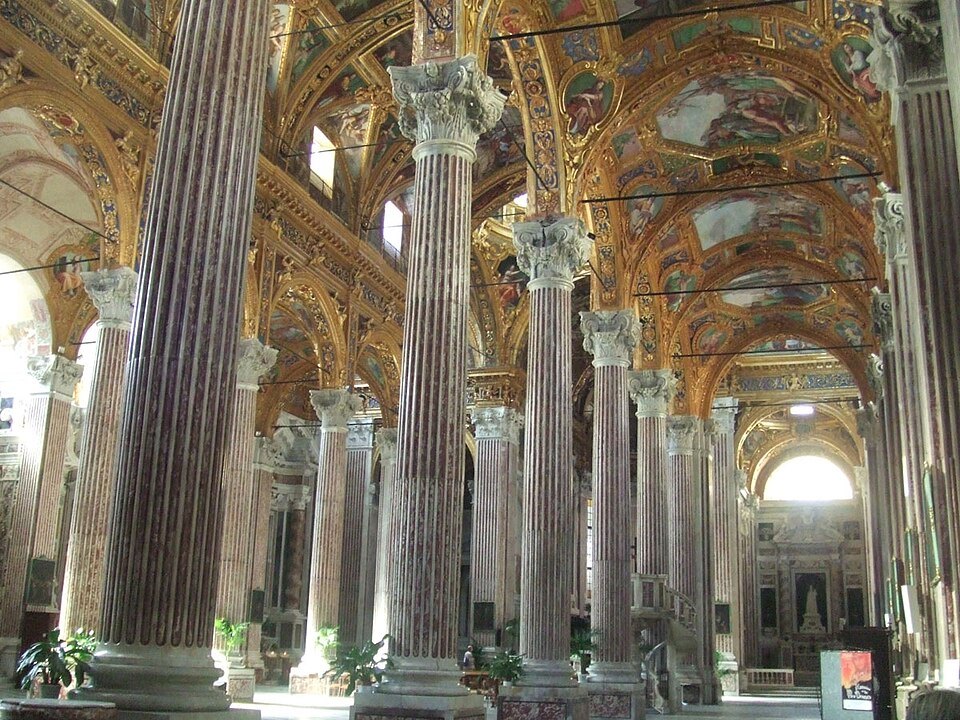
Coin-operated lights illuminate individual chapels. The best light in the nave is late morning.
It fits a walk that begins at the station, takes in Palazzo Reale on Via Balbi, and ends on Via Garibaldi, ten minutes away.
Arriving by train, it is worth the ten minutes on foot rather than the metro: the walk down Via Balbi passes the university palaces and their courtyards, and the church is the natural place to stop at the end of it.
Honest notes
The square outside is a traffic junction and does the church no favours; judge it from the inside.
Some chapels stay roped off, and the sacristy and cloister are not usually shown.
Gilding on this scale divides people. If it is not to your taste, San Matteo and the banded medieval churches are the opposite case, and both are nearby.
Much of what glitters is gilded stucco rather than gold leaf on stone, and a good deal of it dates from the post-war repair. That is normal for Italian baroque interiors and does not make the room less extraordinary.
Where to go next
- NEXT DOORPalazzo Reale and Via BalbiA banker's palace that became a royal residence, with a mirrored gallery, a hanging garden and a terrace over the harbour, on the street the Balbi family built for themselves.Read the page
- NEXT DOORVia Garibaldi and the Strada Nuova MuseumsA single short street of sixteenth-century palaces built by the richest families of the republic, three of them now one museum, and the heart of the UNESCO listing of the Rolli.Read the page
- NEXT DOORThe Church of the GesùA dark, gilded Jesuit interior a step off Piazza Matteotti, holding two paintings Rubens made for this building and the frescoes that began the Genoese baroque.Read the page