Spianata di Castelletto
- IThe belvedereA long railed terrace, formally the Belvedere Luigi Montaldo, above the roofs of the old town
- IIThe lift from Piazza del PortelloA public lift that rises inside the hill and opens straight onto the terrace
- IIIThe Liberty cabinsRebuilt in 2020 to the original early-twentieth-century drawings, panelled in pine
- IVCaproni's versesLines by the poet Giorgio Caproni about this lift, set on a plaque in its entrance tunnel
- VThe garden and caféPalms, benches and a kiosk along the terrace, used by the neighbourhood all day
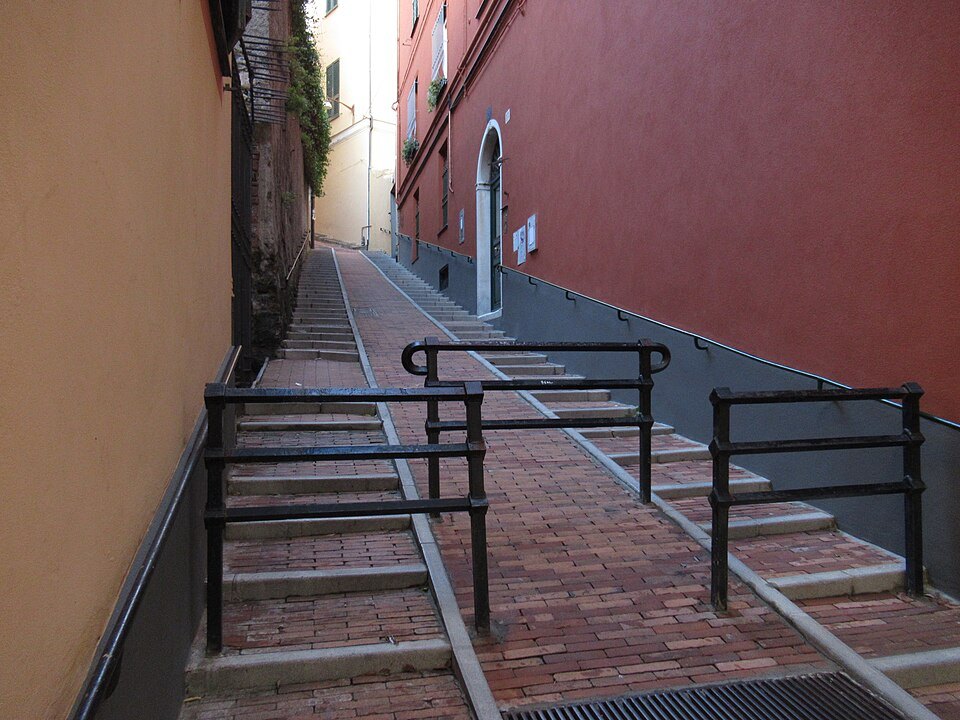
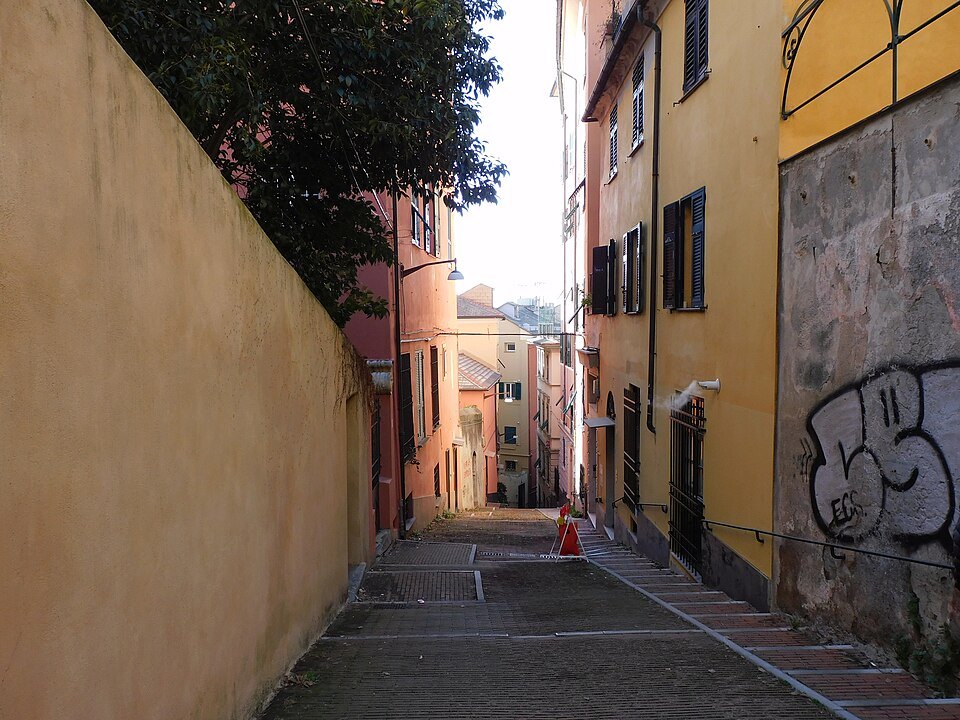
- VIThe saliteStepped lanes running down from the terrace into the streets below, for the walk back
The sight in detail
Why it matters
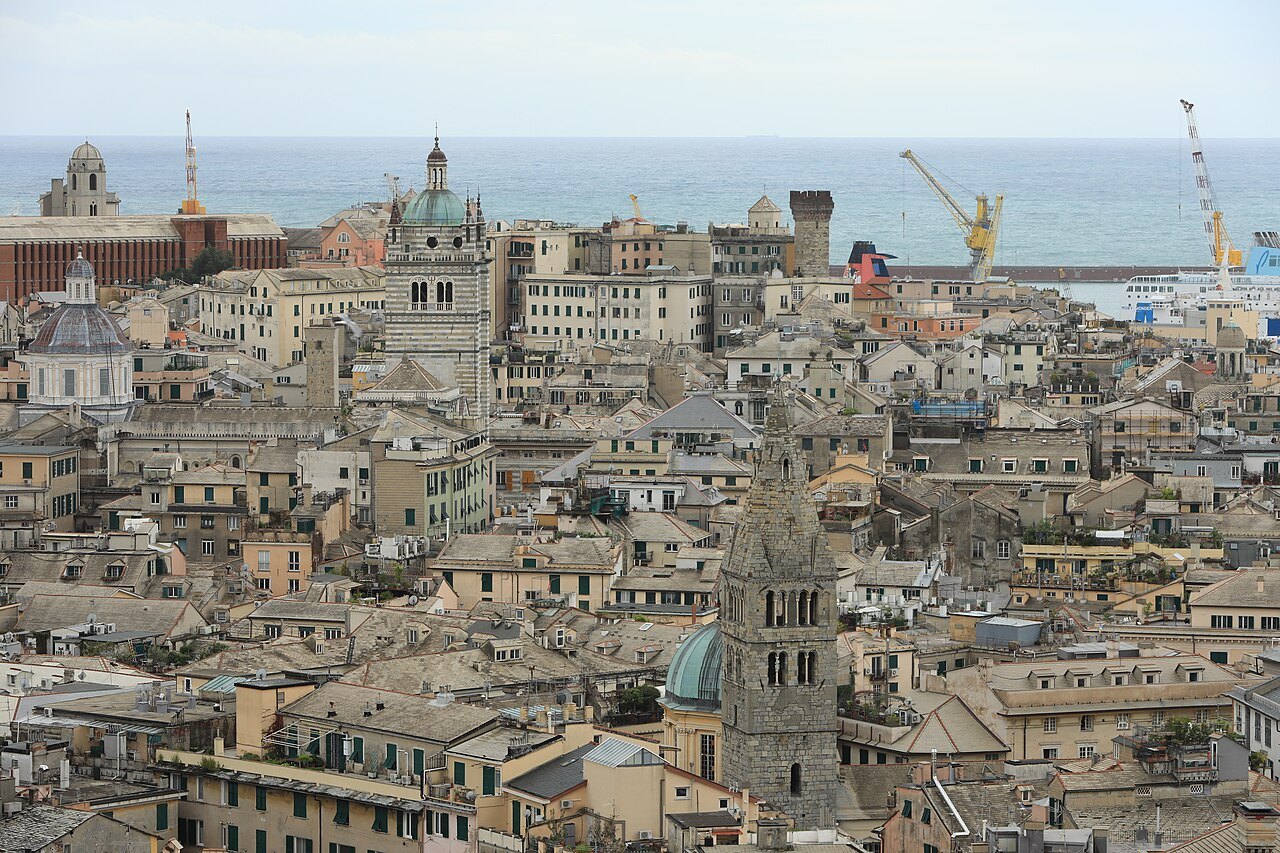
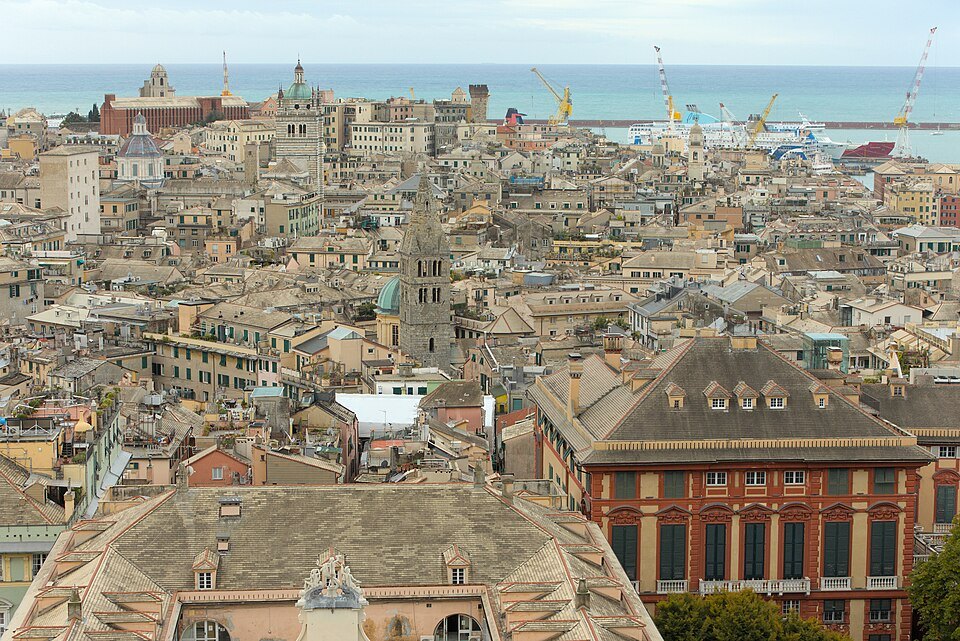
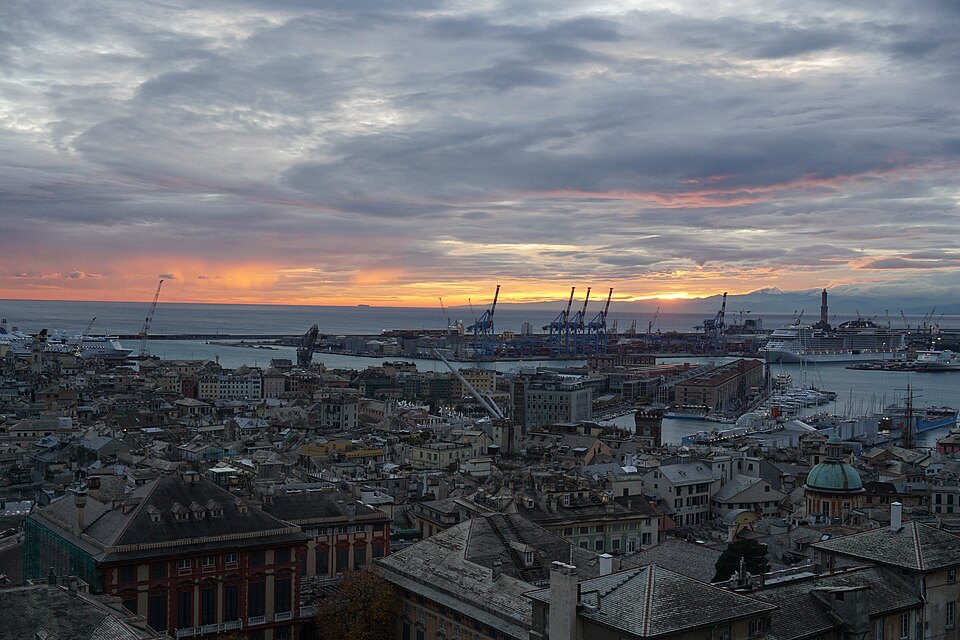
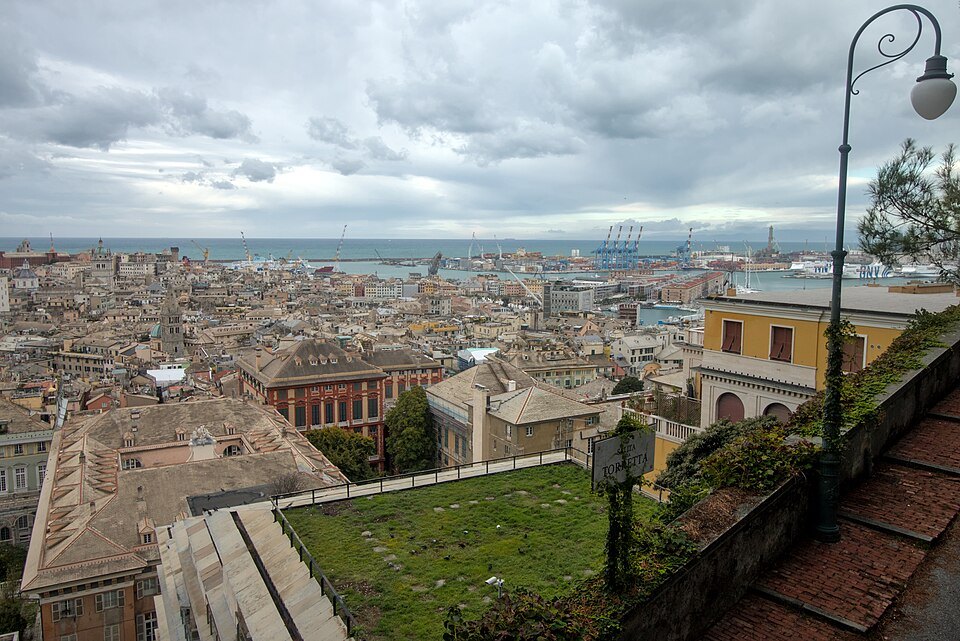
Genoa is a city you understand from above, and this is the easiest above to reach. The terrace sits directly over the old town, so the view is not a distant panorama but a plan: the roofs of the alleys, the striped tower of the cathedral, the domes, the cranes, and the sea closing it off.
The name means little castle, and it is literal. A fortress stood on this spur from at least the tenth century, controlling the city below; it was pulled down in the late nineteenth century, and the flat ground it left became the belvedere.
What makes it particular is how you arrive. A public lift, part of the ordinary transport system rather than a tourist ride, climbs from Piazza del Portello inside the hill and opens through a doorway straight onto the terrace. Locals use it to get home with the shopping.
The terrace also explains the city's transport. Genoa runs public lifts, funiculars and a rack railway because the difference between sea level and the first ridge is a few hundred metres over a very short horizontal distance. Riding one of them is not a novelty here; it is how people get home.
The lift
The Castelletto lift is the most famous of Genoa's public lifts and has been running since the early twentieth century. In 2020 the whole installation was renewed, and the cabins were rebuilt to the original drawings, panelled in pine in the Liberty style.
It is reached through a tunnel from the square, and the poet Giorgio Caproni, who grew up in this city, wrote verses about it that are reproduced on a plaque in that tunnel — a lift to paradise, he called it, which is the kind of claim only a Genoese would make about municipal transport.
A single urban ticket covers it, the same one used on the buses and the metro, and it runs from early morning to late evening. The ride takes well under a minute.
What you actually see
Step out and the city is below you at an angle that photographs badly and reads beautifully. Immediately under the railing are the roofs of the old town, slate and tile, with washing lines and roof terraces; beyond them the belfries and the green dome of the cathedral; then the harbour, the mole and the sea.
To the west the Lanterna stands out on its rock. To the east the hills climb behind the nineteenth-century city, with the walls and forts along the ridge above them.
The terrace itself is a neighbourhood space: palms in tubs, benches along the railing, a kiosk, and children on bicycles in the late afternoon. It is not a viewpoint people drive to; it is a piece of the quarter that happens to have a view.
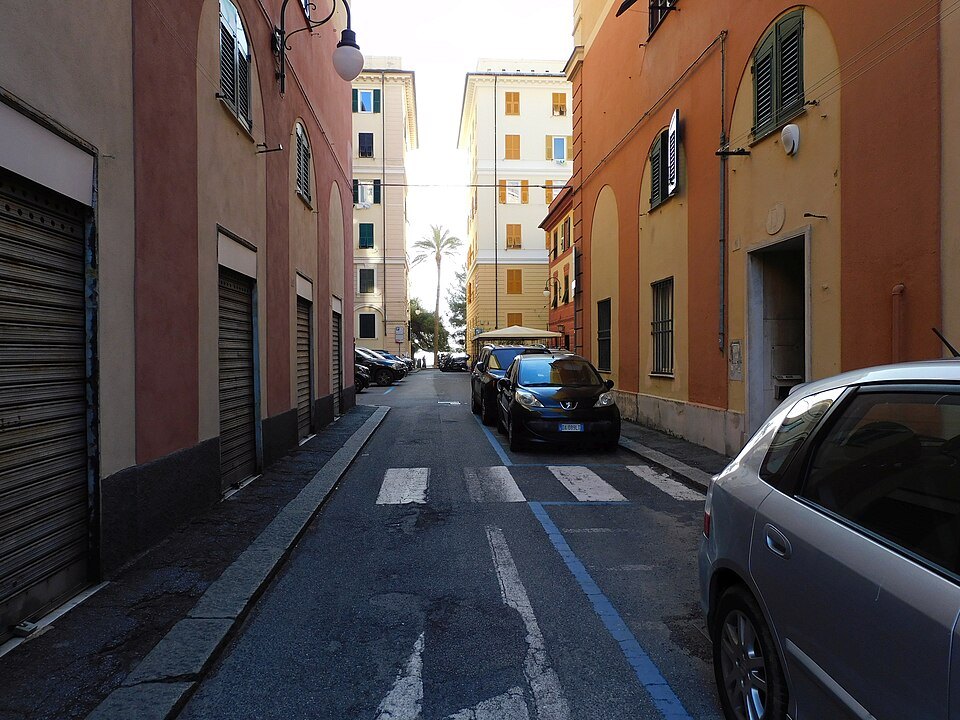
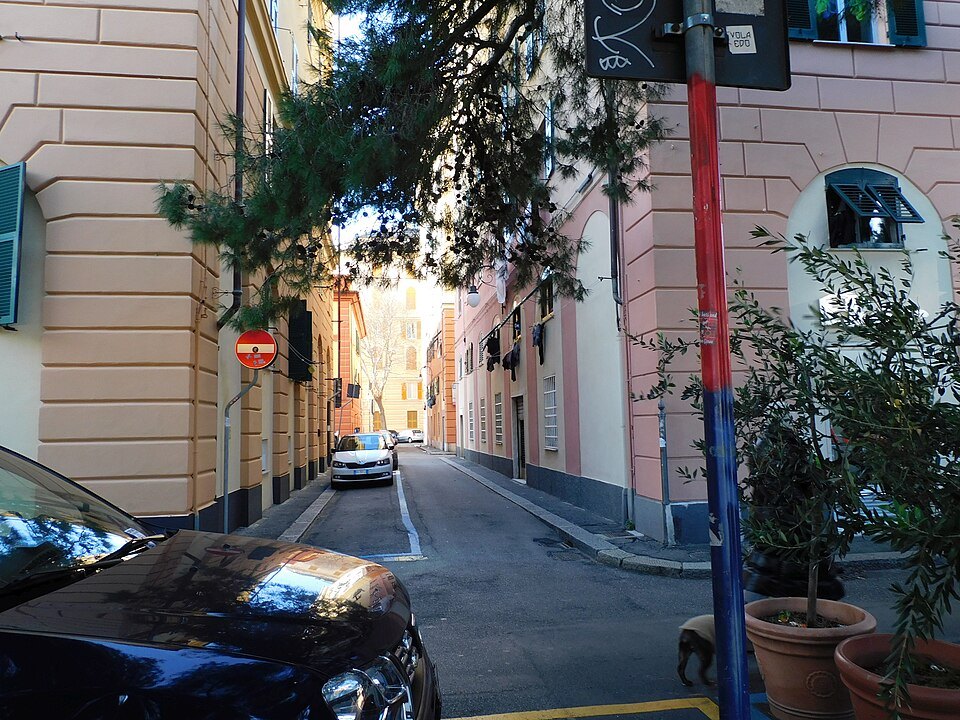
Behind the terrace the streets of Castelletto run off along the hillside, lined with the confident apartment buildings of the late nineteenth century, some by architects who also built the city's castles and villas.
Pick out four things and the geography falls into place: the Lanterna to the west, the container cranes beyond it, the green dome of the cathedral almost directly below, and the line of the ridge behind you with its forts. Everything else in the city hangs off those four points.
Walking down
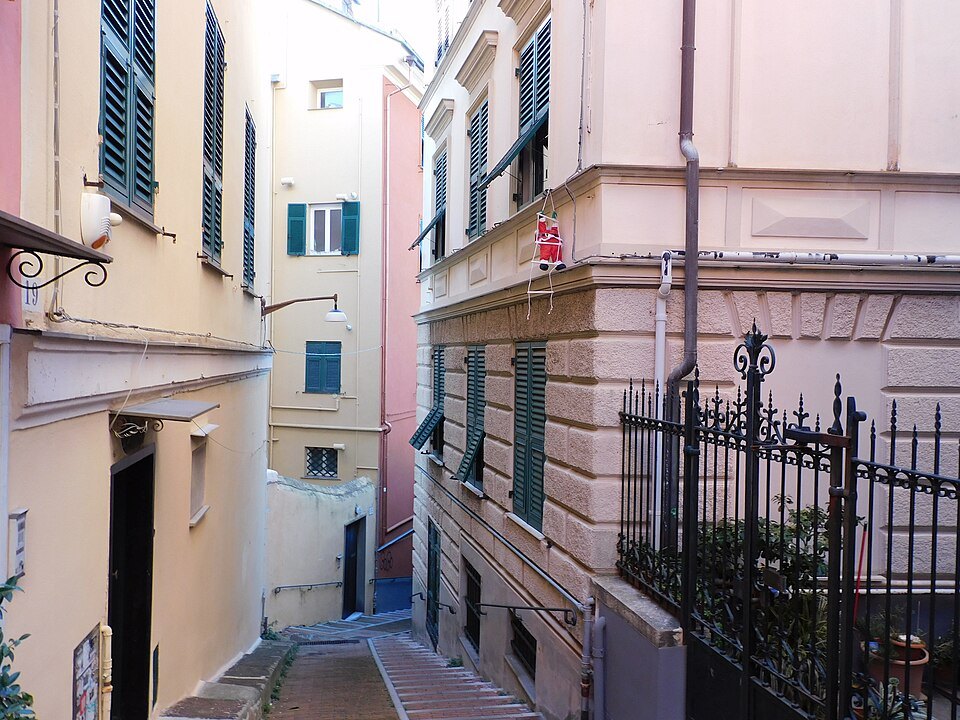
The walk back into the centre is half the pleasure. Stepped lanes — salite — drop from the terrace into the streets above Via Garibaldi, passing garden walls, shrines set into corners and the back doors of palaces.
The most direct is the Salita alla Spianata di Castelletto, which comes out near Largo della Zecca. It is steep and paved with brick and stone, and it is one of the best short walks in the city.
Doing it in the other direction, upward on foot, is a real climb of about ten minutes. Most people take the lift up and walk down, which is the sensible order.
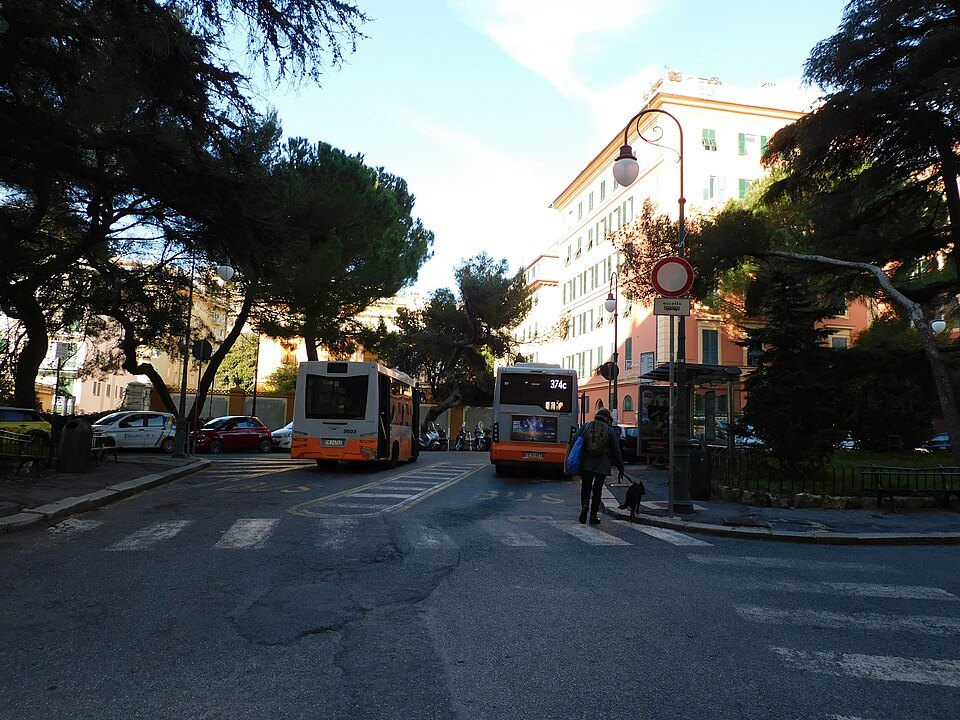
If you would rather not walk, the lift runs down as well, and buses pass along the Circonvallazione a Monte, the boulevard that curves along the hillside behind the terrace with views of its own.
How to visit
Half an hour at the terrace, longer if you sit. There is nothing to pay beyond the transport ticket and nothing to book.
Come at the end of the afternoon: the sun moves round to light the old town and the sea, and the terrace fills with people who live here.
It pairs naturally with the funicular up to the Righi, which starts a few minutes away and goes much higher, if you want the whole city rather than the old town alone.
Honest notes
The view is over roofs and port rather than over a picturesque skyline; people expecting a Tuscan panorama sometimes find it industrial. That is Genoa, and the port is the point.
The lift can shut for maintenance, and there are stairs at the top end of the tunnel.
The second Castelletto lift, the Ponente one built in 1929, is a different and less useful machine, reached through a road tunnel; the one you want is the Levante lift from Piazza del Portello.
Where to go next
- NEXT DOORVia Garibaldi and the Strada Nuova MuseumsA single short street of sixteenth-century palaces built by the richest families of the republic, three of them now one museum, and the heart of the UNESCO listing of the Rolli.Read the page
- NEXT DOORThe Righi Funicular and the FortsA funicular of the eighteen-nineties climbs from the edge of the old town to the Righi, where the seventeenth-century walls run along the ridge and a line of forts guards the skyline.Read the page
- NEXT DOORPiazza De FerrariThe hinge of the city: a bronze fountain of 1936 ringed by the opera house, the stock exchange and the palace of the doges, where the medieval alleys meet the nineteenth-century streets.Read the page