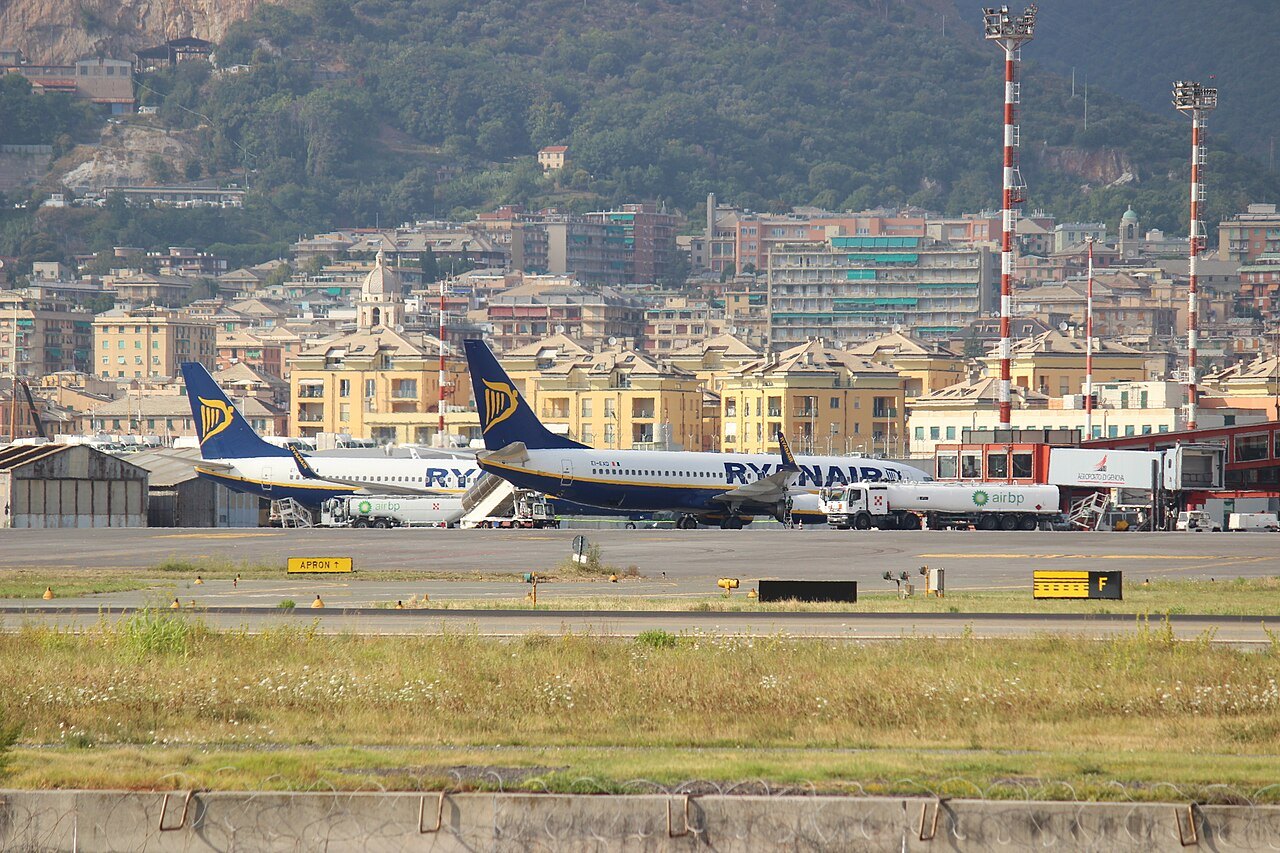
The airport is close, but awkward
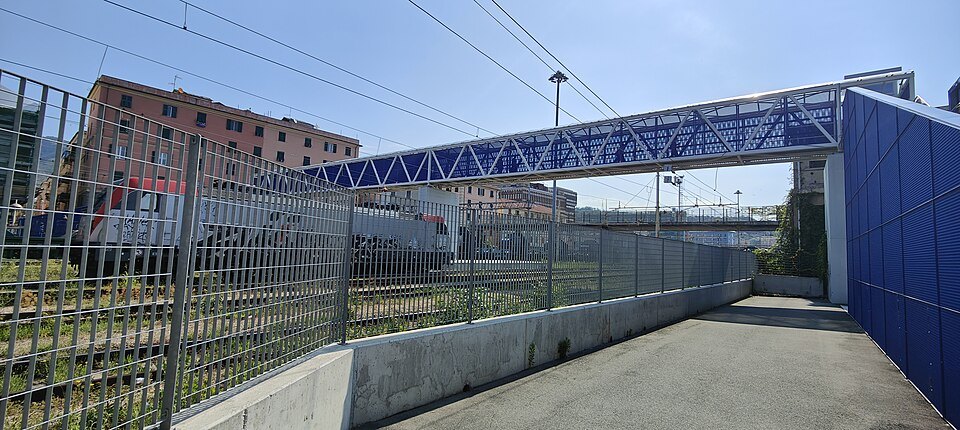
Genoa's airport sits on reclaimed land beyond the container port, which is unusual for a city this size and, in a practical sense, unhelpful. There is no rail link of its own, so however a visitor arrives by air, the last stretch into town has to happen by road.
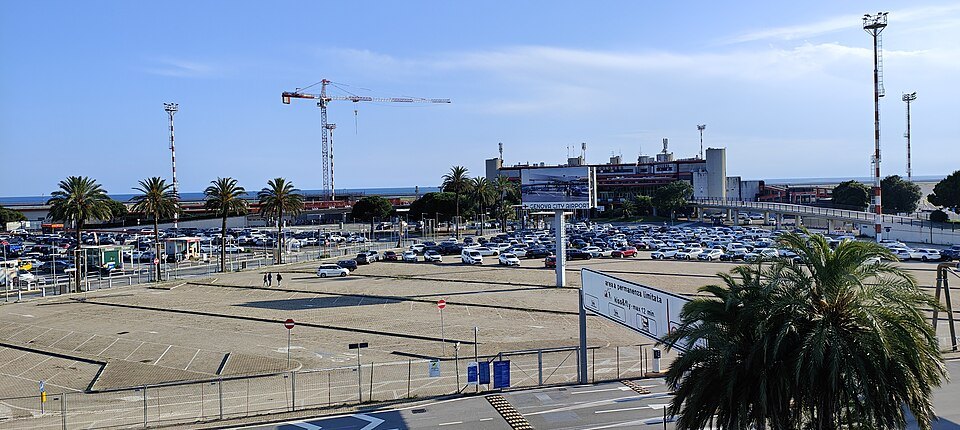
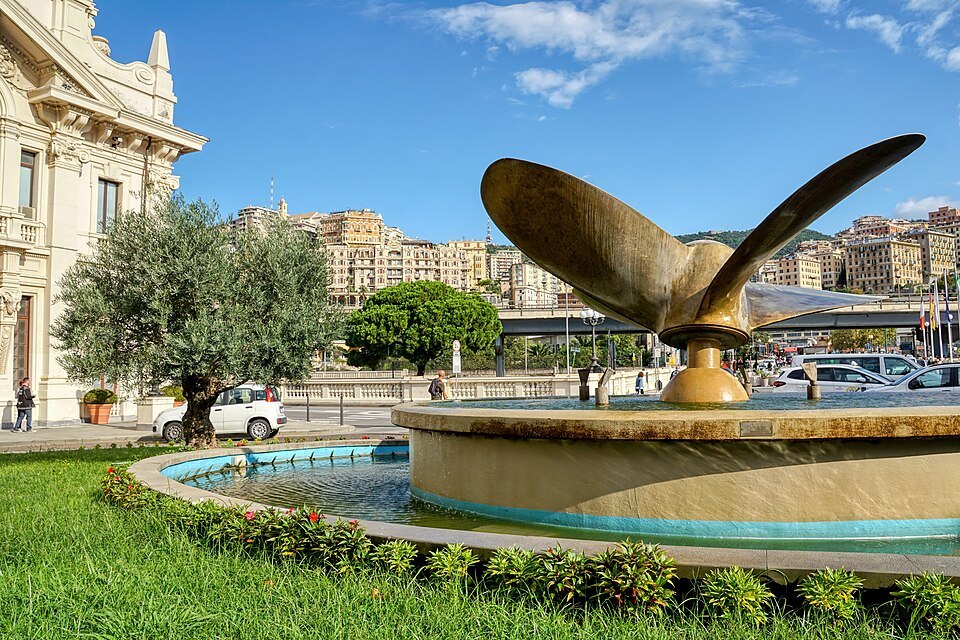
The airport carries the name of Christopher Columbus, who was born in the city, and it occupies an artificial peninsula next to the working port. Flights coming in from the east pass low over cranes and container ships before landing, and a seat on the left side of the aircraft gives a view of the whole city stacked against the hills in the last few minutes of the approach.
Because the airport is small, schedules thin out considerably outside the summer months, and plenty of travelers find it cheaper, and no slower door to door, to fly into Milan or Pisa instead and finish the journey by train along the coast.
Some links on this page are affiliate links. If you book through one we may earn a commission, at no extra cost to you. It does not affect what is recommended here, and no sight page on this site carries one.
A transfer booked ahead, somewhere to leave bags, and mobile data from landing.
The Volabus, and how it works with luggage
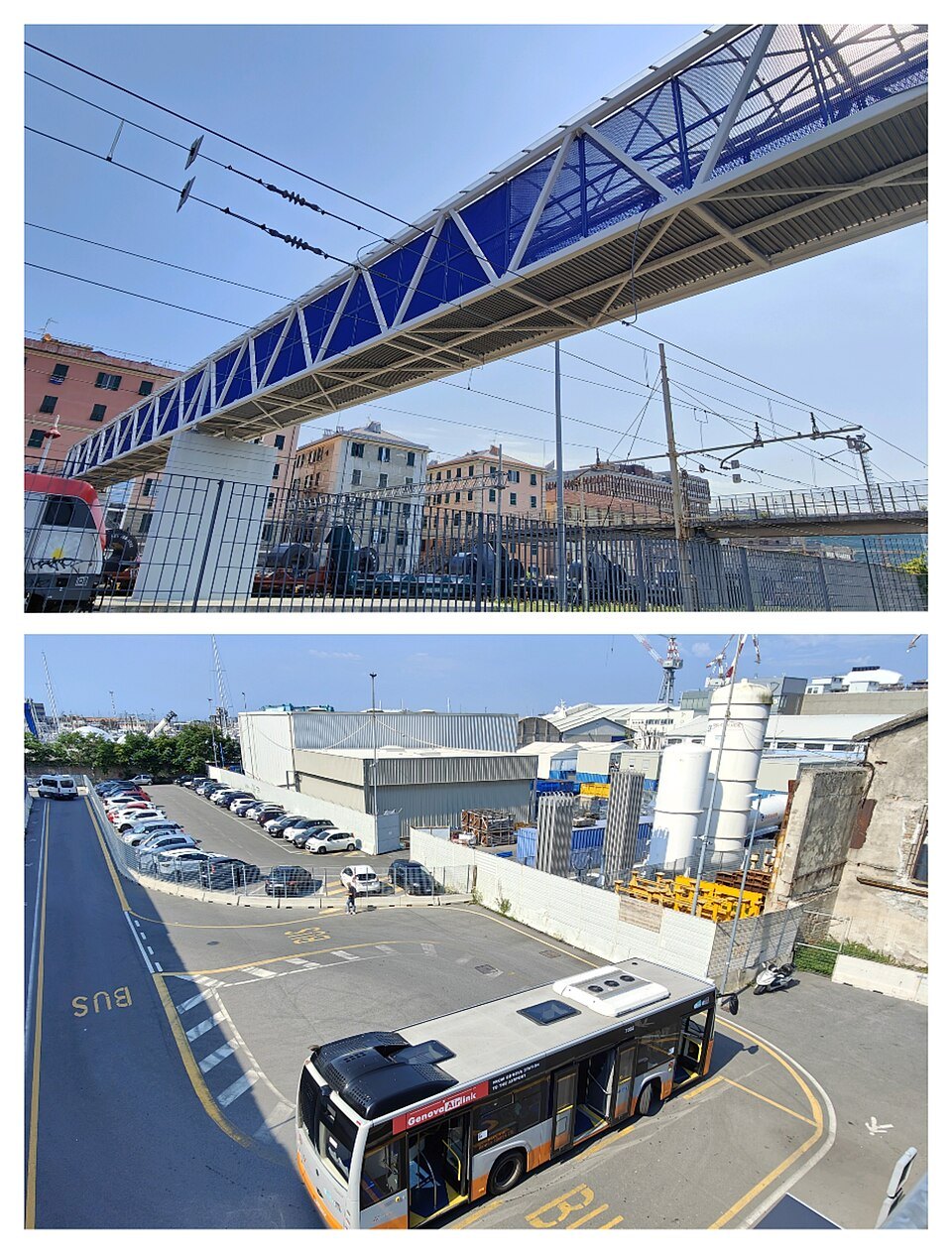
The practical way in is the Volabus, which runs from outside the terminal to Piazza Principe and continues to Brignole, covering the distance in around half an hour and departing roughly every half hour through the day. It is built for exactly this journey, with space for cases, and it is the option most visitors should default to.
The ticket is worth understanding before boarding: it includes an hour of onward travel on the city's buses and metro, which matters if a hotel is a short ride from either station rather than a walk. Buy it before boarding where possible, and keep it validated, since Genoa's ticket inspections are not symbolic.
With luggage, the bus is manageable but not spacious in the way a taxi is. A visitor with one large case and hand luggage will be comfortable; a family with several cases and a stroller may prefer to spend a little more and take a taxi directly to the door of where they are staying.
Taxis, and why they are worth considering
Taxis from the airport are metered rather than fixed-price, and in ordinary traffic the ride into the center takes fifteen to twenty minutes. There is no meaningfully faster alternative, and for anyone arriving late, arriving with a lot of luggage, or arriving with young children, the taxi rank outside the terminal is the least complicated choice.
It is worth asking the driver, before setting off, whether the destination is easiest reached from Piazza Principe or Brignole, since a hotel near the old port and a hotel near Via XX Settembre sit at opposite ends of the city and a driver who knows the address well will already have a preferred route.
Arriving via Milan or Pisa instead
Most travelers on long-haul routes do not fly directly into Genoa at all; they land in Milan and come down by train. The connection is straightforward, with a journey time from Milan Centrale of under two hours, and it is often the most reliable way to reach the city regardless of season.
Pisa serves a similar function for some European routes, with a coastal rail line running north toward Genoa. Either approach avoids the limited timetable of Genoa's own airport, and either lands the visitor at one of the two stations covered below, which is where the practical part of arriving with luggage actually begins.
Which station you will end up at
Genoa is long and narrow, and its two stations sit at opposite ends of it. Piazza Principe, at the foot of Via Balbi, serves the western half of the city: the royal palace, the old port, the ferry terminals. Brignole, further east, serves the nineteenth-century city and the shopping streets around Via XX Settembre, and it is also where most regional trains along the coast toward Nervi begin.
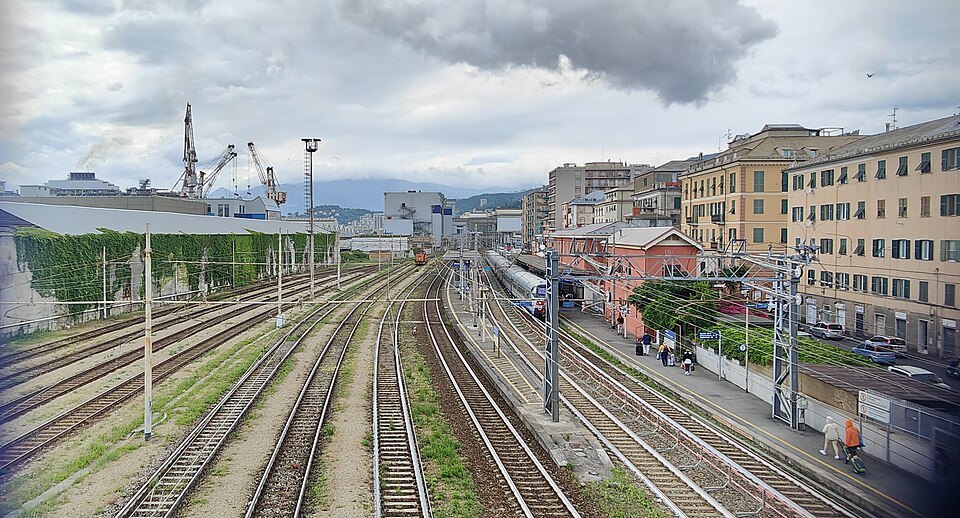
The Volabus calls at both, in that order, so a visitor bound for a hotel near the old town should get off at Principe, and one bound for the shopping streets or Corso Italia should stay on to Brignole. Getting off at the wrong one costs very little: the two stations are joined by a four-minute metro ride and by frequent buses.
Both stations have left luggage facilities, and there are independent storage points in the surrounding streets as well, which is useful for a day when a flight lands early or leaves late and the hours in between need filling without a case in tow. Neither station rewards lingering; the interesting parts of Genoa begin a short walk from either one, as covered on the /neighborhoods/ page.
The first hour, once the bags are down
Whatever the route in, the first useful thing to do once luggage is dropped at a hotel is to get above the city rather than through it. The lift up to Castelletto or the Bigo at the old port each take about ten minutes and turn what feels, at street level, like a confusing tangle of alleys into something legible: a city stacked on a hillside above a harbor, rather than a maze.
It is worth buying a day ticket for the urban network early, from a tobacconist or through the transport app, since it covers buses, the metro, the funicular and the public lifts together, a genuine convenience in a city built on this much slope. Details of routes and how the network fits together are on the /getting-around/ page.
Anyone staying in the old town should photograph the street sign nearest their door on arrival. Addresses here are numbered in two colors, red for commercial premises and black for residential ones, and finding a specific door among the caruggi is a skill that takes a little practice, best not left until dark with luggage still in hand.
More from the journal
- Getting HereWhich Genoa station should you get off at, Principe or Brignole?A practical guide to Genoa's two main stations, which end of the city each serves, and how to choose.Read the piece
- Getting AroundWhich of Genoa's lifts and funiculars are actually worth riding?Genoa runs ten public lifts, two funiculars and a rack railway on the ordinary bus ticket. Here is what each one is for, which are worth a detour, and how to use them.Read the piece
- The CaruggiIs it safe to walk the caruggi, and which lanes should you take?Genoa's medieval quarter has a reputation. Here is what is actually true, which streets are busy and which are not, and how to walk one of Europe's largest old towns without worrying.Read the piece