Two stations, one long city
Genoa runs in a narrow strip between hills and sea, and almost nothing about it is arranged in a circle around a single center. That shape is the reason the city has two main stations rather than one, and it is the reason the choice between them matters less than it first appears. Principe sits at the western end of the built-up center, Brignole at the eastern end, and the historic core that most visitors come for lies roughly between the two, closer to Principe.
Long-distance trains from Milan, Turin, Rome and beyond generally call at both stations on the way through, so in practice the question is rarely which station serves your route. It is which one puts you closer to where you are staying, and which one your particular ticket happens to name. Reading that ticket carefully before setting out saves a confusing few minutes on arrival.
Some links on this page are affiliate links. If you book through one we may earn a commission, at no extra cost to you. It does not affect what is recommended here, and no sight page on this site carries one.
A transfer booked ahead, somewhere to leave bags, and mobile data from landing.
Principe: the western arrival
Piazza Principe, opened in the eighteen-fifties at the foot of Via Balbi, is the older and more imposing of the two, with a colonnaded hall and a square in front of it dominated by the Columbus monument. It serves the western half of the city: the royal palace on Via Balbi, the old port, and the ferry terminal used for sailings to Sardinia, Sicily, Corsica, Tunisia and Barcelona.
Anyone staying in or near the old town, heading for the Palazzo Reale, or continuing on to a ferry will generally find Principe the more convenient stop. The station itself is not a place to spend time in; it is surrounded by ordinary traffic, hotels and bus stands, and the streets worth walking begin a short distance away, down toward the water or into the tangle of the caruggi.
Brignole: the eastern arrival
Brignole lies at the opposite end of the city and serves the nineteenth-century quarters: Via XX Settembre, the main shopping streets, Corso Italia along the seafront, and the bus routes out to Boccadasse. It is also the more useful station for regional trains along the coast, including those toward Nervi, most of which start their run here rather than at Principe.
Visitors staying near Piazza De Ferrari, planning a day out to Nervi or Boccadasse, or arriving with heavier shopping in mind will usually do better arriving here. Like Principe, it is not a destination in itself. It is a working station set among ordinary city, and the parts of Genoa that reward attention start a few streets beyond its doors.
Getting between them, and why the choice matters less than it seems
The two stations are joined by the metro in about four minutes, and by frequent bus services that cover the same ground on the surface. That short connection is the reason arriving at the station your ticket does not favor costs very little: a change of platform, a short ride, and the traveler is at the other end of the city with barely any loss of time.
Both stations have left-luggage facilities, and there are independent storage points scattered around each one as well, which is useful on a day of early arrival or late departure, or when a few hours need filling before a train or ferry. Anyone unsure of the current arrangement at either station should ask at the ticket office on the day, since staffed services of this kind can change without much notice.
So which one should a visitor actually aim for
The honest answer is that it depends on the address of the accommodation and the shape of the plan, not on any inherent superiority of one station over the other. A visitor heading straight for the old town, the port, or a ferry should look at tickets that call at Principe first. A visitor heading for the shopping streets, Nervi, or the eastern seafront should look toward Brignole.
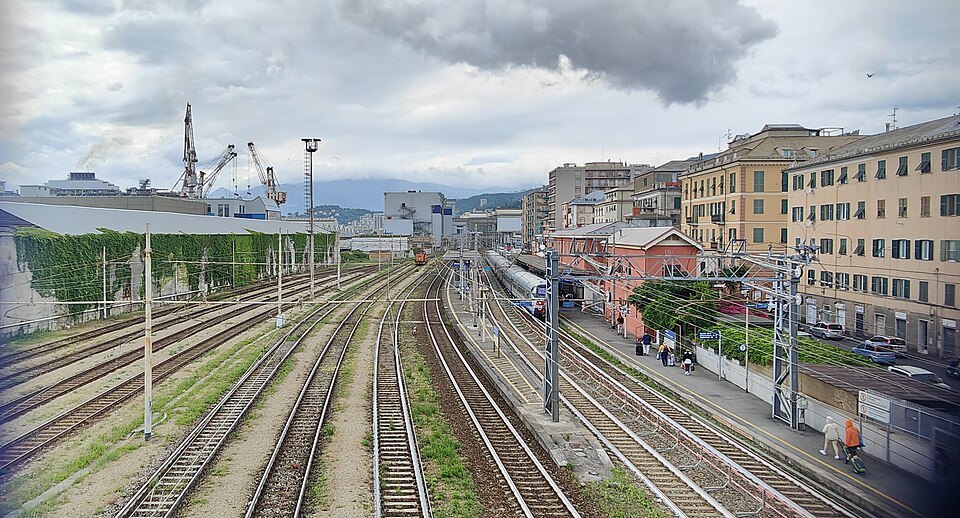
For a first visit with no fixed plan, Principe has the edge, since it sits closer to the old town, the cathedral, and the Rolli palaces along Via Garibaldi, all of which are covered in more detail on the neighborhoods page. But nobody should reroute a whole itinerary around a four-minute metro ride. If the ticket names the other station, the loss is a short connection, not a wasted morning.
The first hour after arrival
Whichever station is used, the first useful move in Genoa is the same: get above the city before trying to understand it at street level. The public lift to Castelletto and the Bigo panoramic lift at the old port both take about ten minutes and turn a place that reads as confusing from below into something legible from above, with the layout of hills, port and old town suddenly visible at once.
A day ticket for the urban network, bought at a tobacconist or through the transport app, covers buses, the metro, the funicular and the public lifts together, which in a city built on this kind of terrain is a genuine convenience rather than a formality. It also removes the need to work out fares station by station on a first day.
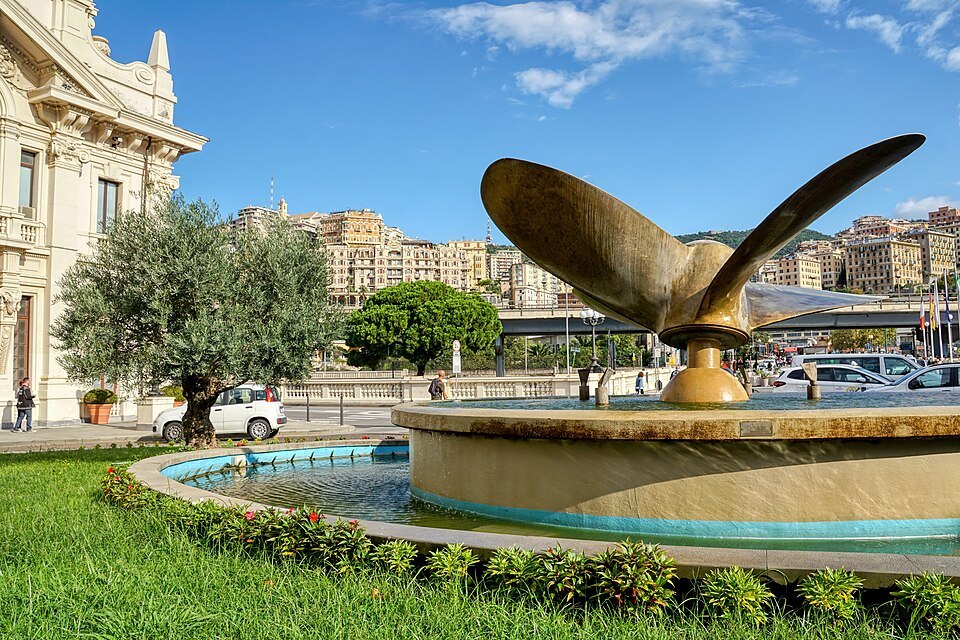
Anyone staying in the old town should take a photograph of the street sign nearest the door on arrival. The alleys are numbered in two colors, red for commercial premises and black for residential ones, and finding a specific address here is a small skill in itself, one that a map built for a grid city will not help with. Genoa's streets follow the contours of the hills and the lines of old watercourses, and the vertical transport described above is not a novelty but the key to moving through it. Details on riding that network sensibly, once above ground, belong on the getting around page.
More from the journal
- The Righi Funicular and the FortsHow do you reach the forts above Genoa without a car?A funicular from the edge of the old town, a path along seventeenth-century walls, and four forts on the skyline — a half day from the centre with no car and no tour.Read the piece
- Getting AroundWhich of Genoa's lifts and funiculars are actually worth riding?Genoa runs ten public lifts, two funiculars and a rack railway on the ordinary bus ticket. Here is what each one is for, which are worth a detour, and how to use them.Read the piece
- ItinerariesWhat can you see in Genoa on a six-hour cruise stop?A plan for a short day in Genoa from the cruise terminal: what is close, what is worth the walk, and what to leave for a longer visit.Read the piece