The short answer
Yes, if you are travelling with children, if the weather has turned, or if you want to understand the sea this city lived by. It is the largest aquarium in Italy and one of the largest in Europe, and it is built to be walked rather than glanced at.
It is also the most expensive ticket in Genoa and the only place in the city where crowds are a real factor. Both problems have the same solution: book a timed slot and go early or late.
If you have one day and no children, the palaces and the alleys will tell you more about Genoa. If you have two, the aquarium earns its place on the first.
It is worth knowing what it is not. This is not a small local aquarium with a few tanks: it was built as the centrepiece of the 1992 waterfront, designed by Renzo Piano with exhibition design by Peter Chermayeff's team, and it draws well over a million visitors a year.
What is inside
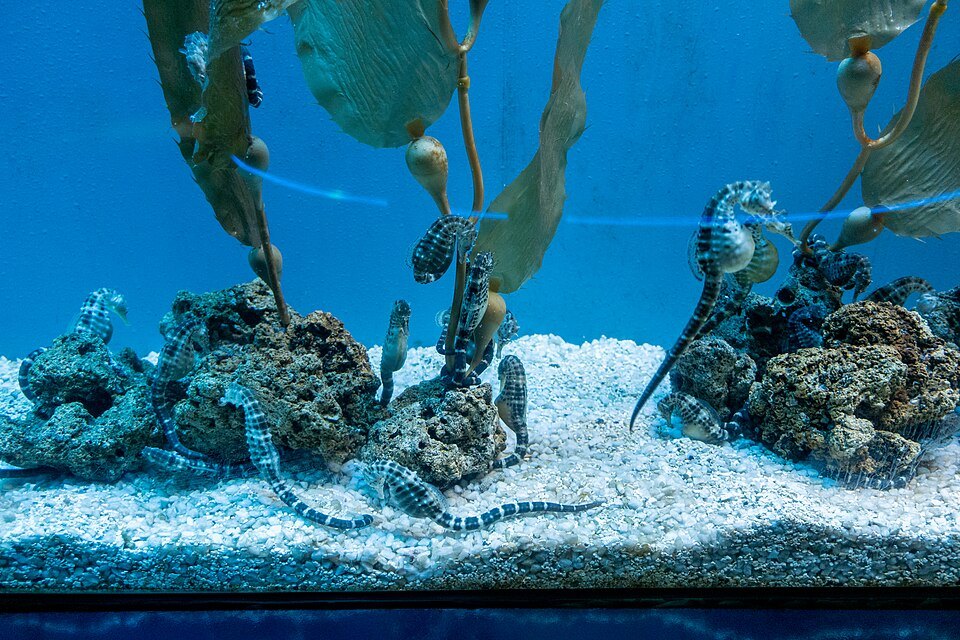
The route is one-way and starts with the Mediterranean: groupers, rays, the seagrass meadows that are vanishing from this coast. These are the tanks worth slowing down for, because everything in them lives a few kilometres from the door.
Then the Atlantic and Caribbean galleries, a shark bay crossed by a half-tunnel, a moray grotto, penguins, seals, and a manatee tank that is one of very few in Europe. Reptiles, amphibians, a tropical lagoon and a jellyfish gallery follow.
The last section is on the water: a moored barge holding the deepest tanks, with the harbour visible past the glass. There is also a shallow pool where rays come up to be touched, supervised and with its own queue.
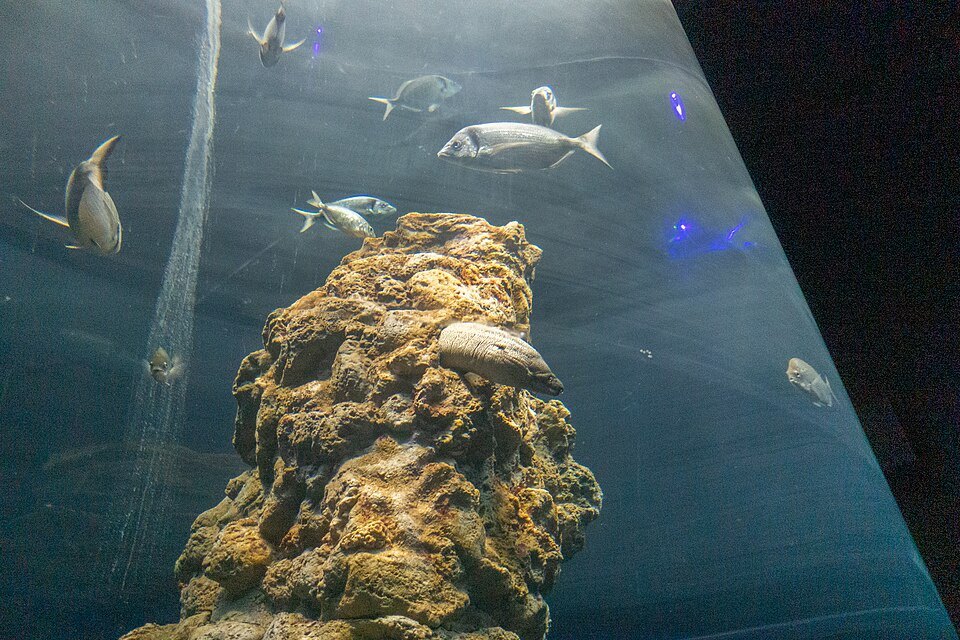
More than four hundred animal species and two hundred plant species are kept, and the labels are in Italian and English throughout.
Between galleries there are windows back out to the harbour — a deliberate piece of design, reminding you that the sea being explained is immediately outside. The panels are unusually good on conservation: what has been lost from this coast, and which species in the tanks belong to European breeding programmes.
How long it takes
Two hours is the honest minimum for an adult walking at a steady pace. Families take three, and anyone who stops at every tank will take longer.
The building is large and the route is long — several kilometres of walking if you take every gallery — and there is little natural light until the barge at the end.
There is a café and a picnic area inside, and the route can be broken without leaving the complex, which matters with small children.
If time is short, the Mediterranean galleries at the start and the barge at the end are the two sections to protect; the middle can be walked more briskly without missing the argument of the place.
Avoiding the queue
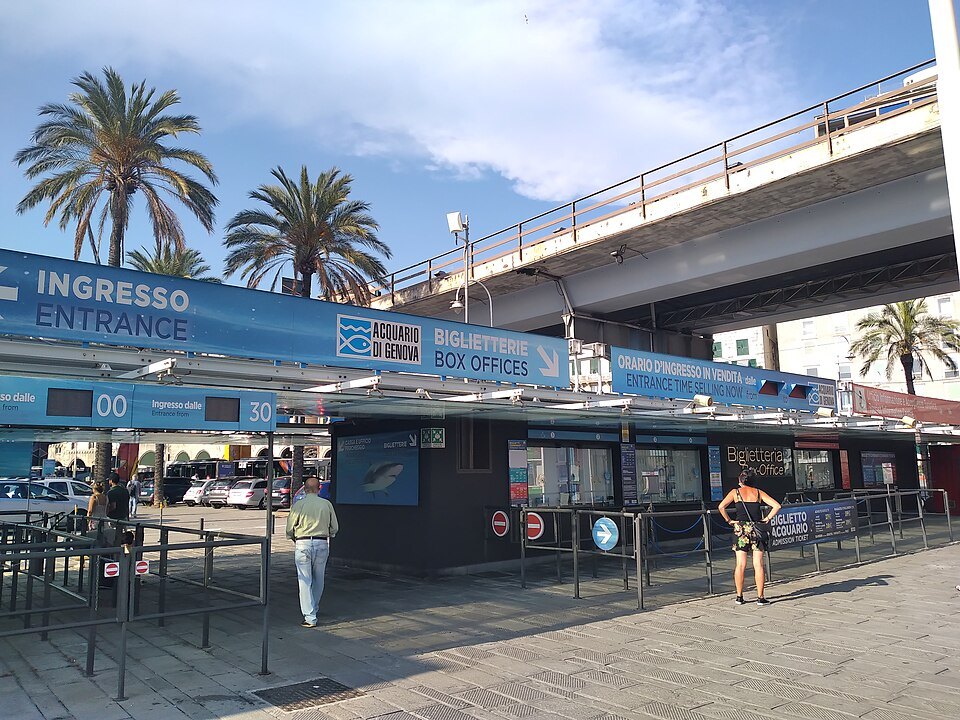
The aquarium stands on an exposed quay, and the queue stands there with it, in the sun or the wind. A timed ticket booked online removes that entirely.
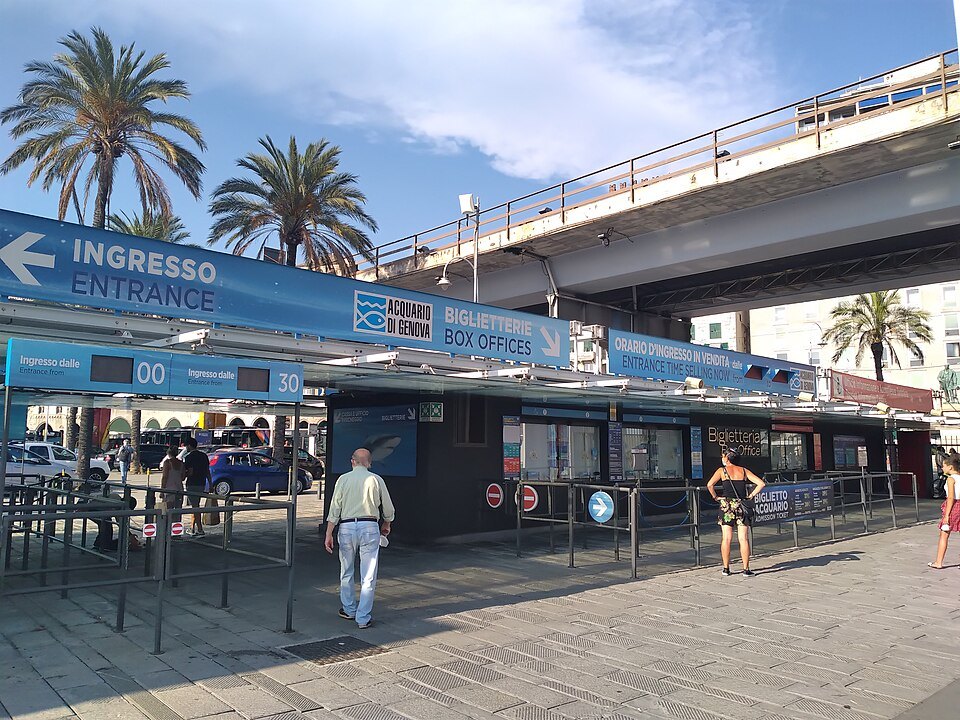
The quietest hours are the first entry of the day and the last two hours of the afternoon. The worst is the middle of the day in summer and at weekends, when tour groups and school parties arrive together.
Combined tickets with the Bigo panoramic lift, the Biosfera and the Galata sea museum are sold on the same site. They save a second queue at each, and all four are within a few minutes' walk of one another.
The ticket desks also sell same-day slots, and out of season the next entry is often within the half hour. It is only in summer and at weekends that booking ahead changes the day.
The part people argue about
The aquarium keeps dolphins, in large open-air tanks with an underwater viewing gallery, and that is contested. Some visitors will not want to support it.
The institution publishes its research and breeding work rather than hiding the question, and the dolphin gallery can be skipped without missing the rest of the route.
It is worth deciding before you buy the ticket rather than at the glass.
What else is on the same quay
The Bigo, Renzo Piano's white derrick of 1992, carries a panoramic lift that rises and rotates over the harbour — ten minutes, and the best cheap view in the city.
The Biosfera, a glass sphere on the water, holds a small tropical ecosystem: ferns, hummingbirds, tree frogs. It takes ten minutes and is a curiosity rather than a botanical garden.
The Galata sea museum, five minutes west, has a full-size Genoese galley to walk through and a submarine moored alongside. It is the better museum for adults, and the two make a full day together.
The Neptune, a full-size wooden galleon built for a film in 1985, is moored on the same quay and can be boarded. It is a film prop rather than a museum ship, and children do not care in the slightest.
Practical notes
Large bags are not allowed in the galleries; lockers and a pushchair park are at the entrance.
The nearest metro stop is San Giorgio, a few minutes away, and Darsena is the stop for the sea museum.
Photography without flash is fine, and the low light means a steady hand is worth more than a good camera.
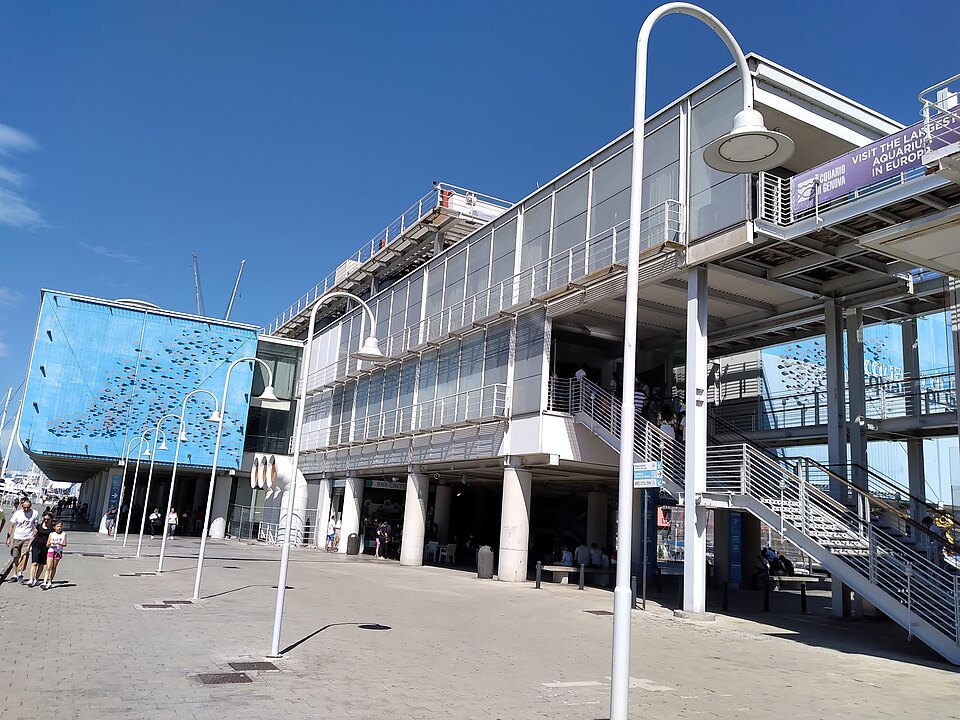
In summer, the quay outside is hot and shadeless. Whatever time you book, have somewhere in mind to sit down afterwards — the arcade of Sottoripa, five minutes inland, is the local answer.
More from the journal
- ItinerariesWhat can you see in Genoa on a six-hour cruise stop?A plan for a short day in Genoa from the cruise terminal: what is close, what is worth the walk, and what to leave for a longer visit.Read the piece
- Eating & DrinkingWhere do you eat farinata and focaccia the way Genoese do?Genoa's best eating is cheap, fast and eaten on foot: chickpea farinata from a copper pan, oily focaccia at any hour, and fried fish from a counter in the arcade.Read the piece