Beyond the cliff walk
The Passeggiata Anita Garibaldi is the reason most visitors come to Nervi, and it deserves the reputation, but the town built around it gives a visitor a full half-day rather than a single walk. Behind the cliff path sit the grounds of three former villas, now run together into one park, and inside those villas are four small museums covering painting, decorative arts and a private collector's taste. There is also swimming, a working harbour, and a quiet residential town that keeps something of its old identity as a resort for northern Europeans wintering on this coast.
None of this needs a plan more complicated than a train ticket and a few hours. The walk, the parks and the museums sit close enough together that a visitor can cover all of them without retracing much ground, as laid out below under how to visit. It is worth treating Nervi as a destination in itself rather than a quick add-on to a day spent among the central sights.
The old harbour
The western end of the cliff walk begins at the porticciolo, a small working harbour where fishing boats are still pulled up on the slipway rather than kept purely for show. A bar sits on the quay, and the scene — nets, small boats, a handful of people fishing from the rocks — is a reminder that Nervi was a fishing hamlet before it became a resort. It is a good place to start the walk and, on the way back, a good place to pause before the climb up to the station.
The harbour gives a sense of the older Nervi that the villa gardens and grand hotels of the resort era tend to obscure. The path between this harbour and the next hamlet along the coast is, in fact, the older route that the formal nineteenth-century walkway was later built along, in stages, from the end of that century onward.
The parks above the cliff
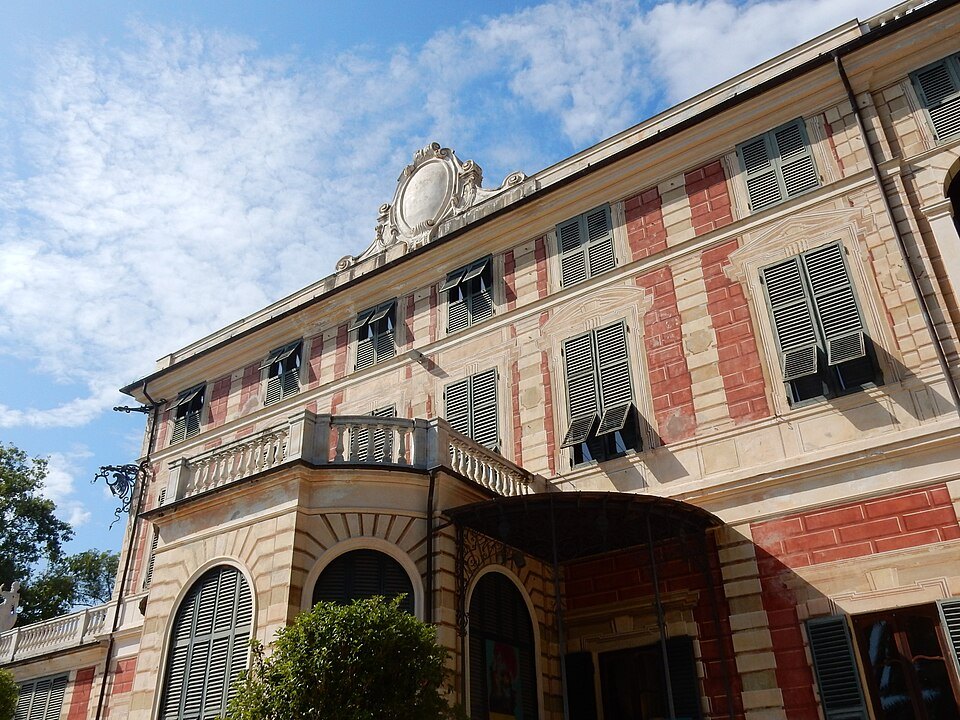
The Parchi di Nervi run along the top of the cliff, formed from the gardens of the Gropallo, Serra and Grimaldi Fassio villas after the city bought the estates rather than let them be built over. The result reads as one continuous green belt: palms, cedars, olives and holm oaks, gravel paths, clipped hedges, specimen trees labelled in Latin, and a large rose garden that is the main reason to visit in spring. Long lawns run to the very edge of the cliff, with views out over open water.
This is Genoa's venue for Euroflora, the city's flower show, held in these grounds rather than anywhere more central. Outside of that event the parks are simply a worked garden to walk through — busy with prams, parakeets and cats, formal rather than wild, and a useful green contrast to the stone and vertical streets described on /sights/. A visitor who has spent a morning in the caruggi will notice the change of register at once.
Four museums, one ticket
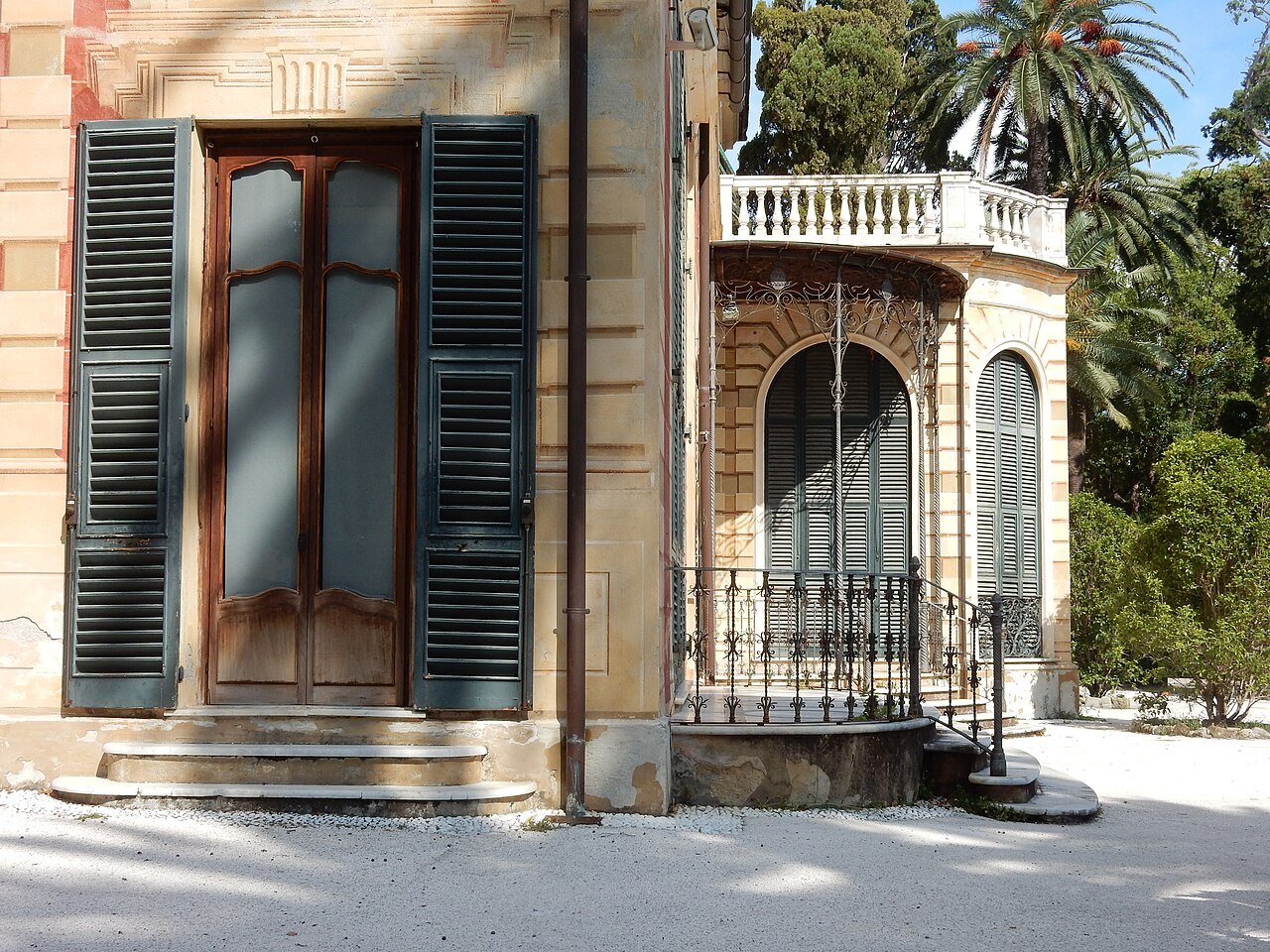
Villa Saluzzo Serra holds the Galleria d'Arte Moderna, a collection built around Italian painting of the nineteenth and twentieth centuries. Villa Grimaldi Fassio holds the Raccolte Frugone, a private collector's gallery from the end of that period, still hung in something close to a domestic arrangement rather than a conventional museum sequence. Both sit inside the park itself, so a visitor can move between garden and gallery without leaving the grounds at all.
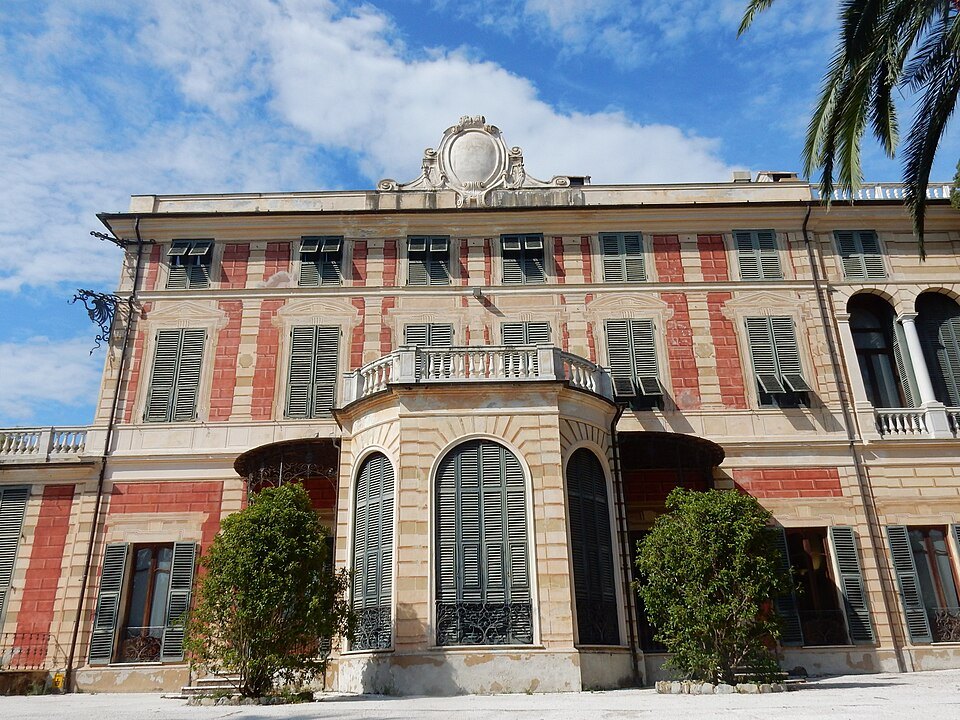
A short walk inland is the Wolfsoniana, the odd one out and arguably the most rewarding: decorative arts, posters, furniture and propaganda objects spanning roughly the eighteen-eighties to the nineteen-forties, tracing how design was put to political use across that period. Villa Luxoro, at the eastern end near Capolungo, is smaller again — furniture, clocks and nativity figures inside a house above the sea, closer in feel to a private collection than a public gallery.
The four museums share a single ticket and keep their own museum hours, which are worth checking with the museum network directly before setting out, since the parks and the walkway themselves need no ticket and no fixed hours at all. A visitor short on time might choose one museum rather than attempt all four in a single half-day.
Swimming from the rocks
Nervi's shoreline is rock and concrete platforms reached by rough steps down from the cliff path, with ladders rather than stairs into the water itself. That suits confident swimmers better than anyone wanting to wade in gradually, but the water off this stretch is clear and notably deep close to shore. A swimsuit is worth packing for any warm-season visit, along with shoes that can cope with rock rather than sand.
The platforms are informal rather than managed facilities, so a visitor should judge conditions on the day — sea state, crowding, the state of the ladders — rather than expect supervision of any kind. In rough weather the sea comes over the walkway itself and sections close; that is also when the coast looks most dramatic, best watched from a safe distance rather than from the rocks themselves.
Getting there and timing the visit
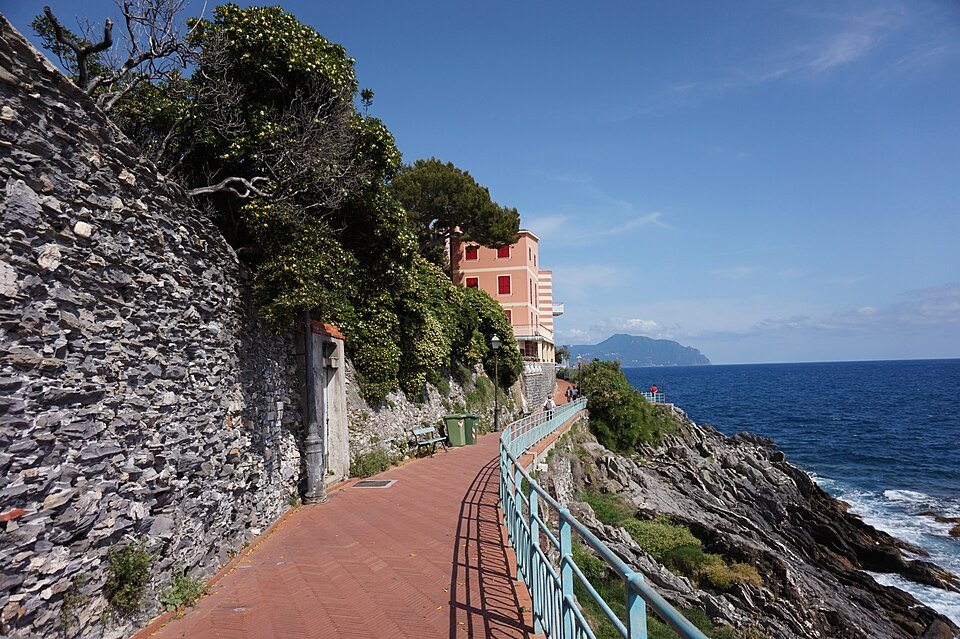
Trains from Brignole reach Genova Nervi in about a quarter of an hour, and the station sits a few minutes' walk from both the old harbour and the park entrances; for the distinction between the city's two main stations, see which one to use for this trip. Buses along the coast road also run out to Nervi but take longer. The train ticket is an ordinary city ticket, covered under /getting-around/, rather than a separate regional fare, which surprises some visitors who assume Nervi lies outside Genoa proper.
A workable order is to arrive at the station, walk down to the porticciolo, take the cliff path east toward Capolungo, climb into the parks at the far end, and return through them to the station — about two hours without stopping, longer with a museum and a swim folded in. Spring brings the rose garden, high summer the swimming, and autumn the particular light along the cliff late in the afternoon; see /when-to-come/ for how that fits the wider calendar of a visit to the city.
Honest notes
Nervi is often described as a village apart from Genoa, but it has been part of the city for a century, and nothing about reaching it — the train, the ticket, the museum network — treats it as separate. It is, however, genuinely quiet once the day's visitors leave: a residential coastal town rather than anywhere with an evening life of its own, so plan the visit as a half-day excursion rather than a base for an evening out.
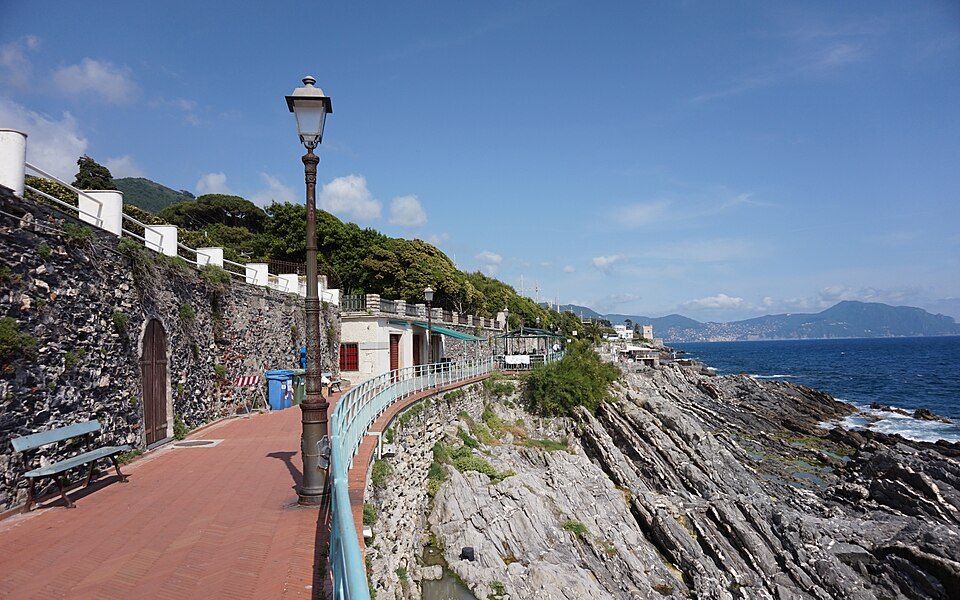
The cliff walk itself is level, paved and almost free of steps along its length, which makes it one of the easier stretches of ground in a city built largely on slopes — though there are steps at both ends and the surface can run wet with spray in any kind of swell. None of that changes the basic character of Nervi: a resort town, absorbed into Genoa, still doing exactly what it did in the eighteen-sixties.
More from the journal
- Getting HereWhich Genoa station should you get off at, Principe or Brignole?A practical guide to Genoa's two main stations, which end of the city each serves, and how to choose.Read the piece
- BoccadasseHow do you walk from the centre of Genoa to Boccadasse?A level, half-hour stroll along Corso Italia links central Genoa to the fishing cove of Boccadasse.Read the piece