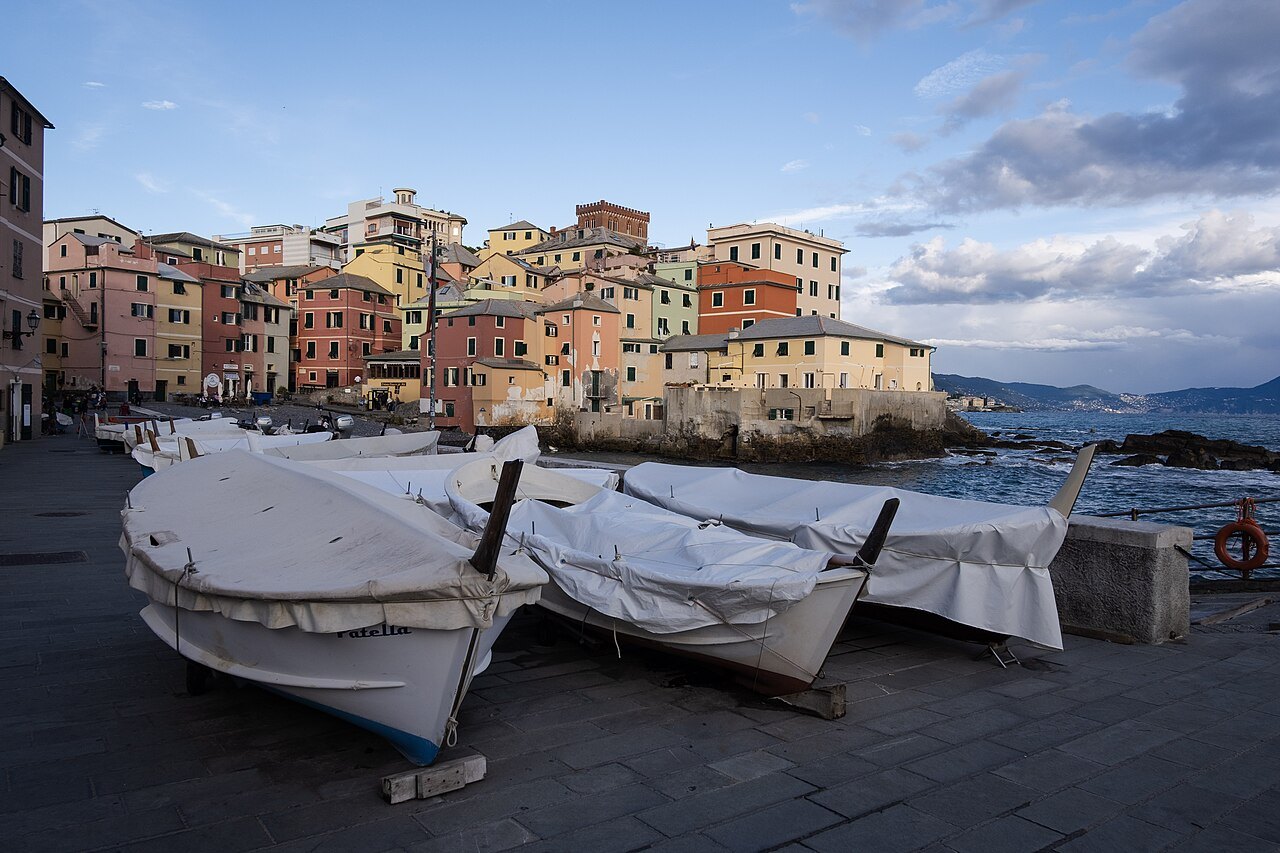
Why walk rather than ride
Boccadasse sits at the eastern edge of the city, past the districts that line the coast below Albaro, and the easiest way to understand how it fits into Genoa is to walk there rather than take a bus straight out. The approach on foot follows the seafront the whole way, with the sea on one side and nothing to climb, so it works for almost anyone who can manage a flat walk of a couple of hours there and back.
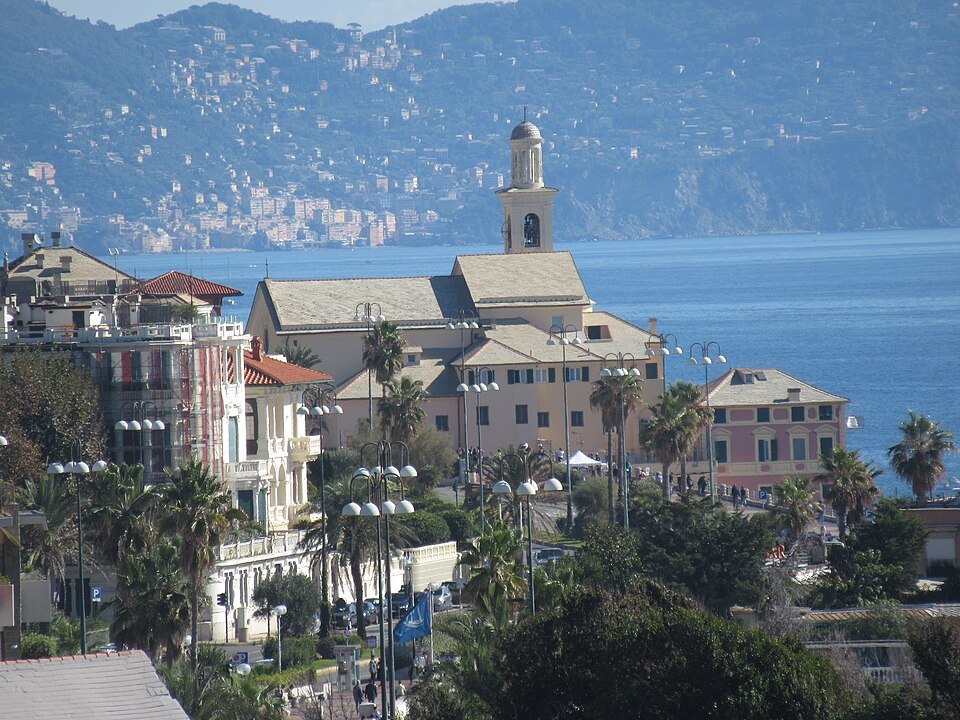
The route also explains why Boccadasse feels the way it does when visitors arrive. It is the end point of a walk the Genoese themselves make most evenings, and turning up on foot, tired and ready to sit down, puts a visitor in the same frame of mind as everyone else queueing for ice cream at the cove.
It is worth treating the walk as the point of the outing rather than a means of reaching one. The city's seafront is at its most ordinary and most lived-in along this stretch, away from the sights of the historic center, and that ordinariness is part of what makes the cove at the end feel earned rather than simply arrived at.
Getting to the start of the walk
The walk begins at the Foce, the district where Corso Italia meets the rest of the city's seafront. The Foce is reachable by bus from the center and from Brignole station, and visitors coming from the old town or from De Ferrari should plan on a short bus ride to reach the start rather than walking the whole way from the center, which adds considerable distance before the promenade even begins.
Once at the Foce, the promenade is simple to find: it runs along the shore with the sea directly below and apartment buildings set back behind it. There is no junction to miss and no sign to look for beyond following the water. For general guidance on how the city's buses and tickets work, the getting around page covers validation and routes in detail.
The promenade itself
Corso Italia runs for about two and a half kilometres from the Foce to Boccadasse, and it was laid out in the nineteen-thirties below the Albaro district, which is why the buildings along it are large, confident, and set well back from the water, leaving a wide, generous strip of promenade. It is flat for its entire length and has no awkward crossings or junctions to navigate, which makes it an easy walk to do without planning.
For most of its length Corso Italia functions as an outdoor living room for the city: runners, people walking dogs, families with prams and groups of teenagers use it throughout the day and well into the evening. There are lidos along the way, a rowing club, and several bars with terraces facing the water, so stopping partway for a break is straightforward and requires no detour from the route.
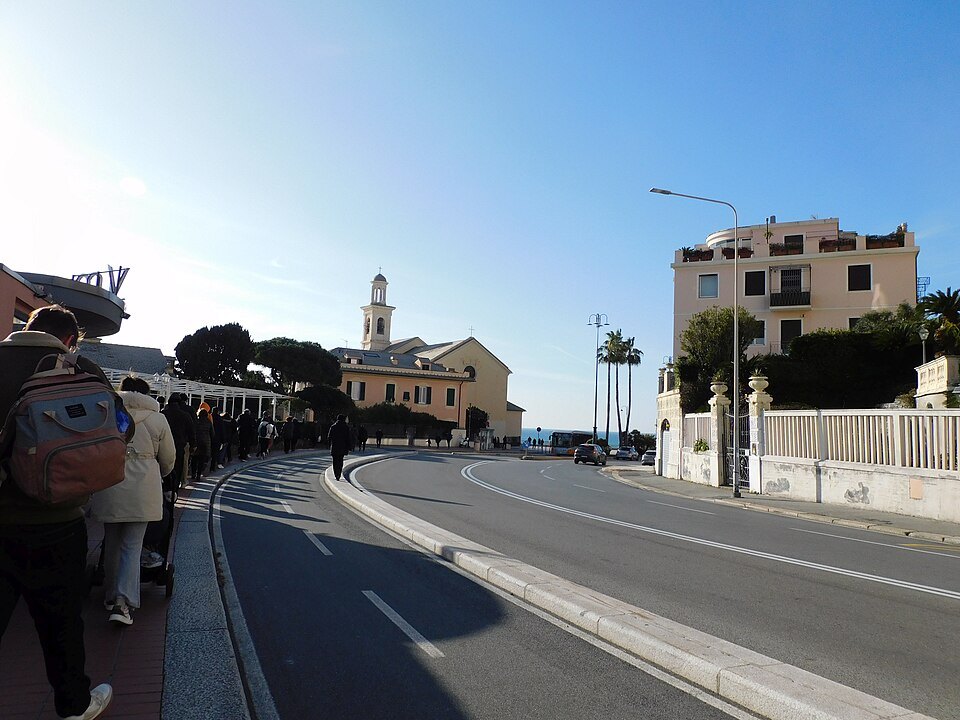
The church of San Giuliano stands along the way, and the promenade passes it without any detour needed. None of this requires a plan beyond walking forward with the sea on one side; the whole stretch is a single, unbroken line of pavement, and it is effectively impossible to lose the way.
The last stretch into the cove
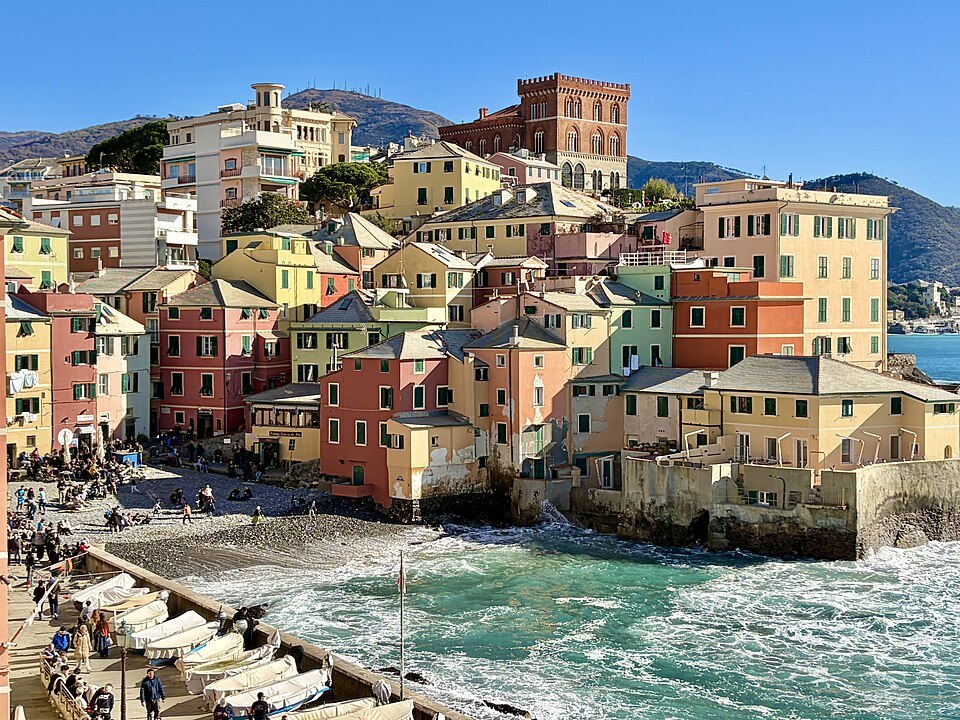
Corso Italia ends, and the road narrows as it rounds the last stretch of coast before the cove opens up below. The houses change character here, becoming the four- and five-storey fishermen's buildings in ochre, pink, cream and Genoa red that make Boccadasse recognisable, with wooden boats drawn up on the pebbles and the church of Sant'Antonio standing above the waterfront on its own terrace.
The lanes that drop down into the cove itself are steps rather than road, so the final few minutes are on foot regardless of how a visitor has arrived from elsewhere in the city. This is also why driving to Boccadasse makes little sense as a plan: parking nearby is effectively impossible to find, and the approach is built for people on foot, not for cars looking for somewhere to stop.
Coming back
Most visitors walk out and ride back, or the other way round. Buses run the length of Corso Italia from Boccadasse to the Foce and on to Brignole station, so there is no need to retrace the whole walk on tired legs once the cove and the ice cream have been dealt with. Details of how tickets and validation work across the city's bus network are covered on the getting around page, and it is worth checking current routes with the operator before setting out.
Walking back along the same route in the evening has its own appeal: the promenade fills with people at that hour, and the light over the water changes as the sun drops, which is part of why this walk is a genuine local habit rather than simply a way of reaching a viewpoint. Visitors who have the time are often better rewarded by walking both directions than by riding one way purely to save the half hour.
When to make the walk, and honest notes
Early morning suits the walk well, since the promenade is quieter and the cove itself is calmest before the day's crowd arrives, with the fishing boats still drawn up on the pebbles and the light low across the water. Evening gives the opposite experience: a busy, sociable walk ending in a cove full of people and a queue at the ice cream shops, which is the more typical version of the outing as Genoese themselves make it.
The middle of a summer afternoon is the least comfortable time to attempt it, with little real shade along most of Corso Italia and the cove at its most crowded once the walk is done. Winter visitors tend to have an easier time of it: the cove is quieter, the sea is louder on the rocks, and the bars are used mostly by people from the neighborhood rather than by other visitors.
The distance is manageable but real: about two and a half kilometres each way, flat throughout, taking roughly half an hour at an easy pace without stops, so a there-and-back walk with time at the cove itself is closer to two hours in total. Comfortable shoes are the only real preparation needed, since the route has no climbing and no navigation difficulty beyond following the shoreline; the final descent into the cove is on steps rather than a road, which is the one point on the whole route where a plain road becomes a proper footpath.
More from the journal
- The CaruggiIs it safe to walk the caruggi, and which lanes should you take?Genoa's medieval quarter has a reputation. Here is what is actually true, which streets are busy and which are not, and how to walk one of Europe's largest old towns without worrying.Read the piece
- Getting HereWhich Genoa station should you get off at, Principe or Brignole?A practical guide to Genoa's two main stations, which end of the city each serves, and how to choose.Read the piece
- Eating & DrinkingWhere do you eat farinata and focaccia the way Genoese do?Genoa's best eating is cheap, fast and eaten on foot: chickpea farinata from a copper pan, oily focaccia at any hour, and fried fish from a counter in the arcade.Read the piece