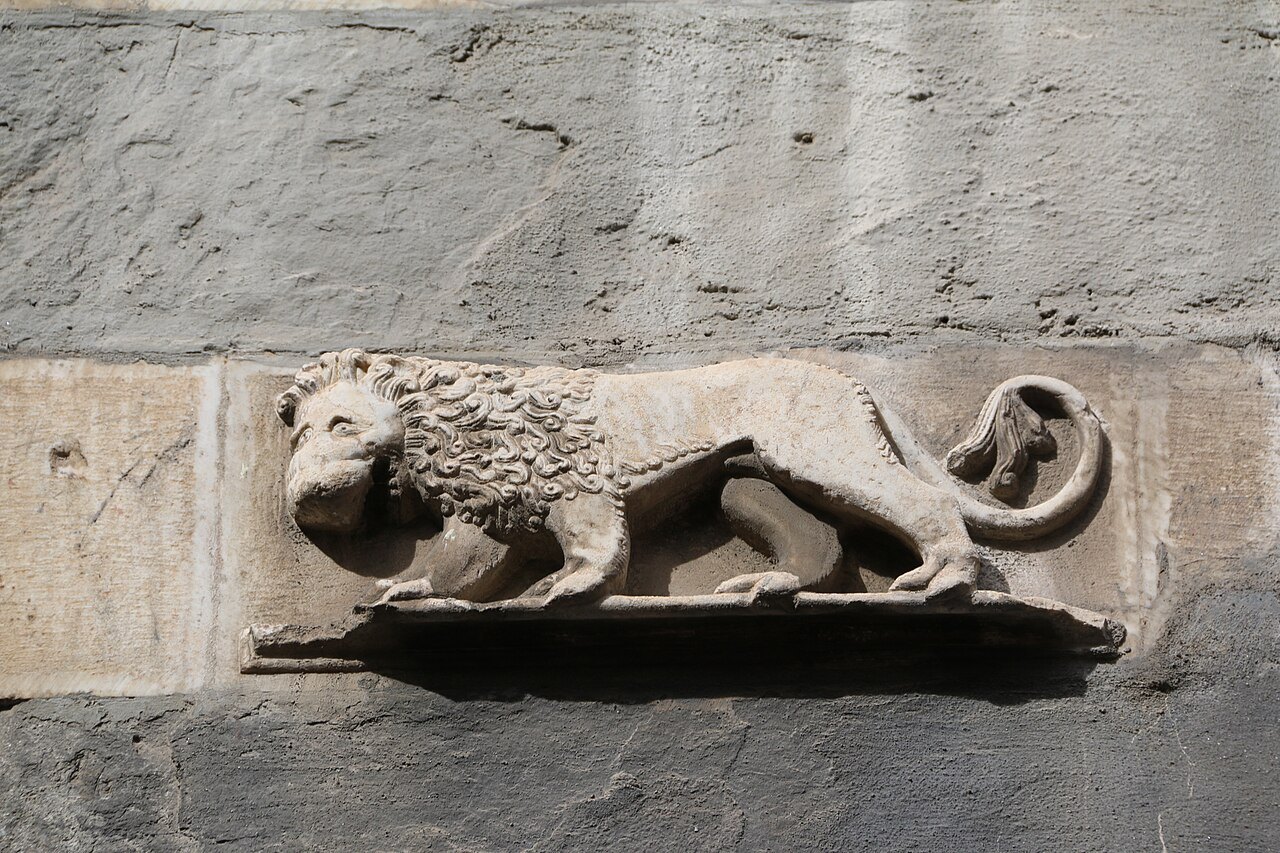
Piazza San Matteo
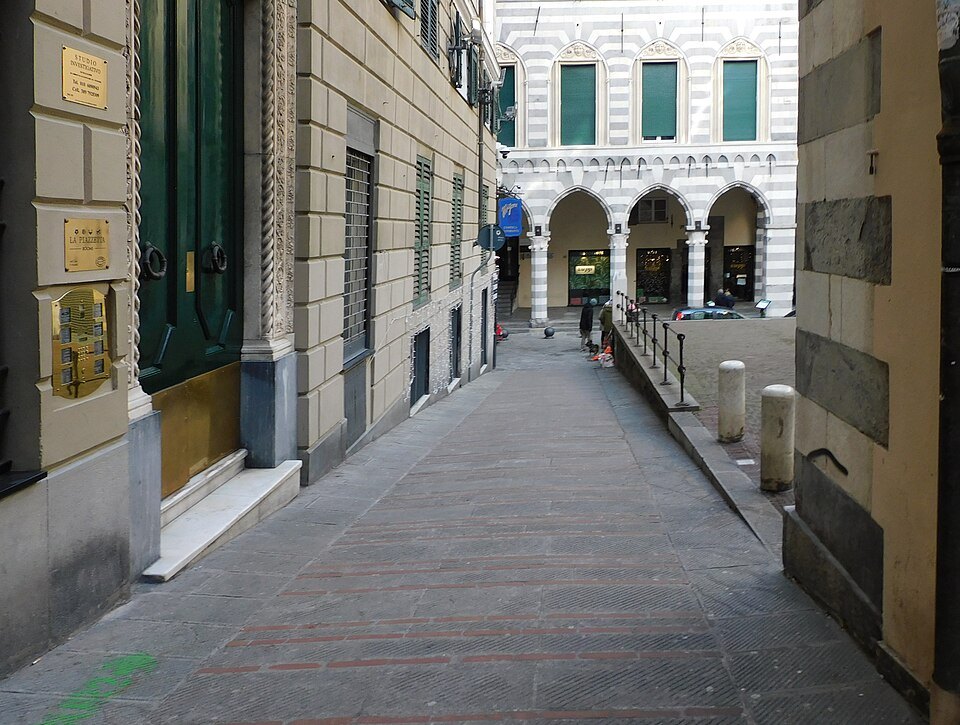
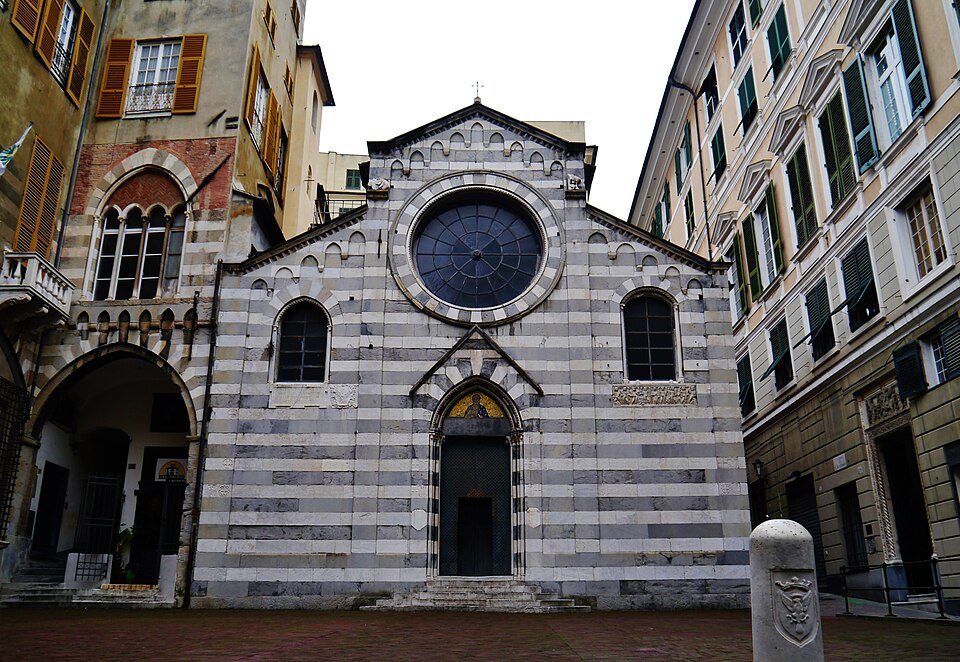
- IThe striped frontWhite marble and dark Promontorio stone in bands, laid when the church was rebuilt in 1278
- IIThe inscriptionsBands of white marble carved with the deeds of the Doria family, read like a public record
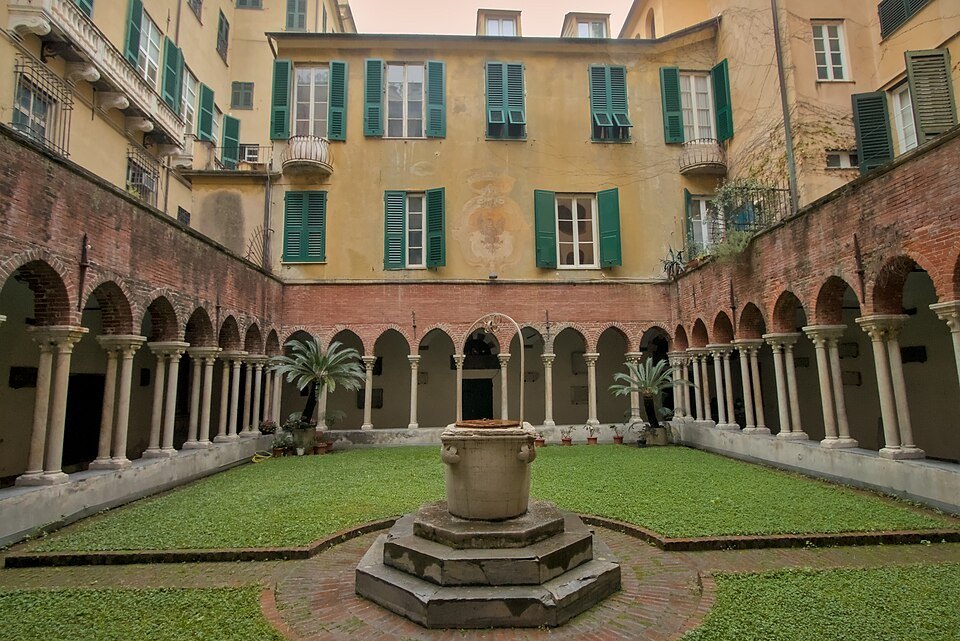
- IIIThe cloisterA small arcaded cloister of about 1310, behind the palace of Branca Doria
- IVThe cryptAndrea Doria's tomb, under a presbytery remodelled for him in the fifteen-forties
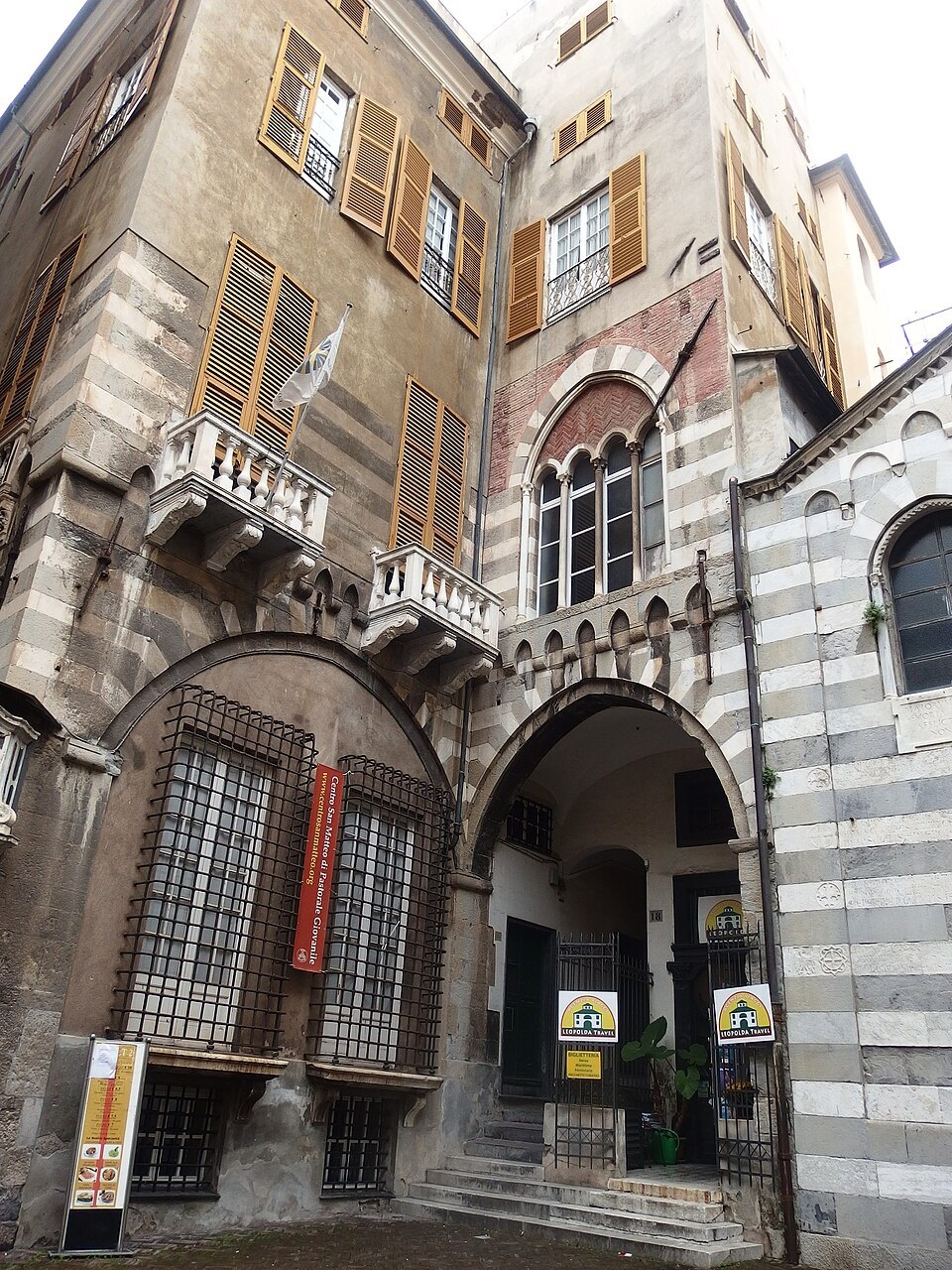
- VThe Doria palacesFour family houses around the square, their fronts banded and pointed like the church
- VIThe square itselfBarely twenty paces across, and the best-preserved medieval corner of Genoa
The sight in detail
Why it matters
Genoa was run by families rather than by princes, and this is what a family's headquarters looked like. The Doria — admirals, bankers and, for a long stretch, the most powerful of the city's clans — built their church here in 1125, ringed it with their own palaces, and turned the space between into something between a courtyard and a public square.
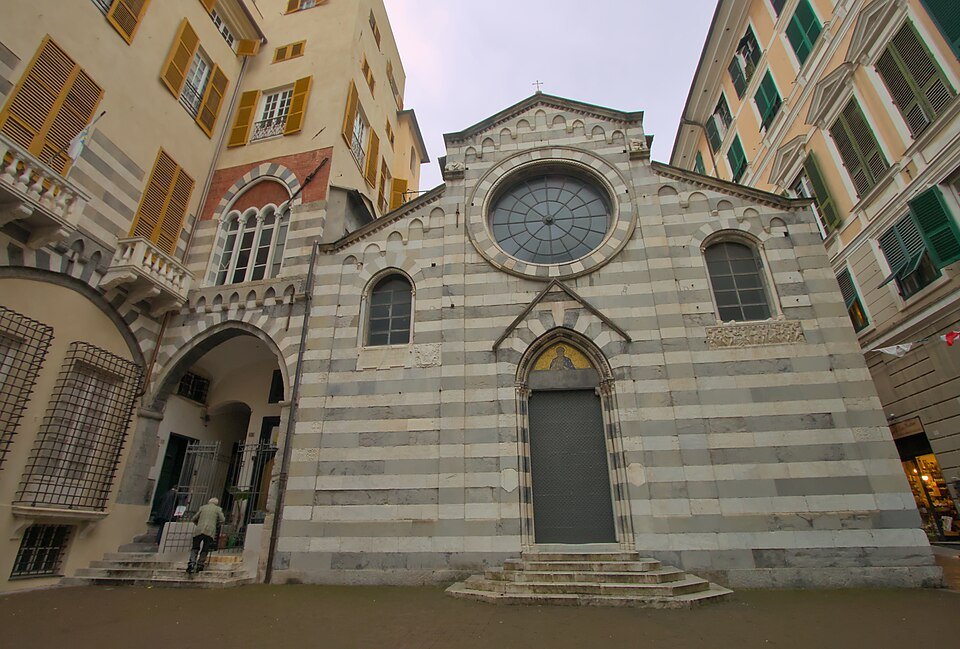
The result is the most complete medieval corner left in the city. Nothing here is grand in the Roman or Florentine sense: the scale is domestic, the materials are local, and the decoration is a set of bands of black and white that ties church and houses into one composition.
It is also a lesson in how Genoese families advertised. The white marble strips across the church front are carved with the achievements of the Doria — victories, offices, gifts — so that anyone crossing the square read the family's record in stone.
Andrea Doria is the name to know here. In 1528 he changed sides in the wars between France and Spain, brought Genoa into the Spanish orbit, and rewrote its constitution so that the doge served two years instead of for life. The republic that arrangement produced lasted until 1797, and the man who made it is buried a few steps below the floor of this church.
How it came to be
Martino Doria founded the church in 1125 on family land near the cathedral, and it was consecrated in 1132 in the presence of Pope Innocent II. Its dedication to Saint Matthew, a tax collector, was a joke with a point: the Doria were collectors of customs dues.
The church was rebuilt from 1278 in the Gothic manner and set back from its old line, which is what created the square. The new front used pointed arches and banded stone to match the family palaces going up around it at the same moment.
Between about 1308 and 1310 a cloister was added to one side, behind the palace of Branca Doria, and it survives with its slender paired columns — a quiet space a few steps from the square.
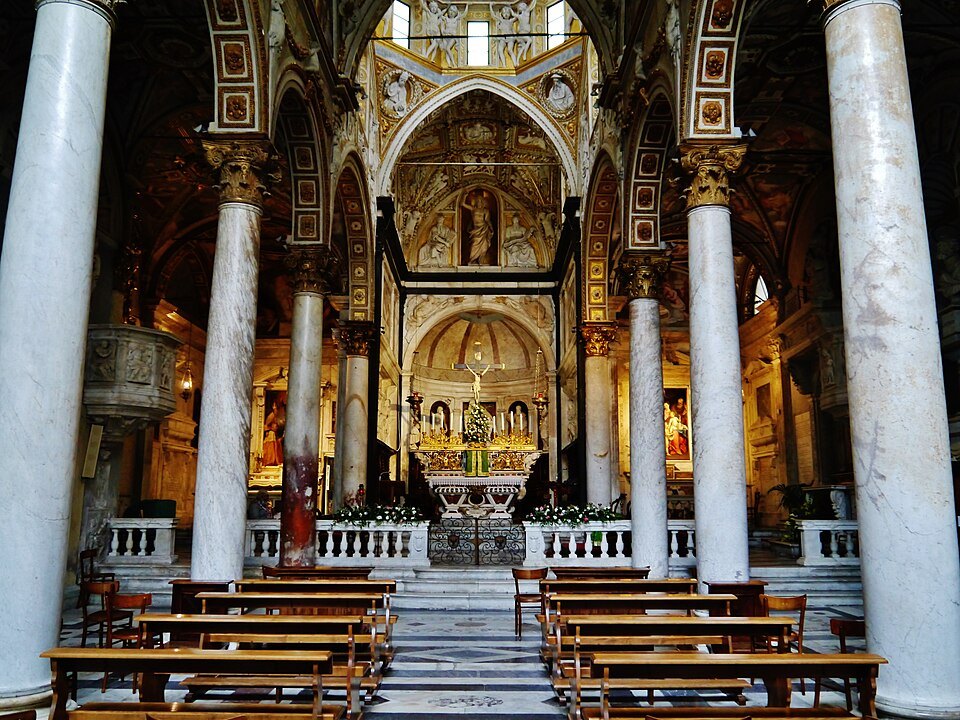
In the fifteen-forties the church was renewed again for Andrea Doria, the admiral who in 1528 gave the republic the constitution it kept until Napoleon. Montorsoli rebuilt the presbytery, the dome and the crypt beneath; Giovan Battista Castello and Luca Cambiaso then redecorated the nave with scenes from the life of Saint Matthew.
The square kept its shape because the family never let it go. The Doria held the right of patronage over the church, and the buildings around it stayed in family hands for centuries, so the medieval frontages were never replaced by grander ones as happened elsewhere in the city.
What you actually see
From the square, the church front is a flat striped wall with a rose window, a pointed doorway and, above it, the carved marble bands of family history. The palaces facing it repeat the same stripes in their arcades, so the whole square reads as one building broken into parts.
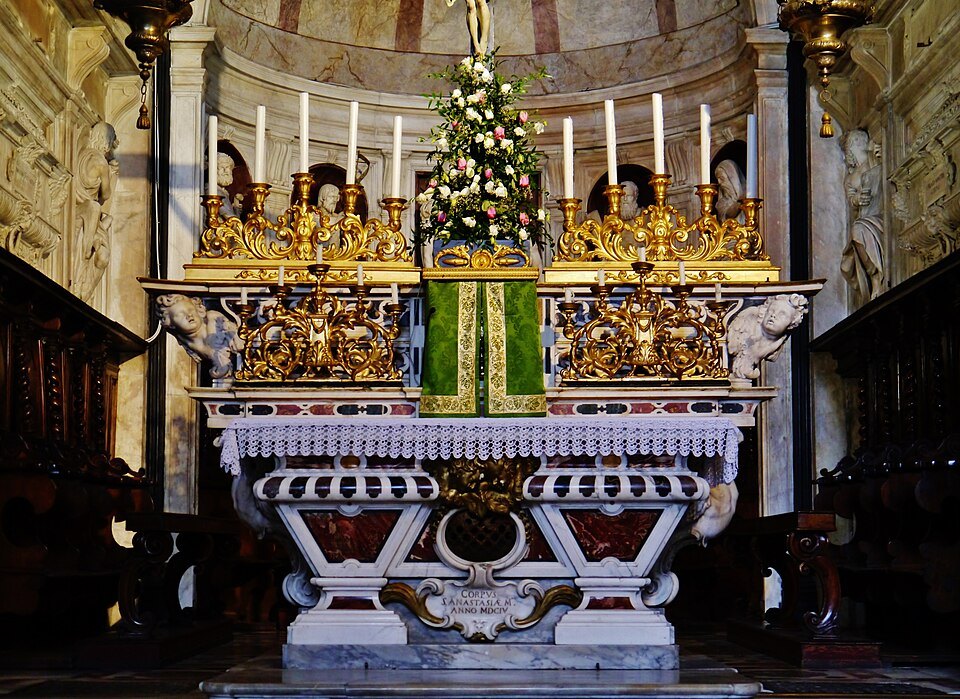
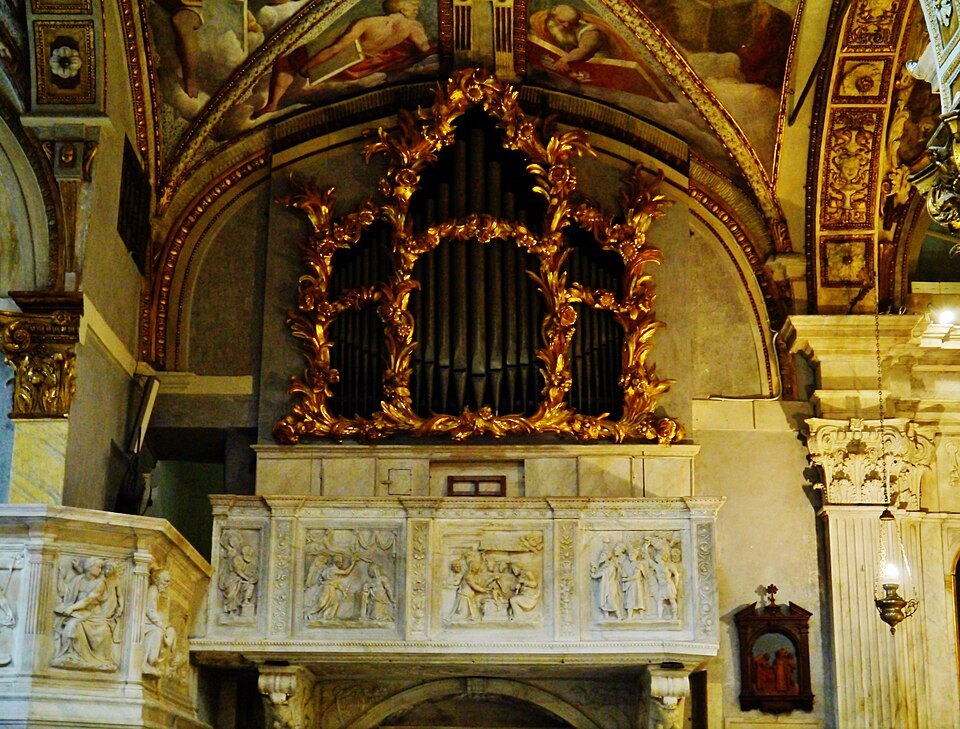
Inside, the church is dark and short, with the banded stone continuing along the arcade. The presbytery is a complete sixteenth-century composition in a Romanesque shell, and the crypt below holds Andrea Doria's tomb, reached by steps from the nave when the church keeps its usual hours.
The cloister is entered from the side and is easy to miss: a rectangle of paired colonnettes around a small garden, with medieval fragments and inscriptions set into the walls. It is often empty.
Look, too, at the pavement and the doorways of the palaces. Several keep carved slate lintels above the doors — the local black stone, cut with saints and coats of arms — which are one of the most characteristic details of the old town.
The palaces are worth reading one by one. The house of Branca Doria, on the north side, keeps its loggia; the house given to Andrea Doria by the republic in 1528 carries an inscription recording the gift; and another front still shows the pointed arcades of the thirteenth century at ground level, now filled in as shopfronts and doorways.
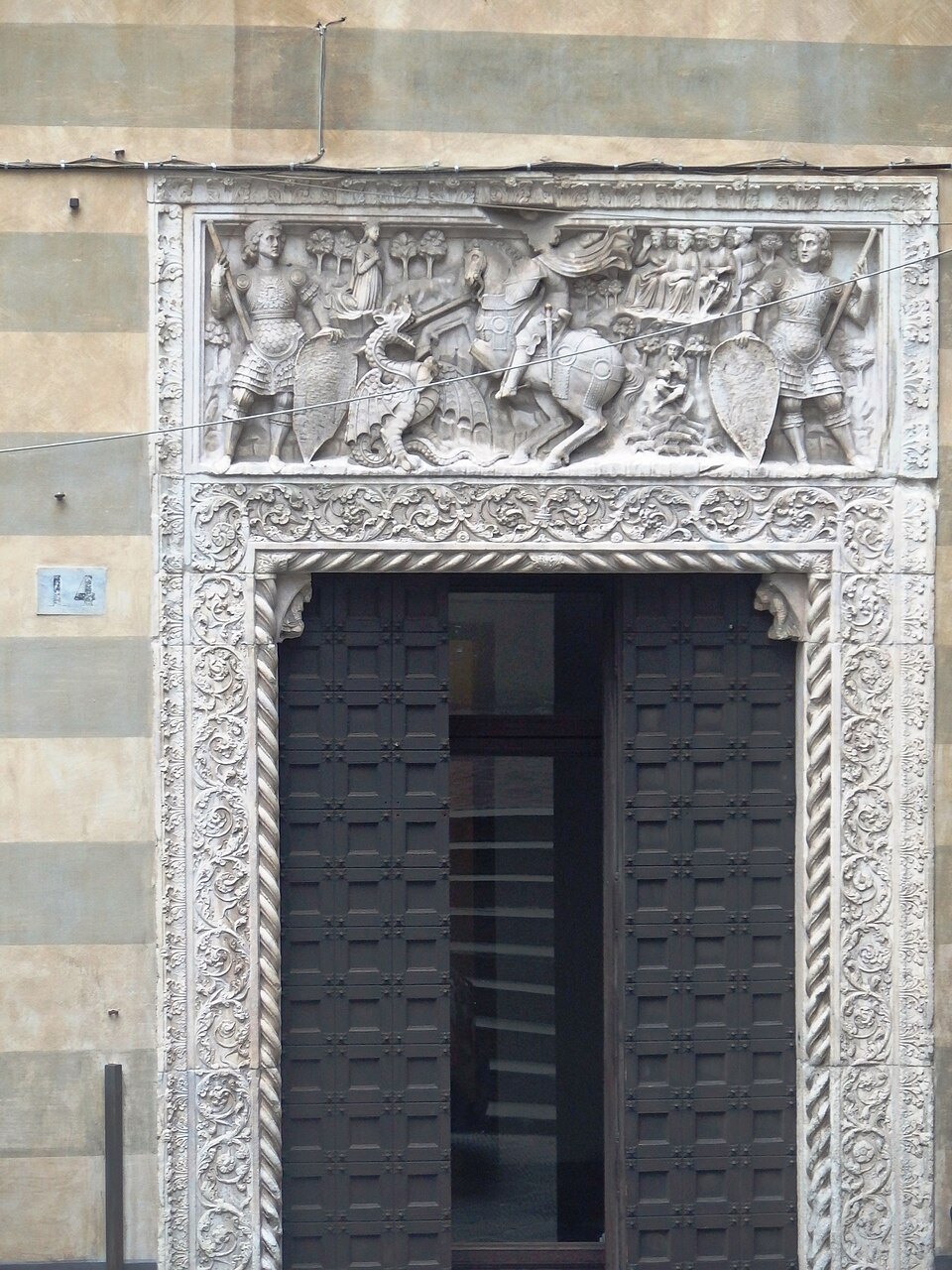
Above the door of the church, look for the relief of Saint George and the dragon. The saint is the city's, not the family's, and his cross is the red-on-white flag that Genoa flew at sea and that is still painted on the Lanterna.
How to visit
Twenty minutes for the square and the church, half an hour with the cloister and the crypt.
The church is used for services and keeps irregular hours; the square is public at all times, and worth passing through in the evening when the striped stone takes the last light.
It lies two minutes from the cathedral and three from the Palazzo Ducale, so it costs nothing to build into a walk through the alleys.
Sit for a few minutes if the square is empty, which it often is in the early morning. Genoa has almost no other space of this age where you can stand back far enough to see a medieval front whole.
Honest notes
This is a small church, and the crypt and cloister are not always accessible; do not plan a day around them.
The square's reputation as the best-preserved medieval corner of Genoa is fair, but the buildings were heavily restored in the nineteenth and twentieth centuries, and the stripes are sharper now than they were in 1900.
The Doria villa outside the centre, the Villa del Principe, is a different building altogether and a separate visit.
Where to go next
- NEXT DOORSan Lorenzo CathedralGenoa's cathedral, banded in black and white stone, with two stone lions on its steps, a treasury in the crypt and a British naval shell that came through the roof and did not explode.Read the page
- NEXT DOORPalazzo DucaleThe seat of the doges of Genoa from 1339 until the republic ended, rebuilt after a fire, and now the city's main hall for exhibitions — with two courtyards you can walk through for nothing.Read the page
- NEXT DOORPiazza De FerrariThe hinge of the city: a bronze fountain of 1936 ringed by the opera house, the stock exchange and the palace of the doges, where the medieval alleys meet the nineteenth-century streets.Read the page