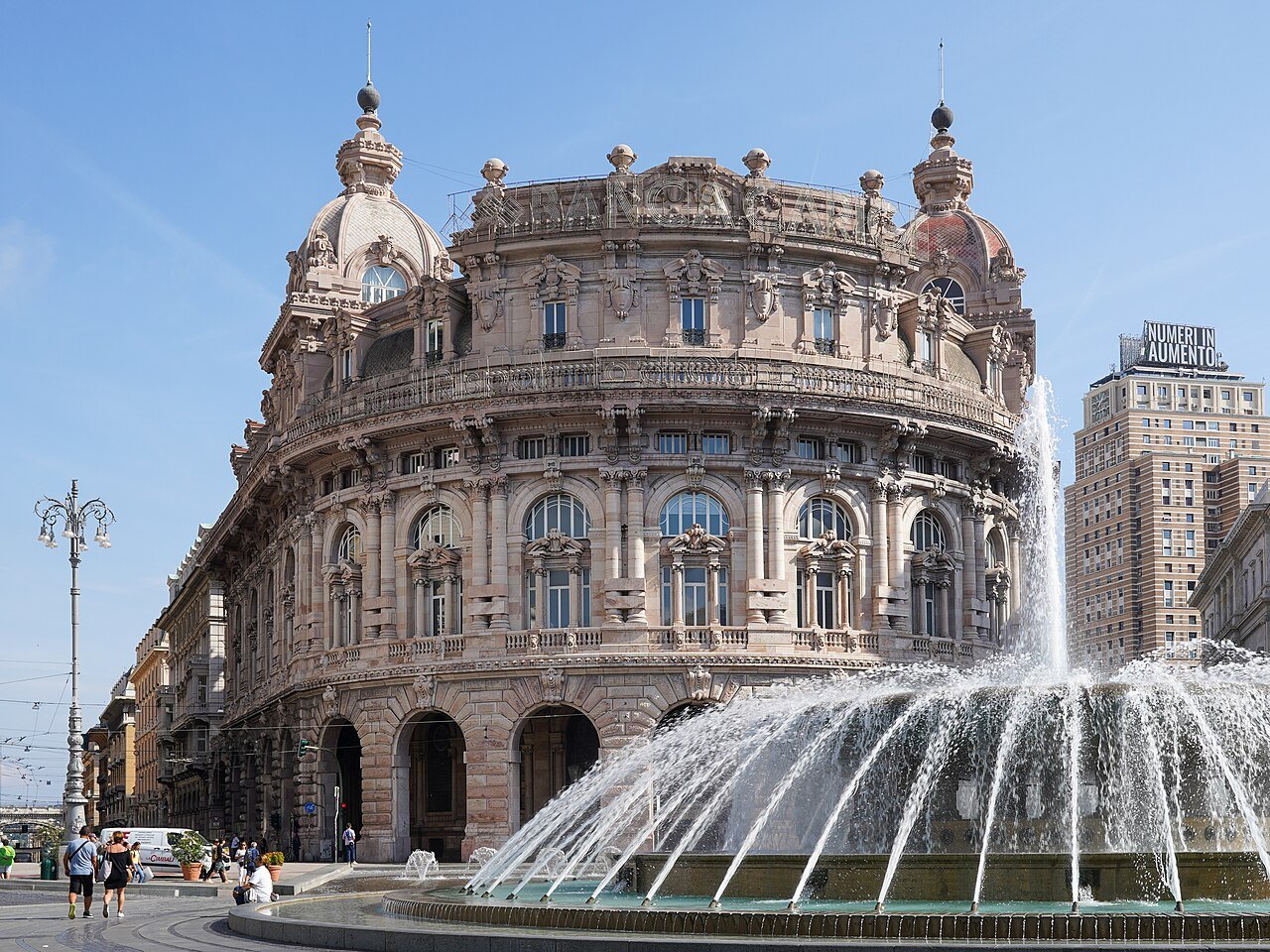
Piazza De Ferrari
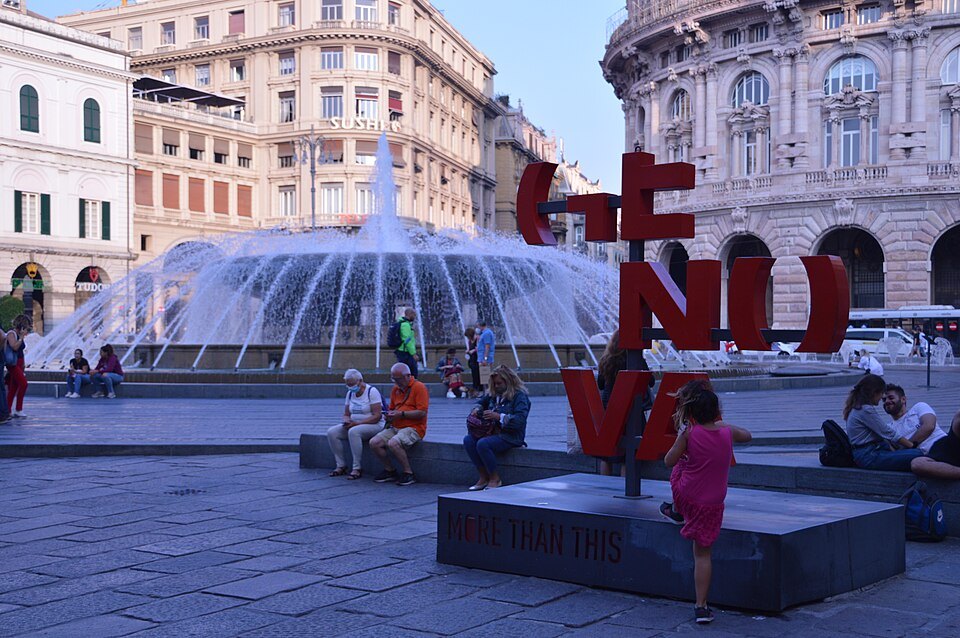
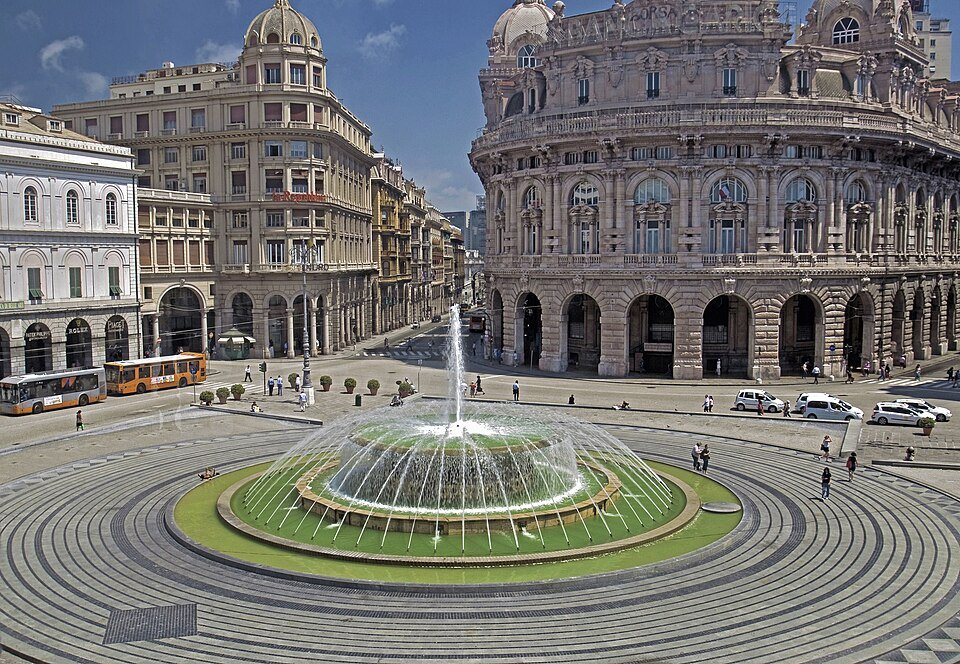
- The bronze fountainDesigned by Giuseppe Crosa di Vergagni and placed at the centre of the square in 1936
- Teatro Carlo FeliceCarlo Barabino's opera house of 1827, rebuilt behind its old portico after war damage
- The Accademia LigusticaThe fine arts academy of 1831, next to the theatre, with a gallery upstairs
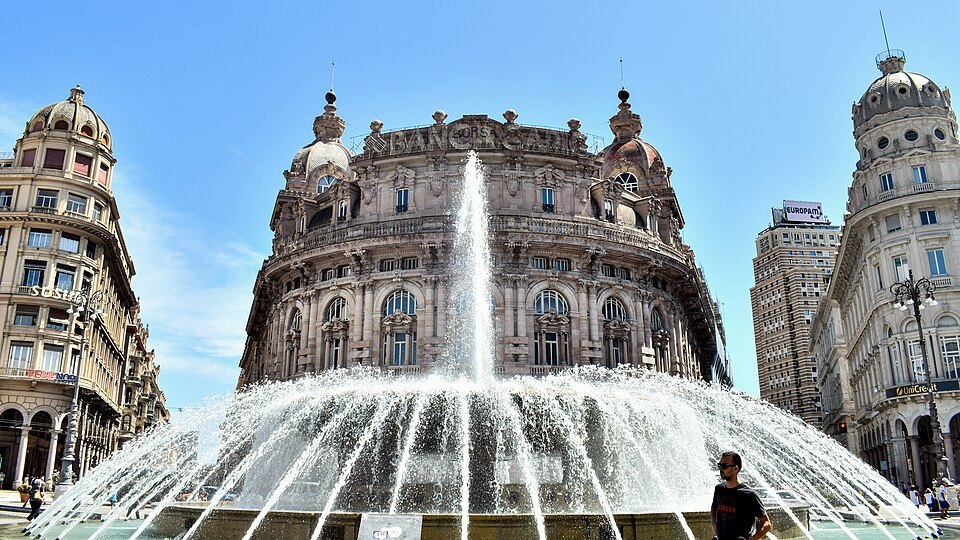
- The old stock exchangeA domed palace of 1912 in Liberty style, closed to the street but unmistakable
- The Palazzo Ducale frontThe neoclassical face of the doges' palace, added after the fire of 1777
- The Garibaldi monumentAn equestrian statue looking down the square toward the theatre
The sight in detail
Why it matters
Every visitor crosses this square, usually several times. It is where the old town ends and the planned city begins: behind it the alleys run downhill to the port, in front of it broad streets lead east to the shopping quarter and north to the hills. The metro stops underneath, and most bus routes touch one of its corners.
It is also the city's public room. Genoa has no great medieval piazza — the old town was too crowded to spare the ground — so celebrations, protests and football victories all end up here, around the fountain. The square as you see it is not old: it took its present form in the nineteenth and twentieth centuries and was rebuilt again in the nineteen-nineties, when it was paved and largely closed to traffic.
The square works as an address as much as a place. Genoese say they will meet at the fountain, at the Ducale, or under the theatre portico, and all three are within sight of one another. It is the one point in a confusing city that everyone can find.
How it came to be here
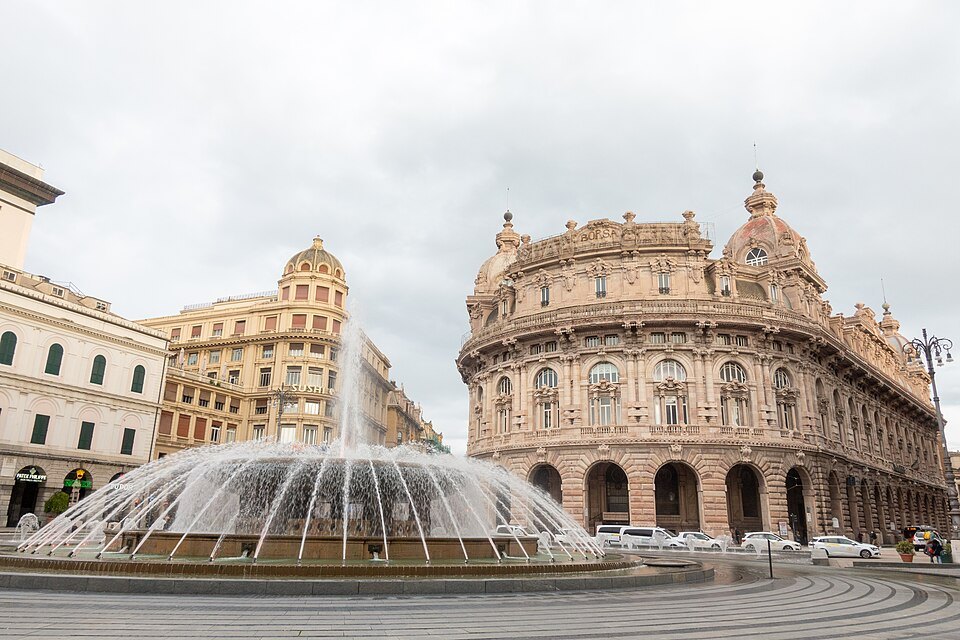
There was no square here at all until the eighteen-twenties. The site was an irregular open space beside the church of San Domenico, and it took its name from the church. The convent was demolished to make room for a theatre, and with that one decision the centre of gravity of the city began to shift east, out of the medieval core.
Carlo Barabino, the city architect, designed both the Teatro Carlo Felice, opened in 1827, and the Palazzo dell'Accademia Ligustica di Belle Arti of 1831, and set them facing each other across the new space. The square later took the name of Raffaele De Ferrari, Duke of Galliera, whose gift paid for the expansion of the port.
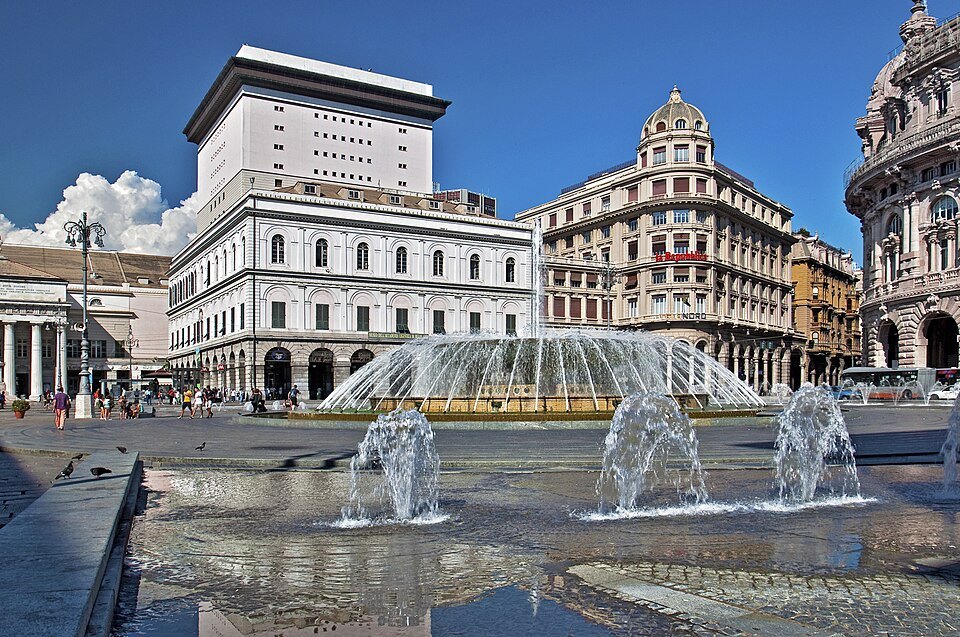
The buildings that close the other sides came later still, in the confident years around 1900: banks, insurance offices, and the domed stock exchange of 1912, whose Liberty-style hall is one of the finest interiors in the city, though it is rarely open.
What you actually see
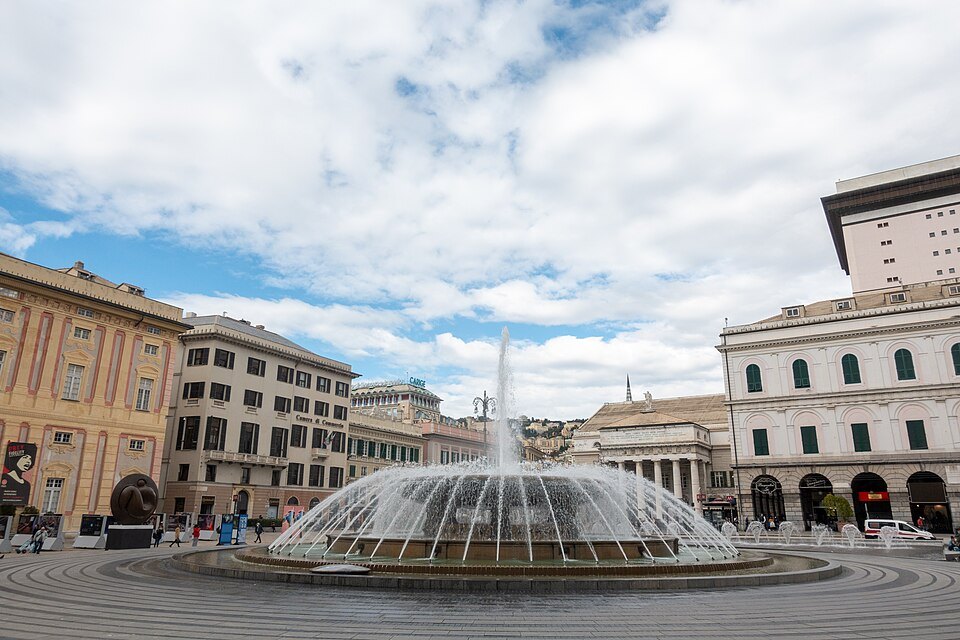
The fountain is the anchor. A wide bronze basin throws a single broad plume that the wind pushes across the pavement; in summer, and after football victories, people climb into it. It has been at the centre since 1936 and shares with the Lanterna the job of standing for the city on postcards.
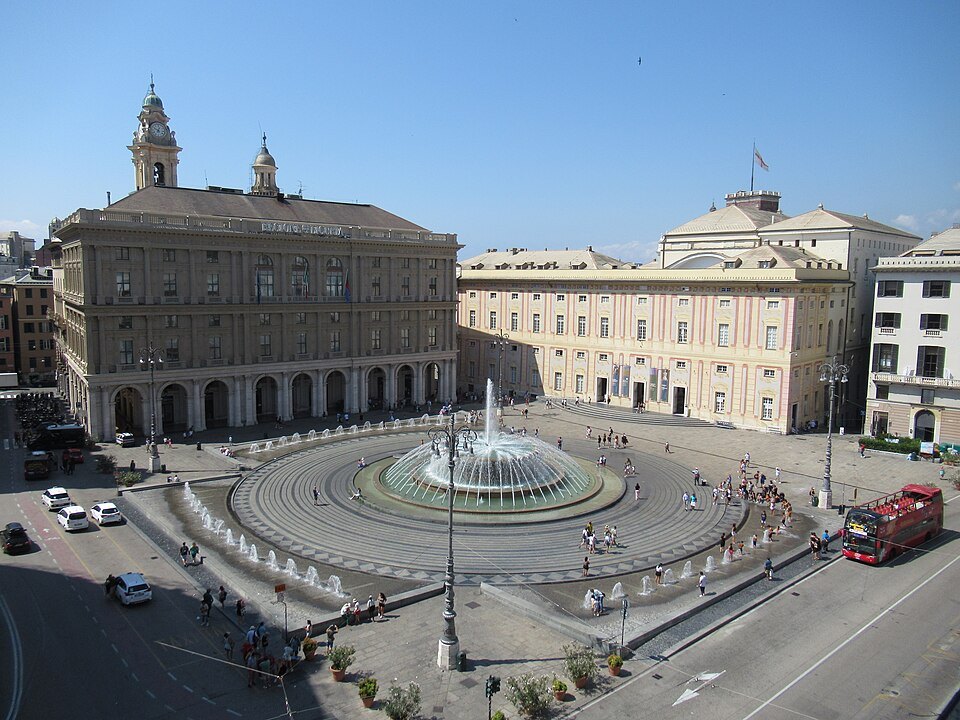
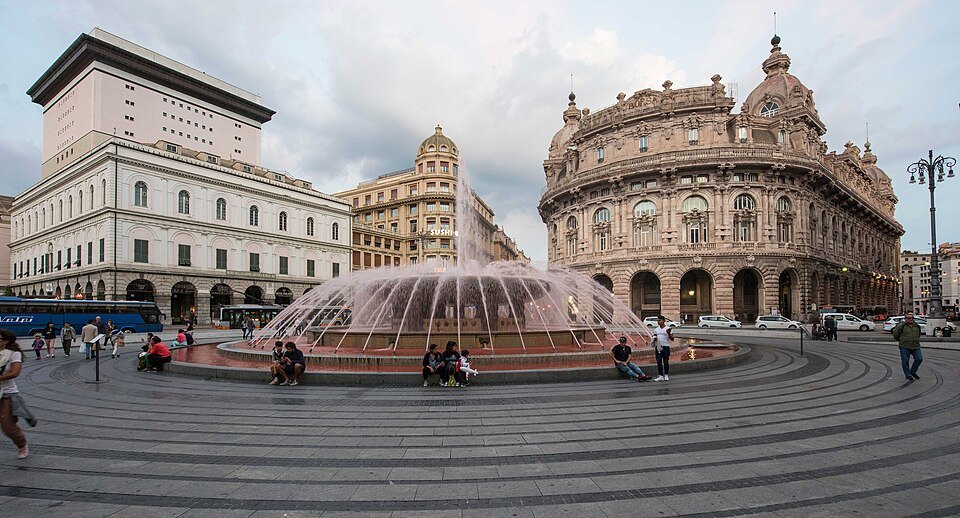
Turn slowly from it and you get a lesson in Genoese architecture in one circle. The theatre presents a severe Doric portico; the academy beside it is restrained neoclassicism; the stock exchange is exuberant, domed and pale; and the front of the Palazzo Ducale is the calm face added after the fire of 1777.
The theatre itself is worth a second look. It was gutted by bombing in the Second World War and rebuilt over decades, finally reopening in 1991 with a tall stage tower that stands up behind the old portico like a separate building — which, in effect, it is. The result is disliked by some and admired by others; either way it is honest about being new.
The two streets leading west from beside the theatre are worth noting for later: Via Roma, lined with shops and the glass-roofed Galleria Mazzini, and Via XXV Aprile, dropping gently to Piazza delle Fontane Marose and on to Via Garibaldi.
The paving repays a look down as well as up: pale stone laid in wide bands that sweep around the fountain basin, with the tram lines and the traffic pushed to the edges. Standing at the centre you are on ground that was a convent garden two centuries ago, a tangle of traffic sixty years ago, and a pedestrian square today.
How to visit
Ten minutes, and then again whenever you pass. There is nothing to book and nothing to queue for; the square is the connective tissue of a Genoa visit rather than a destination in itself.
The Accademia Ligustica's gallery upstairs is a genuine small museum of Ligurian painting and is almost always quiet. The stock exchange opens only for events. The opera house can be seen properly on a performance night or on one of its guided rounds — see booking ahead.
The metro station under the square is the most useful in the system: it connects in one ride to both main stations and to the old port.
If you only pass through once, do it after dark. The fountain is lit, the domes above the square catch the light, and the crowd is local rather than visiting — this is where the evening passeggiata from Via XX Settembre comes to an end.
Honest notes
This is a modern square wearing old clothes. Nothing on it is medieval, and the pavement you walk on was laid in the nineteen-nineties.
It is noisy and busy by day and can feel empty late at night, when the offices around it are shut. The life moves to the alleys and to the waterfront.
Photographs of the fountain with the domed palace behind it are taken from the northern corner, near the Ducale; from the theatre side the light is usually against you in the afternoon.
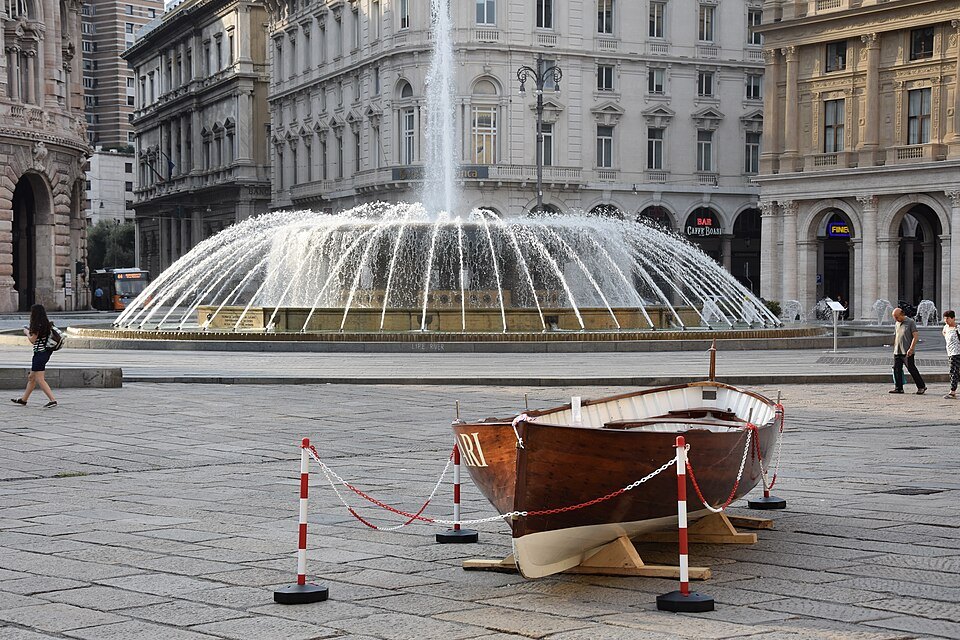
The stock exchange, the academy and the theatre are all in use, so what is visible from the square changes with the day: banners, stage doors open, a market stall or two. That is the square behaving normally, not neglect.
Where to go next
- NEXT DOORPalazzo DucaleThe seat of the doges of Genoa from 1339 until the republic ended, rebuilt after a fire, and now the city's main hall for exhibitions — with two courtyards you can walk through for nothing.Read the page
- NEXT DOORVia Garibaldi and the Strada Nuova MuseumsA single short street of sixteenth-century palaces built by the richest families of the republic, three of them now one museum, and the heart of the UNESCO listing of the Rolli.Read the page
- NEXT DOORSan Lorenzo CathedralGenoa's cathedral, banded in black and white stone, with two stone lions on its steps, a treasury in the crypt and a British naval shell that came through the roof and did not explode.Read the page