Staglieno Cemetery
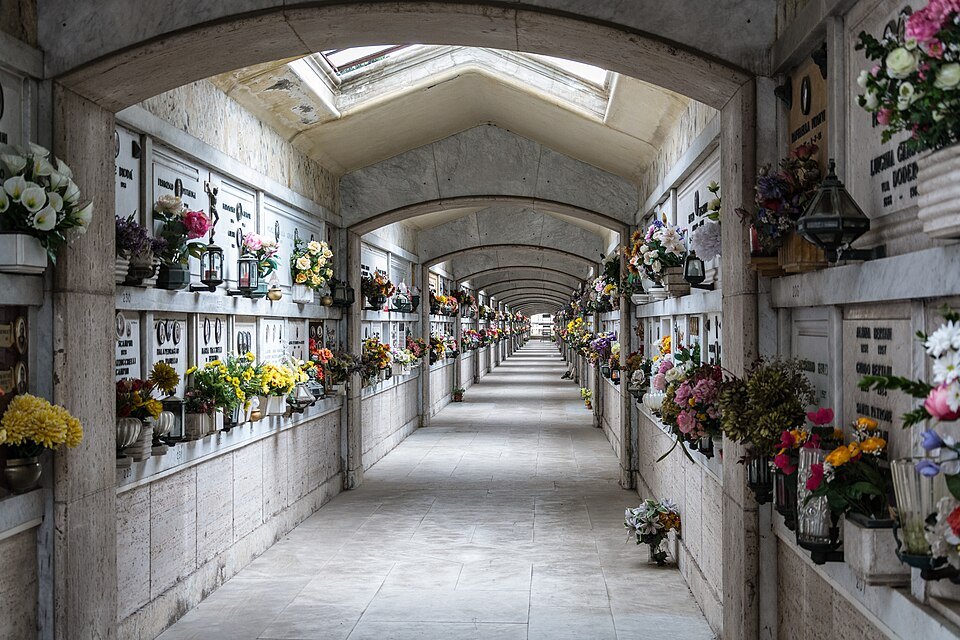
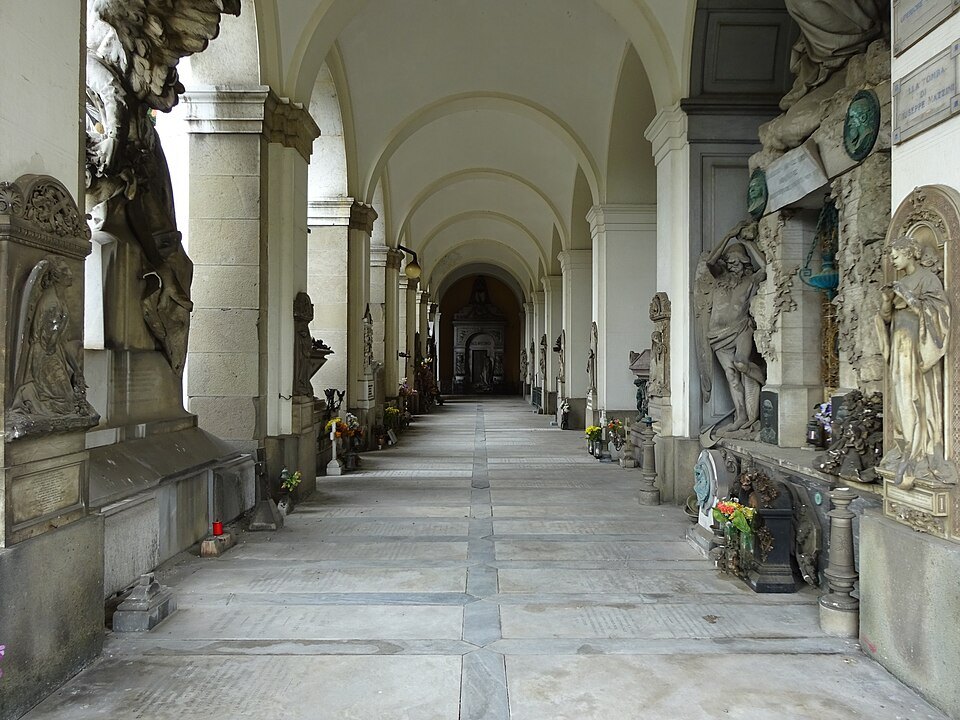
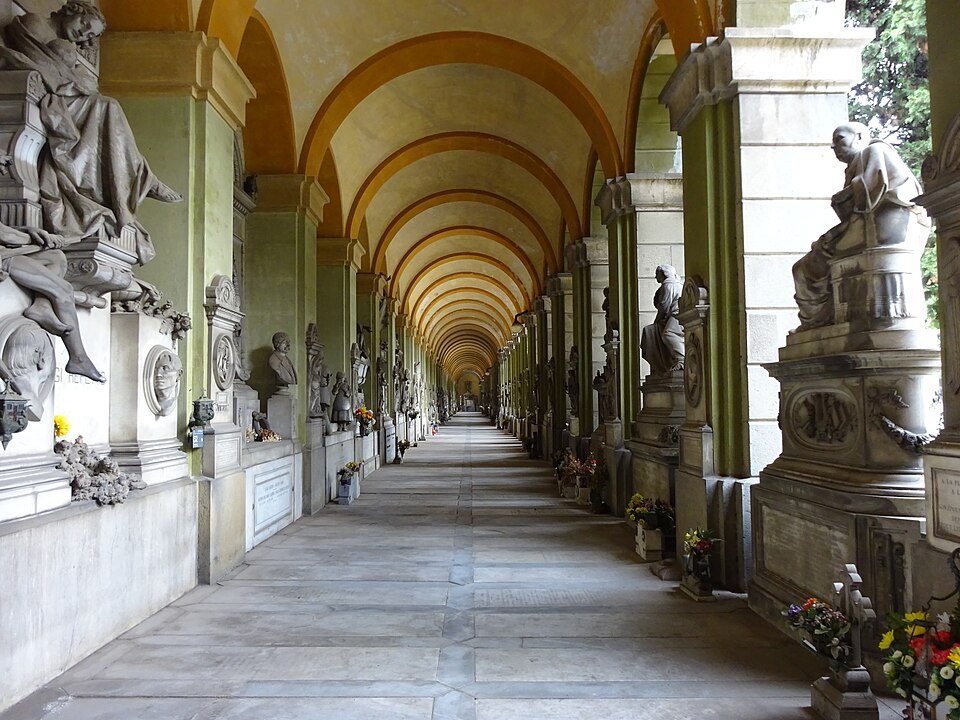
- IThe galleriesLong arcaded colonnades lined with family tombs, each one a small stage set
- IIThe PantheonA copy of the Roman Pantheon at the head of the great stair, with a Doric portico
- IIIThe Statue of FaithSanto Varni's nine-metre figure at the centre, carved to present the cemetery itself
- IVCaterina CampodonicoLorenzo Orengo's statue of a nut seller who paid for her own monument
- VMazzini's tombThe grave of Giuseppe Mazzini, cut into the rock in a separate enclosure
- VIThe Boschetto IrregolareA wooded English-style section where the monuments stand among trees
- VIIThe other cemeteriesEnglish, Protestant, Jewish and Muslim grounds inside the same walls
The sight in detail
Why it matters
Staglieno is not a sight in the usual sense; it is an art collection that happens to be a burial ground. Between the eighteen-fifties and the First World War the Genoese middle class commissioned sculpture here on a scale and with a realism that has no parallel, and most of it is still in place, outdoors, free to walk among.
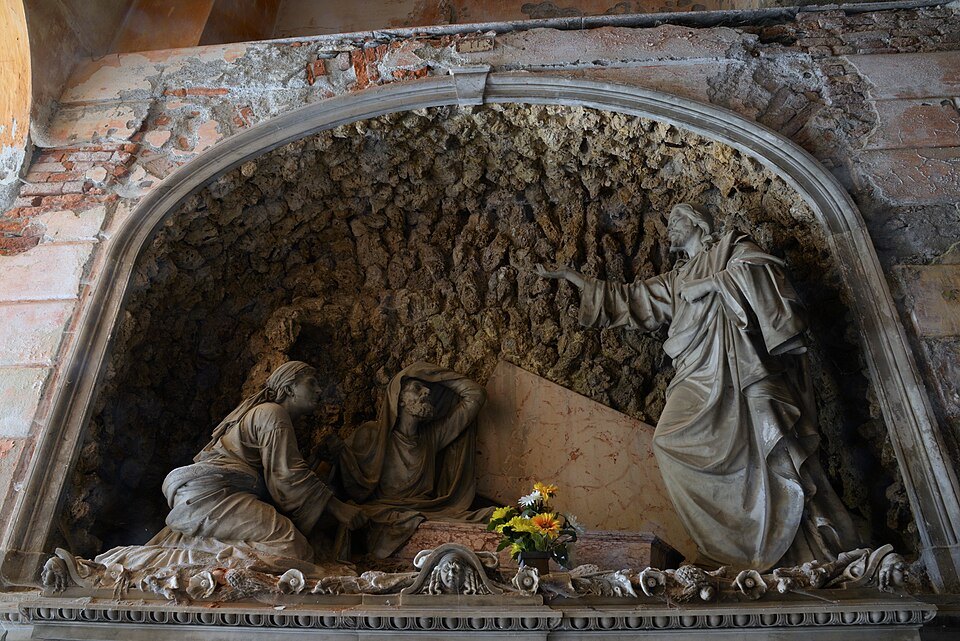
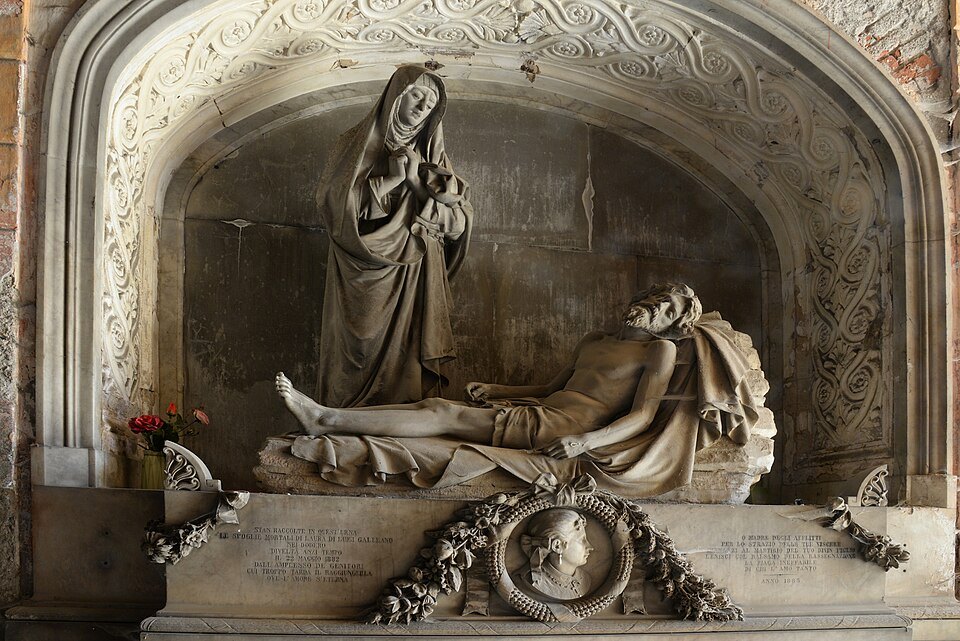
The subject of that sculpture is unusual too. Alongside angels and allegories are ordinary people rendered exactly: a widow in her shawl, a man in a frock coat and spectacles, a street seller with her wares. They are portraits of a class that had money for the first time and wanted to be remembered as itself.
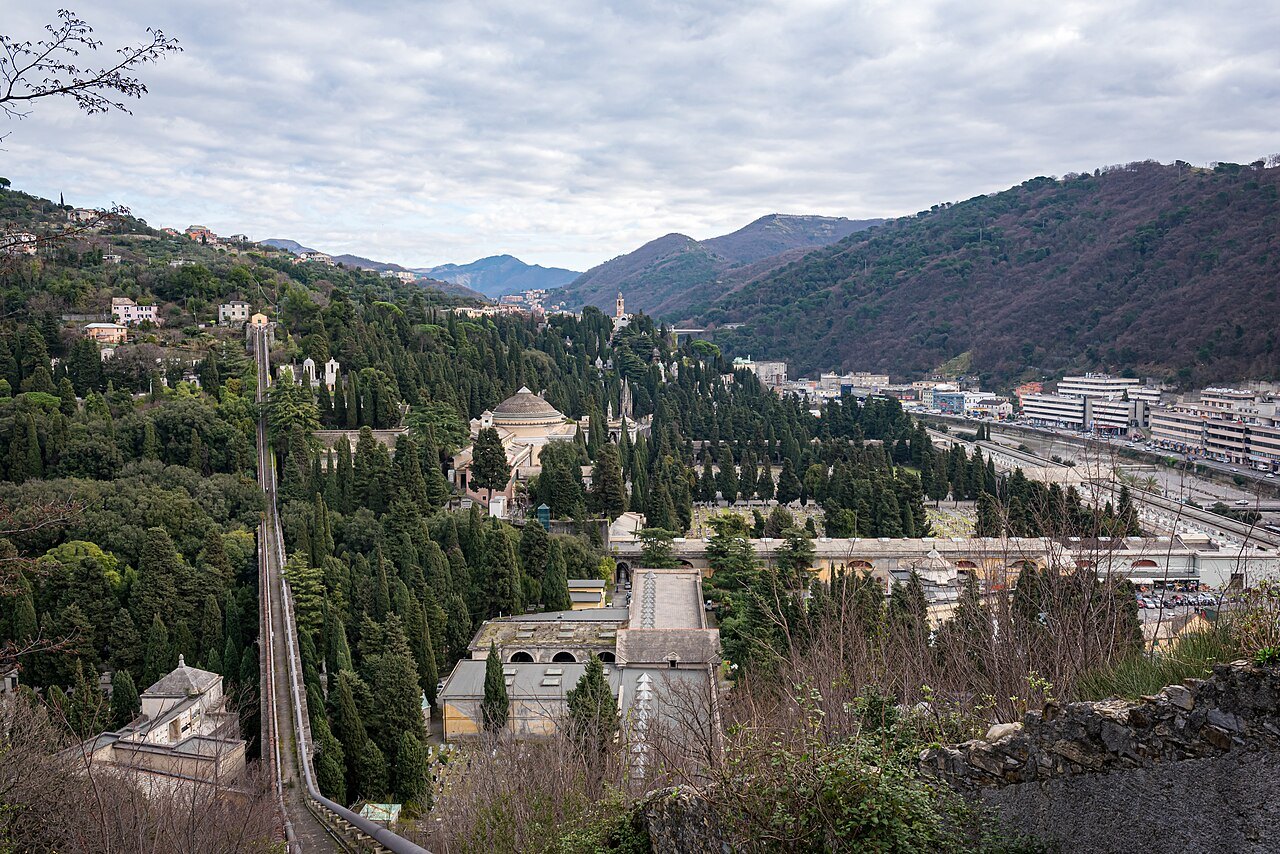
It is also a very large place. The grounds cover more than a square kilometre on the slope of the Bisagno valley, with English, Protestant, Jewish and Muslim cemeteries inside the same walls.
The cemetery had an international reputation almost at once. Nineteenth-century travellers came to see it as they came to see the palaces, and guidebooks of the period list it among the sights of Italy. That is a strange fate for a burial ground, and it is why the monuments were made so ambitious in the first place.
How it came to be
Napoleon's decree of 1804 banned burial inside churches and towns, and Genoa, like every Italian city, had to find ground outside. The project was approved in 1835 and designed by the city architect Carlo Barabino, who died of cholera the same year; his pupil Giovanni Battista Resasco carried it out.
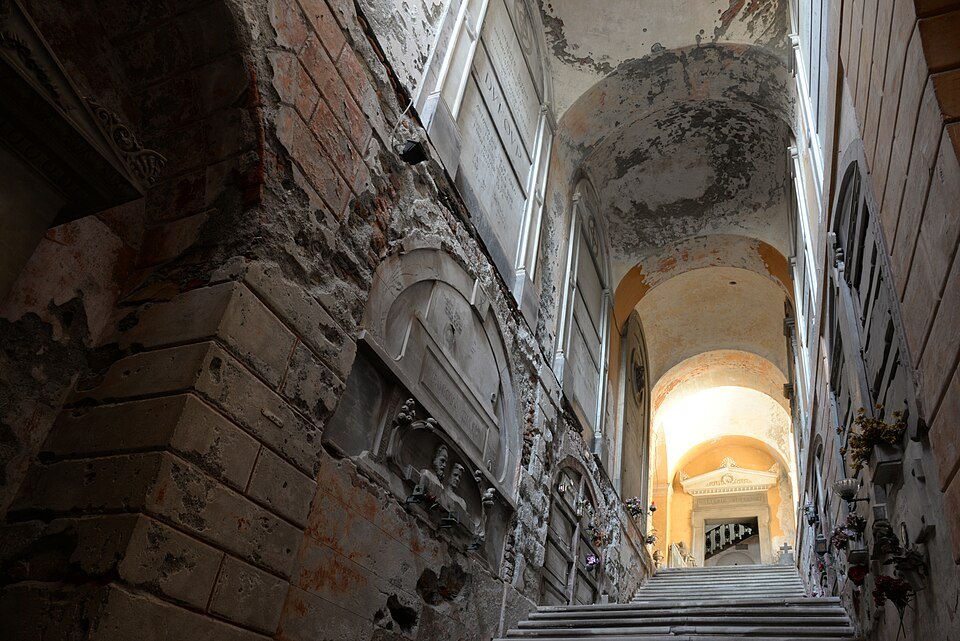
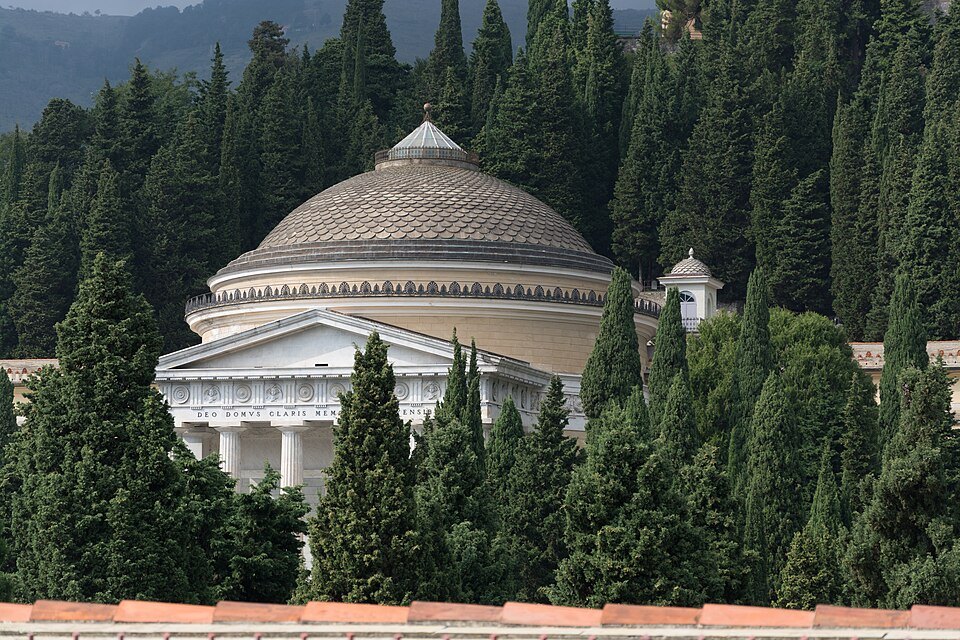
Work began in 1844 and the cemetery opened on 2 January 1851. The plan is architectural rather than picturesque: a rectangle of colonnaded galleries around a lawn, a monumental stair, and the Pantheon at the top, with the wooded Boschetto Irregolare spreading up the hill behind.
The sculpture came with the families. A tomb in the galleries was a public statement, and the leading Ligurian sculptors — Santo Varni, Lorenzo Orengo, Giulio Monteverde and others — spent careers filling them.
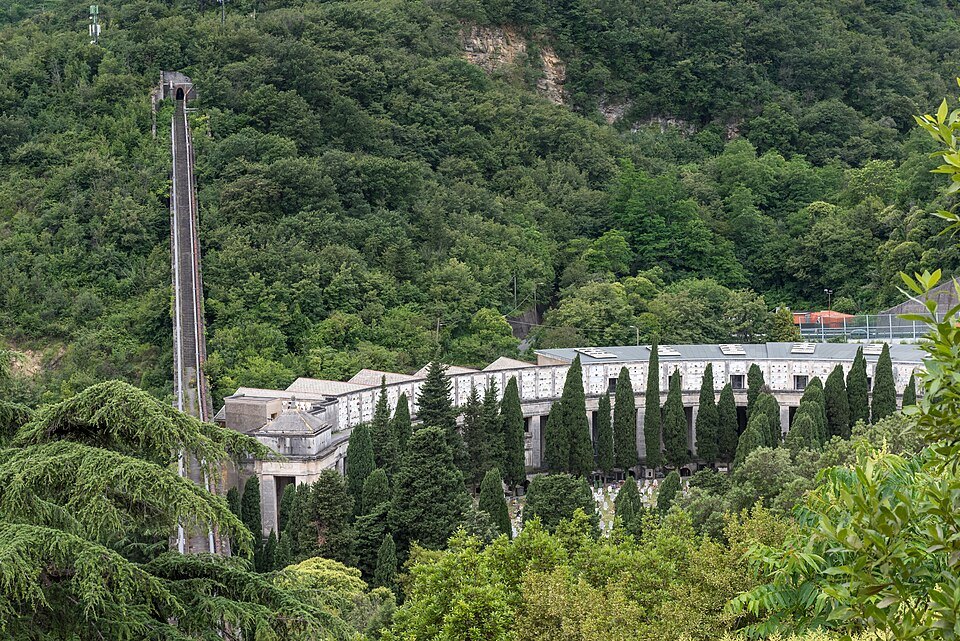
The scale was possible because the site is a hillside. The galleries step up the slope in terraces, so that the architecture reads as a single composition from the valley floor, and each terrace has its own character: formal arcades below, wooded paths above.
What you actually see
Enter and the first thing is the scale: two tiers of arcades running away on both sides, each arch a family plot with its own marble group, the figures at life size and often reaching out of their niches.
At the centre of the lawn stands Santo Varni's Statue of Faith, nine metres high, carved not for a grave but as an introduction to the whole cemetery. Behind it, at the head of a long stair, the Pantheon copies its Roman namesake with a Doric portico, flanked by the prophets Job and Jeremiah.
The monument people come for is Caterina Campodonico, carved by Lorenzo Orengo. She sold nuts and sugared bread at village festivals, saved for years, and paid for her own statue: she stands in her shawl holding her wares, and the inscription she commissioned explains that she did it herself.
Giuseppe Mazzini, one of the makers of Italian unity, lies in a tomb cut into the rock in its own enclosure. Others buried here include Constance Lloyd, Oscar Wilde's wife, in the English cemetery, and Edoardo Sanguineti and Fernanda Pivano among writers of the last century.
Higher up, the Boschetto Irregolare abandons the grid: monuments stand among cypresses and holm oaks on winding paths, and the effect is of a garden that has been colonised by marble.
Look for the small realist details the sculptors put in: the fringe of a shawl, a pair of spectacles, a bunch of keys, the creases of a working jacket. This was carving meant to be recognised by the neighbours of the dead, not to illustrate a classical idea.
How to visit
Two hours minimum, and easily half a day. Maps at the entrance mark the main monuments; the arcades alone take an hour.
It is a working cemetery and funerals take place; dress and behave as you would anywhere else, and keep cameras away from mourners.
City buses run up the valley from the centre to the gates, and the ride is part of the interest: the Bisagno valley is ordinary working Genoa, as far from the palace streets as the city gets.
The ground is steep and the upper sections are rough underfoot. Water and shade are both scarce in summer.
Admission is free, every day of the week. Guided walks in English are run occasionally by the city and by local associations; otherwise the printed plan at the gate is enough.
Honest notes
Weather has not been kind to some of the marble, and restoration is continuous; scaffolding and roped-off arcades are normal.
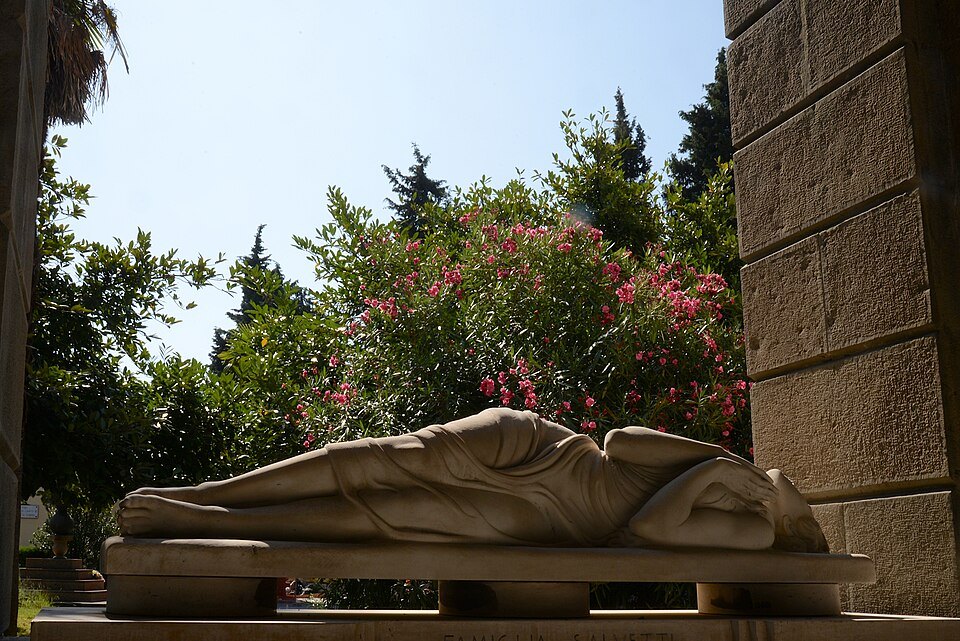
The realism can be startling rather than sentimental — deathbeds, illness, grief shown plainly. Some visitors find it too much, and children may.
It lies about half an hour from the centre, so it needs planning into a day rather than being fitted in between the squares.
Where to go next
- NEXT DOORThe Righi Funicular and the FortsA funicular of the eighteen-nineties climbs from the edge of the old town to the Righi, where the seventeenth-century walls run along the ridge and a line of forts guards the skyline.Read the page
- NEXT DOORSpianata di CastellettoThe terrace where a fortress once stood, reached by a wooden-panelled public lift from the street below, with the whole old town, its domes and the port laid out under the railing.Read the page
- NEXT DOORPiazza De FerrariThe hinge of the city: a bronze fountain of 1936 ringed by the opera house, the stock exchange and the palace of the doges, where the medieval alleys meet the nineteenth-century streets.Read the page