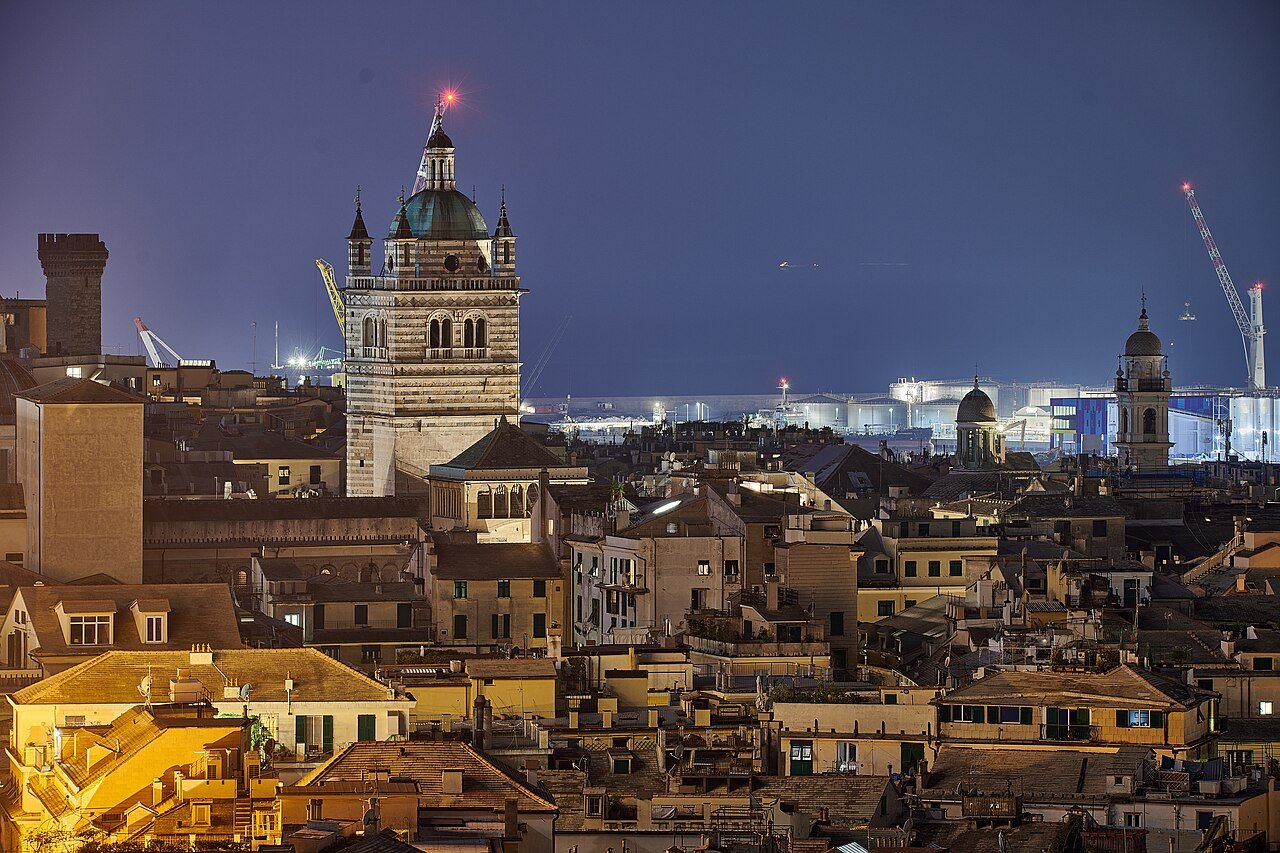
A case in the right aisle
Inside San Lorenzo, in the right aisle, a plain case holds the casing of an armour-piercing naval shell. It sits apart from the chapels and the carved stone around it, with none of the gilding or marble that marks the rest of the cathedral's interior. Visitors who do not already know the story often walk past it, assuming it is some kind of reliquary or ceremonial object rather than a piece of ordnance left over from a war.
It is, in fact, a relic of conflict rather than of faith, kept inside one of the oldest churches in the city as a record of a night the building nearly did not survive. Nothing about its setting announces this; the case is modest, the lighting plain, and a visitor moving quickly through the aisle toward the Chapel of Saint John the Baptist can miss it entirely.
What happened on 9 February 1941
During a British naval bombardment of the port on 9 February 1941, a shell came through the roof of the cathedral and buried itself in the corner of the nave. Genoa's harbor was the target that night, and the cathedral stands close enough to the old port, inside the maze of the caruggi, that a stray hit on a building of this scale was always a real risk once the bombardment began.
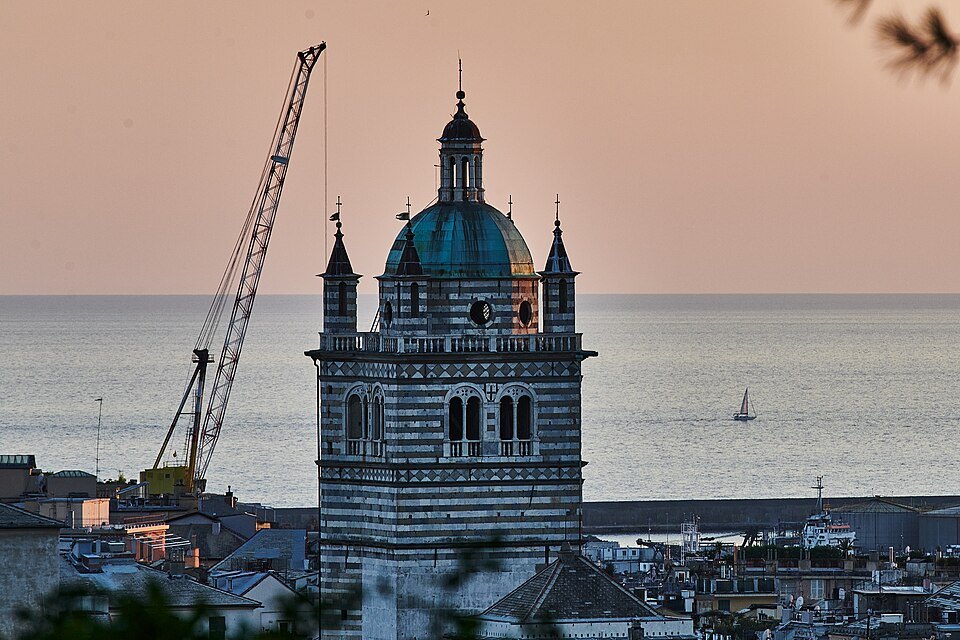
A direct strike of this kind was a serious threat to a structure that had stood, in one form or another, since the church was begun around 1098 and consecrated in 1118. The Gothic facade and its striped bands, the finished bell tower, the Renaissance dome over the crossing: all of it depended, for one evening in 1941, on a single piece of unexploded ordnance lodged in the stone floor of the nave.
Why the cathedral survived
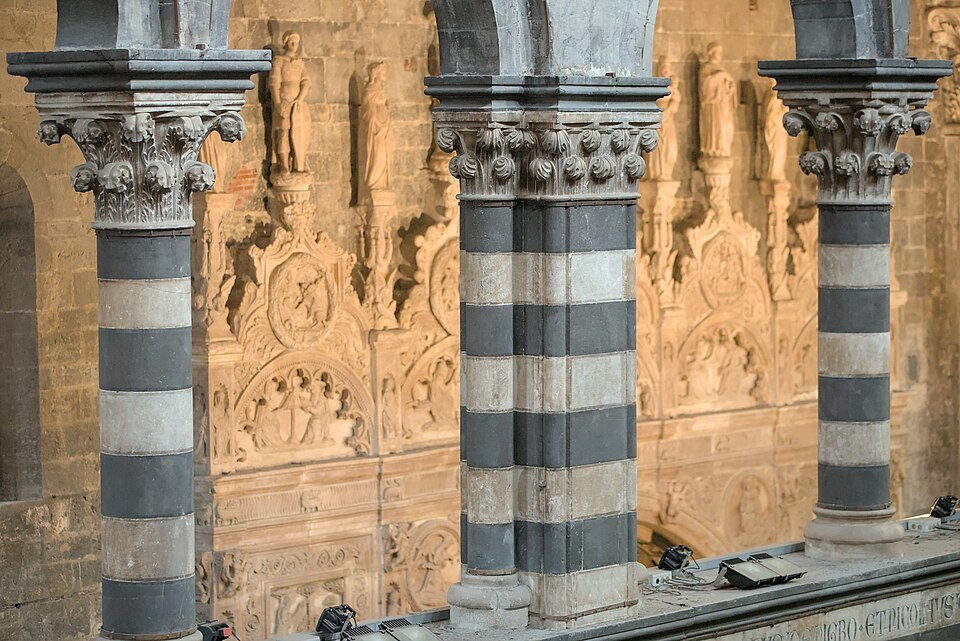
The shell did not detonate. The fuse failed, and the explosion that should have followed never came. That single mechanical failure is the reason the cathedral's nave, its stone bands, and the chapels along its aisles look today much as they did before the war, rather than as a rebuilt or heavily restored twentieth-century reconstruction standing on the same site.
It is worth pausing on how narrow that margin was. San Lorenzo's long survival is often told as a story of stone and patronage, a church rebuilt and extended across eight centuries by a wealthy maritime republic and its successors. The 1941 shell is a reminder that the building also survived the twentieth century by a margin that had nothing to do with design or craftsmanship, and everything to do with a fuse that simply did not fire.
The replica on display
What stands in the case today is an exact replica of the casing, not the original shell that fell in 1941. This is worth knowing before arriving, since the display itself does not dwell on the distinction, and a visitor could easily assume the object on view is the actual piece of ordnance recovered that night from the nave floor.
The underlying history, the failed fuse and the near miss to the cathedral, is well documented and not in question. It is only the physical object in the case that is a later stand-in, made so the story could be told to visitors without keeping a genuine unexploded shell, however inert it may now be considered, on permanent public display inside a working church.
The rest of San Lorenzo worth seeing
The shell casing sits a short walk from the Chapel of Saint John the Baptist in the left aisle, a complete Renaissance room screened off by columns and built to hold the ashes of the city's patron saint, brought back to Genoa at the time of the First Crusade. Nearby, steps lead down to the Museo del Tesoro, where the Sacro Catino, a shallow dish of green glass long claimed by Genoese tradition to be the Holy Grail, is kept under careful, deliberately dim light.
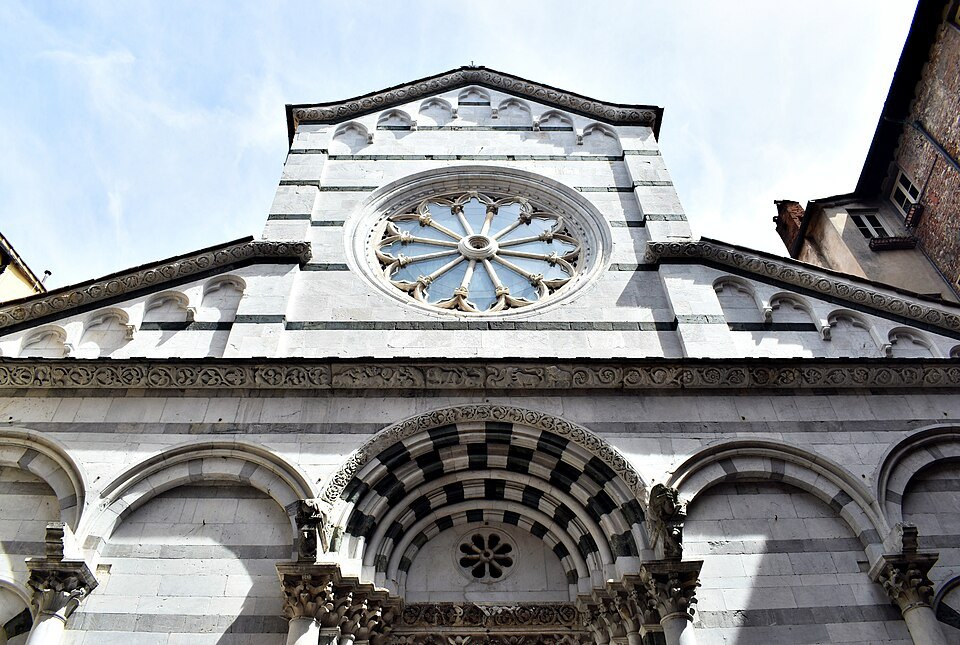
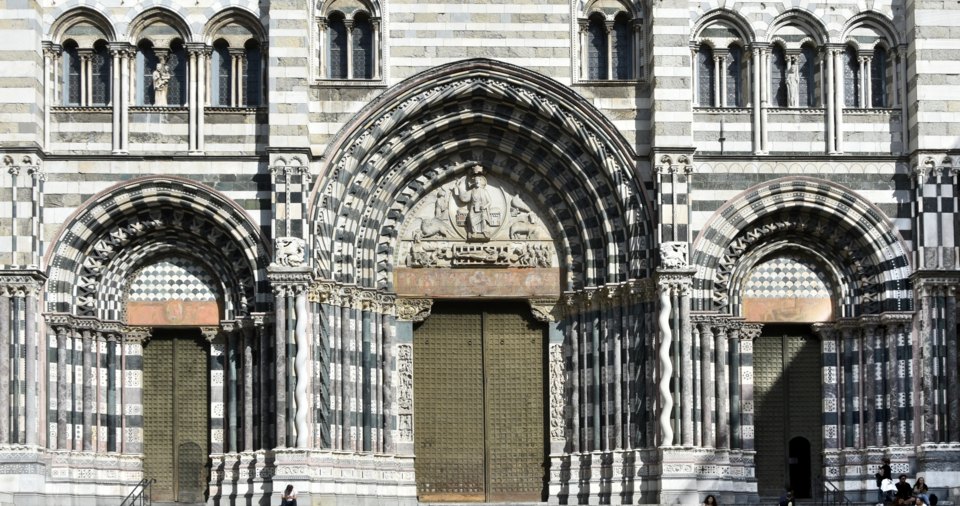
Outside, the building's real draw is the striped facade itself: bands of dark Ligurian slate and white coastal marble running unbroken across three deep portals, carved with figures and a scene of Saint Lawrence's martyrdom over the central door. Two marble lions added in the nineteenth century sit on the steps and have become one of the city's informal meeting points. Walking around to the north flank shows the plainer Romanesque doorway that survives behind the later Gothic front.
Taken together, the facade, the Renaissance chapel, the wartime shell casing, and the treasury make a useful loop through nearly a thousand years of the same building. The shell is simply the most recent layer, and one of the easiest to overlook if a visitor arrives focused only on the stripes outside.
Visiting San Lorenzo
Allow about half an hour for the church itself, longer if the treasury is included in the visit. San Lorenzo is a working cathedral, so services run through the day and some areas close to sightseeing while they do; check the posted schedule at the entrance rather than planning a visit around assumptions about access.
Dress as for any Italian church, with shoulders and knees covered, and expect the treasury to be shown on a short guided round rather than browsed freely at a personal pace. The cathedral sits in the middle of the caruggi, close enough to the Palazzo Ducale to combine easily with a wider walk through the old town, and it rewards a return in flat light, when the carved portals and the black-and-white bands of the facade are easiest to read without hard shadow flattening the detail.
More from the journal
- ItinerariesWhat can you see in Genoa on a six-hour cruise stop?A plan for a short day in Genoa from the cruise terminal: what is close, what is worth the walk, and what to leave for a longer visit.Read the piece
- The CaruggiIs it safe to walk the caruggi, and which lanes should you take?Genoa's medieval quarter has a reputation. Here is what is actually true, which streets are busy and which are not, and how to walk one of Europe's largest old towns without worrying.Read the piece