Via Garibaldi and the Strada Nuova Museums
- IPalazzo RossoThe red palace of the Brignole-Sale, kept with its furniture, paintings and roof terrace
- IIPalazzo BiancoThe white palace opposite, a gallery of Flemish, Spanish and Genoese painting
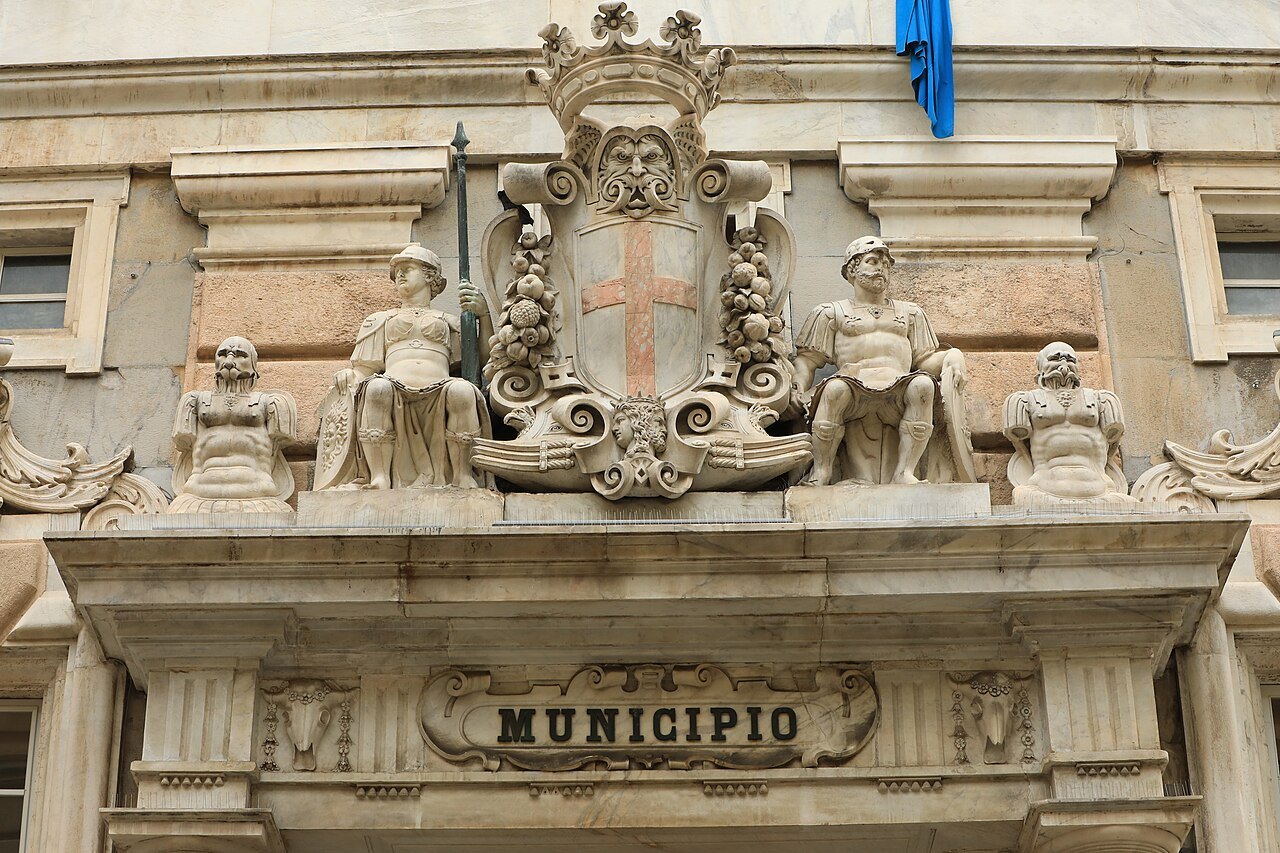
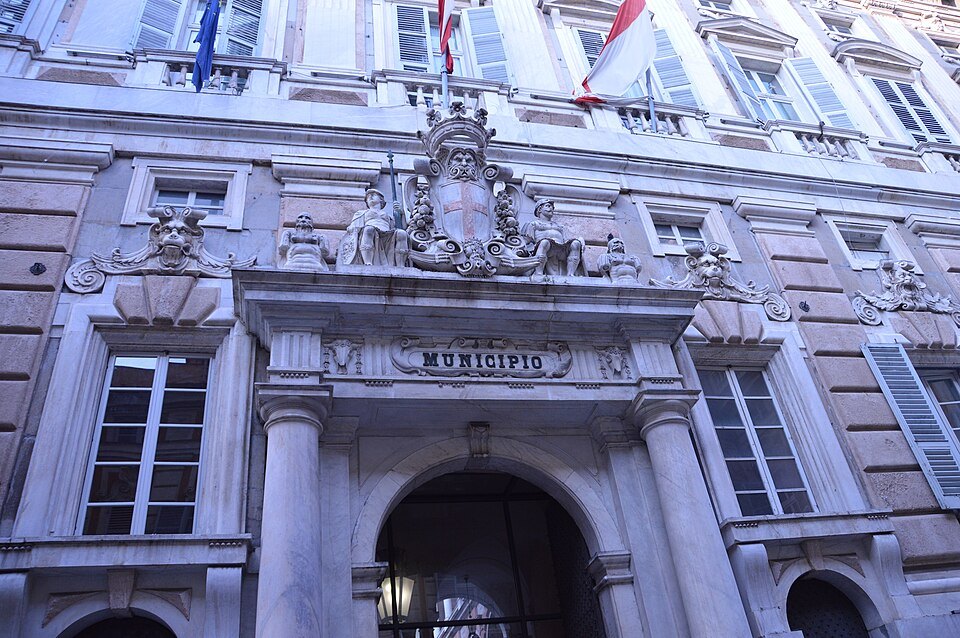
- IIIPalazzo Doria TursiThe largest of the three, now the city hall, holding Paganini's violin
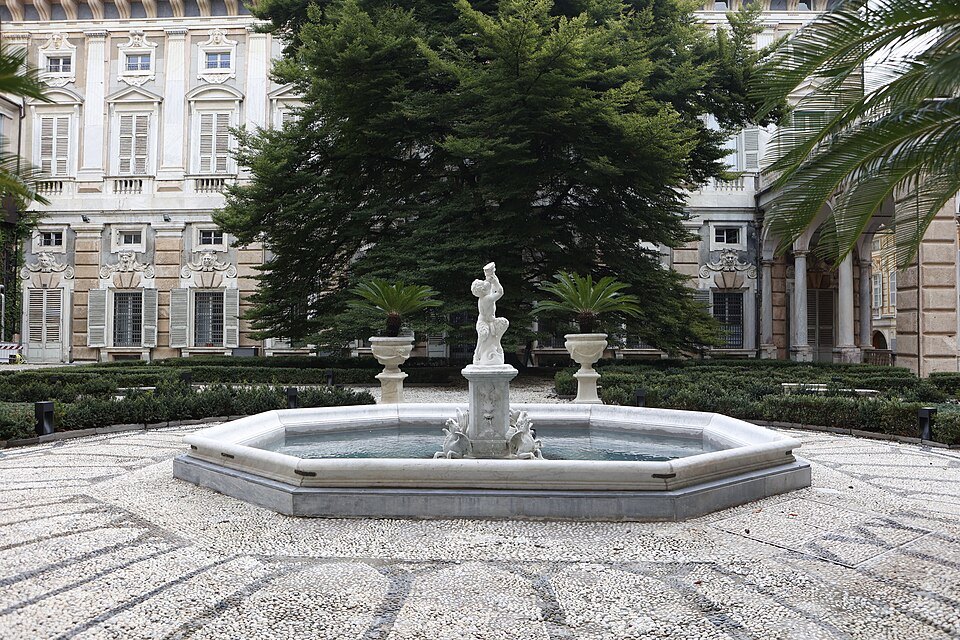
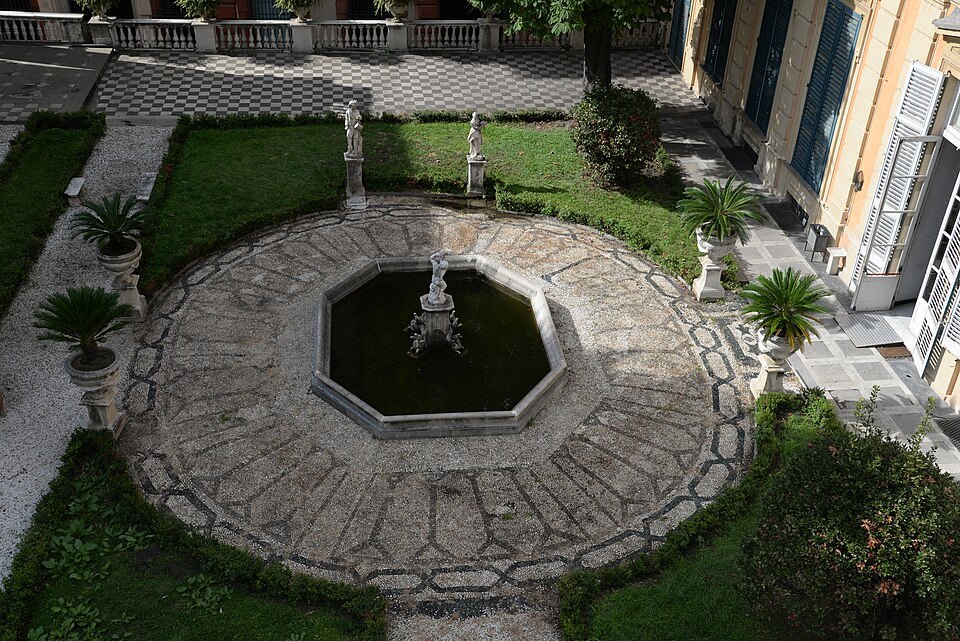
- IVPalazzo PodestàA private palace whose courtyard holds a grotto fountain of shells and stone
- VThe atria and stairsOpen vestibules designed to be seen from the street, rising to gardens at the back
- VIThe street itselfLaid out from 1550 and built between 1558 and 1583, and barely altered since
The sight in detail
Why it matters
This street is the reason Genoa is on the UNESCO list. In the middle of the sixteenth century the republic's leading families decided to move out of the crowded medieval town and build, on a new street above it, a row of palaces of a kind Europe had not seen: private houses designed as a single architectural set, on a hillside, each one stepping up from an open atrium to a stair, a courtyard and a garden.
Their use was public as much as private. Genoa had no royal court to lodge visiting rulers, so the state kept lists — the rolli — of the palaces good enough to house its guests, and a lottery decided which family got which visitor. Forty-two of those palaces, along Via Garibaldi and its neighbours, were inscribed by UNESCO in 2006.
Rubens measured and drew them, publishing the plans in 1622 as a model for the nobility of northern Europe. It is an unusually direct line: a street in Genoa becoming a pattern book for palaces elsewhere.
How it was built
The street was sanctioned in 1550 and built between 1558 and 1583 as the Strada Nuova, the New Street, on ground above the old town. It took the name Via Garibaldi only in 1882.
Because the plots were narrow and the ground rose steeply, the architects worked in section rather than in plan: you enter at street level into a vestibule, the stair turns and climbs to the piano nobile, and the courtyard sits higher again, with the garden behind. The effect is theatrical and was meant to be — the doors were left open so that the sequence could be seen from the street.
The palaces were not owned by one family for long. Several passed by inheritance or gift to the city, which is why three of them stand open today as the Musei di Strada Nuova.
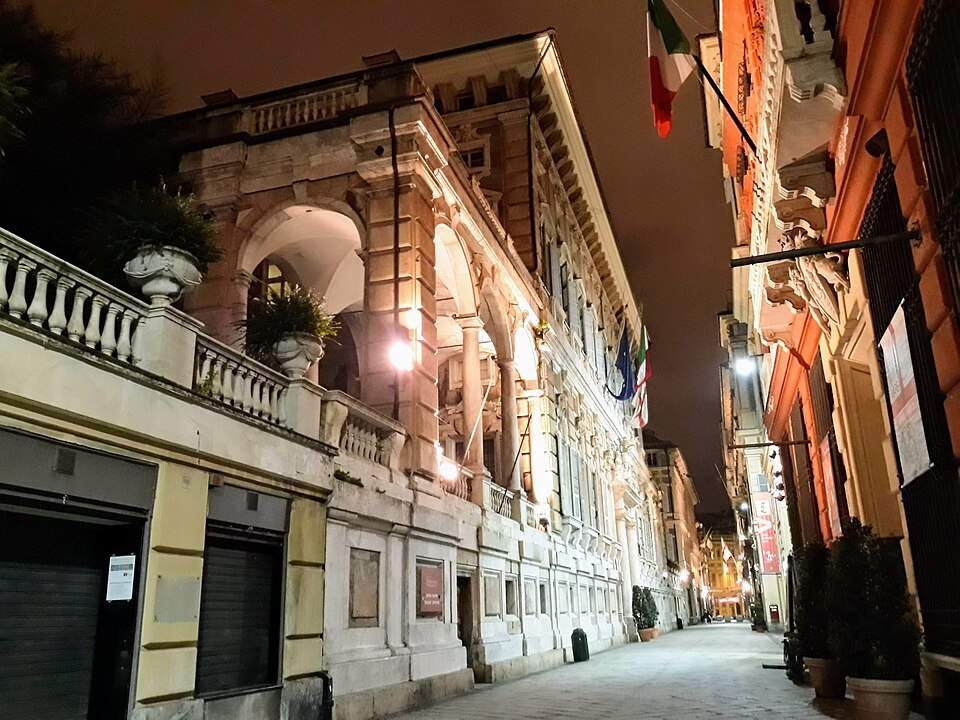
The architects worked to a shared discipline rather than to one plan. Doorways line up along the street, cornices run at the same height, and the palaces are faced in the same grey stone and pale plaster, so that the street reads as one composition while every house is different behind its front. Several were painted, and patches of that painted architecture survive on the upper storeys.
What you actually see
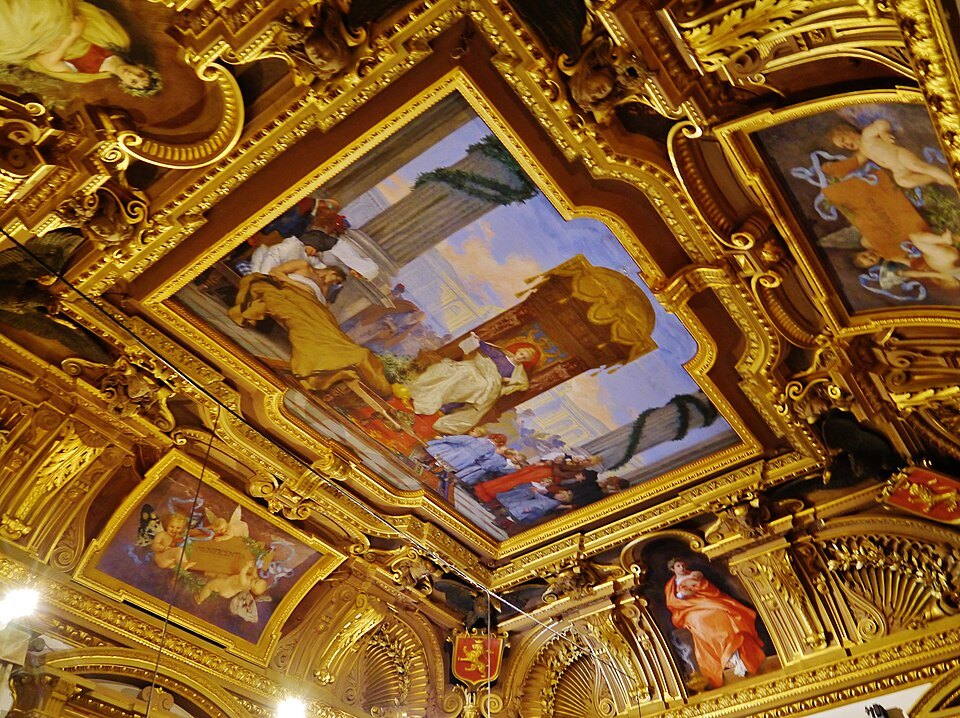
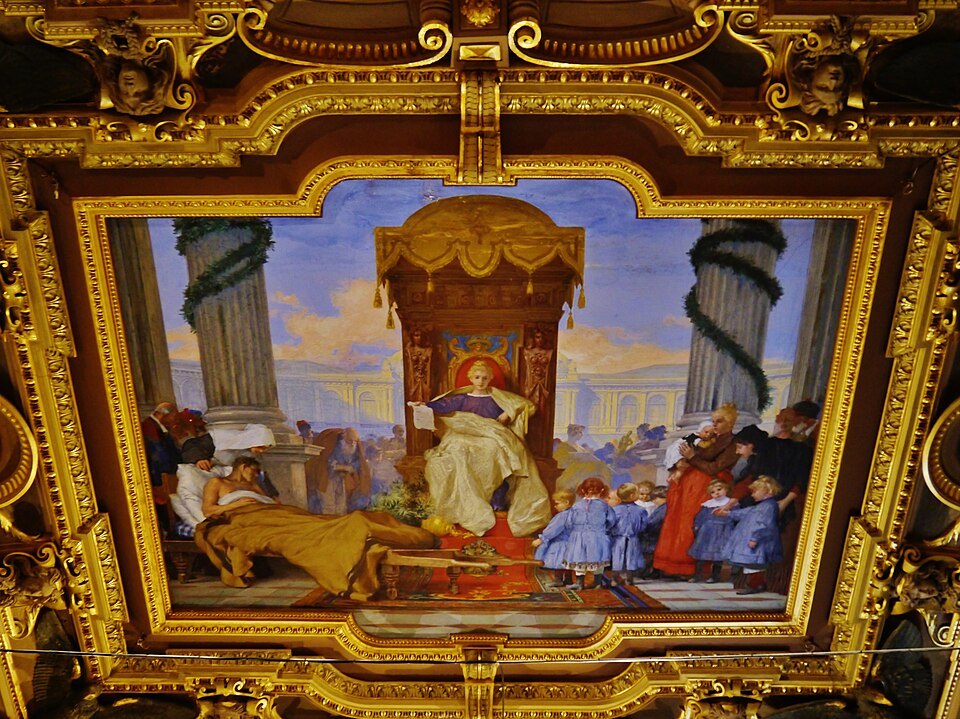
Palazzo Rosso, the red one, keeps the collection and much of the furniture of the Brignole-Sale, who gave it to the city in 1874: Van Dyck portraits of the family, frescoed rooms of the seasons, and a roof terrace reached by a modern stair with one of the best views over the old town.
Palazzo Bianco, opposite, is the picture gallery proper, strong in Flemish and Dutch painting because Genoese merchants bought it, and in the Genoese painters — Strozzi, Cambiaso, Magnasco — who are hard to see anywhere else.
Palazzo Doria Tursi, the largest, is also the city hall, so you walk past offices to reach its rooms. It holds the city's civic collections and, in a dim case of its own, the violin of Niccolò Paganini, made by Guarneri and left by him to Genoa.
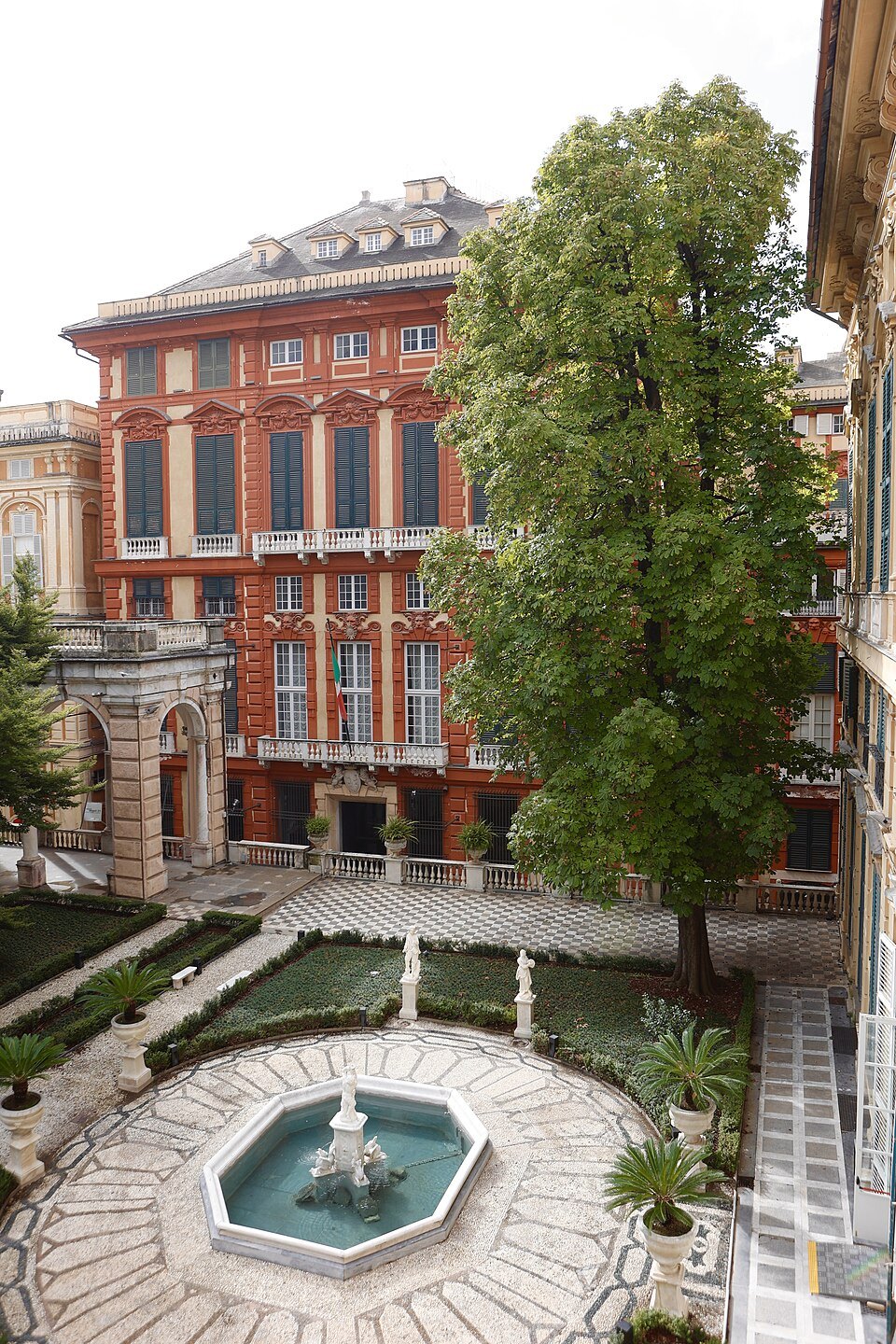
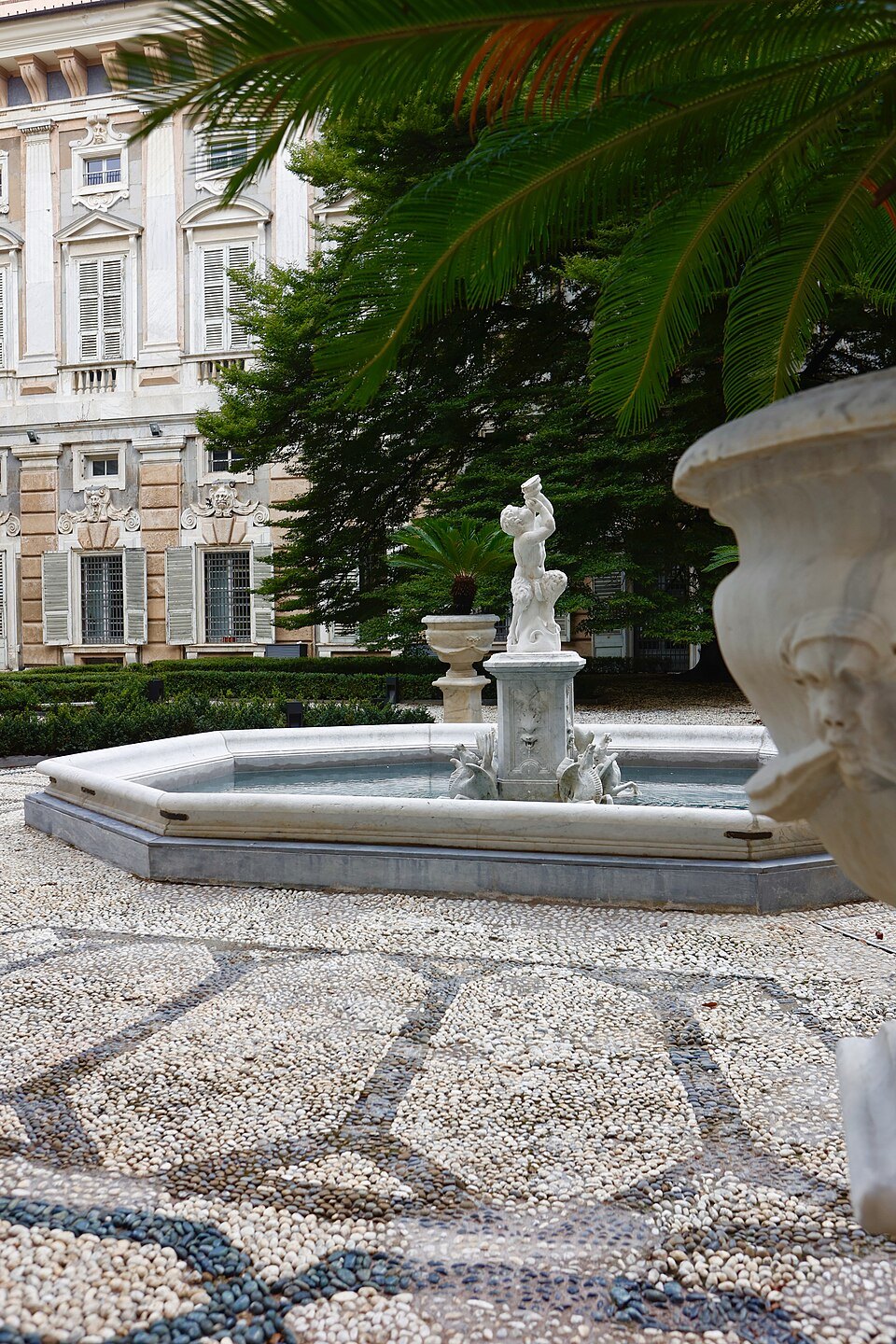
The street outside is the fourth exhibit. Look into the atria of the palaces that are not museums — Podestà, Spinola, Cattaneo Adorno — where the doors are often open onto stairs, courtyards and, in one case, a grotto fountain encrusted with shells.
Inside the museums, the three buildings are joined underground, so the visit runs from one to the next without going back into the street. The passage is worth noticing in itself: it cuts through the hillside the palaces were built into, and it is the clearest demonstration of how much rock these families moved to get their gardens level.
How to visit
The three museums share one ticket and one route; two hours covers them at a walking pace, three if you stop at the paintings.
Palazzo Rosso's terrace is the part people miss: keep going up. In Tursi, ask where the violin is, because the room is easy to walk past.
The street is only two hundred metres long and carries almost no traffic, so it is also simply a pleasant place to stand. The Rolli palaces page explains which of the others can be seen and when.
Two smaller collections sit within a few minutes of the street and are usually empty: the Galleria Nazionale in Palazzo Spinola, kept as a furnished palace, and the Museo di Palazzo Reale on Via Balbi, described on its own page.
Honest notes
These are palaces without much furniture. Genoese families sold or divided their contents over the centuries, and what you see is largely architecture and paintings rather than lived-in rooms.
Photography rules vary between the three buildings, and parts of Tursi close when the council is sitting.
The famous view from the Rosso terrace is over the roofs toward Castelletto; it is not the sea view some visitors expect.
Three of the forty-two listed palaces admit visitors daily. The rest are offices, banks and private homes whose doors open for the Rolli Days weekends a few times a year.
Where to go next
- NEXT DOORPalazzo Reale and Via BalbiA banker's palace that became a royal residence, with a mirrored gallery, a hanging garden and a terrace over the harbour, on the street the Balbi family built for themselves.Read the page
- NEXT DOORSantissima Annunziata del VastatoA neoclassical portico hiding one of the most lavish interiors in Italy: a gilded and frescoed basilica paid for by the Lomellini, five minutes from the station.Read the page
- NEXT DOORPiazza De FerrariThe hinge of the city: a bronze fountain of 1936 ringed by the opera house, the stock exchange and the palace of the doges, where the medieval alleys meet the nineteenth-century streets.Read the page