The dishes that belong to this city
Eating & Drinking in detail
The logic of the cooking
Liguria is a narrow strip of steep ground between mountains and sea, with very little flat land and almost no grazing. Its cooking follows from that: herbs and vegetables from terraces, chickpea and wheat flour, olive oil, salted fish, and almost no meat.
What the region did have was ships. Sardinian pecorino, Piedmontese hazelnuts and eastern spices arrived through the port, and the famous dishes of the city are combinations of a poor countryside and a rich harbour.
The result is a cuisine of green sauces and flatbreads rather than of roasts, and it is unusually kind to vegetarians for an Italian city.
Two ingredients do most of the work. Olive oil comes from the terraces behind the coast, pressed from small Taggiasca olives and mild enough to use raw on everything; and salted anchovies, packed in the villages of the western Riviera, turn up in sauces, on bread and stuffed and fried.
Wild greens matter too. Preboggion, a mixture of hillside herbs gathered in spring, fills the pansoti and the savoury pies, and is the reason Ligurian vegetable cooking tastes of something other than the garden.
Pesto, properly
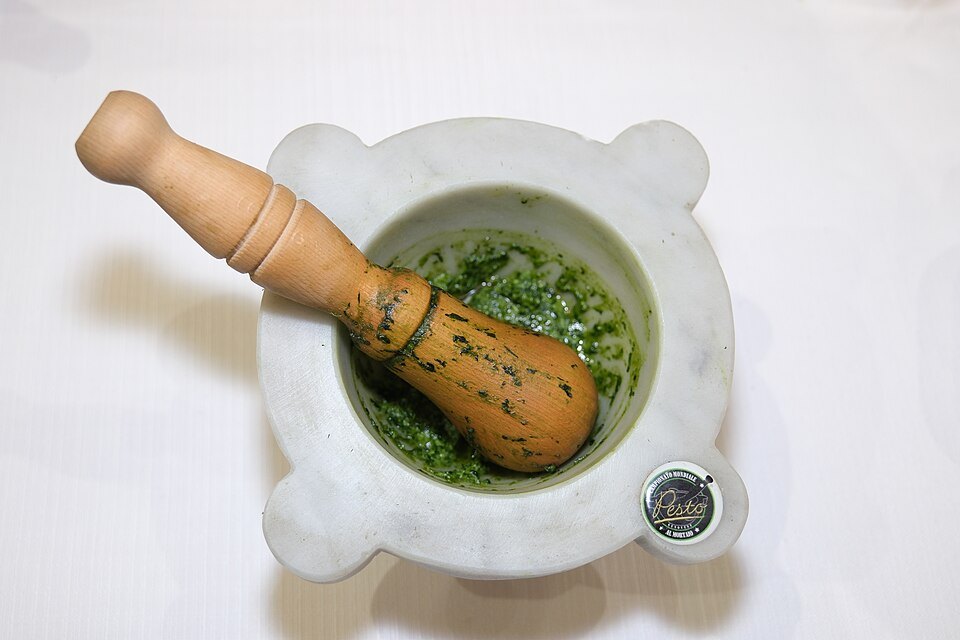
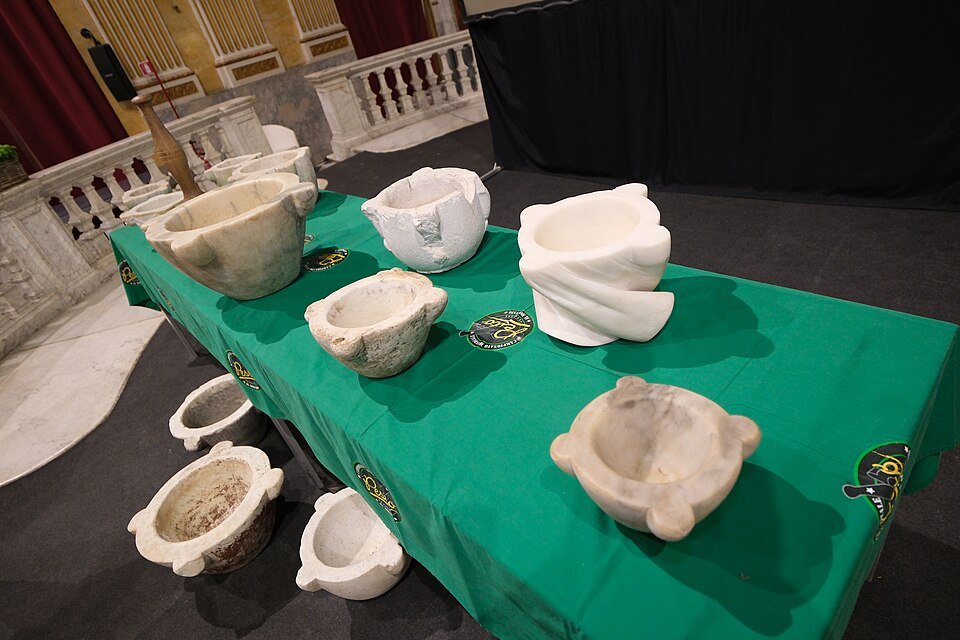
Pesto means pounded, and in Genoa it still is: basil, garlic, pine nuts, hard cheese, coarse salt and olive oil worked in a marble mortar with a wooden pestle, never heated and never blended for long enough to bruise the leaves.
The basil is local and small-leaved, grown under glass on the slopes at Prà on the western edge of the city, where it has protected status; big, minty supermarket basil makes a different sauce.
It is served with trofie, trenette or lasagne, and the classic version comes with potato and green beans boiled in the same water — a detail visitors often think is a mistake and locals consider essential.
The city takes it seriously enough to hold a world championship of pesto in the mortar in the halls of the Palazzo Ducale, which tells you where the sauce sits in the civic imagination.
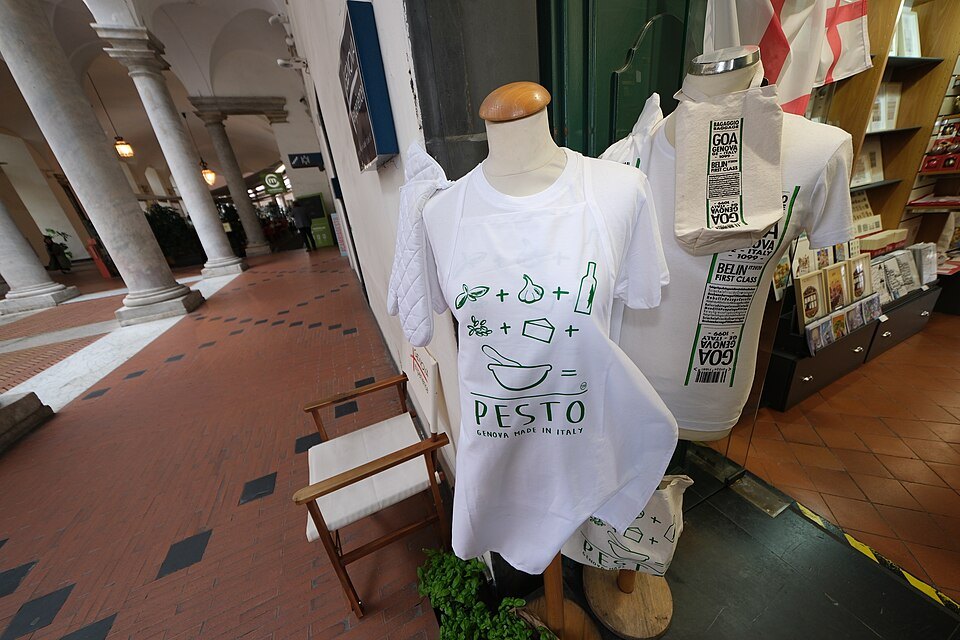
A jar bought here is a reasonable souvenir, but the fresh sauce does not travel; what is sold in tubs at the market is meant to be eaten within a day or two.
Focaccia and farinata
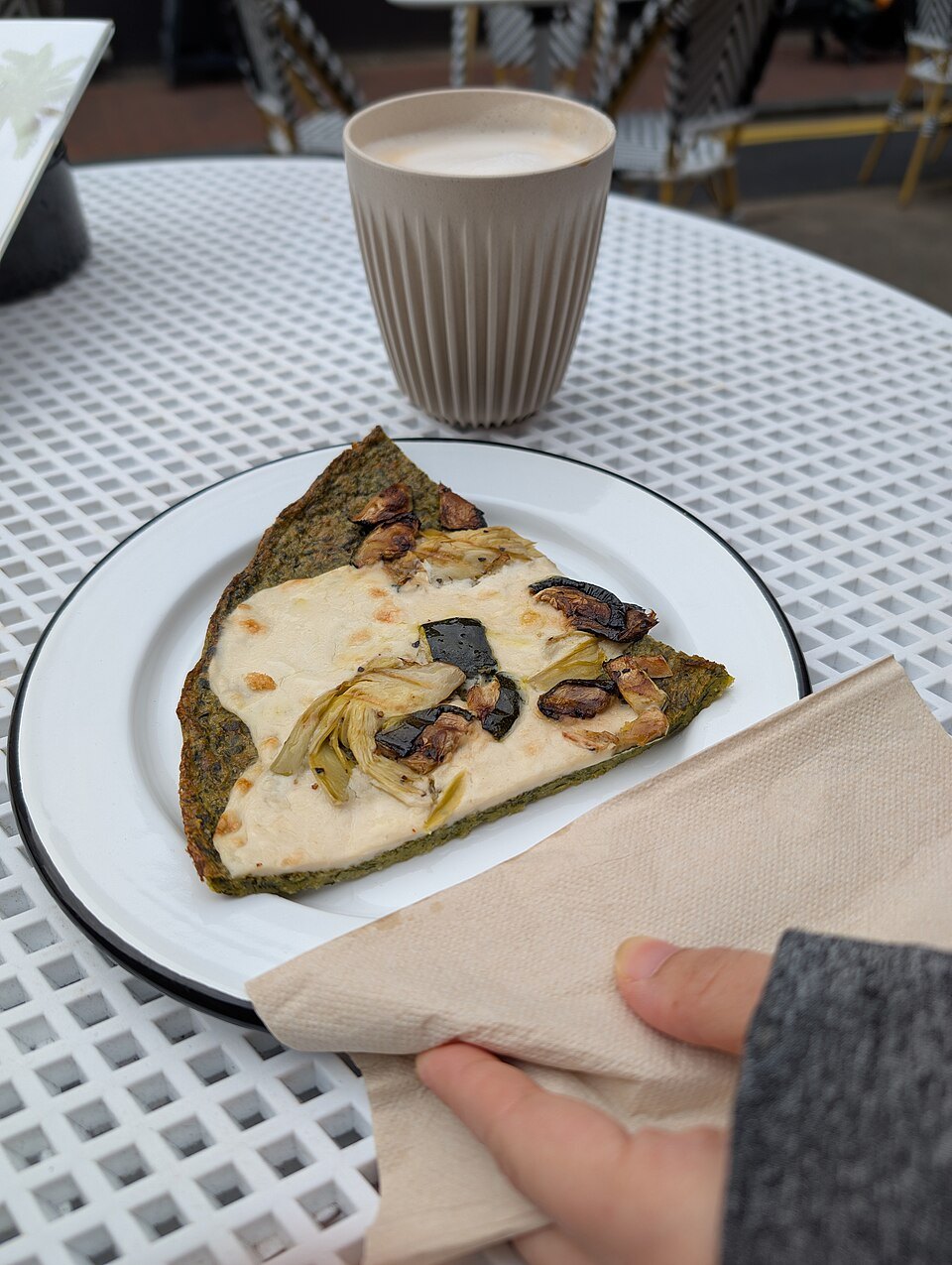
Focaccia genovese is a flat, salty, oil-soaked bread with dimples pressed into the surface, sold by weight from bakeries all day and eaten at any hour. The local habit of dipping it into a cappuccino at breakfast is real and worth trying once.
Focaccia col formaggio is a different thing entirely: two almost transparent sheets of dough with soft cheese between, baked fiercely so it blisters. It belongs to Recco, along the coast, and is made in the city too.
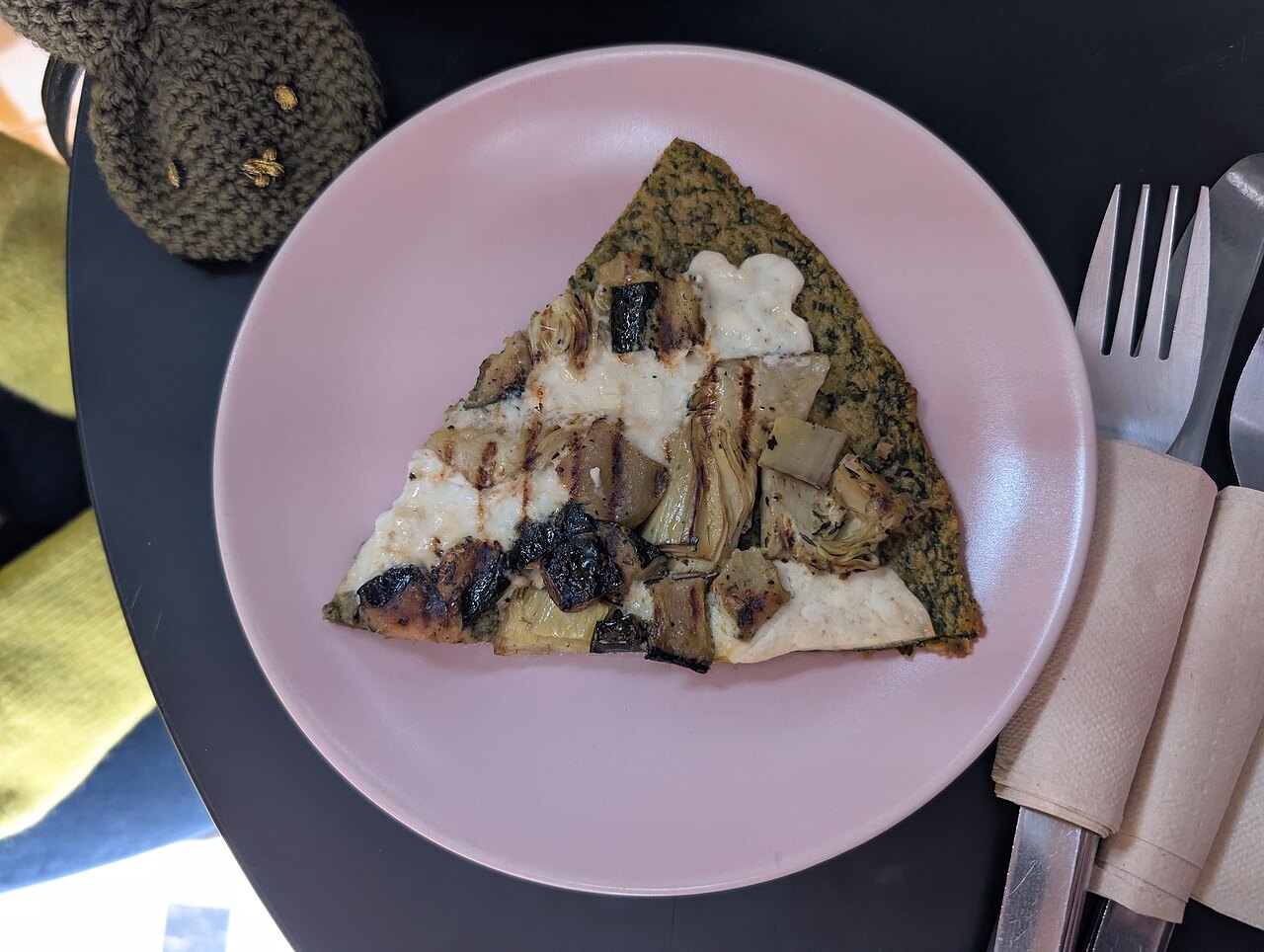
Farinata is chickpea flour, water, oil and salt, poured into a broad copper pan and baked in a very hot oven until the edges crisp. It is sold by the slice in the sciamadde — the old fried-food shops — along with fried vegetables, salt cod and stuffed anchovies.
These three are the cheapest and most characteristic eating in the city, and none of them needs a restaurant.
Where the city eats
The friggitorie and sciamadde of the old town — in Sottoripa along the harbour, around Via San Luca and in the lanes behind the cathedral — do farinata, fried fish and vegetables to eat standing or walking.
The Mercato Orientale, a covered market in a former convent cloister off Via XX Settembre, is the food centre of the city: fish, vegetables, cheese and, upstairs, a hall of stalls cooking what is sold below.
Proper trattorie survive in the old town and in the hill quarters. Look for a short handwritten menu, pesto made that morning and a room with no view — the places with the harbour view are rarely the best cooking.
On the coast at Boccadasse and Nervi the fish is simpler and the setting does the work.
Prices fall sharply as you leave the waterfront. A plate of trofie in a back-street trattoria in the caruggi costs a fraction of the same plate on a terrace by the old port, and it is usually better.
Sunday lunch is the meal Genoese take seriously, and it is when the family trattorie in the hill quarters fill up. Booking a table for it is sensible even in a modest place.
Drinking
Ligurian wine is white and coastal: Vermentino, Pigato and Bianchetta from the western Riviera, sharp and saline, and the red Rossese from further west near the French border.
The aperitivo hour is taken seriously, and in Genoa it is usually taken standing in a small square — Piazza delle Erbe, Piazza San Donato or the lanes off Via San Luca — with something fried alongside.
Coffee is coffee, but the city has a few historic bars with marble counters and painted ceilings, in the galleries off Piazza De Ferrari and along Via XX Settembre, that are worth a stop for the room.
Sciacchetrà, the sweet wine of the eastern Riviera, appears at the end of a meal in the better restaurants. It is made in tiny quantities from dried grapes and is expensive for a reason.
Practical notes
Kitchens keep Italian hours: lunch in the middle of the day and dinner in the evening, with nothing much between except the bakeries and the fried-food shops, which is where the city actually eats.
Many trattorie take a weekly rest day, and the old town is quieter in August, when Genoese leave for the coast.
Booking is sensible for dinner at the well-known places and unnecessary everywhere else; see booking ahead for what genuinely needs arranging in this city.
More photographs
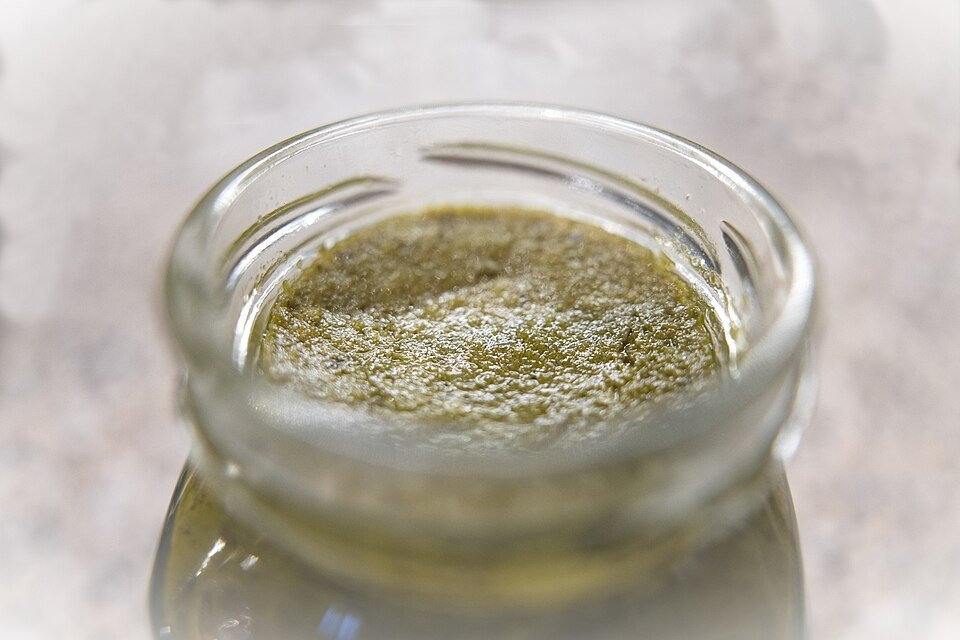
A jar of freshly made pesto, the oil still sitting on topElisaCrestani, Wikimedia Commons, CC BY-SA 4.0