Why most of the doors stay shut most of the year
The palaces on the Rolli lists were never public buildings. They were private houses, built by merchant families to lodge state guests when duty called, and most of them remain private: lived in, rented out, or used as offices, banks and university faculties. A place on the UNESCO list, which covers forty-two of the palaces along Via Garibaldi, Via Cairoli, Via Balbi and the streets nearby, recognizes the architecture. It does not open the door.
That means visiting one is less a matter of buying a ticket than of knowing which mechanism applies to which building: full museum, occasional opening, a courtyard that can be walked into during the working day, or a front that is simply there to be looked at from the street. All four exist within a few minutes' walk of each other.
The five palaces you can always plan around
Three of the grandest are run as museums on a daily basis and share a single ticket: Palazzo Rosso, Palazzo Bianco and Palazzo Doria Tursi, all on Via Garibaldi. Between them they give the clearest possible reading of how a Genoese palace is built, from the open vestibule at street level up through courtyard and piano nobile to a garden or loggia at the top.
Two more stand as museums in their own right. The Palazzo Reale on Via Balbi is one. The Galleria Nazionale, inside Palazzo Spinola di Pellicceria in the old town, is the other, and it is kept as a furnished house rather than an emptied gallery. All five publish their own calendars and conditions of entry, so confirm hours and any booking requirement with the museum directly before setting out; see booking ahead for how reservations generally work in the city.
Palazzo Spinola, hidden in the old town
Palazzo Spinola is the palace most visitors walk past without noticing, because it sits in a lane of the caruggi so narrow that stepping back to see its front is not possible. There is no distant view to announce it; the building has to be found rather than approached.
Inside, it keeps what the museums on Via Garibaldi had to strip away to become galleries: family portraits on the walls where they always hung, a mirrored gallery, and furniture arranged as if the household might still use it. It rewards exactly the kind of unhurried look that a converted museum room, however well labelled, rarely asks for.
The ones that open sometimes
A second tier of palaces opens on set days, or by prior arrangement with the owner or managing institution. Palazzo Nicolosio Lomellino, with its frescoes and nymphaeum, and Palazzo della Meridiana, higher on the hill, both fall into this category. Neither keeps a museum's regular pattern, so the only reliable step is to check current arrangements with the palace itself or with the city's tourism office before building a visit around one.
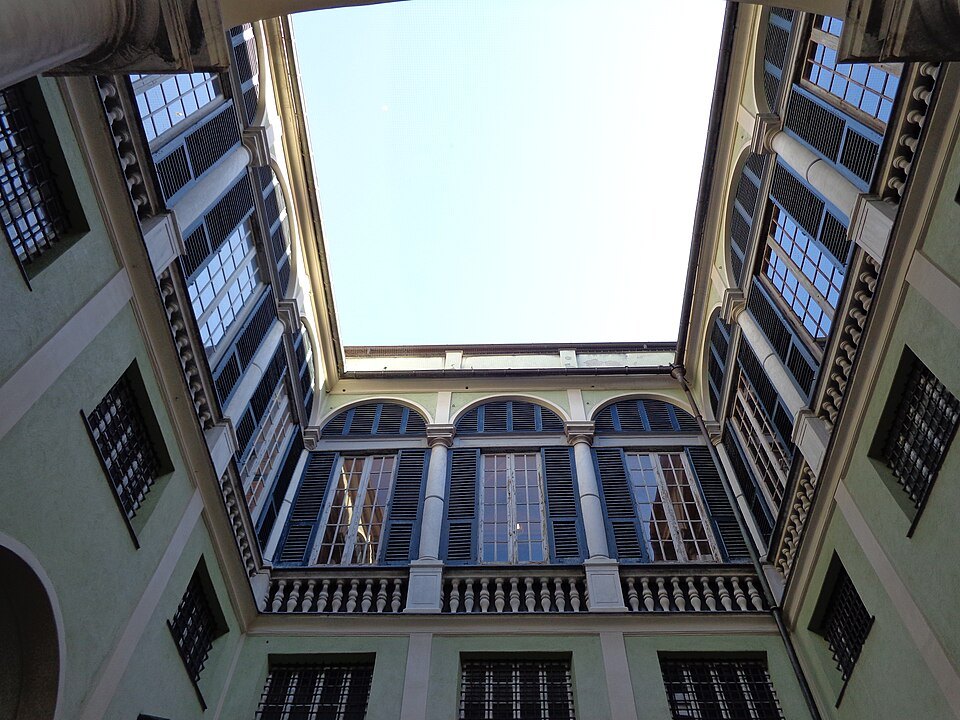
A further group now serves as banks, offices or university faculties. Their courtyards, often arcaded and painted, can generally be walked into during normal business hours, since they function as a public passage rather than a private room. The state rooms above are a different matter, reserved for staff and for the Rolli Days, so treat a courtyard visit as a glimpse rather than a full tour.
Opening patterns across this whole middle tier shift with the season and with the city's resources for staffing them, so a list compiled even a year ago cannot be relied on. The tourism office and the palaces' own notices are the sources to check on the day.
The Rolli Days weekend
Twice a year, in spring and autumn, the city runs the Rolli Days, when palaces that are otherwise closed to casual visitors staff their rooms with volunteers and art history students and let anyone walk through. It is, for many of these buildings, the only way inside at all, and it draws large numbers of visitors over a single weekend.
Slots for the most sought-after houses are booked online in advance and go quickly, so if a trip to Genoa can be timed around the Rolli Days, that is worth doing deliberately. Exact dates are set by the city year to year, so check them with the Comune di Genova or the tourism office once travel plans are otherwise fixed, rather than assuming a fixed calendar slot.
Outside that weekend, small plaques on the palace fronts identify which buildings belong to the Rolli system, and the city publishes a walking map of them that is worth picking up even if most of the doors on it stay shut.
Reading the fronts between visits
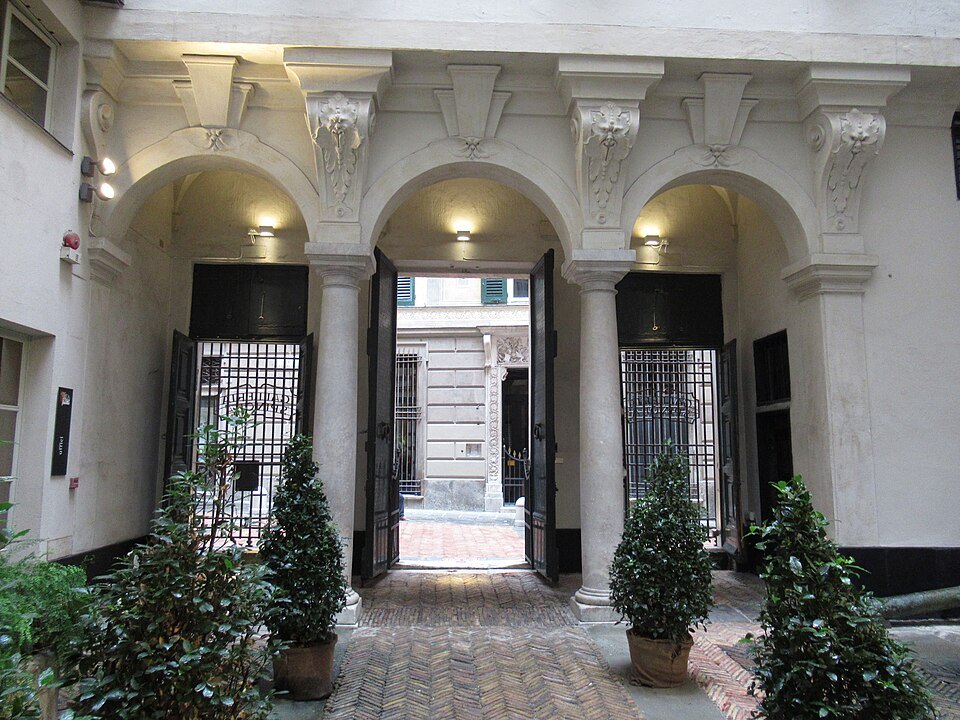
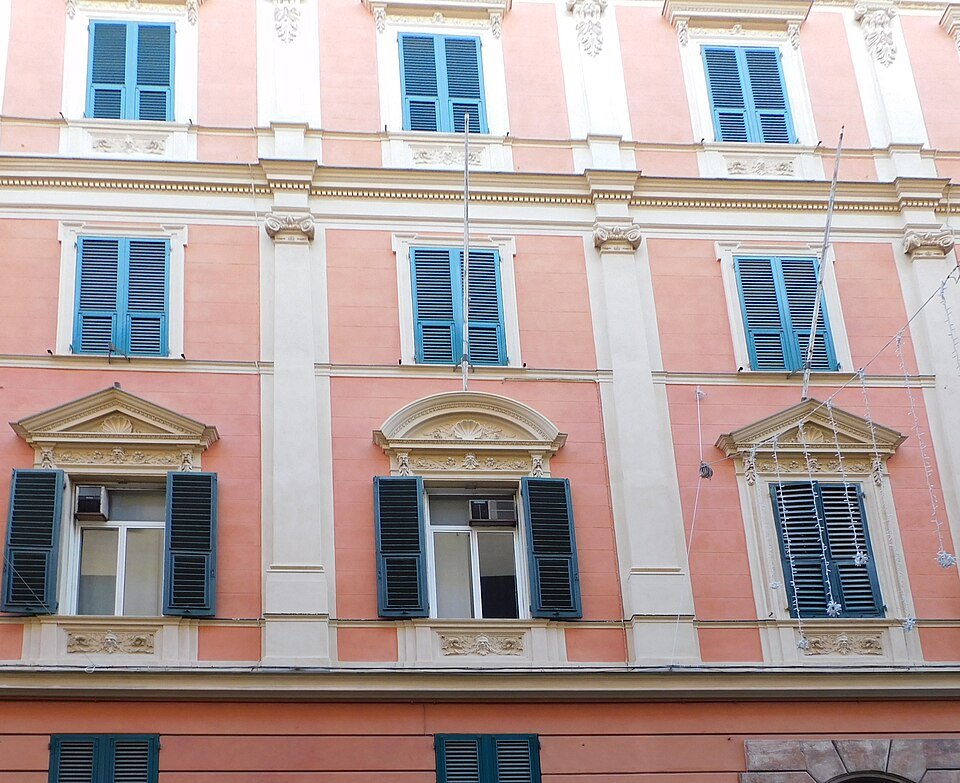
Much of the pleasure of the Rolli, on an ordinary day, is architectural rather than curatorial: looking through whatever is left open, rather than touring a sequence of rooms. The palaces were designed to be read this way, from the street, with the vestibule left open to show the stair and courtyard beyond and the piano nobile catching the light above.
Rubens recognized the pattern during his years in Italy, measuring and drawing a number of these buildings and publishing them in 1622 as a model for northern European patrons to imitate. The grey stone frames, black slate door surrounds and painted plaster above, often imitating cornices and window frames that the family could not afford in real stone, are details worth watching for on any walk through the Via Garibaldi quarter.
Planning a half day among them
Start with the three museums on Via Garibaldi; they lay out the anatomy of a Genoese palace with nothing locked away. From there, a walk between the cathedral and Piazza Fontane Marose passes a dozen or more listed fronts, several with vestibules left open to the street.
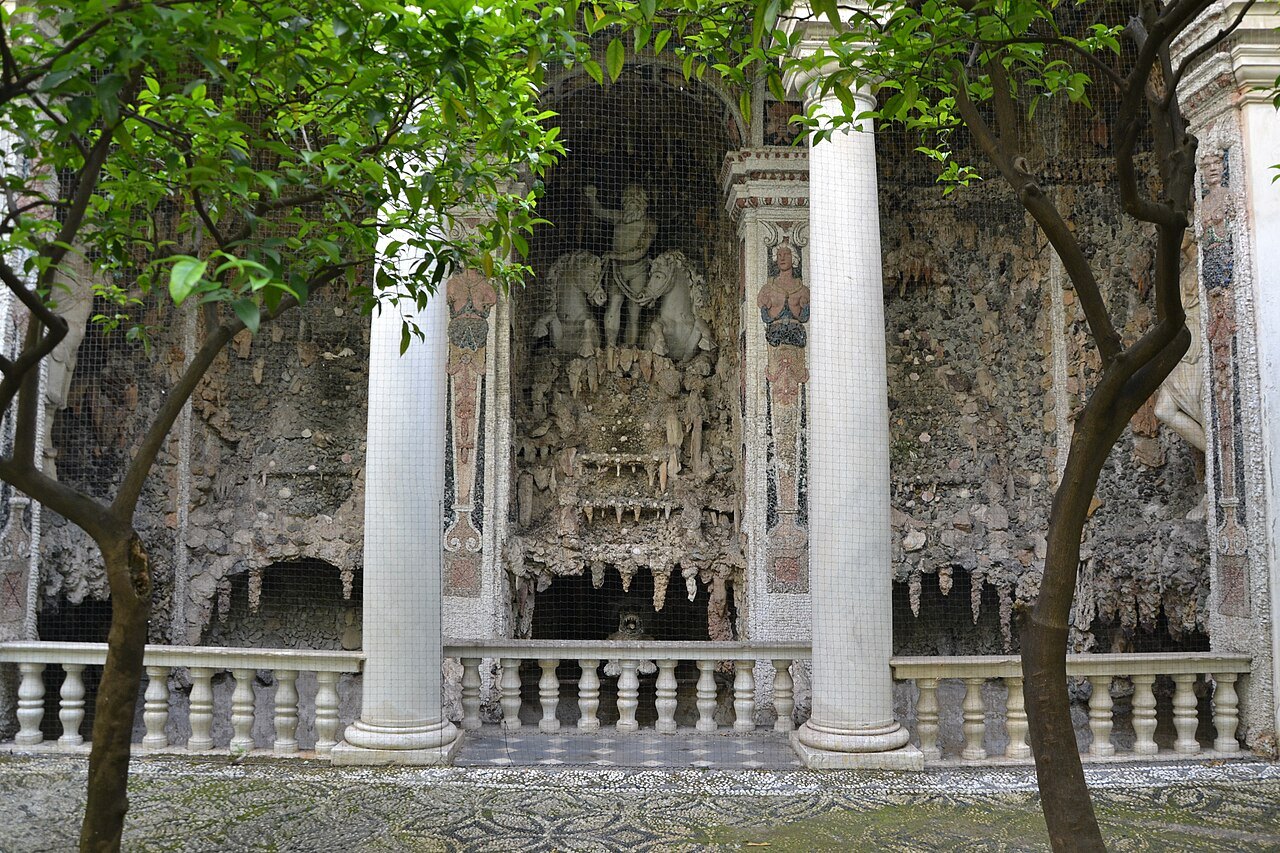
If time allows, add Palazzo Spinola and, if one happens to be accessible that day, a nymphaeum: the combination of grotto, water and formal garden partway up a hillside above a working port is among the most distinctive things these families built. None of this needs advance booking beyond the museum tickets themselves; following open doors works as well as any itinerary.
One practical note applies across all of them: the rooms were built for candlelight and daylight from a courtyard, not for artificial lighting, so interiors read as dim at first. Standing still for a minute while the eyes adjust shows far more of a frescoed vault than reaching straight for a camera.
More from the journal
- The CaruggiIs it safe to walk the caruggi, and which lanes should you take?Genoa's medieval quarter has a reputation. Here is what is actually true, which streets are busy and which are not, and how to walk one of Europe's largest old towns without worrying.Read the piece
- ItinerariesWhat can you see in Genoa on a six-hour cruise stop?A plan for a short day in Genoa from the cruise terminal: what is close, what is worth the walk, and what to leave for a longer visit.Read the piece