The quarters, and who each one suits
- The old townVisitors who want to be inside the maze and do not mind noiseEverything is on the doorstep and nothing arrives by car. Lively and atmospheric around Via San Luca, Piazza Banchi and the cathedral; poorer and rougher west of Via del Campo.
- Around Piazza De FerrariA first visit, or a short stay with an early trainThe hinge between the old town and the modern city, with the metro under the square, most bus routes at the corner and the shopping streets alongside.
- Principe and Via BalbiArrivals by ferry or train who want to walk to their bedStation, ferry terminal and the royal palace within a few minutes; cheaper rooms, a busier and plainer street life.
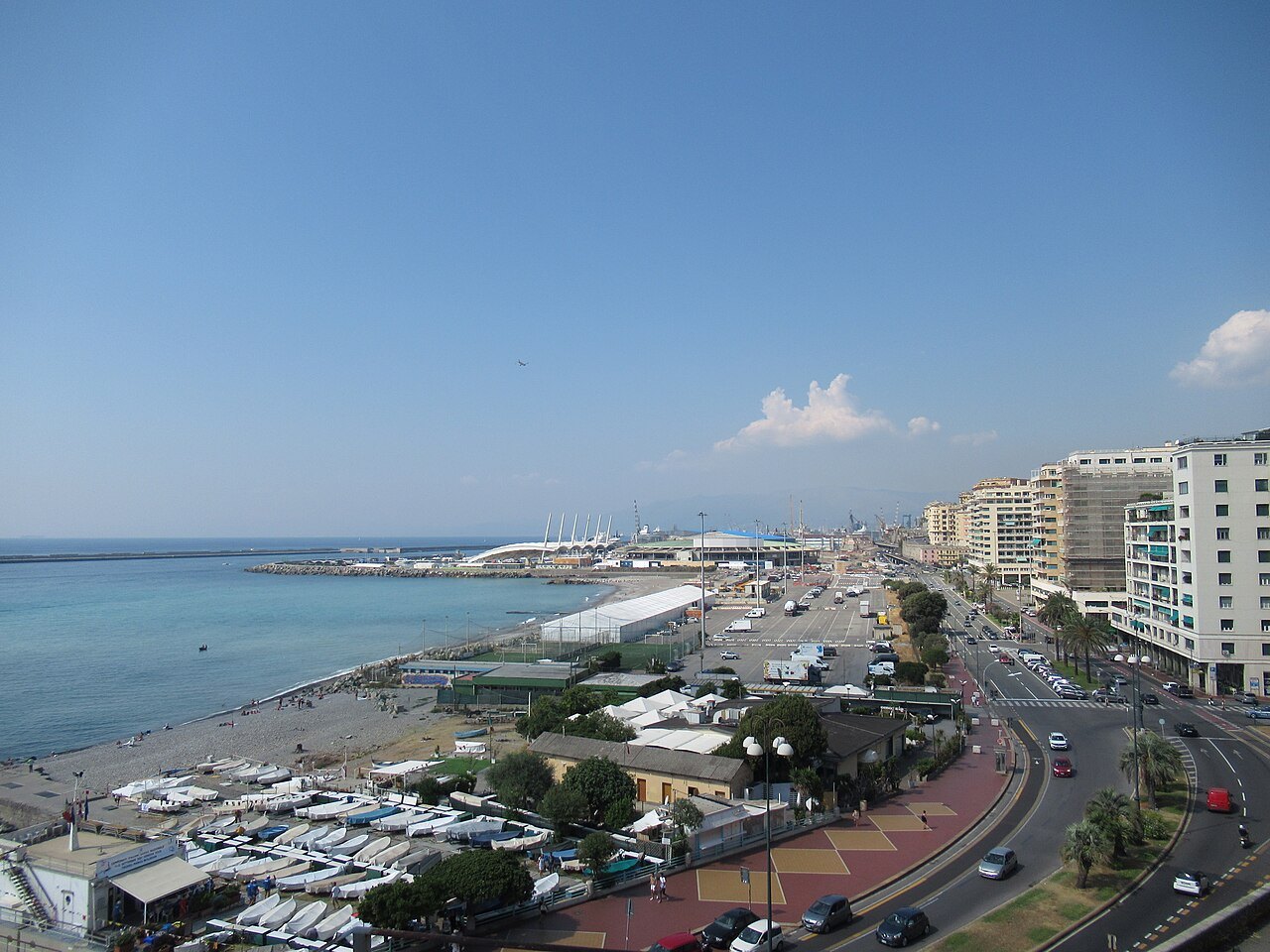
- Carignano and the FoceQuiet nights within walking distance of the centreA residential hill of nineteenth-century blocks above the sea, with the basilica at the top and the seafront below.
- Albaro and BoccadasseA stay by the sea with the city twenty minutes awayLeafy streets of villas and apartment houses behind Corso Italia, ending at the fishing cove; good for families.
- Castelletto and the hillTravellers who like a view and do not mind a liftResidential streets on the ridge above the old town, reached by public lift, with the belvedere and quiet evenings.
- NerviA seaside base with trains into the cityA former resort seven kilometres east, with parks, a cliff walk and a quarter-hour train to Brignole.
- The Lanterna
- Palazzo Reale and Via Balbi
- Santissima Annunziata del Vastato
- Via Garibaldi and the Strada Nuova Museums
- Spianata di Castelletto
- The Righi Funicular and the Forts
- Piazza San Matteo
- Palazzo Ducale
- Piazza De Ferrari
- Porta Soprana and Columbus's House
- The Church of the Gesù
- San Lorenzo Cathedral
- The Porto Antico
- The Aquarium of Genoa
- Galata Museo del Mare
- Staglieno Cemetery
- Boccadasse
- Nervi and Its Promenade
Where to Stay in detail
How the city is laid out
Genoa runs for thirty kilometres along the coast and is rarely more than two kilometres deep. Everything a visitor comes for sits in the first five of those kilometres, between the Lanterna in the west and Boccadasse in the east.
Within that strip the city is layered vertically. The old town lies along the harbour, the nineteenth-century streets sit a level above it, and the residential hills climb behind, reached by lifts and funiculars.
That geometry, not distance, is what to think about. A hotel four hundred metres from the cathedral may be a hundred and twenty steps above it.
There is no single tourist district, which is unusual for an Italian city of this size. Visitors, students, dockers and bankers all use the same few streets, and the character of a quarter can change within fifty metres — one lane of bars and the next of shuttered workshops.
Distances are short: from Principe in the west to Brignole in the east is about two and a half kilometres, and the metro covers it in four minutes. Nowhere in this list is more than half an hour from the centre.
Inside the old town
Staying in the caruggi is the most atmospheric choice and the one with the most caveats. The lanes are narrow, the buildings tall, the sound carries, and no vehicle will bring you to the door — expect to walk the last stretch with your bags.
The good part is total immersion: bakeries opening at dawn, the fish market, the cathedral three minutes away, and the harbour five. Rooms are often in converted palace floors with painted ceilings and no lift.
Choose the streets carefully. Around Via San Luca, Piazza Banchi, Piazza delle Erbe and the cathedral the lanes are busy and well lit into the night. West of Via del Campo, toward Via di Prè and the Ghetto, the quarter is poorer and less comfortable after dark.
Deliveries, taxis and ambulances cannot reach most addresses here, which is worth knowing if you travel with heavy luggage or have trouble walking. Luggage storage points near both stations are widely used for exactly that reason.
The modern centre
Around Piazza De Ferrari and along Via XX Settembre the city becomes nineteenth-century and legible: wide streets, arcades, department stores and hotels in old office buildings.
It is the practical base. The metro runs under the square to both stations and the old port, the buses to the hills and the coast leave from the corners, and everything in the old town is within a ten-minute walk downhill.
Evenings here are quieter than in the alleys, with the aperitivo crowd a street or two away in the lanes. For a first visit or a short stay, this is the safest choice.
Via XX Settembre, the arcaded street running east from the square, is where the city shops, and the side streets off it hold most of the mid-range hotels. Piazza della Vittoria, at its eastern end, has the coach station and several larger places.
By the station and the port
Principe station and the ferry terminal sit at the western end of the centre, with Via Balbi and the university behind them.
Rooms here are cheaper, and the area is convenient for anyone arriving late or leaving early, or sailing to Sardinia or Corsica. The streets are busy and workaday rather than pretty, and parts of the quarter behind the station are run down.
The old town begins a few minutes east along the waterfront, so the location is better than its reputation for anyone who does not mind an ordinary city street outside the door.
One practical advantage: both the airport bus and the ferries land you here. For a one-night stop before a crossing, or an early flight, it is the obvious base.
The hills and the sea
Castelletto, on the ridge above the old town, is residential, quiet and reached by the public lift from Piazza del Portello; you sleep with a view and ride down into the city in a minute.
Carignano and the Foce, east of the centre, are nineteenth-century apartment quarters with the seafront below and the basilica above — good value, ten to twenty minutes on foot from the middle.
Albaro, behind Corso Italia, is the city's comfortable residential district: villas, gardens, the sea promenade and the cove at Boccadasse at the end of it. Families do well here, and the buses into the centre are frequent.
Nervi, further east, is a different proposition: a seaside town with parks and a cliff path, a quarter of an hour by train from Brignole. It suits a slower visit, or a summer one.
Staying up a hill means depending on a lift or a funicular, and those keep timetables. Check the last departure if you plan late evenings in the centre; otherwise it is a taxi or a long stair.
Practical points
Ask about stairs before booking in the old town and on the hills. Lifts are not universal, and a fourth-floor room in a palace may mean eighty steps.
Ask, too, about noise. A room over a lane in the centre is loud until late, and shutters are the local answer.
If you are arriving by car, choose a hotel with a garage arrangement or plan to park once and leave it — see getting here.
Prices follow the calendar rather than the district: September, with the boat show, and Easter are the two weeks when rooms are hard to find anywhere in the city.
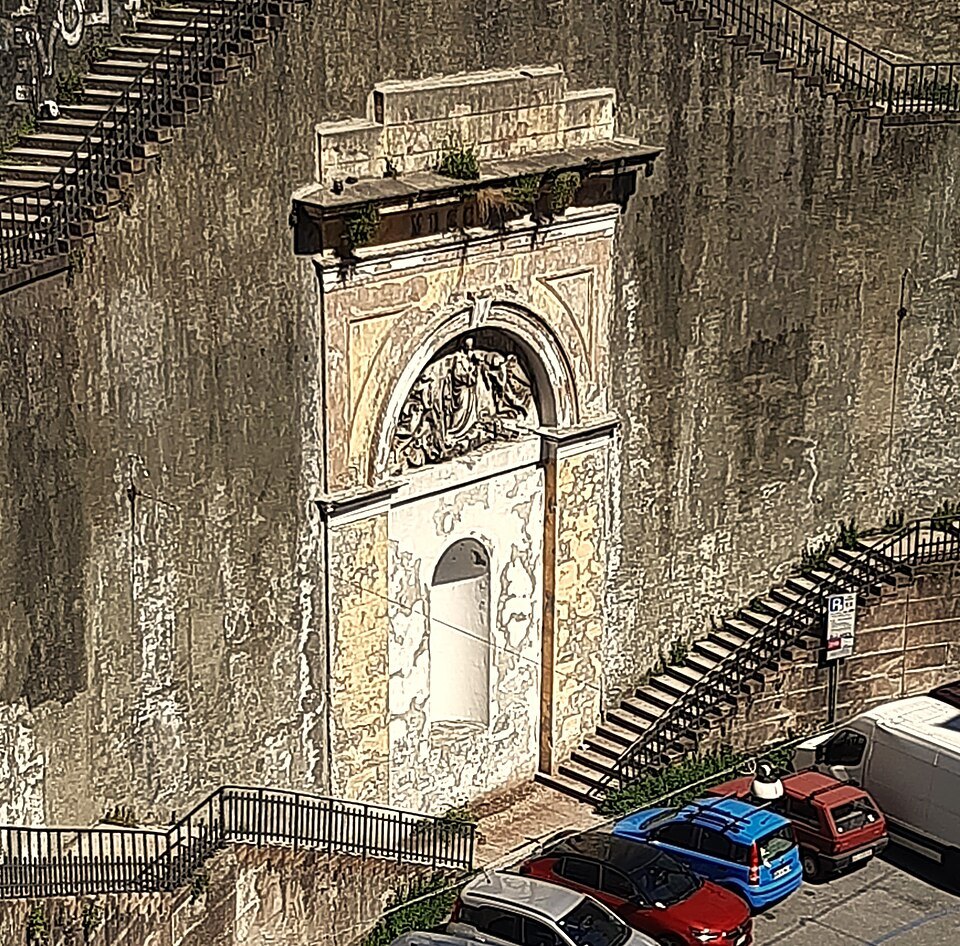
One more consideration is the evening you want. The old town eats late and noisily, the modern centre closes earlier, and the seaside quarters are quiet after dinner.
More photographs
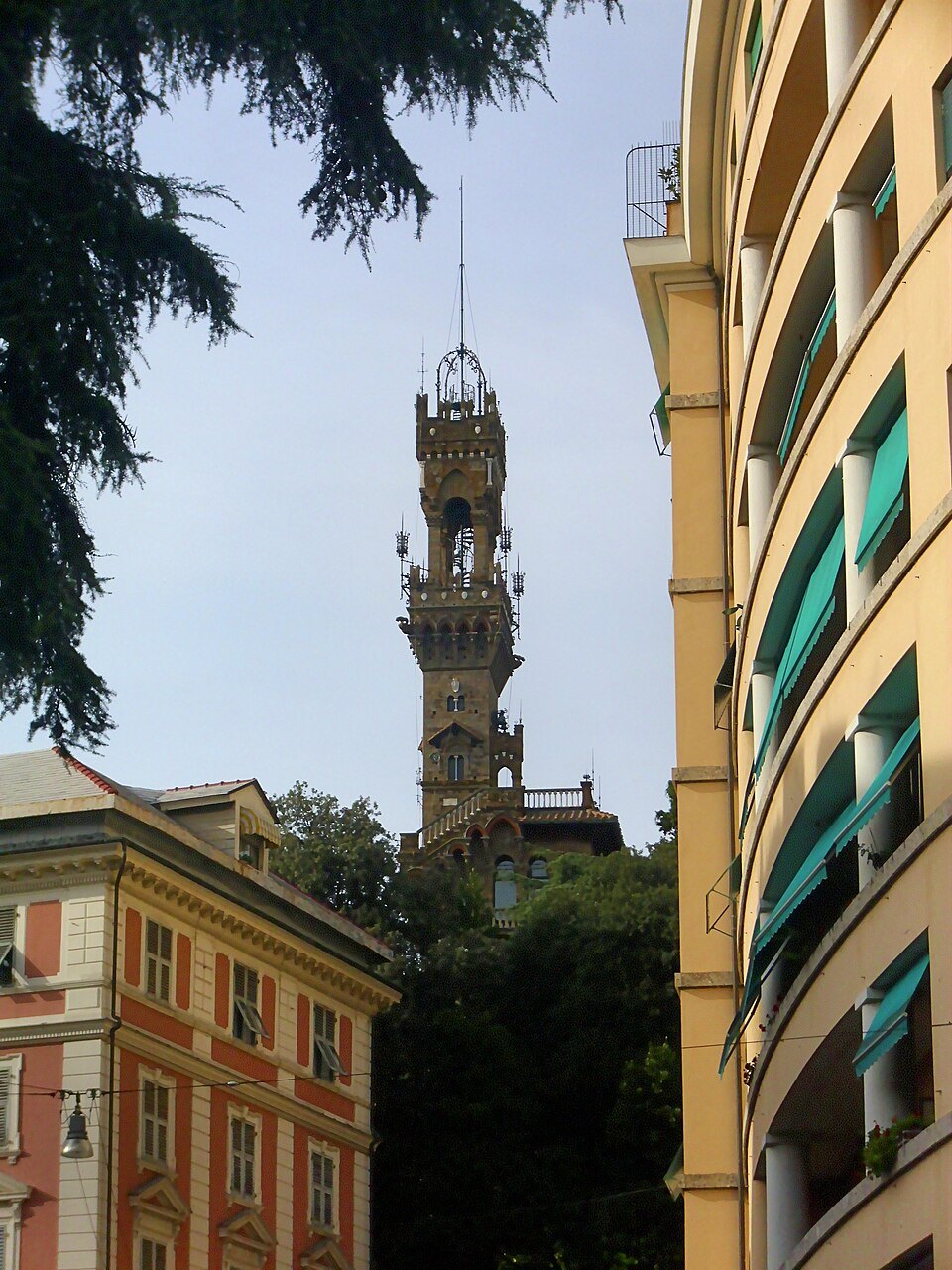
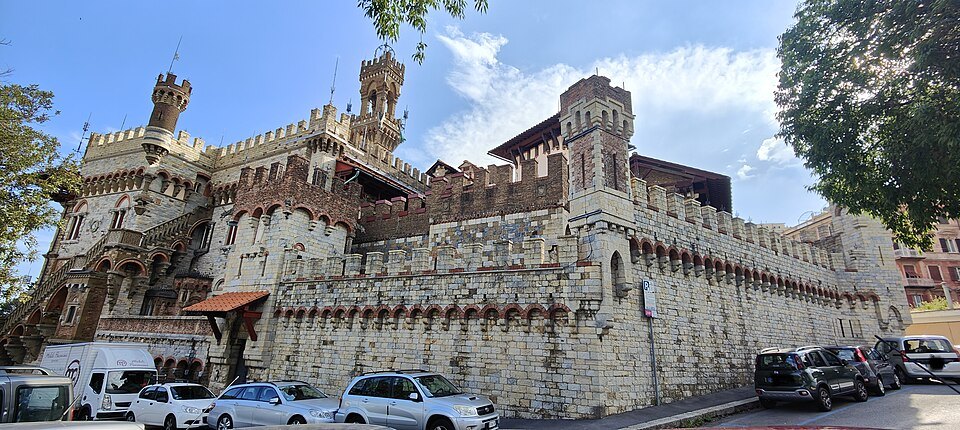
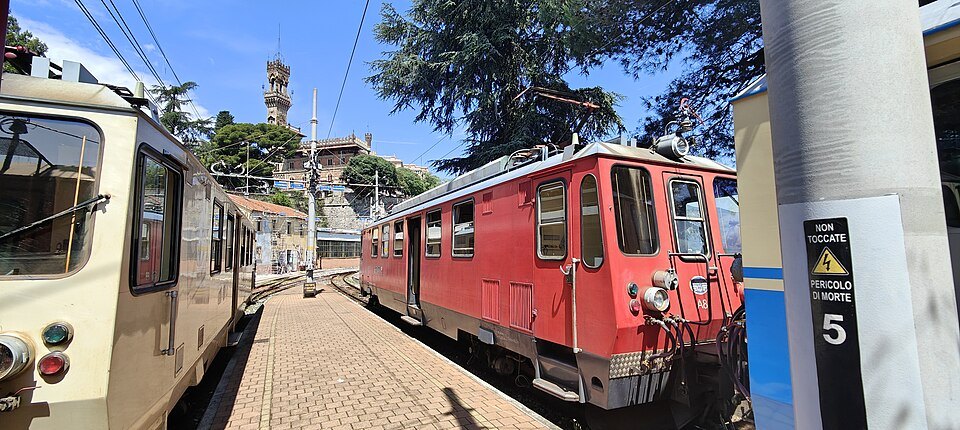
The tower of Castello Mackenzie above the roofsAlessio Sbarbaro User_talk:Yoggysot, Wikimedia Commons, CC BY-SA 3.0 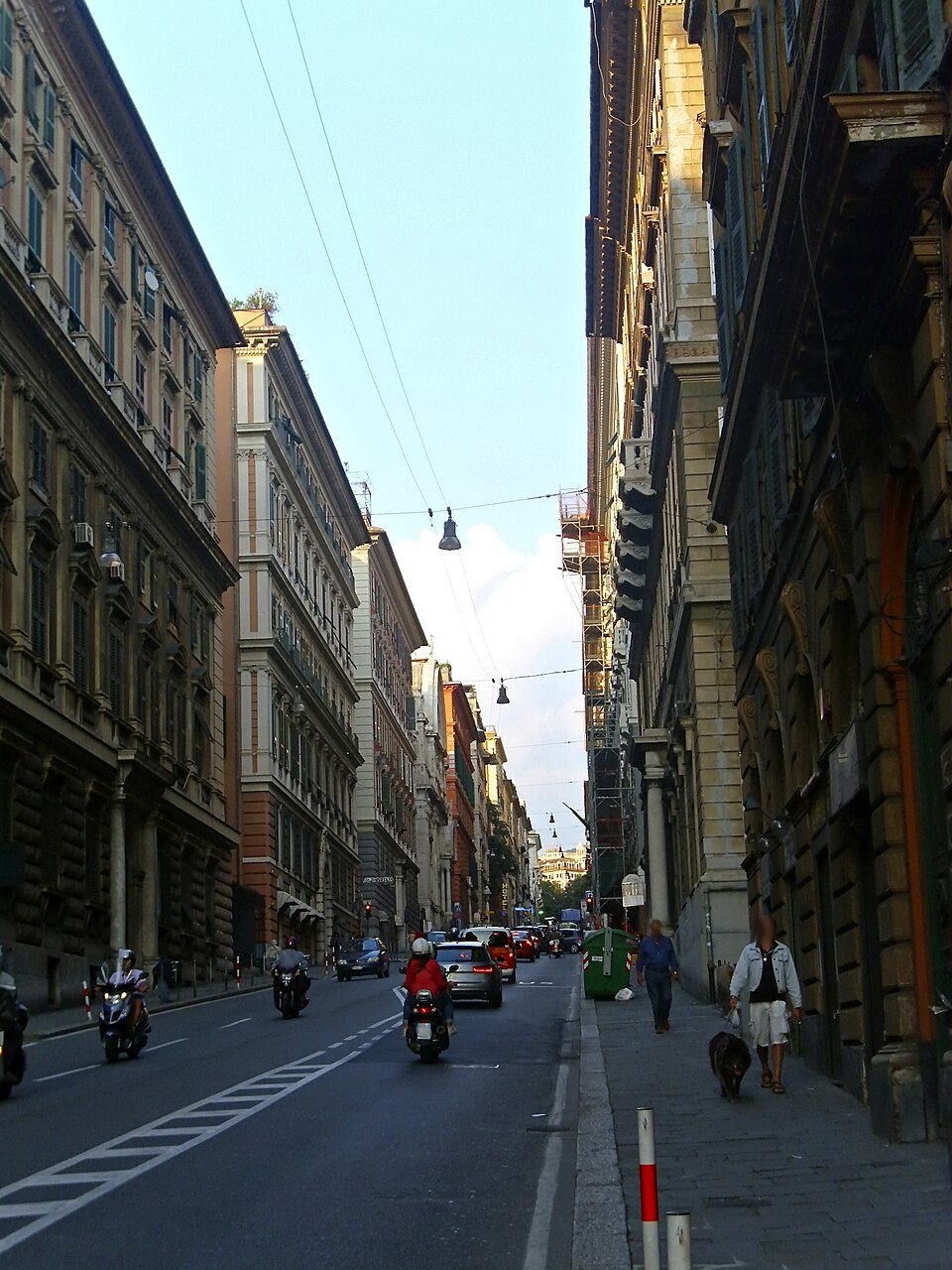
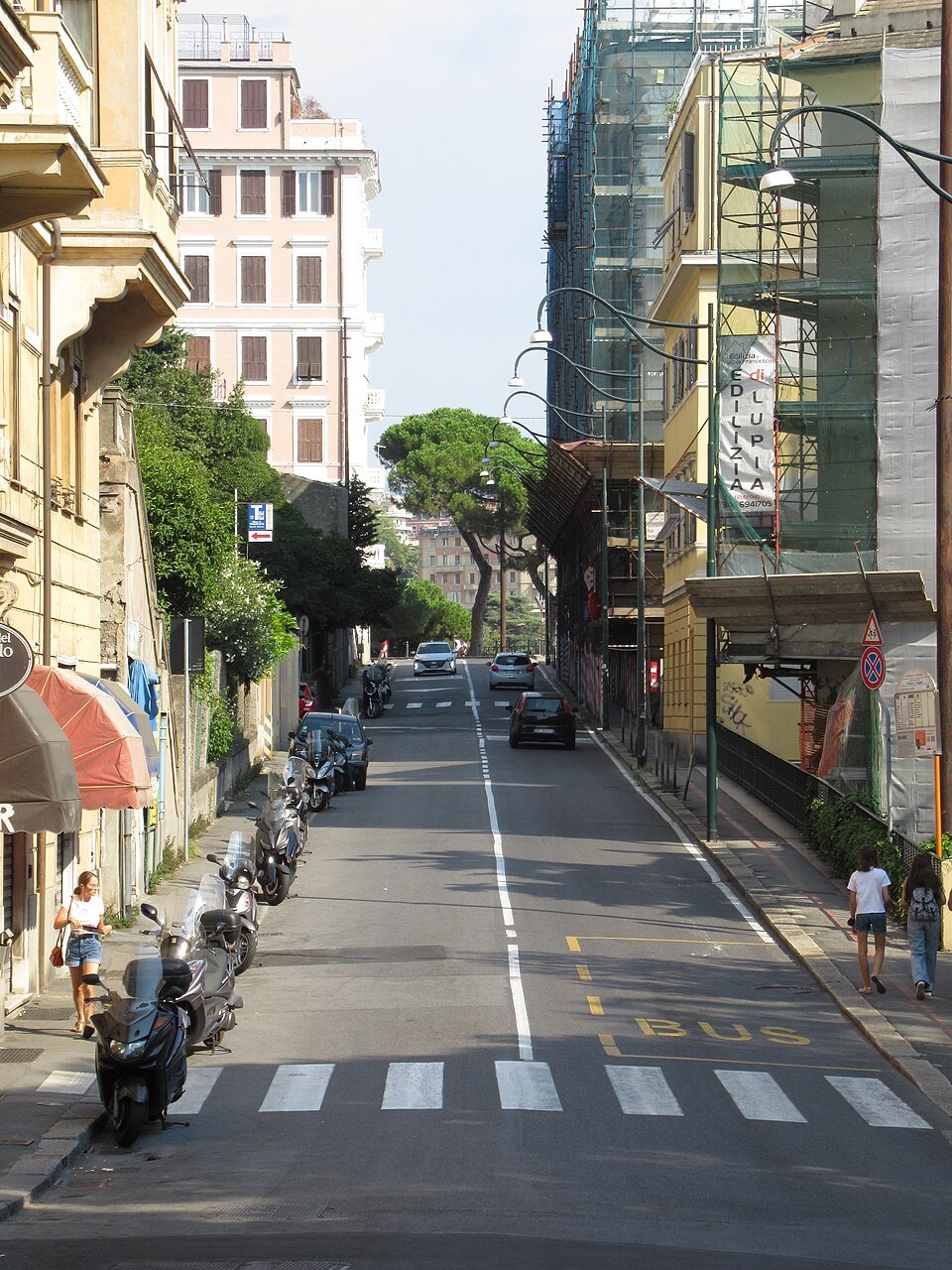
Via Assarotti, running downhill between nineteenth-century blocksAlessio Sbarbaro User_talk:Yoggysot, Wikimedia Commons, CC BY-SA 3.0